
Welcome to Mariupol… or more rather… to the memory of it.
As recorded, it’s a Ukrainian City on the Sea of Azov – the tenth largest in the nation in fact, and home to around 425,000 people, two giant steel mills, a busy port, and all the usual Soviet-era concrete you’d expect from a City in that neck of the woods…
But in reality, all of that is now in the past, and it has been replaced by a Russian city; the natives mostly gone – either having been displaced or killed – the skyline demolished and created anew, and the language and landmarks steadily scrubbed to better fit ‘New Mariupol’, as Moscow calls it.
Key Takeaways
- Mariupol was a major Ukrainian city with a rich history and significant industry.
- The Russian invasion in 2022 led to a brutal siege and extensive destruction.
- The siege resulted in massive civilian casualties and the near-total destruction of the city.
- Russia has since occupied Mariupol, renaming streets and rebuilding for Russian settlers.
- The future of Mariupol is uncertain, but it is likely to remain under Russian control.
How did this happen? Why did this happen? When did this happen? And what will happen next?
They are all questions we will be answering today – big questions, with unsettling answers…
The Background
If we want to understand what was actually erased, we need to understand what Mariupol was before it became a battlefield; because it isn’t just ‘copy and pasted Soviet-built city number 82’ – it’s its own place, with its own story.
Geographically – to get us started – it’s simple enough. Mariupol sits on the northern shore of the Sea of Azov, at the mouth of the Kalmius River, and that alone makes it strategically important; as whoever controls Mariupol controls not just a chunk of Ukraine’s coastline, but a key outlet for Donbas coal, grain, and steel to the wider world.
Before the 2022 invasion too, it was also Ukraine’s tenth-largest city, with around 425,000 people calling it home, most of whom lived within one of four urban districts: Kalmiuskyi, Livoberezhnyi (Left Bank), Prymorskyi (Seafront), and Tsentralnyi.
Historically though, the story starts with Greeks and Cossacks.
Basically, in the mid-18th century, the area around the Kalmius estuary was Cossack country – outposts, fishing villages… and that’s about it. After Russia’s victory over the Ottoman Empire in the Russo-Turkish War of 1768 to 1774 however, Catherine the Great took it upon herself to ‘tidy up’ the frontier – as she saw it.
Thus, in 1778, the town of ‘Pavlovsk’ was founded; giving itself a smidge of an infrastructural headstart by building on top of an old Cossack encampment – and then, a year later, ‘Pavlovsk’ became ‘Mariupol’.
But even that name – the name we know it as today – didn’t stick though, as the Soviets renamed it ‘Zhdanov’ between 1948 and 1989 in honour of one of Stalin’s goons. After that, however, with the Soviet Empire then in the midst of absolutely imploding in on itself; ‘Mariupol’ – the name was put back to normal.
As for the Greek connection, they come into Mariupol’s story as its first major wave of settlers. Not that they had any choice in the matter, as Catherine the Great moved them there at bayonet point.
Long story short; she yanked tens of thousands of Greeks – and a few Armenians too – out of Crimea to: A), cripple the Crimean Khanate’s tax base to soften it up for full annexation, B), seed the Azov steppe up with ‘reliable’ Christian settlers, and C), to lock those very same settlers in properly as Russian subjects, subject directly to her laws and charters.
And right up to 2022, this ‘Greek connection’ remained a big part of Mariupol’s identity, as you had tens of thousands of ‘Azov Greeks’ in the city and its surrounding villages, older folks still speaking the local Greek dialect – ‘Rumeika’, to use its proper name – dedicated Greek museums, Greek cultural centres and Sunday schools in town, and even a Modern Greek Studies department at Mariupol State University. It wasn’t just some vague historical footnote, is what we’re getting at, it was a major deal.
And what did they do for the first hundred years or so of their history in Mariupol? Not much actually… pretty much standard ‘early modern period city stuff’ basically; plenty of agriculture, bit of industry here and there, plenty of Jesus-ing, and so and so forth.
BUT THEN… then came the railways, which connected the city up to the Donets Basin area in 1882. That one act alone lit the match on a process that would see Mariupol – the sleepy nowhere city as it then was – transform into a major industrial hub.
Coal came down that line you see… so they may as well expand the port so they can ship as much of it as possible… oh, and since the coal’s coming that way anyway, why not expand complementary industries too… industries like, say, STEEL.
And so good of an idea did that compressed and simplified logic turn out to be, that it got a bit out of hand… with Mariupol becoming one of the biggest steel hubs in the Russian Empire, and later the Soviet Union, with blast furnaces, coke plants, power stations and rolling mills all eventually sprawling out for kilometres.
We’ll also give you two specific examples: the Ilyich Iron and Steel Works, founded in 1899, during the Imperial period, and the Azovstal Iron and Steel Works, founded in 1930, during the Soviet period. Why them in particular, you ask? Well, they both went out of business in 2022 didn’t they… and as you can likely ascertain from that fact… they’ll be coming up later in the episode…
Bringing it back to the matter at hand, however.
Mariupol, being an industrial port city in the Soviet Union had the exact pattern of growth you would imagine – rapid expansion, rapid urbanisation and absorption of surrounding villages, and endless Khrushchyovka apartment blocks popping up everywhere as far as the eye could see, all laid out in the familiar ‘plenty of space between them and yet weirdly nowhere to park’ pattern that characterises all Soviet built cities.
Above all of that, however, Mariupol’s Soviet-era growth also brought POLLUTION. We’re talking bad pollution too, not London’s ‘remember those four days in 1952 when it got a bit smoggy’, no, we’re talking year-round steel-mill haze, brown snow, and metal dust on your balcony. Not quite Pripyat levels of bad admittedly, as that did raise the bar rather – for very obvious reasons – but still, very much ‘top tier’ on any list of the Soviet Union’s most polluted cities.
And while the situation certainly improved after the wall came down, Mariupol remained a city that’d struggle to win the Greta Thunberg seal of approval all the same; still routinely coming in as one of Ukraine’s most polluted cities, with long-running complaints and monitoring pointing to industrial emissions impacting residential areas downwind of Azovstal and Ilyich in particular.
Really though, all that is just a long-winded way of saying that Mariupol is not some postcard resort, but a real city: noisy in places, grimy in others, full of hardworking salt-of-the-earth blue-collar types who do their shifts at Azovstal and Ilyich, haul crates down at the docks, drive trams and trolleybuses, and go home to concrete blocks that rattle when a freight train comes past. A city where Greek grandmothers still swear in Rumeika, students did exams at the uni, and kids kick balls around between Khrushchyovkas…
…Or rather, should we say it was those things, because of course, on the 24th of February 2022, the Russian Military would pull the lid off the boiling pot of tensions that had been simmering since 2014, and initiate its full-scale invasion of Ukraine…
The Siege
There were three things Russia wanted to achieve when it invaded: 1), to install a deferential government in Kyiv, 2), to drag Ukraine out of the Western orbit and back into Moscow’s sphere of influence, and 3), to seize a swathe of territory in the East and South that would permanently secure its grip on Crimea, and provide a land corridor leading to it along the Azov Coast… and unfortunately… that last objective put Mariupol in the crosshairs… literally.
The city was to receive no reprieve, nor allowance for its civilians to flee before things got too bad either, as it started getting hit immediately.
At 04:20 on the 24th, for example, rockets were already slamming into Mariupol Airport, then housing a not insignificant radar and communications installation, which was then followed by BM-21 Grad rocket salvos hitting the Left Bank districts from 05:37, and the shelling of an apartment building in Skhidnyi District at 05:40 which left 10 civilians killed, and a further 35 wounded.
At the same time, Russian Ground Forces, as well as those from the Donetsk People’s Republic – a self-declared separatist state established in Eastern Ukraine in 2014 – were pushing towards Mariupol from two main directions: East, from Novoazovsk, and North from the Volnovakha axis – probing Ukrainian lines and testing the routes that would later become the siege ring, basically.
A splinter force of the former also attempted an immediate and direct assault on the city come the afternoon – sometime around 16:00. Key word there though, ATTEMPTED, as their advance was stalled, and turned back before it could properly penetrate the built-up Eastern Districts – with it also losing at least three tanks outright destroyed in the process.
That was day one. From there, the intensity ratcheted up, slowly but surely.
On the 25th, for example, the Ukrainians were reporting fighting in all directions of the city, and by the 28th, Pavlo Kyrylenko – then serving as the Governor of the Donetsk Regional Military Administration – was reporting that the noose was being tightened, with the fighting now truly having reached the city limits as the attackers pushed ever-in, and outlying villages to the North and East having totally fallen under their control.
Crucially though, particularly for our purposes today with our focus on the erasure of the City, this initial phase of the Siege – vaguely the first week or so – the Russians started to hit infrastructure HARD,
DTEK, for example – that being Ukraine’s largest energy company – reported that on the 25th, two vital lines feeding residential estates on the Left Bank went down together, and further, on 26th, the City Council reported that 188 electric substations had been damaged, cutting power to 41,229 customers – roughly a quarter of all households in the city – mostly in the Left Bank and Kalmiuskyi districts.
At the same time, thanks to strikes upstream on the Siverskyi Donets–Donbas canal system, canal water – from which many properties commercial and residential alike drew their water – effectively stopped flowing to the City on the 25th.
Most of the taps kept running for a time however, chiefly because damage was able to be offset by switching the still operable Starokrymski Filter Stations in the North of the City to draw water from the local reservoir instead. It was a workaround that’d last for mere days though, as the Russians continued escalating their unrelenting targeting of infrastructure.
And indeed, the battle writ large escalated similarly too, with the Russians having ONE thing they wanted to achieve first and foremost: encirclement.
That is exactly what it sounds like too; literally, surrounding a city. And once that ring closes, reinforcements, ammo, food, fuel, medicine – EVERYTHING that the defenders could ever want to move in – stops getting in; and all the while, the attackers find themselves with carte blanche to rotate fresh units in, and generally keep piling the pressure on.
It wouldn’t take the Russians long to pull it off either, with encirclement being achieved on the 2nd of March… more or less anyway – there was a thin Ukrainian-held strip running north out of Mariupol along the H20 Highway and an adjacent rail line… but this wasn’t all that much use anyway given the direction it was pointing in, and it was choked off by the 8th regardless.
And with the City (effectively) encircled, the Russians’ tempo immediately shifted from RACE for Mariupol, to SMASH Mariupol; with artillery and airstrikes alike hitting all districts with a terrifying regularity from the 3rd to the 6th.
There were attempts to establish humanitarian corridors out of the city, but they came and went in a repeating cycle: a ceasefire window was announced, civilians were told to gather, cars and buses were fuelled… and then the shelling would start anew, forcing everyone back into their basements.
Want to know an unsettling reality, too? Their being trapped was GOOD for the Russians. A few would pick up arms against them, sure. But the reality was that most wouldn’t, couldn’t, and indeed, didn’t. They were scared, desperate people who just wanted it to be over; for the terror of their newly reforged existence to come to an end. And what would you know, that was also exactly what the Russians wanted… just with the very specific asterisk attached that it happened with their flag being hoisted up over City Hall, and so the bombing and the artillery strikes continued unabated. All the people of Mariupol had to do was to convince their government to surrender… and it could all be over. So, the Russian’s logic went, anyway.
But surrender, they did not – Mariupol was going to break only after it had made the attackers pay for every alley, every throughfare, and every damned paving slab with their blood.
Let’s loop back to what we just said about the bombing and artillery strikes continuing though, because all that firepower had consequences: specifically the City losing ALL water and electricity on the day of the encirclement.
What followed was a phase of ‘make do’, as municipal workers and volunteers alike tried to improvise a water system out of whatever they had: eight large water tankers and two smaller vehicles, ferrying water from wells and reservoirs to hospitals, big shelters, and a handful of public gathering points. People queued for hours at makeshift water stations – including gyms, schools, and the forecourt of the Drama Theatre – all under shelling. Several of the trucks were eventually hit though, and so even that jury-rigged system would begin to fall apart with time.
Communications followed the same trajectory as well. Mobile coverage began breaking up in late February as masts and power supplies went down, and by the first week of March the last major cell tower was gone. The Internet specifically, it died in two stages: the loss of electricity taking landlines down with it, and the loss of the cell towers cutting off what mobile devices still had some charge in them.
And as for the ACTUAL fighting, it too only intensified following the encirclement, with Russian forces starting to prod into the City at its furthest edges.
To the East, Infantry and armour pushed up through Livoberezhnyi District, trying to cross the Kalmius River and get a foothold on the higher central ground, and to the North, columns edged down, testing every junction and crossroads on the H20 corridor. And in response, Ukrainian Marines, Azov Brigade detachments, National Guard, were effectively fighting a moving defence line – ambush a group of vehicles in one cluster of tower blocks, displace before the artillery found you, set up again two or three streets back, repeat.
The next few days too, specifically the 3rd to the 6th of March, were also when the Russian losses REALLY started stacking up.
In no small part, this was due to their tactics – a kind of combined arms packet that combined a handful of tanks, some BMPs, dismounts behind them, and a wall of artillery fire in front.
But, while such tactics had served them well in Syria, open and expansive as it is – it also didn’t hurt how poor their Syrian opposition actually were as fighters – in Mariupol their tested tactics ran headlong into well prepared kill zones; RPG and NLAW teams high up in the apartment blocks, heavy machine gunners down in the courtyards, and pre-registered mortar fire dialled in and ready to go on their likely rally points.
We’re spoilt for choice for examples to demonstrate this with as well, but one that stands out particularly was an attack on the 6th: the entire length of Russian column caught in a crossfire, not just its front face, and then; three tanks, four BMPs, and two Tigr armoured cars knocked out, and 30 soldiers, as the Ukrainians put it, “remaining in their burning vehicles forever.”
Such gallantry did little to dam the flowing tide, however – no, it simply stemmed it ever so. But nor did the defenders ever think that they could stop it. They were just tying up otherwise re-deployable forces by delaying their city’s surrender – and, of course, just making the Russians BLEED.
Come the 8th and the 9th of March, the Russians were through the outskirts, and properly in the City.
Units from the 150th Motor Rifle Division, the Federal National Guard, and supporting elements from Donetsk People’s Republic formations like ‘Somalia’ and ‘Vostok’ in particular were fighting their way along Mytropolytska Street and towards Myru Avenue, while other groups tried to push through industrial belts towards the port.
In response, the Ukrainian defenders – mainly Azov Brigade elements in that central Mytropolytska–Myru stretch, backed by elements of the 36th Marine Brigade, National Guard, and even police officers – hit back… HARD.
Watch The Project Briefing
Open Video
Video Briefing
The Caribbean Capital City... That is a Ghost Town
Over the 24 hours covering the 9th of March alone, to give you specifics, the Ukrainian Interior Ministry was boasting that they’d dealt with FOUR main battle tanks, one infantry fighting vehicle, and a further ELEVEN armoured vehicles; all destroyed or knocked out just in Mariupol.
Come the 12th, Russian Command was finding itself increasingly frustrated with the slow rate of their progress in bringing Mariupol to heel – Pravda, THE Russian newspaper themselves, let slip in their coverage that it was turning into an absolute grind: literally, constant hard fighting, block by block.
And to do something about that fact, the following days saw the pressure noticeably ratchet up into a more deliberate push to break the city open: heavier and more continuous shelling, more aggressive probing assaults, and a clear attempt to cut Mariupol into chunks so the defenders couldn’t shift forces between districts without being spotted and smashed; and that pace continued to build through the 13th to the 15th – culminating with a strike on the Mariupol Drama Theatre on the 16th.
It had long since started being used as a civilian shelter – as basically EVERY solidly built structure that the Russians presumably weren’t prioritising for strikes had been – and, well… they say a picture speaks 1,000 words, so here it is before… and here it is after. As for how many were killed here: Moscow says 12, the Mariupol City Authorities said 300 at the time, and a mid-2022 Associated Press investigation that compiled survivor accounts and evidence put it at around 600.
Then, from the 17th through to the 19th, Russian forces continued to try and split Mariupol into pieces, carving corridors between districts and taking key junctions so Ukrainian units could no longer move laterally without being seen and hit. The port-side industrial belt became a particular focus.
The defence – starved of men and materiel as it was – held up well though, and so it wouldn’t be until around the 24th that the Russians properly penetrated the edge of the industrial district. And from there, it was as before, just with the slow bloody progress through courtyards and Khrushchevkas being replaced with one through warehouses and workshops.
And as they were taken, and the Ukrainians found themselves with increasingly less land to fall back too, their defenced contracted towards the ONLY place for a last stand: the vast industrial complexes directly on the seafront.
This wasn’t even the last chance saloon, as there had never been any chance of a Ukrainian victory here – the Russians were simply too comparatively vast in number, and their supply lines too short to allow any kind of ‘Kyiv miracle’ where their ‘range of a single tank of diesel’ logistical complexity would afford the defenders a deus ex machina. The Ukrainians, by comparison, were trying to hold a city at the end of a quickly severed lifeline – all while the REAL strategic priority was stopping the war being lost outright on the Kyiv Front…
No, again, they were just making the Russians bleed before the inevitable came.
Back to the matter at hand though: the Siege’s final arc on the seafront.
There’s no clear cut ‘it started here’ moment to be found; but as a vague marker, we’re talking the opening days of April for when Ukrainian units started properly digging in, and the Russians in turn started pushing.
Come the 10th, the port itself was under Russian control, and the Ilyich complex was under such pressure that the 36th Marine Brigade stationed there was down to a choice between staying put and being totally overrun, or trying to break through in a sharp, pointed attack, and (hopefully) escape.
And sure enough, some Ukrainian elements DID attempt a breakout on the night of the 11th through 12th. It didn’t work though – the deck was just too tightly stacked against them at that point – and all involved were captured or killed.
As indeed, all of the Ilyich defenders would be within 24 hours, because following the failed push, all remaining broke. Surrenders then began to trickle in, and the trickle eventually cascaded into a flood, with the Russians taking 1,026 prisoners.
It would take a day still for the facility to be properly locked down, and then, what left of the Ukrainian defence was focused on one place: the Azovstal Iron and Steel Works.
The Russians made many attempts to storm the facility, but such efforts proved… costly, to say the least. As a result, Vladimir Putin himself personally called off any further direct action, and ordered the complex locked down and battered from afar instead – a siege within a siege.
And by May, it was all entering its final stage.
Between the 1st and 7th, UN and Red Cross–supervised convoys evacuated civilians from the plant in stages, until Kyiv announced that all women, children, and elderly people had been brought out. Fighting then continued till the 16th, and then, under orders from Kyiv, wounded Ukrainian servicemen started to come out of Azovstal and into Russian custody.
Ukraine framed it as the garrison having “fulfilled its combat mission”, and its commanders consequently being told to shift focus to saving lives. Moscow, by contrast, called it the start of a mass surrender.
Over the next few days, more defenders emerged in batches from the tunnels and bunkers – searched, disarmed, loaded onto buses – and by the 20th of May, Russia was claiming that around 2,400 troops from the Azovstal garrison had been taken prisoner.
And with Azovstal being the final holdout in Mariupol, that was it for the WHOLE siege.
It has lasted for 86 days – from the first rockets at 04:20 on the 24th of February, to the last defenders filing out of Azovstal. And in that time, Mariupol had gone from being Ukraine’s tenth-largest city to a dead one; its garrison shattered, its people scattered or buried, its skyline ripped open and left to smoke.
As for how many never made it out at all, the figure is still somewhat up in the air, with different bodies giving very different numbers.
The UN Human Rights Office, for example, has only been able to confirm 1,348 civilian deaths in Mariupol, but stresses that the true toll is “likely thousands higher.” Mariupol’s own officials have been far blunter, with the mayor and his advisers variously estimating over 20,000 civilians killed during the siege, and later Ukrainian figures putting it at at least 22 to 25 thousand.
A 2024 study by Human Rights Watch, for example, then estimated at least 8,000-plus excess deaths in the city between March 2022 and February 2023, while the Uppsala Conflict Data Program gives a total death range for Mariupol – mostly civilians – of roughly 27 to 88 THOUSAND.
However you slice those numbers up though – however cautious or expansive you want to be they all point to the same unpleasant truth: that Mariupol wasn’t just conquered… it was KILLED.
The Material Damage
Something we mentioned in passing during the last Chapter, but were unable to focus on overly for risk of being derailed, was Mariupol’s physical destruction during the Siege.
It is just as much an aspect of erasure as much as the changing of the flag flying over city hall, and the death caused therefrom – because a city isn’t just it’s people, it’s its shape: the landmarks that go on the postcards, the streets and districts people navigate by instinct, the schools and clinics that anchor neighbourhood life, and the hidden systems nobody thinks about until they’re gone… and in Mariupol, a LOT of all that was gone come the end of the fighting.
If you want the bluntest possible proof of that, consider the City’s housing stock, because by the 27th of March 2022 – so well before the Siege itself had even drawn to a close – the Authorities were already reporting that 2,340 high-rise apartment buildings had been damaged… and that’s about 90% of the total amount in the City. Worse still, 1,040 of them were outright DESTROYED – now either just being a pile of rubble, or in such a ruinous state that tear-down was the only realistic path forward.
Similar levels of destruction were seen in private dwellings too, with 61,200 being damaged to one degree or another, and 27,200 of them being DESTROYED.
Independent and international bodies later converged on the same reality too – just using different wording. The UN High Commissioner for Human Rights, for example, assessed in June 2022 that up to 90% of residential buildings in Mariupol had been damaged or destroyed, with up to 60% of private dwellings being affected.
And then, layer public services onto that too, because Mariupol Authorities tallies that seven general hospitals had been damaged, with three being DESTROYED outright. Maternity hospitals took it too; three damaged, one DESTROYED. In fact, Human Rights Watch, working with Truth Hounds – a Ukrainian NGO that documents and investigates war crimes in the field – went over satellite imagery, and ended up concluding that there was not a single medical facility in the city that didn’t at least receive some damage.
Education facilities followed the same pattern as well, with figures provided by the City in late-March 2022 – again, before the fighting had even stopped – listing 57 schools damaged and 23 DESTROYED; and that was alongside a further 70 kindergartens damaged as compared to 28 DESTROYED. Human Rights Watch’s assessment put some numbers on the broad picture: 97% of educational facilities across the city showing damage.
Paint with a broader brush, however, and consider the United Nations Satellite Centre; because they undertook a full investigation of the City, and reported that 315 buildings had been OUTRIGHT destroyed, 2,132 were severely damaged, 3,002 were moderately damaged, and a further 194 were possibly damaged, but unverifiable from the satellite imagery.
And some areas of the city, of course, took it worse than others – with a particularly grim point of note being the immediate area around the Drama Theatre; a 14-kilometre square bit of land where 93% of high-rise apartment buildings were damaged or destroyed.
And then there’s the economic spine of Mariupol – the stuff that made it more than just a 400,000+ strong housing estate.
The city authorities’ logged the port as damaged but useable in late March, and so immediately utilisable for bare minimum services once the shooting stopped… but then there was the steel plants.
Take Ilyich first. The Conflict and Environment Observatory – a British nonprofit that monitors and researches the environmental impacts of armed conflict and military activity – reported that 46% of its structures were damaged, with those hit not just being minor irrelevant sheds either, but MAJOR stuff: tailings heaps, fuel injector units, electrical substations, and wastewater treatment plants all appear in the remote-sensing and verified-footage picture. They also identified major fires during March and April, including one involving pulverised coal on the 1st of April, and another at a landfill heap beside the equipment repair shop that burned on the 6th through the 7th of April.
BUT, it wasn’t outright destroyed. Production was still possible – a far far reduced output, and of a far, FAR worse quality too – but still.
Unfortunately, the same could NOT be said of Azovstal. In real terms, it was GONE, now little but scrap. If steel is ever made on that site again, it’ll be in a ground up, totally rebuilt mill…
And speaking of things being rebuilt… that segways us nicely into discussing the occupation of the City…
The Occupation
Like any stereotypical conqueror, the first on Russia’s to-do list upon taking Mariupol was to set about plundering it – to pull the copper out the walls.
We mean that more literally than you might first imagine too, as on the 28th of May – so only EIGHT days after the final holdouts had surrendered at Azovstal – the RM-3, a general cargo ship, was in Mariupol’s harbour; with TASS – a Russian state-owned news agency – proudly boasting that it had arrived to load 2,700 tonnes of metal for a run up to Rostov-on-Don.
And nor was it a one-off too, as on the 31st, the very same RM-3 was snapped being loaded with an estimated 2,500 tonnes of metal, again, bound for Rostov. Then, less than a week later, on the 4th of June, a second, unnamed ship arrived, with TASS reporting that it had been “sent to load metal and ship it to Russia”.
Around the same period, Russia’s Defence Minister – Sergei Shoigu – was publicly boasting that the port had been demined and was “functioning normally,” which tells you all you need to know: these shipments were not going to be a one and done type affair, no, they were expecting Mariupol’s port to become a regular conveyor belt of stolen steel and scrap feeding Russian mills up the coast – a permanent feature of the new order…
Then there’s the matter of the dead.
Reuters, citing imagery gathered by Maxar Technologies – a big satellite-imagery company – reported that a cemetery at Manhush had expanded to include more than 200 new graves… and of course… that was BEFORE the City actually fell.
Give it a few months – till December specifically – and the Associated Press, again citing satellite data, would be reporting that at least 10,300 new graves had appeared in and around Mariupol, with the biggest concentration being at Staryi Krym.
‘But a matter of administration for Moscow, however – mere cleanup in the most morbid sense of the word. After all, if they actually cared about the sanctity of life, and human dignity, they wouldn’t have invaded and levelled a city full of civilians in the first place, would they?
No, what Moscow was REALLY all about at this point was what they called “reconstruction”’; Kremlin-ese for ‘remove all physical reminders that we levelled the place, and make sure that what we put in its place looks Russian, feels Russian, and – on the surface at least – is much better than whatever was there before. It was a part of their attempt to claim legitimacy for the invasion basically: ‘not only were we morally right to invade, but materially we’ve improved where we took too – so what are you whinging about’, type logic.
This ‘reconstruction’ process is well documented too, with Human Rights Watch, working with SITU Research – a New York–based firm that uses satellite imagery and spatial forensics to map and analyse war damage – as well as Truth Hounds, documenting how it played out.
Basically, the occupation forces, supplemented by contracted workers, cleared MILLIONS of tonnes of rubble, trucking it to dump sites around the city, with that debris then being used in the rebuild where able.
Not that Moscow tried to hide that fact, as a Deputy Mayor for Urban Policy, Yurii Khadzhinov, told Meduza in February 2023 that there were about 2.5 million tonnes of rubble piled up over 37 hectares, and that buildings “too badly damaged” to restore were being crushed into concrete chips for road construction, with facilities supplied by Russia’s Construction Ministry.
Around the same time, the Russian-installed Mayor of Mariupol – Oleg Morgun – was boasting that 287 of 409 buildings slated for demolition had already been knocked down and that all demolitions would be finished by the end of the year.
And as for what is going up in all of that’s place, Moscow calls it “New Mariupol”, with planning documents published by Ukrainian media in October 2022 laying out a “Rebuild-and-Redevelopment” plan slated to last until 2035, targeting a total of 2.24 MILLION metres squared of housing to be built or renovated by the end of 2022, a further 2.76 million by 2025, and a final 1.25 million by the 2035 end date.
The quality, however – in stark contrast to what Moscow would have you believe – appears… lacking, to put it mildly, with analysis by Radio Free Europe, the Financial Times, and others, describing how showcase quarters like the so called ‘Nevsky’ district, thrown up near the Azovstal site by Russian military builders – and much shown off during Putin’s surprise night visit in March 2023 – are reportedly full of leaks, finished shoddily, and much smaller than what had actually been promised too.
And crucially, they’re not building for returning Mariupol residents either, but for fresh arrivals from Russia to move in.
Russian real-estate marketing is VERY clear about this, with a Mariupol realtor’s Telegram channel, for example – @rieltorspivak if you all wanted to look it up yourselves – boasting that, quote:
“For those who are moving to Mariupol… central location, developed infrastructure and minimal renovation costs. You can immediately settle in on a new place.”
“In my opinion, in the Primorsky district the park and the sea are on one side, and the whole city infrastructure is on the other – it’s comfortable to live and relax here. I especially recommend this area to: students, couples who value peace and quiet, and people moving to Mariupol.”
“An apartment for 22,177 roubles for those who are moving to Mariupol… an ideal option for a comfortable start in a new place… you can immediately settle in calmly in your new home.”
Remember, that’s a realtor IN Mariupol. He wants to make money. He’ll be following the money. And the money, it appears, speaks Russian…
We don’t just have to take Spivak’s word for it either, as Russia’s own media and developers spell out who ‘New Mariupol’ is for. In an April 2025 real-estate piece, by way of an example, RIA Novosti – another Moscow-owned media group – quotes Mariupol realtor Luiza Naliwai as saying that new builds in the city “are really growing like mushrooms after rain” and that “most buyers are from Moscow, St Petersburg, Yekaterinburg, Novosibirsk and the northern regions of Russia.”
And if that’s not clear as day erasure, we don’t know what is: they flattened a Ukrainian city, are bulldozing what’s left, and are now quite openly selling the rebuilt bits as Russian Benidorm – cheap seaside real estate for Russians from ‘Big Russia’ to move into instead.
The physical erasure doesn’t just stop at mortar, migration, and mortgages though, as Moscow is also trying to fully Russify the city: Mira Avenue, for example, has become Lenin Avenue, and Freedom Square has become Lenin Square.
That isn’t just a bit of nostalgic street renaming – it’s the occupier scrubbing out Independence-era names, reinstating Soviet ones, and wrapping it all in Russian symbols so that, day by day, Mariupol feels a little less like a Ukrainian city that was taken, and a little more like a Russian one that has always been there.
There’s a final angle to consider too: the bureaucratic one. Because in occupied Mariupol, housing wasn’t just destroyed and replaced… it was also STOLEN.
Basically, now, thanks to ‘Federal Law No. 518-FZ’, passed in December 2025, so called “ownerless” mechanisms are being used to threaten eviction and reassign flats, with Russian-installed authorities openly publishing lists of apartments “showing signs of ownerlessness”, and ordering owners to appear in person with documents – specifically within 30 days…. and how the bloody hell are the 350,000 of Mariupol’s pre-invasion population that the UN estimates fled the city meant to do that if their property gets flagged, given that THEY FLED THE CITY?
They aren’t, is quite obviously the answer.
Really then, we should understand the occupation as an administrative continuation of the siege:
Artillery knocked holes in the walls – and now demolition orders finish them off.
Bombs drove people out – now ‘ownerless’ procedures and 30-day deadlines quietly lock them out for good.
The old names come down, the old-old ones from the last Russian occupation go back up.
The new flats get advertised to buyers from Moscow and St Petersburg.
The port that once shipped Ukrainian steel to the world now loads whatever Russia can strip out.
And do you know what all of that means when viewed as a whole? It means that the place on the map marked ‘Mariupol’ simply doesn’t exist in any real sense anymore.
All the word ‘Mariupol’ now signifies a skinsuit; its innards carved out and removed, and its leftover flesh grafted to a figure that clearly doesn’t quite fit – and accordingly, just as how the slasher movie killer such imagery conjures up would insist that they are the person they are wearing, so too does ‘New Mariupol’ claim to be ‘Old Mariupol’, despite possessing none of the substance beneath that borrowed skin: not the people, not the civic memory, not the history, not the identity that gave the name meaning in the first place, not even the same bloody buildings…
The Future
So, what does the future hold for Mariupol, then? Is the new status-quo here to stay, or are the occupiers going to get kicked out – be it at muzzle point or with the flick of a pen – and some semblance of ‘normalcy’ return to the city.
Well, never say never, and also never make absolute predictions – lest ye end up with egg on your face – but as we see it, the Russians are there to stay.
Chiefly, we make that prediction based upon one particularly unpleasant truth: the Russians – in real terms – have won the war. Is it a glorious and overwhelming victory? Hell no. Is it a bloodied pyrrhic victory? Hell yes. BUT, it is a victory all the same – and what do victors get? That’s right – the spoils.
It’s not something that’s nice to hear – we’d be the first to admit – but it’s the reality of the matter: Russia currently controls somewhere in the region of 20% of Ukraine’s territory as of the time of writing, including most of the Donbas, and the entire Northern Sea of Azov coastline. And while battered and bruised, it’s war machine is still steaming along quite happily: they’ve yet to run out of tanks, yet to run out of bodies, their economy is bountiful with strategic resources, and has been reinforced to the point of being all but sanction proof.
Ukraine, meanwhile, is exhausted: millions of its people have been driven abroad or internally displaced, its army is flagging after years of high-intensity fighting, able to tie the Russians up, but totally unable to push through and make any kind of bold or decisive action. Huge chunks of its power grid, industry, and housing stock have been wrecked, and it is now fundamentally dependent on a drip-feed of Western money, ammunition, and political will just to keep going… and worst of all from a strategic perspective… it’s starting to run out of bodies to throw into the fight, with one recent analysis by the Center for Strategic and International Studies estimating around 400,000 Ukrainian military casualties – some 60–100,000 killed and the rest wounded – since 2022.
Such a situation simply isn’t tenable, and that’s EXACTLY why serious Peace Talks have been ongoing since early 2025, rolling through a year of shuttle summits in places like Riyadh and Washington, and now culminating in the first full Russia-Ukraine-US Trilateral talks in Abu Dhabi, which are ongoing as of the time of writing.
And Russia, bruised and breathing heavily, but still just about upright as it is, has the upper hand in those negotiations. It can afford to continue fighting – just about – Ukraine cannot.
Further still, the return of the captured territories would also be nothing short of political SUICIDE for Vladimir Putin; no Russian leader could survive handing back a land corridor to Crimea and a ‘hero city’ like Mariupol after burning through so much blood and treasure to seize them in the first place…
And with all of that basically killing any prospect of a White Peace deal – that being one where no side gains territory, money, or concessions, essentially returning to the status quo ante bellum – that means that to all intents and purposes, that Mariupol is not only a de-facto Russian city now, but will likely become a de-jure one soon enough too…
And that is where we will have to leave Mariupol today: not with some tidy and reassuring promise that it’ll all be put back how it was, but with the far more uncomfortable truth that it in all likeliness won’t be.
But whatever flag ends up flying over city hall, the simple fact will always remain that a Ukrainian city was bombed, starved, levelled, and then rebuilt as something else entirely. And if there’s any justice left in the story now, it is only to be found in the fact that whenever the word “Mariupol” is spoken in the years to come, people will remember the place that was killed all so that Moscow could get its dry road to Crimea…

Simon Whistler
Simon Whistler is one of YouTube's most prolific educational creators, with tens of millions of subscribers across his channels. Places is his expedition into the world's most remarkable locations — from cities carved from salt to islands nobody dares inhabit. He brings a researcher's rigour and a traveller's awe to every field note.
Frequently Asked Questions
What was the population of Mariupol before the 2022 invasion?
Mariupol had a population of around 425,000 people before the 2022 invasion.
What are the four urban districts of Mariupol?
The four urban districts of Mariupol are Kalmiuskyi, Livoberezhnyi (Left Bank), Prymorskyi (Seafront), and Tsentralnyi.
What is the strategic importance of Mariupol’s location?
Mariupol’s location on the northern shore of the Sea of Azov and at the mouth of the Kalmius River makes it strategically important for controlling a chunk of Ukraine’s coastline and a key outlet for Donbas coal, grain, and steel.
What was the original name of Mariupol and when was it founded?
Mariupol was originally founded as ‘Pavlovsk’ in 1778 and was renamed ‘Mariupol’ a year later.
What is the ‘Greek connection’ in Mariupol’s history?
The ‘Greek connection’ refers to the tens of thousands of Greeks and a few Armenians moved to Mariupol by Catherine the Great in the 18th century, which remained a significant part of the city’s identity up to 2022.
What were the two major steel mills in Mariupol?
The two major steel mills in Mariupol were the Ilyich Iron and Steel Works, founded in 1899, and the Azovstal Iron and Steel Works, founded in 1930.
What was the impact of the Russian invasion on Mariupol’s infrastructure?
The Russian invasion severely damaged Mariupol’s infrastructure, including the destruction of residential buildings, hospitals, schools, and industrial facilities like the Azovstal steel plant.
How did the Russian occupation affect Mariupol’s population?
The Russian occupation led to the displacement or killing of most of Mariupol’s native population, with the city being repopulated by Russians from other regions.
What is the ‘New Mariupol’ project?
The ‘New Mariupol’ project involves the reconstruction and redevelopment of Mariupol to make it a Russian city, with new housing and infrastructure primarily for Russian settlers.
What is the future outlook for Mariupol according to the article?
The article suggests that Mariupol is likely to remain under Russian control, with ongoing reconstruction efforts aimed at making it a permanent part of Russia.
Sources
- Original Places video: The Caribbean Capital City… That is a Ghost Town
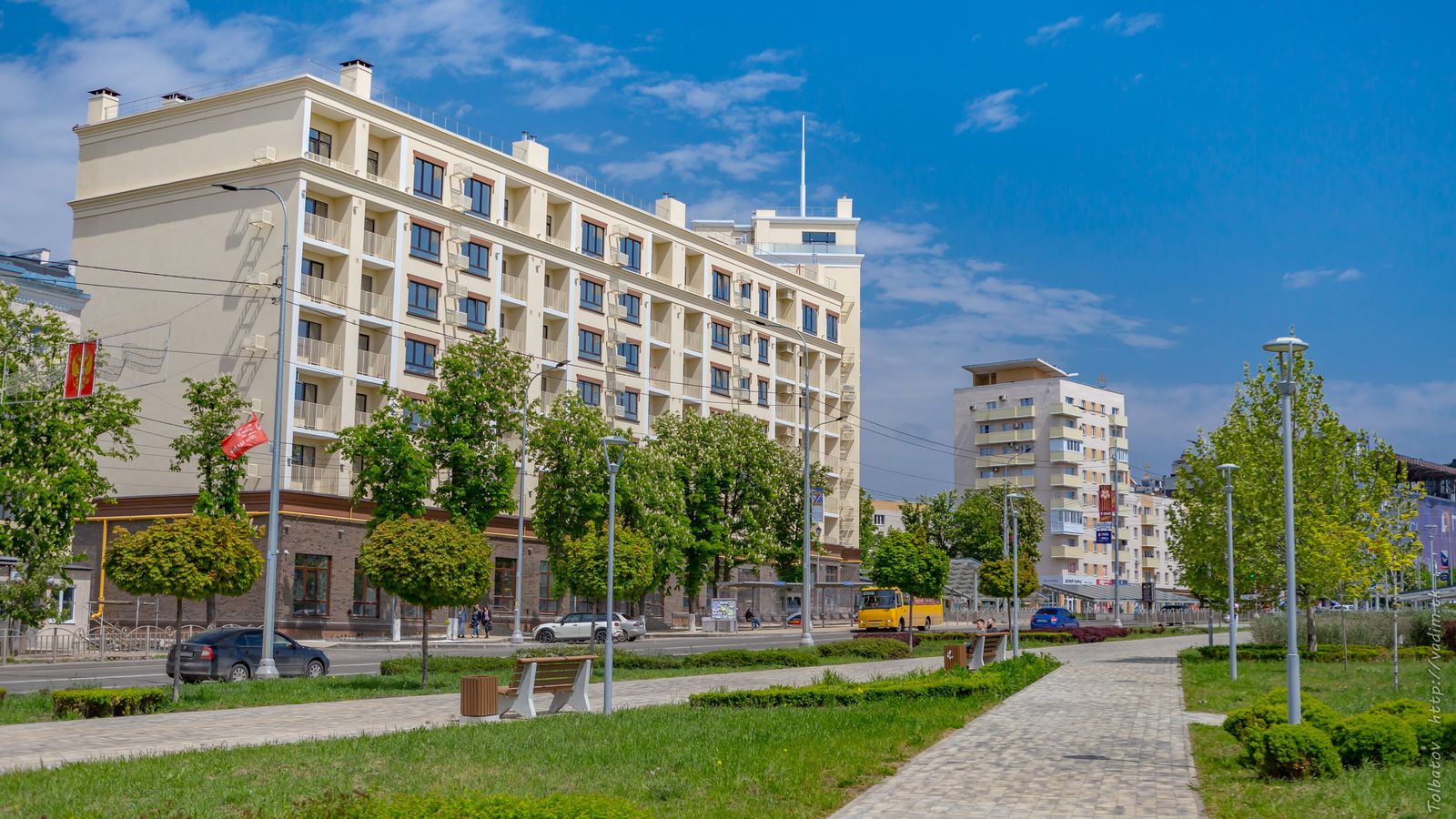
- Hero image source by Vadim Tolbatov / openverse, by-sa.