

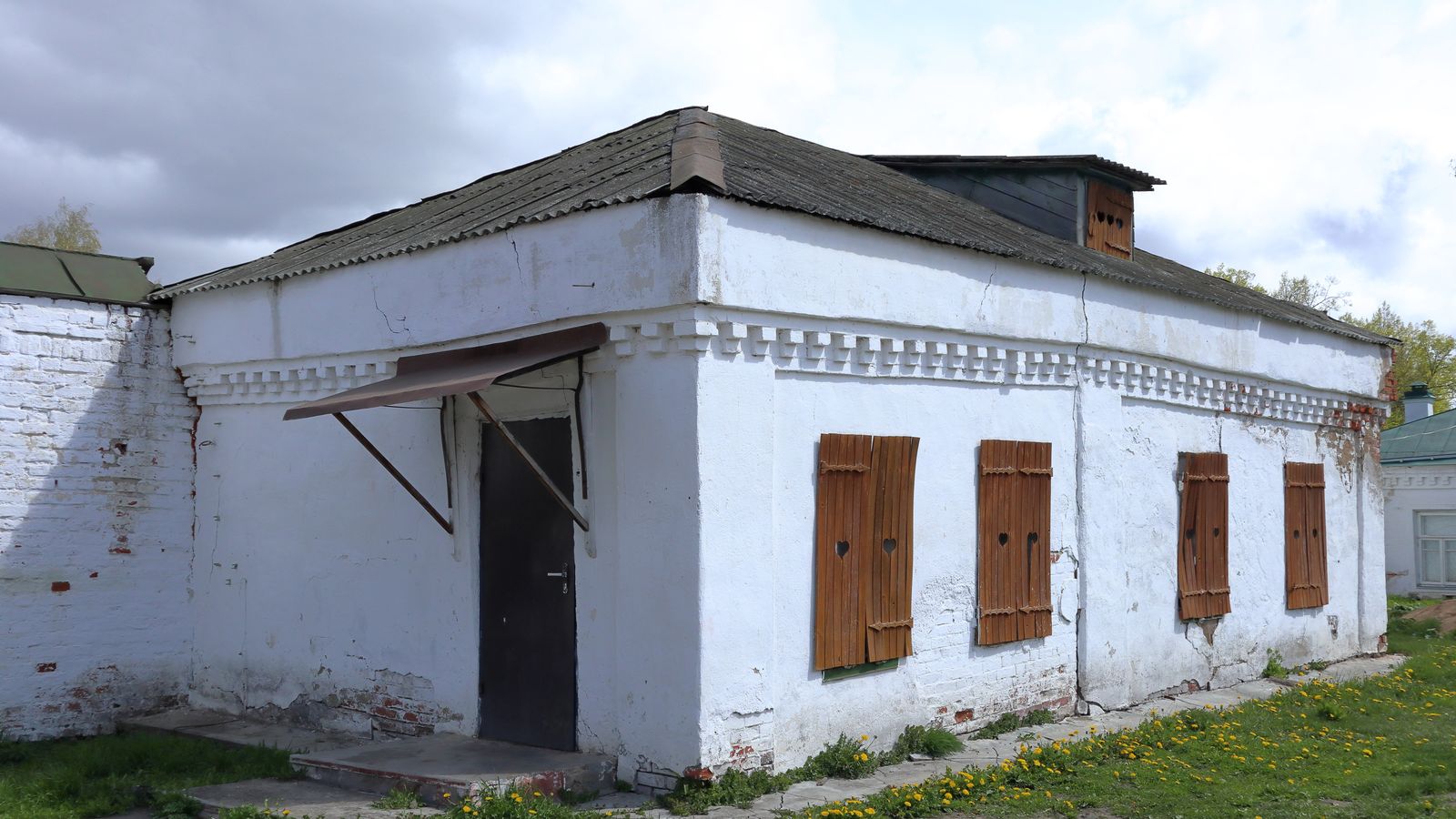
What’s the only thing worse than a life sentence in a maximum-security prison? That’s right, a life sentence in a Russian maximum-security prison. To be locked away inside a vault in the middle of the tundra, miles away from civilisation in one of the most dangerous nations in the world, it doesn’t bear thinking about.
And yet for a select few, this isn’t just a thought, but a reality. These places often represent no escape, no freedom and no hope. This is the story of one of those institutions. We’re going to show you the monsters who are held in this place. When we tell you what they’ve done, you’ll be glad they’re there for life.
This is a prison where the only thing worse than the frozen conditions outside are the inmates inside. Russia’s supermax prison. A modern-day gulag.
Key Takeaways
- Black Dolphin is a Russian maximum-security prison housing the worst criminals.
- The prison is designed for extreme control and isolation, with harsh conditions.
- Inmates at Black Dolphin have committed an average of five murders each.
- The prison’s name, Black Dolphin, symbolizes rare freedom, as escape is nearly impossible.
- Notorious inmates include serial killers and high-profile criminals like Said Amirov.
Black Dolphin.
What is “Black Dolphin”?
Russia in the 1990s and early 2000s was a hard place to live. Post-Soviet collapse and economic insecurity gripped the nation leading many to misery, alcoholism and a life of crime.
By that we don’t just mean stealing a loaf of bread to feed your children kind of crime; but vicious, brutal, violent crime. Between 1988 and 1994, the Russian homicide rate more than tripled. By 2003, the country had one of the highest murder rates in the world.
As such, Russia needed a place to put the worst of the worst and lock away the key. And they found their solution in the prison known as IK-6. Originally an 18th century prison colony for those sentenced to hard labour, in 2000, IK-6 was updated to house Russia’s violent criminal epidemic. Far away from the large cities in Western Russia, it was a suitable place to isolate criminals away.
Today, the facility is thought to house some 700 inmates in its maximum-security section – although given the secretive nature of Russia’s penal system, it’s hard to get accurate numbers. If we take the often-reported figure of 700 as true, though, that means they have collectively committed 3,500 murders - an average of five murders per inmate. Imagine having killed four people and being sent to a prison where that is considered “below par”.
Why the name ‘Black Dolphin’ though? It seems a strange thing to call a prison, especially one that’s situated in a landlocked region.
Well, Russian prisons being nicknamed after animals is a surprisingly common practice, just ask inmates at Polar Owl, White Swan, and Red Eagle prisons. But Black Dolphin’s name also comes from something you wouldn’t expect from a modern-day gulag, art. There is a sculpture just outside of the prison of, you guessed it, a black dolphin, made by the prisoners themselves, representing an interesting contrast.
Dolphins are often symbols of freedom and black ones are exceptionally rare. In a way, the name of the prison could be said to translate to “rare freedom”, which makes sense given that the only way to leave Black Dolphin is in a body bag.
Conditions at Black Dolphin
Black Dolphin is a pretty rough place to be sentenced. The concept of rehabilitating criminals so they can reintegrate back into society is absent, but considering the nature of their crimes, that may well be a good thing. From robberies, to murders, to various kinds of assault and even terrorism, this place houses the very worst Russia has to offer. As such, efforts are focussed on stopping anyone ever getting out.
We don’t know just how big in terms of size Black Dolphin is. Russian prisons are often shrouded in bureaucracy and state secrecy for security purposes, and because the prison has only very rarely been entered by journalists, attempts to estimate the true size of the colony is difficult. As a result, no concrete numbers appear online. So, we went on Google Maps to take a look for ourselves.
Whilst you can’t see much from the street view, we can gauge where the prison’s grounds start and end based on the lack of permanent businesses in this rectangular area. The only identifiable things that aren’t prisons between these four streets are a hospital and a dentist, in accordance with what prisoners are entitled to under Russian law. But a large amount of this area likely isn’t the prison itself, with residential buildings and the wall and barbed wire coming to an end along the Southern side.
Given that, we approximately measured everything inside the walls at around 40,000 square metres. That’s pretty spacious for just 700 inmates, but given there are lower security facilities on site for more than the 700 infamous ones held there permanently in a settlement style “open prison” system, size-wise it’s about average.
The perimeter has several walls and fences all topped with a generous amount of barbed wire, the tallest wall, according to one of the guards in a rare National Geographic feature inside the prison, is several times the height of an average human, any potential escapee would have a very difficult and sharp time in trying to scale them. Believe it or not, there is even a gift shop, a building just outside the entrance bears a sign saying “souvenirs” in Cyrillic. Well, that’s next Valentine’s Day sorted.
But it’s also the internal design and the policies of the maximum-security section that make it so secure. Cells are locked behind several separate sets of steel doors. Two inmates to a cell is standard, but more dangerous inmates get their own. For prisoners kept in the same cell, their interactions with each other are limited to stop escape attempts and the formation of partnerships.
The cells are often small and cramped and the “cage within a cage” structure ensures that if a prisoner did somehow breach the first layer, they would still be confined by the second.
The guards enforce a strict routine in the max-sec wing. Inmates are under 24-hour surveillance by security cameras and guards do their rounds every 15 minutes in order to ensure that prisoners are abiding by the rules. Such rules include no sitting or lying down on their beds, with inmates spending the majority of the day, around 16 hours, on their feet. Prisoners are allowed to exercise every day in a slightly larger cage but that is the only time they are allowed out of their cells on a regular basis.
There is no exercise equipment, just a steel and concrete pit for walking. And allowing the prisoners to exercise isn’t out of the goodness of the guard’s hearts mind you, as during this time, cells are thoroughly searched for contraband.
Every aspect of Black Dolphin and its policies are all about control. You might say “so what? That’s no different to any other maximum-security prison” and whilst that is true, Black Dolphin takes this to the extreme. The best example is how prisoners are transported.
Whenever an inmate is moved, several security protocols are implemented. Firstly, prisoners are blindfolded, so they can’t visually map the layout or spot avenues for escape, and it also allows them to be fully controlled by the guards as they can’t see where they’re going. Once handcuffed through the food slot in the cell door and blindfolded, the prisoner’s arms are raised behind them above their hips, forcing them to bend at the waist as they walk. Nothing is left to fate.
There is a precisely ZERO percent chance an inmate could turn being blindfolded, handcuffed and bent at the waist into an advantageous position.
And interactions with the guards cement this degree of control. When a prison officer makes a command towards an inmate, they must respond with the words “yes, sir”. Any other response leads to punishment. Some guards in the prison are dog handlers, their persistent barking at the prisoners is a common theme in the National Geographic documentary on Black Dolphin and likely acts as an “extra incentive” for inmates to behave themselves.
The prison is also designed to keep inmates inactive, unstimulated and tired. The walls are bare and prisoners are allowed very few amenities other than books, newspapers, religious texts, or a radio. The lights are always kept on even when the prisoners sleep for monitoring, reducing the quality of sleep.
They’re fed three or four times a day depending on which sources you read but what doesn’t change is the menu. Soup all year round. A cost-effective choice which gives just enough nourishment to keep them alive.
Prisoners are fed in their cells and monitored as they eat, with on average 5 murders per inmate, you wouldn’t even trust these guys with a spoon. There is a basic central heating system that is just enough to live in severe discomfort during wintertime where it can reach many degrees below freezing. Thin blankets on top of a thinner mattress are the sleeping arrangements, ensuring that prisoners very rarely have the energy to resist their confinement.
Even basic hygiene is controlled. Prisoners must groom themselves on a specific schedule. Inmates are only allowed electric shavers to groom themselves as regular blades are considered too dangerous, whilst soap and toilet paper are only provided in limited amounts.
Watch The Project Briefing
Open Video
Video Briefing
The Most Extreme Prison in Russia
Well-behaved inmates are sometimes afforded greater luxuries, like engaging in cleaning their cells or even small maintenance jobs, but nothing that could allow for the prisoners to escape. It’s also unclear whether the very limited few who are allowed to leave their cells are subjected to the same bent over, handcuffed and blindfolded routine as when prisoners are moved.
Prisoners who do break the rules could find themselves losing their limited privileges or even being placed in an isolation cell, where there is no bed whatsoever provided during the day (not that this makes much of a difference if you’re not even allowed to sit on the damn thing). However, there are also purportedly darker consequences for rule-breakers. The prison has attracted controversy over the years for the way in which prisoners are allegedly treated. Human rights campaigners have compared the prison to the Soviet era gulags in terms of the treatment and the conditions.
In Black Dolphin itself, the prison has been accused of attacking and beating prisoners who do not comply with the rules. Despite the lack of sharp objects they’re afforded, prisoners have been known to harm themselves in protest of their living conditions. It’s bold of the prisoners to assume that the Russian prison system would care about this however as due to the nature of their crimes, those serving sentences at Black Dolphin are barely considered human beings.
Lieutenant Denis Avsyuk, who oversees Black Dolphin, told National Geographic that the prison is full of “maniacs, paedophiles and terrorists” which to be fair is a perfectly apt description. When talking specifically about the prisoners Mr Avsyuk did not pull any punches, stating: “To call them people - it makes your tongue bend back just to say it. I have never felt any sympathy for them.”
At this point, you may be wondering if the Russian state hasn’t recently tried to put these inmates to good use – sending them to die on the battlefields of Ukraine. After all, Moscow has heavily recruited from prisons during the conflict, even going so far as to release multiple murderers.
As to whether any of them came from Black Dolphin, though, it’s impossible to say. We couldn’t find any information about fighters recruited from this specific prison – which probably makes sense, given its notoriety. What we have seen reported, is that according to Pravda, several members of Ukraine’s Azov Battalion – who became internationally famous defending the Azovstal Iron and Steel works during the siege of Mariupol – were sentenced to Black Dolphin after being captured.
The Inmates of Black Dolphin – A Cesspit of Depravity
So, that’s the prison itself, but what about the inmates? Who are the monsters here who committed crimes so terrible that Russia would lock them up and throw away the key? These are not the kinds of people you would be bringing home to your parents…largely because Black Dolphin doesn’t do visitors, but I digress.
Housed in Black Dolphin is Ramses Lobazanovich Gaichayev, a Chechen serial killer who committed mass murder among other depraved crimes. With the help of four accomplices, Gaichayev robbed, assaulted and killed at least 10 different people between 1997 and 1999, in two small settlements near the Georgian border. His and his accomplices’ crimes were so severe and alongside the fact all of their victims were ethnic Russians, that Russian prosecutors petitioned to have Gaichayev and his cronies tried for genocide, but it didn’t stick.
Gaichayev didn’t get off easy though as he was sentenced to death, but because of the Russian moratorium on the death penalty that came into place in 1996, it was never carried out. His sentence was automatically commuted to life and as far as we know, he is still in Black Dolphin today.
Andrei Fyodorovich Melyukh is a serial killer held at Black Dolphin known as The Brick Maniac. From 2000 to 2002 he killed ten people in a series of robberies and murders where he deliberately targeted the elderly by striking them in the head with a brick before stealing their belongings. On more than one occasion his victims survived the attacks but were unable to identify him, until a 75-year-old woman he attacked one day didn’t lose consciousness and was able to call for help. Melyukh was arrested later that day.
He tried to appeal his conviction but was denied and was still in Black Dolphin as of 2022, with no newer records since. Yeah, I think it was wise to keep a guy nicknamed “the brick maniac” in jail.
Don’t worry though, it gets worse. Kegashbek Shamshievich Orunbayev is a Kyrgyzstani-Russian serial killer, cannibal and necrophile. Orunbayev was convicted of murdering six women between 1991 and 2012 in two regions near the Kazakhstan and Mongolia borders respectively. Not much is known about his first murder but one of the following ones only landed him a measly eight years in prison.
He was released in 2006, but a year later in 2007 he would strangle a woman to death for rejecting his sexual advances while he was drunk. Orunbayev would confess that all six murders happened this way. He is also serving life in Black Dolphin.
Those are clearly some of the most brutal people to ever grace mother Russia, but what about the more well-known cases? Black Dolphin has several more high-profile criminals housed within. Said Dzhaparovich Amirov is a Russian economist, former politician and was the mayor of the Caucus city of Makhachkala from 1998 to 2013.
He is considered a terrorist by the Russian government, detained on suspicion of having ordered the murder of a Russian state investigator in 2011. Amirov wasn’t the most popular guy when in office, surviving as many as 15 attempts on his life. He was accused over the years by the Russian state of many crimes including being connected to organised crime, planning terrorist acts and commissioning contract killings, for which he was eventually sentenced to life at Black Dolphin in 2015.
Amirov maintains his innocence, claiming he became the victim in a political game.
However, the most famous prisoner at Black Dolphin may not currently be a prisoner there at all. And considering that for 99% of inmates the only way out of Black Dolphin is in a body bag, that makes it all the more impressive. I’m talking about Alexander Alexandrov, an Orenburg local who in 2016 was the first person to successfully escape the inescapable Black Dolphin, according to a report by RadioFreeEurope.
Well… sort of.
You see, the Russian penal system has a specific classification system for its prisoners. The first is the “settlement” classification where there are lighter detention conditions, prisoners must “clock in” at a settlement colony but can leave at certain times and even wear civilian clothes. This is a lot like the “open prisons” we have in the West where inmates are monitored but can come and go.
Alexandrov was likely in the “settlement” category, which would make sense considering he was originally only convicted of robbery, which while clearly bad, makes him look like Mother Theresa at Black Dolphin. On October 22nd 2016, Alexandrov was working at a cinder block production facility on the site of the colony, when he simply walked out and did not report back. This case is bizarre as Alexandrov was due to be released in only another 9 months in mid-2017.
There is no confirmed public information that he was ever caught. The authorities launched a large-scale manhunt to find him, but any follow-up on his whereabouts or recapture has gone largely unreported. One version of events suggests that he got an additional four years for his escape attempt, but this could not be corroborated. For all intents and purposes, he may well have gotten away with it and become the first person to escape Black Dolphin, quite the legacy for a lowly street criminal.
Conclusion
Overall, the story of Black Dolphin is one where its legacy only has gotten more notorious the longer it has existed. It’s hard to imagine that there is a prison built in the 1700s that is a worse place to be sentenced to today than when it was first used. It truly is a vault for Russia’s monsters. Despite Alexander’s infamous escape, nobody has really been able to escape from maximum-security section of the prison itself.
One thing is for sure though, Black Dolphin is a truly unique institution. And for those locked up there, every day is a fight for survival. Sink or swim.
Most sink.

Simon Whistler
Simon Whistler is one of YouTube's most prolific educational creators, with tens of millions of subscribers across his channels. Places is his expedition into the world's most remarkable locations — from cities carved from salt to islands nobody dares inhabit. He brings a researcher's rigour and a traveller's awe to every field note.
Frequently Asked Questions
What is the nickname of the Russian supermax prison?
The Russian supermax prison is nicknamed ‘Black Dolphin’.
How many inmates are thought to be housed in the maximum-security section of Black Dolphin?
The facility is thought to house some 700 inmates in its maximum-security section.
What is the average number of murders committed by each inmate at Black Dolphin?
If we take the often-reported figure of 700 inmates as true, that means they have collectively committed 3,500 murders - an average of five murders per inmate.
What is the significance of the name ‘Black Dolphin’?
The name ‘Black Dolphin’ comes from a sculpture of a black dolphin made by the prisoners themselves, symbolizing ‘rare freedom’.
What are the conditions like inside Black Dolphin?
Conditions at Black Dolphin are extremely harsh, with a focus on control and security. Inmates are under 24-hour surveillance, spend most of the day on their feet, and are fed soup all year round. The cells are small and cramped, and the prison is designed to keep inmates inactive and tired.
Who is Ramses Lobazanovich Gaichayev and why is he in Black Dolphin?
Ramses Lobazanovich Gaichayev is a Chechen serial killer who committed mass murder and other depraved crimes. He was sentenced to death, which was commuted to life in prison due to a moratorium on the death penalty.
What is the story of Alexander Alexandrov’s escape from Black Dolphin?
Alexander Alexandrov was the first person to successfully escape from Black Dolphin in 2016. He was working at a cinder block production facility when he walked out and did not report back. He was due to be released in only another 9 months.
What is the history of Black Dolphin prison?
Black Dolphin, originally known as IK-6, was an 18th-century prison colony for those sentenced to hard labor. In 2000, it was updated to house Russia’s violent criminal epidemic, isolating criminals far away from large cities in Western Russia.
What kind of crimes have the inmates of Black Dolphin committed?
The inmates of Black Dolphin have committed a range of severe crimes, including robberies, murders, assaults, terrorism, and even cannibalism and necrophilia.
What is the size of Black Dolphin prison?
The approximate size of Black Dolphin, based on Google Maps measurements, is around 40,000 square meters.
Sources
- Original Places video: The Most Extreme Prison in Russia
- Hero image source by Александр Сигачёв / openverse, by-sa.