

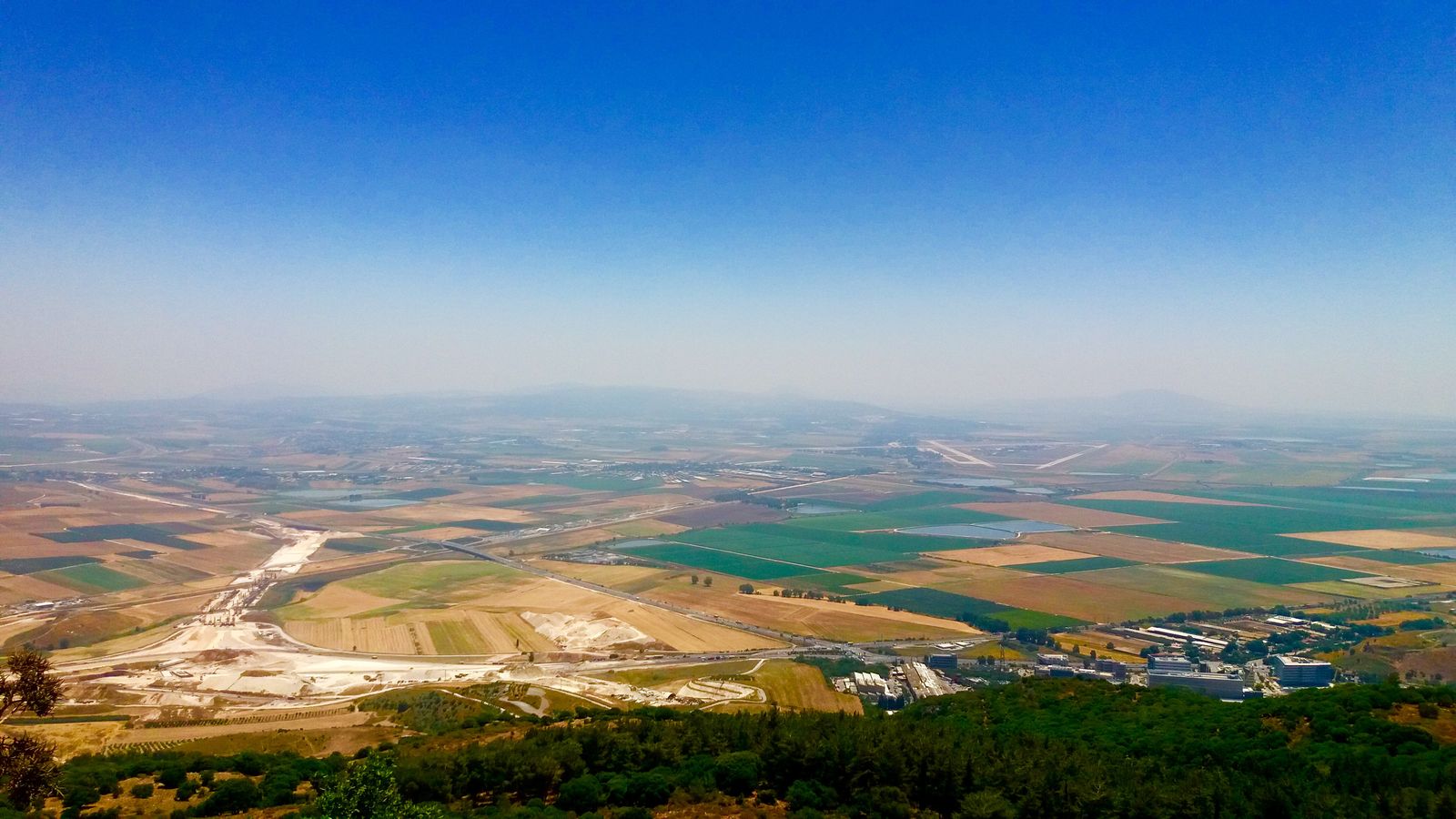
Imagine you are living in Soviet Russia in the 1960s. One day, you are summoned by your department supervisor to discuss an important matter. You brace for the worst, and you get the worst, when you are told in dry and unflinching terms: “Comrade, pack your bags. You are leaving for Siberia.”
In panic, your mind starts to race. Have you done something wrong? Why do you deserve this? It turns out, you are not being punished. This is a promotion.
You are heading to a city where you will have access to goods, amenities and luxuries which your fellow nationals elsewhere can only dream of. And a sweet salary to match that sweet life.
Key Takeaways
- Krasnoyarsk-26, now Zheleznogorsk, was a secret Soviet city built for nuclear weapons production.
- Residents of Krasnoyarsk-26 enjoyed high living standards but were heavily monitored and restricted.
- The Mining and Chemical Combine produced plutonium, causing significant radiation contamination in the Yenisei River.
- Shutting down the last plutonium reactor involved complex international negotiations and technical challenges.
- The city’s current operations focus on producing MOX fuel, aiming for a closed nuclear fuel cycle.
This is a special and exclusive location.
So special, in fact, no one ever heard, nor will hear about it.
So exclusive, it’s not even on the map.
And there are another couple of catches.
You will be constantly monitored by the military, the police and the KGB. Your freedom of movement will be severely curtailed. And you will have to work in a highly dangerous, poisonous, potentially lethal environment, as you contribute to the construction of devices which could bring about the end of the world.
Congratulations, you have been hired to work in Krasnoyarsk-26, Siberia’s secret nuclear city.
Citizens of ZATO
Our destination today is Krasnoyarsk-26, known since 1994 as Zheleznogorsk. It has also been known as “Soc City” or “PO-9”. It is located on the eastern bank of the Yenisei River, within the oblast, or administrative region, of Krasnoyarsk Krai, in central Siberia.
But before we reach your future workplace, my dear comrades, let me give you a briefing about Soviet secret cities.
Before the onset of WWII, or “Great Patriotic War”, the Soviet military-industrial complex funded the construction of new towns and cities entirely dedicated to the development of weapons. After Operation Barbarossa was unleashed in June 1941, the construction of these manufacturing towns accelerated, with new centres being founded East of Urals, beyond the reach of the Axis.
After the end of that very hot conflict, the onset of the Cold War pitched the opposing Western and Eastern Blocs in a perpetual nuclear arms race. Josef Stalin decided to resurrect the concept of purposefully built towns, creating dozens of centres of excellence dedicated to research and development of new armaments.
Some were designated as “Naukograds” — science towns — or “Akademgorodok” — academic cities. Others became known as “ZATOs” — a Russian acronym which can be translated as “closed administrative-territorial formations”.
In simpler terms, the ZATOs were secret cities, removed from all maps and guides, and kept out of bounds to all foreigners and most Soviet citizens. They didn’t even have a name, but were simply identified by a postal code, composed by the name of the Oblast, or administrative region, followed by a number.
For example: Krasnoyarsk-26!
The numbers theoretically indicated the distance in kilometres from the main administrative city of the oblast, but were often assigned at random, or changed at will, to further shed confusion about their whereabouts.
Some of you may think: “hang on! Surely the building contractors knew where these cities were located!”
I have to sadly inform you that Stalin’s public tender process did not exactly follow modern procurement practices. Except for one principle: give the contract to the lowest bidder. Which, in Stalin’s case, translated to slave labour, provided by the Gulag system.
Once these ZATOs were completed, they would be dedicated mainly to research, development and manufacturing in the fields of space exploration, military intelligence, and mostly, weapons of mass destruction.
Now, we should clarify that the Soviets were not the first to come up with this concept. Back in 1915, the British Government developed the townships of Eastriggs and Gretna, entirely dedicated to the production of cordite for ammunition — and completely secret!
Later, the US would adopt the same approach to house the personnel involved in the Manhattan Project.
Many Soviet ZATOs, in fact, were conceived along the model of the American “factory towns”, residential centres developed for, and occupied by, the personnel of a single employer. As such, Soviet secret cities came with their own schools, hospitals, power plants, restaurants, shops and other amenities, offering to their inhabitants — often in the tens of thousands — a standard of living considerably better than the one endured by the general population.
But you could say they lived in a gilded cage. The ZATOs were surrounded by fences, walls, and guard posts. The entry and exit to cities was regulated by armed personnel, and all inhabitants were under heavy surveillance of the Soviet security services, be it the NKVD or its successor the KGB.
As you may expect, even after the fall of the Soviet Union, it is still difficult to survey the exact number and location of these secret cities. I mean, the clue is in the name.
Nonetheless, one estimate places the number at 38, of which 17 are categorised as “gorsovets”, or larger centres with population above 20,000, which include both urban facilities and rural locations. The remaining 21 are “PGTs” or “Urban-Type Settlements”, which house fewer than 20,000 citizens and do not include rural areas.
It is now time to make a stop at our “gorsovet” of choice, Krasnoyarsk-26, and learn about its history.
Life of Luxury (and Plutonium)
Krasnoyarsk-26 was founded in 1950, following the blueprints drawn up by the Governmental Construction Design Institute-11 in Leningrad.
The orders for its construction were given directly by Josef Stalin and Lavrenti Beria, head of the feared security apparatus, the NKVD. In their plans, the secret town would house the staff to be employed at the Mining and Chemical Combine, or MCC, another planned facility to be built 10 km to the north of Krasnoyarsk-26.
A work force of 70,000 GULAG prisoners converged on the banks of the Yenisei. These enslaved labourers included political dissidents, farmers and prisoners of war from Germany, Poland, Greece, Bulgaria, Romania, Spain and Finland.
The essential infrastructure of the town was completed in 1954, but the prisoners continued to toil away at the construction of the town and the MCC plant until 1964. The work at MCC was particularly gruesome and back-breaking, as it involved digging out rock from inside a granite mountain.
It was the combined presence of the mountain and the river which convinced Stalin and Beria to select this location. You see, in spite of that boring and harmless title, “Mining Chemical Combine”, the plant was anything but: it was dedicated to the production of plutonium-239 to arm the Soviet Union’s nuclear arsenal.
The granite mountain would protect from enemy strikes the MCC, housed in tunnels and chambers excavated up to 250 metres beneath ground level. And the waters of the Yenisei would be used to cool the reactors generating the plutonium.
The first reactor, AD, was brought into operation on August 25th, 1958. Two more reactors, ADE-1 and ADE-2, were completed in 1961 and 1964 respectively. The first two are described as graphite-moderated reactors, cooled with light water canalised from the nearby river. The contaminated water was then piped back into the Yenisei. The third reactor was cooled via a closed-loop system, meaning that it did not discharge directly into the river.
The end product of the MCC was plutonium dioxide, which was then shipped to the chemical and metallurgical plants in two other “secret towns”, Chelyabinsk-65 and Tomsk-7. There, the plutonium dioxide was converted to metal, ready to be used in nuclear warheads. According to US estimates, the MCC originated more than 40 tons of weapons-grade plutonium, one-third of the total used by the Soviet military-industrial complex.
This process produced large amounts of radioactive waste, of course. The majority was transported to a storage site in Severny, some 55 km to the south west, close to the capital of the oblast. However, part of the waste was processed directly at MCC, and disposed of inside deep waste injection wells.
Reactors AD and ADE-1 were shut down in 1992, shortly after the collapse of the Soviet Union in December 1991. As per ADE-2, it’s a more complicated story, as we’ll learn later.
So, during the decades in which all reactors were in operation, the residents of Krasnoyarsk-26 went to work every day into the bowels of a granite mountain, handling highly radioactive isotopes. Sure, they worked hard but they were also awarded a standard of living which other Soviet citizens could only dream of.
Their town offered the best housing in the nation, the best clothes, the best food — even chocolate, a rare luxury!
Residents enjoyed 36 days of paid holidays per year — if they worked at ground level. Those who had to routinely descend below the mountain were given 48 days of leave. It is not clear whether the inhabitants of Krasnoyarsk-26 were allowed to routinely leave the confines of their “ZATO” during these periods of leave.
But even if they couldn’t, the town offered enough amenities and distractions to keep them well entertained. For example, the residential area of the secret city boasted an artificial lake with three beaches, and a movie theatre showing brand new Soviet films the day after they opened in Moscow.
Stream of Running Death
The USSR inevitably collapsed onto itself in December of 1991 and the ever present danger of the Cold War became a past memory. Weapons-grade plutonium was not so much in demand any longer, and the Mining and Chemical Combine at Krasnoyarsk-26 scaled down operations.
In 1992, reactors AD and ADE-1 were closed down. Two years later, the once secret town was revealed to the world, and renamed Zheleznogorsk. Then, in 1995, the Ministry of Defence of the Russian Federation cancelled its plutonium orders from MCC. The remaining reactor, ADE-2, was then reconverted into producing electricity for civilian use, essentially becoming the main source of power and heating for Zheleznogorsk.
Over the previous 36 years, the MCC plant had produced enough plutonium-dioxide to power more than 10,000 nuclear warheads.
Naturally, the scaling down of operations at MCC combined with the dissolution of the USSR, had a significant impact on the livelihood of the local citizens. The residents of Krasnoyarsk-26, now Zheleznogorsk, were no longer confined to a life of luxurious captivity, but this meant they were also stripped of their privileges. Wages were severely reduced, very often delayed. The previously state-of-the-art facilities went into a steep decline.
The remaining reactor at MCC itself could not be operated continuously, resulting in frequent power outages. The town was left without heating for extended periods of time — and we are talking about Siberia here!
The healthcare infrastructure was particularly hit hard by cuts in funding, with medical services limited to emergency surgery.
Watch The Project Briefing
Open Video
Video Briefing
Zheleznogorsk/Krasnoyarsk-26: Siberia’s Secret Nuclear City
Now, the availability of good healthcare service in such an area is kind of a key point. You may bury your nuclear reactors 250 metres beneath a granite mountain, and you can pump radioactive waste further underground … but if you use the nearby river as a cooling system, sooner or later radiation poisoning is going to leak out.
In 1990, the Soviet Union’s State Committee for Nature Protection set up a commission in charge of evaluating the effects of radiation due to plutonium on the inhabitants of the area. The commission reached the conclusion that the MCC had no major impact on health.
As you may expect, this is not exactly the case.
In the years following the commission’s report, many independent researchers have found evidence of contamination in and around Krasnoyarsk-26. More worryingly, they have found evidence of its consequences.
One of those researchers was Vladimir Mazharov, from the Institute of Complex Problems of Hygiene and Occupational Diseases, Russian Academy of Sciences.
Mazharov compared healthcare statistics from three districts closest to the MCC against a control group of areas elsewhere in the Krasnoyarsk oblast.
He also compared the incidence of disease in the population of the area, before and after 1958, when the facility started to produce plutonium.
Mazharov found that the mortality rate due to solid and haematological tumours for the area in the early 1950s was 88.9 per 100,000 people. After the MCC began its operations, the mortality rate increased to 134.4 per 100,000.
By comparison, the mortality rate in the control areas remained stable.
The increase in mortality rate was particularly staggering when it came to cases of breast cancer, soaring from 1.9 to 10.9 per 100,000 women. Besides breast cancer, it appears that radioactivity generated by the MCC was responsible for increased incidence in lung, thyroid, bone and skin cancers.
Mazharov also noted an increase in cases of complicated pregnancies and birth defects, mostly concentrated along the basin of the river Yenisei, downstream from Krasnoyarsk-26. This resulted in frequent genetic disorders and immunodeficiencies reported amongst the locals.
The researcher’s conclusion was that the effects of living downstream from the MCC plant were “clearly unfavourable”.
The increase in incidence of cancers is hardly a surprise, especially if you look at the research conducted by Irina Osokina, Chief of Endocrinology at the Institute for Medical Problems of the North, in Krasnoyarsk. Her 1996 studies demonstrated how plutonium contamination in the area surrounding the MCC was between 8 and 17 times higher than the contamination resulting from nuclear weapons tests.
Another researcher who has been focusing on the pernicious impact of MCC on the Yenisei river is Alexander Bolsunovsky, from the Krasnoyarsk Institute of Biophysics.
In the mid-to-late 1990s, Bolsunovsky carried out several fact-finding expeditions finding that the sands of the riverbed, the river islands and the floodplains by the banks were heavily contaminated with isotopes resulting from nuclear fissions, such as plutonium-239, cesium-137 and strontium-90.
Evidence of contamination was found in the two closest villages to Krasnoyarsk-26, Atamanovo and Bolshoi Balchug. Here, researchers from the Russian Academy of Sciences surveyed the presence of the radioactive isotope caesium-137. Its concentration was 1,000 times higher compared to the readings following the Chernobyl accident.
So, you would expect the villages closest to the MCC to be heavily exposed to contamination. But exposure to radioactive waste has transformed the nearby river into a “stream of running death” — to borrow a line from “Radioactive Toy”, by band Porcupine Tree. Dangerous amounts of radiation have been detected in Yeniseysk, a town of 22,000 inhabitants more than 300 km to the north of the MCC plant!
An island close to Yeniseysk, Gorodskoi, is particularly contaminated. According to Dr Vitaly Kovalenko, Regional Sanitary Centre of Krasnoyarsk, the soil on the small island emitted radiation levels of 48 becquerels per kilo. The standard radiation levels for the soil in the region are 0.3 becquerels per kilo.
But radioactive contamination travelling downstream did not stop at Gorodskoi, and was detected as far as 1,400 km away from the MCC. The Siberian Institute of Biophysics found radioactive particles in campsites along the riverbanks. Here, the institute’s experts estimated that a camper enjoying the great outdoors would absorb a year’s worth of radiation in just three hours!
Unsurprisingly, radioactive debris and particles have been detected also in the local flora and fauna.
In August 1998, the Washington Post visited the banks of the Yenisei, and found that most of the locals relied on fishing and foraging for their sustenance. And while they had been warned about the danger of radioactive poisoning, they had no choice but to continue fishing in the river, or collecting mushrooms near its banks.
Biophysicist Bolsunovsky also clarified how radiation poisoning had invaded the Yenisei basin. The most obvious explanation is that the plant cooled its reactors with water pumped from the river, which was then discharged back into the Yenisei. In addition to that, the MCC also bored deep holes into the ground, injecting into them millions of cubic metres of radioactive waste.
According to research published in 1996 by Donald J. Bradley, US Pacific Northwest National Laboratory, these injections released 1 billion curies of radioactivity into the Earth. In 1996, 450 million curies could still be detected.
To understand that level of radiation, Bradley used the Chernobyl disaster as comparison. The April 1986 accident released 5.8 million curies. In other words, the radioactivity in the caverns underneath the MCC is 172 times stronger than the one released at Chernobyl!
While the caverns should do a good job of containing it, Bolsunovsky argued that the radioactive waste may leak into nearby layers of coal, and from there make its way into the Yenisei.
The Last Reactor
The research findings on radiation poisoning and its impact on cancer rates were duly contested by MCC administration throughout the 1990s.
The Russian government, however, was well aware of the dangers of contamination.
And so was the US government.
You see, since the fall of the Soviet Union, both administrations had started cooperating on shutting down plutonium-producing plants.
What kept them awake at night was the ever lingering spectre of accidents in an ageing reactor. Or even worse: the possibility that some of the plutonium produced near Zheleznogorsk might be sold on the black market to terrorist groups or rogue governments.
This was a serious threat, as workers and technicians employed at the MCC plant were growing increasingly disgruntled, due to poor salaries and labour conditions.
By the end of 1992, the ADE-2 was only one of three plutonium-producing reactors still in function in Russia.
As mentioned earlier, just closing it down was not an option, as it powered all electricity and heating for the newly rebranded Zheleznogorsk.
The solution to the problem was to replace or convert the current reactor … but how?
In autumn of 1993, the first proposal came from Evgeny Velikhov, Director of the Kurchatov Institute of Atomic Energy. His plan was to replace the nuclear reactor with gas-turbine generators, which would be installed by an unnamed manufacturer of jet engines and GazProm, Russia’s national gas provider. The total cost for the operation would be relatively affordable, $25 million!
This plan was supported by physicist and government advisor, Prof Frank von Hippel, and later endorsed by US Vice President Al Gore, and Russian Prime Minister Viktor Chernomyrdin.
On June 23, 1994, the two leaders signed a formal agreement, calling for the ADE-2 reactor to be replaced by a non-plutonium based power source by the year 2000.
But all hopes of quickly resolving this issue were dashed by GazProm. Their offer to install a gas-turbine for $25 million morphed into a pitch to replace the MCC reactor with a coal-fired power plant. The estimated bill: $300 million!
The solution suddenly became too costly for both the American and Russian governments, and an alternative needed to be found.
Enter the US Pacific Northwest National Laboratory and the Russian Ministry of Atomic Energy. Their proposed option, “core conversion”, consisted of keeping the ADE-2 reactor. They would replace the type of fuel used instead.
Until that moment, the MCC reactor was fed with uranium. As a byproduct of the reaction, the plant produced highly radioactive plutonium isotope, which came with its host of problems, from contamination to potential reuse in “rogue” nuclear weapons. The new plan called for the uranium fuel to be replaced by enriched uranium dioxide, dispersed in a solid aluminium matrix.
The by-product and waste material resulting from this type of fuel would have been much more stable, safer, easier and cheaper to store.
And to make the revamped reactor even more secure, this plan also envisaged the installation of emergency cooling systems and a new reactor core design. This design included the use of erbium-167, a rare isotope with the even rarer property of absorbing neutrons, thus stabilising the reactor and preventing Chernobyl-style accidents.
The US government liked the proposal of the Pacific Northwest National Laboratory and their pals at the Russian Ministry of Atomic Energy. What they liked most was the price tag: $160 million in total to convert three reactors, including our “old friend” in Zheleznogorsk.
That’s $53 million a pop per reactor, of which Washington would be paying half of the bill.
After initial feasibility studies, in September 1997, Gore and Chernomyrdin formally signed a reactor-conversion agreement. At this stage, however, the plan was thrown off course by what Prof Hippel and energy policy analyst Prof Matthew Bunn described as “a particularly nasty turf war over whether the Department of Defense or Department of Energy should finance and control the conversion effort”.
The DoD eventually had the upper hand, but the whole tug-o-war delayed the project by one year, “a delay which seriously eroded the already difficult relationship between the US government and the Russian Ministry of Atomic Energy”.
Another point of friction was the choice of what type of enriched uranium dioxide should be used in the converted reactor. The Russian project managers preferred using weapons-grade uranium, as this was a tried-and-tested fuel.
Their US counterparts argued that one of the points of the entire project was to avoid the risk of using weapons-grade uranium in the first place! How about using low-enriched uranium, or LEU as an alternative?
The ongoing debate caused further delays, taking us to 1999. The Americans and the Russians reached a compromise, by which weapons-grade uranium would be used as fuel to begin with, but it would be replaced with LEU at a later stage.
By the end of the year, however, two major setbacks put the entire project in jeopardy. Following an economic crisis in August 1998, the Russian government had to admit that they could not foot half of the bill, as initially agreed.
In addition to that, the US Department of Defence and the Russian Ministry of Atomic Energy had to contend with a complex licensing snag. The design for the new converted reactor had to receive a safety licence from Russia’s State Atomic Inspectorate, or GAN.
But one of GAN’s officials, Alexander Dmitriev, raised some concerns about the capability of the erbium isotope to stabilise the reactor, therefore believing the new design to be unsafe.
It had been six years since the initial plan to replace the ADE-2 reactor, and all valiant efforts to reach a solution appeared to crash and burn. That’s when the Ministry of Atomic Energy surprised everybody by ditching their original idea for reactor conversion.
Their new pitch was to simply shut down ADE-2 and replace it with a coal-fired plant.
The US Government agreed in principle, but another year of delays followed, as the Department of Defence handed the project back over to the Department of Energy.
Actual work started only in May 2003, when the DoE awarded $466 million to their contractors Washington Group International and Raytheon Technical Services. If that price tag appears rather steep, it’s because it also included the shut down of the two reactors at Seversk. So, a bargain, really!
On April 15, 2010, the almost never-ending saga of the last remaining plutonium-producing reactors in Russia reached its natural conclusion. On that date, MCC spokesperson Yelena Golovinkina announced that the ADE-2 reactor “was shut down today at 0400 GMT … The closure of the ADE-2 reactor has major international significance. It is the last active military plutonium producer in the world”.
A Breakthrough?
At the time of writing, the Mining and Chemical Combine, MCC, is still in operation, although the facility does not directly generate energy any longer. As a subsidiary of Rosatom, Russia’s state nuclear authority, the plant focuses on producing fuel to be used by other facilities, such as the BN-800 fast neutron reactor, at the Beloyarsk nuclear power plant, Sverdlovsk district.
This more recent production line, located 200 metres underground, went into operation at the end of 2014 and is dedicated to generating so-called MOX fuel, a mixture of plutonium and uranium dioxides. The new line was built as part of Russia’s “Breakthrough initiative”, aimed at enabling a closed nuclear fuel cycle, which would ultimately eliminate the production of radioactive waste.
To put it in terms so simple that I can hear the nuclear physicists baying for blood: in a closed nuclear fuel cycle, radioactive waste can be recycled and reused as fuel itself, therefore eliminating the costs and risks associated with the storage and disposal of said waste.
The “Breakthrough” of the “Breakthrough initiative”, however, appears to be still distant in the future, at least as far as the operations in Zheleznogorsk are concerned.
As of November 2019, the MOX production lines at MCC were still producing liquid radioactive waste, which was then being piped and pumped underground at the Severny landfill, in Krasnoyarsk. Every year, the Combine would dispose of 35,000 cubic metres of low- and medium-level radioactive waste.
At the end of 2019, local environmentalist groups were concerned that the underground waste may migrate through soil and contaminate adjacent aquifers — a risk which may be augmented by seismic activity.
These concerns prompted the MCC to organise a technical tour of the Severny landfills, for the benefit of journalists and the public. The tour was joined by observers of the Bellona Foundation, a non-profit organisation dedicated to tackling environmental issues. Their conclusion was: “The impression we gained from the staff and of the landfill itself was very favourable”.
That reassuring note concludes our exploration of Krasnoyarsk-26, secret nuclear city and home to the last plutonium reactor in Russia, one of the last vestiges of the Cold War. We do hope that the MCC production lines and the Severny landfill will not be the source of further radiation poisoning in the future, and that seems to be the case.
We also have to acknowledge, however, that the situation may have evolved since the end of 2019, and if you have more up to date information, or a direct experience of visiting these locations, please feel free to share your knowledge.

Simon Whistler
Simon Whistler is one of YouTube's most prolific educational creators, with tens of millions of subscribers across his channels. Places is his expedition into the world's most remarkable locations — from cities carved from salt to islands nobody dares inhabit. He brings a researcher's rigour and a traveller's awe to every field note.
Frequently Asked Questions
What was the original name of Zheleznogorsk?
The original name of Zheleznogorsk was Krasnoyarsk-26.
When was Krasnoyarsk-26 founded?
Krasnoyarsk-26 was founded in 1950.
What was the primary purpose of the Mining and Chemical Combine (MCC) in Krasnoyarsk-26?
The primary purpose of the MCC was the production of plutonium-239 for the Soviet Union’s nuclear arsenal.
How many reactors were initially built at the MCC?
Three reactors were built at the MCC: AD, ADE-1, and ADE-2.
What was the impact of the MCC on the health of local residents?
Researchers found evidence of increased mortality rates due to cancers and birth defects among residents living near the MCC, particularly along the Yenisei River.
What was the ‘Breakthrough initiative’ mentioned in the article?
The ‘Breakthrough initiative’ aimed to enable a closed nuclear fuel cycle, recycling radioactive waste as fuel to eliminate the costs and risks associated with storage and disposal.
What was the significance of the shutdown of the ADE-2 reactor in 2010?
The shutdown of the ADE-2 reactor in 2010 marked the closure of the last active military plutonium producer in the world.
How did the residents of Krasnoyarsk-26 live compared to other Soviet citizens?
Residents of Krasnoyarsk-26 enjoyed a higher standard of living with access to better housing, food, and amenities, along with generous paid holidays, in exchange for working in a highly dangerous environment.
What were the environmental concerns related to the Severny landfill in Krasnoyarsk?
Environmental concerns included the potential migration of underground waste through soil, contaminating adjacent aquifers, and the risk of seismic activity exacerbating this issue.
What was the role of the Yenisei River in the operations of the MCC?
The Yenisei River was used to cool the reactors at the MCC, with contaminated water being discharged back into the river, leading to significant radioactive contamination downstream.
Sources
- Original Places video: Zheleznogorsk/Krasnoyarsk-26: Siberia’s Secret Nuclear City
- Hero image source by Saga1111 / openverse, by-sa.