

Have you ever stopped to think just how many dangerous things there are in the world? War, famine, illness and more all help remind us every day that our time on this earth is limited. But what about the deadly things we don’t regularly hear about? Creeping in from the sidelines, slowly over days, months and years until you barely even notice it at all.
Today we’re taking you away to a place that brings these lesser-known killers out of the shadows and into the light. Unfortunately, in this instance, that only makes them stronger. We’re talking of course about plants. But not just any old plants, a collection of plants so dangerous permission is required from the British government just to grow and house them.
Let’s take a look at how one slightly quirky aristocrat managed to build a national tourist attraction based on her two favourite things, nature and death.
Key Takeaways
- The Poison Garden at Alnwick Castle features plants so dangerous that special permission is required to grow them.
- The garden was created by the Duchess of Northumberland, who has a fascination with both nature and death.
- Many of the plants in the garden, such as the laburnum tree and European yew, are highly poisonous and can be fatal if ingested.
- The garden serves an educational purpose, teaching visitors about the dangers of poisonous plants and their potential medicinal uses.
- Despite its dangers, the Poison Garden has never had a fatality, with safety measures in place to protect visitors.
It’s a little slice of death in the middle of the English countryside, what’s not to like?
Alnwick Castle. The Poison Garden.
Origins of the Garden – A Duchess’s Dark Fantasy
The Duchess says people have always had a macabre fascination with death. But how did this garden full of poisonous and otherwise highly dangerous plants come to be? Well for that we need to thank the British extended royal family.
In 1995, Jane Percy became Duchess of Northumberland. At the time the land that has since become the Poison Garden was on the Alnwick Castle estate. It wasn’t being used for anything in particular.
It was a defunct forestry with rows of Christmas trees. So, the Duchess’s husband, the Duke of Northumberland and the very normally named Ralph George Algernon Percy asked her to do something with the area. The Duchess herself admits that the idea of the garden was at least born in part out of spite.
She is quoted as having said “I think he thought, ‘That will keep her quiet, she’ll just plant a few roses and that’ll be it’”. Little did the duke know that his potentially offhanded comment to keep his wife busy would spawn into a national tourist attraction.
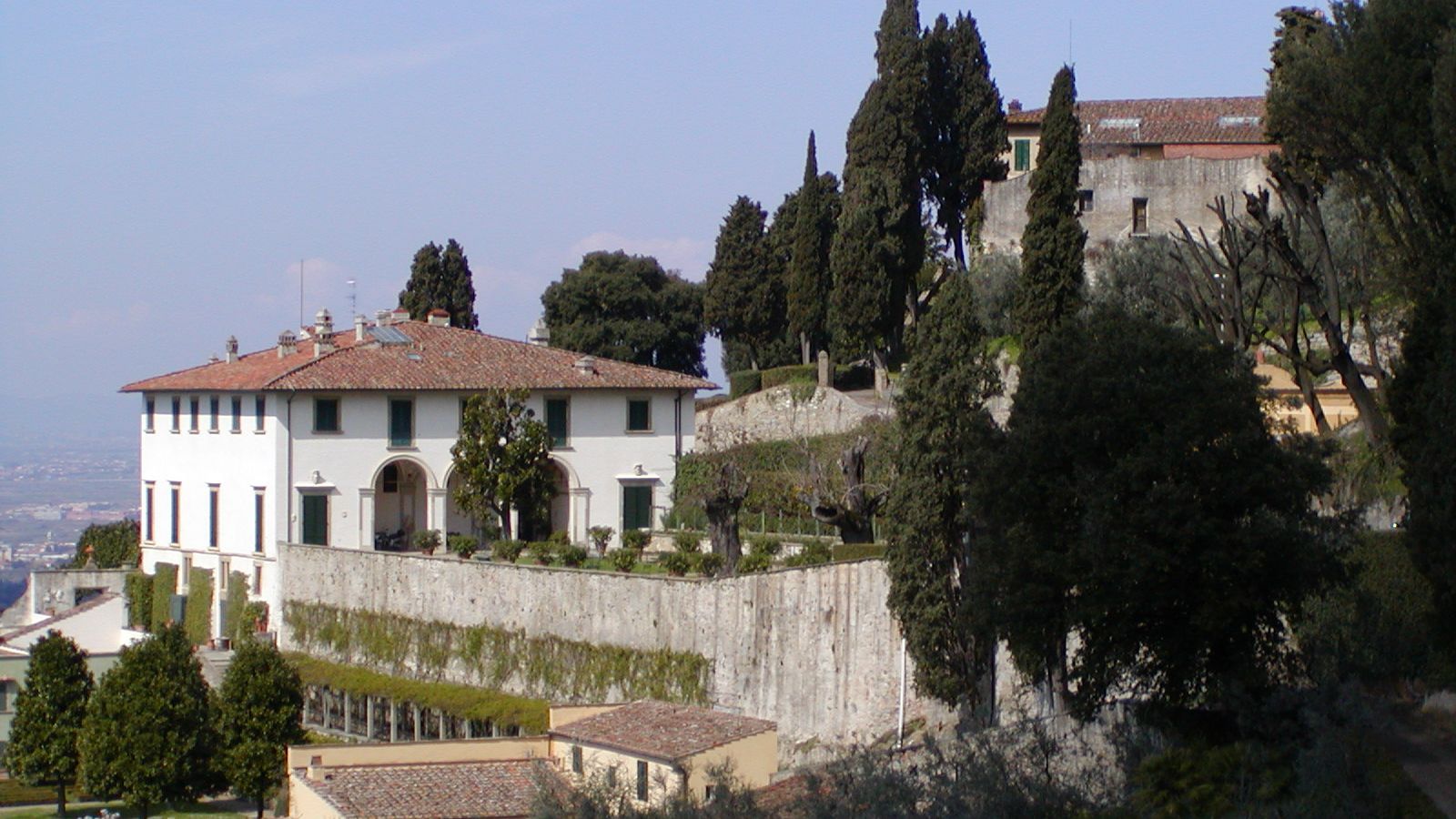
It is clear that there were several other influences on the Duchess that spawned the idea of the Poison Garden. For example, it’s very evident that the Duchess is very fond of nature. She had visited the world-renowned gardens at the Villa Medici in Tuscany, with its beautiful shades of green from a wide variety of different flowers and plants cascading across the Italian landscape with beautiful views of the rolling hills.
Perhaps she thought a similar garden, set in the idyllic English countryside could also draw people in from far and wide. It’s also very well known that another influence on the garden’s creation was the Duchess’s fascination with the dark, the deadly and the macabre. Another site she visited that purportedly inspired the creation of the Poison Garden was Soutra Aisle, the archaeological site of the largest hospital in medieval Scotland.
The thought of any medieval hospital without antibiotics or anaesthetics is enough to make a person’s skin crawl.
But evidently such thoughts fascinated the Duchess to such an extent that she wanted to make a garden that mixed her love of nature with her love of all things deadly. She hired Jacques Wirtz, landscape architect who had previously worked on the gardens at the French president’s residence and by 2005, she had dedicated “her life’s work” to the garden.
The Duchess regards her interest in deadly plants as normal, citing the use of “killing jars” used by children in Victorian times – jars containing laurel (a very common hedging plant) to kill spiders and butterflies while leaving the insect’s body intact. The Duchess is rightly undeterred by such comparisons. She’s been quoted as saying “most plants that kill are quite interesting” and “the story of how plants can cure, I find pretty boring, really.
Much better to know how a plant kills.” And to a degree she’s right. The Poison Garden is a truly different experience to every other garden you may ever find yourself in.
Who really cares that a natural form of aspirin comes from the bark of a willow tree? Nobody. But the focus on the more dangerous aspects of the garden is what draws in tourists from around the country.
The Duchess has even told the tour guides at the garden to focus on the “guts and gore” of the plants housed there. Even the front gate of the garden has a large skull and crossbones, stating “THESE PLANTS CAN KILL” in large enough letters that anybody unfortunate enough to accidentally touch one of the plants should really know better.
Even those who visit the garden today have a similar passion for deadly plants. The Smithsonian Institute interviewed a female tourist who was visiting about why she liked the garden and might have given the most British response to such an enquiry when she said “My fascination is how to murder your husband. Sorry Jim.”
The Plants – The Good, the Bad and the Deadly
The plants at the Poison Garden, as you can imagine, are strictly off-limits. Whilst you can look at them, touching and more is certainly not advisable. As you go through a tour of the garden the guides will tell you a bit about the plants, how the garden cultivates them and the other purposes they have such as medicinal research and education, as well as the more deadly side. 100% of the plants in this garden are poisonous, according to the head tour guide John Knox.
The plants run the gamut from minorly annoying plants like stinging nettles that only require gloves to tend to, all the way up to the deadliest plants that require hazmat suits and facemasks to even go near. The garden continues its yearly botanical research through its cultivation efforts, with the staff at the garden needing to destroy the plants at the end of their season every year for security purposes. You can’t just stick them in the communal compost heap, or some lunatic with a bad idea and a grudge is going to do something very stupid.
It’s important for them to be destroyed as most of the plants are easy to grow with regular sunlight and water. They are plants after all. They can grow in your garden.
In fact, many do. Alnwick Castle plays host to highly poisonous plants that can be found wildly or in people’s gardens throughout the UK. Many people are totally oblivious to the very real danger that could be right outside their window, which also is why the education element of the garden is crucial for those visiting.
Laburnum and Yew
Our first contestant is the laburnum tree, also known as the golden chain tree, so called because of its hanging yellow flowers. The BBC considers this the second most poisonous tree in the UK owing to the poison within it named cytisine. A tour guide named Dean Smith laid out just how dangerous this tree really is, quoting here: “The tree is so poisonous that if one of the branches was to fall to the floor, lay there for several months and the dog later comes along, picks it up to hold as a stick on a walk, chances are the dog won’t finish the walk.” Not to be outdone, the garden also has the most poisonous tree, the humble European yew, whose leaves are so poisonous that even eating a handful of them can be fatal for both humans and animals.
Rhododendron
There are also rhododendrons, that plant with flowers your mum likes but you can’t spell. A person is unlikely to actually successfully eat the leaves of one of these as according to reports they taste disgusting, but if you did, the grayanotoxane within them attacks your immune system. It can lead to nausea, vomiting, excessive salivation, sweating, a burning sensation in the mouth, dizziness and weakness. Eating rhododendron in larger quantities can also lead to low blood pressure, irregular heartbeat, blurred vision, diarrhoea, seizures, coma and death.
They are so poisonous, that if several rhododendrons grow near enough to each other, the soil becomes poisonous to the point that only rhododendrons can grow there. Bees who pollinate their rhododendrons make a honey that has hallucinogenic properties at low doses. It’s no joke.
Laurel
There’s also Prunus laurocerasus, also known as laurel. Its leaves contain cyanide ions and cyanide glycosides. Even touching these plants by themselves will not harm you, as long as you wash your hands afterwards. However, if parts of the plant are mashed together and broken down, say by a predator ingesting the plant…or an unsuspecting gardener pruning his bush…they mix together to form cyanide gas. In a well-ventilated area this might not be an issue, but in a greenhouse or the trunk of a car taking the hedge cuttings to the local tip, it can be exceedingly harmful. That’s one hell of an evolutionary feature.
Aconitum
One of the most poisonous subsets of plants on display at the garden are aconitum. The garden plays host to two kinds of aconitum, known as Monkshood and Wolfsbane. They contain the toxin aconitine which is very deadly even in small amounts and best of all they can be found across southern England and Europe. These plants, unlike some of the others discussed so far that are native to the UK, should not be touched under any circumstances, as the toxin can be absorbed through the skin.
In significant enough amounts this can lead to cardiovascular issues, muscle weakness, paralysis and death. This is why it’s always wise to look up a plant beforehand if you have any intention of interacting with it.
Rhubarb
Watch The Project Briefing
Open Video
Video Briefing
Alnwick Poison Garden: The Deadliest Plants in the World
Now whilst there is no other use for aconitum, there are other plants in the garden that many people cook and eat today. We spoke about stinging nettles of course which when boiled can make a nice soup, but another one you might find in your grandma’s vegetable patch is rhubarb. Now we all know the stems of rhubarb are both delicious and good for you, but what’s not so good for you are the leaves.
The leaves contain oxalic acid, which also happens to be the main ingredient in paint stripper. Fun sidenote, this is something that the British government in WW1 didn’t know so recommended that the general public replace cabbage with rhubarb leaves owing to supply chain issues caused by the global conflict.
Gympie-Gympie
They must also have some pretty exotic and mega-dangerous plants too, right? You know they do. And one that is on display at the Poison Garden you may know very well: the indigenous Australian and Indonesian Dendrocnide moroides, AKA, the gympie-gympie tree. Or its less funny moniker, the suicide plant. Now whilst it has an undoubtedly amusing name, this plant is no laughing matter. As well as being poisonous, it is venomous. It has tiny fine hairs on it called trichomes, that even with a minor glancing brush will implant themselves under your skin, break off and inject you with a highly potent venom. This venom is notorious for causing agonising pain for weeks and months, if not years if you are badly enough stung. Lead tour guide John Knox stated being stung by it is like being electrocuted and set on fire at the same time. The toxin the plant produces has a strong resemblance to scorpion venom and there are stories of animals like horses being stung by this plant hurling themselves off cliffs to their deaths, hence its nickname. It is so dangerous that even in the Poison Garden, where deadly plants are regularly left out in the breeze, it is kept in a glass case.
Castor Oil Plant and Ricin
Ok, so gympie-gympie might be severely painful, but it’s not necessarily deadly if you can handle the excruciating pain. What other poisons are there in the garden that are truly life-threatening? Well, here we actually come to one of the most lethal poisons of them all, and that is ricin, which actually comes from Ricinus communis, commonly known as castor oil plants. The castor beans contain seeds and these seeds contain ricin. It is considered one of the deadliest naturally occurring poisons in the world. If it finds its way into your body you are likely to experience nausea, vomiting, abdominal pain, diarrhoea, liver damage, kidney damage, spleen damage and severe or even total organ failure. What’s worse, there is no antidote for ricin poisoning, with medicinal treatment being purely supportive. Ricin makes the castor oil plant the most poisonous in the world according to the Guinness Book of World Records. It’s not hard to see why either, as a report by Cornell University suggests that one single milligram of ricin can kill a grown adult.
Tobacco
But even that is not the deadliest or most dangerous plant in the entirety of the Poison Garden. The true culprit to take that crown kills 78,000 people in the UK every year. With eight million global casualties. This hyper-dangerous super killer? It’s tobacco.
How Dangerous is The Poison Garden Really?
Now there is a question that I’m sure enters many people’s minds when they first hear about the Poison Garden. Just how dangerous is it? Well, that’s actually a more complicated question than you might originally think. Obviously, the plants are dangerous, there is no disputing that and there could be concern over how some of these plants are glorified and could go on to be used by those with bad intentions. Ricin has been used several times as a bio-weapon. In the UK in 1978 an umbrella tip was dipped in ricin and used to assassinate Bulgarian BBC journalist Georgi Markov in what must be the only assassination via umbrella ever recorded. Serial poisoner Graham Young used berries from the Atropa belladonna, known as “deadly nightshade”, to squeeze poison into tea intended for his sister and mother at the age of just 14. The plant is on display in the garden.
But in reality, those with a warped enough sense of reality who wish to poison others will find the means to do so regardless of the Poison Garden’s existence. In fact, one of the primary functions of the Poison Garden is to educate the general public on dangerous plants and research them to hopefully find real-world benefits for some of these killers. In fact, as the staff of the Poison Garden may tell you, many of the plants housed there have incredible medicinal qualities.
Take for example, the yew tree, that as we mentioned earlier is the most poisonous tree in the UK. The poison in the tree can kill you in just 20 minutes, but the tree also produces a substance called paclitaxel, or Taxol, that is used in breast cancer treatments. Similarly, hellebore which is also present in the garden was once given to children ground up in porridge to kill tapeworms.
Now if the dose was too high you certainly wouldn’t have a tapeworm problem anymore, you just also wouldn’t have a child anymore either. The head gardener at Alnwick Castle, Trevor Jones, even owes his life to one of the plants in it. Madagascar Periwinkle is a plant with five-petalled symmetrical flowers that are usually a vibrant white, pink or violet.
However, this plant isn’t just a pretty face, it’s also highly poisonous to humans and animals alike. Not only that, but the medicines derived from it are cancer-killers. Trevor had leukaemia; the drug used to save his life came from this plant.
Meaning that in a funny way, the Poison Garden has actually saved more human lives than it’s ended.
There’s also an important note to be made around education of these plants and how the general public can learn what certain plants do, why they may be controlled and why they’re so dangerous. Claire Mitchell, Alnwick Garden’s head of community and education, highlights the importance of the Duchess’ drug education programme to the local area. Northumberland is in the northeast of England and the North East has had the highest rate of drug poisoning deaths of any English region for over 10 years. As such, the garden’s “ABC of drugs” serves to educate the populace about narcotics. The “A” in the ABC, is opium poppies, a class A drug. Whilst there are many pharmaceutical uses for opium in medicines and painkillers, these substances are extremely addictive and can eventually lead to heroin overdose while chasing the dragon. A cannabis plant serves as the class B drug. It has psychoactive effects and makes you hungry. The class C narcotic is Catha edulis, or Khat, a plant native to East Africa and the Arabian Peninsula that serves as a mild stimulant when the leaves are chewed on. Narcotics like marijuana and coca plants, which the garden gains special permission to grow, are locked up in metal cages, under 24-hour surveillance by CCTV cameras.
These narcotic plants in Alnwick Garden serve as an excellent way for people to learn about narcotics in a controlled environment, to hear directly from experts the dangers of their use and how to treat them with the respect they deserve.
So we’ve learned about the plants themselves, their dangers and their medicinal qualities, but how dangerous is the garden itself? Do people simply visit, accidentally touch a plant they shouldn’t have, keel over and die on the spot? Well actually, no. As we mentioned earlier there has miraculously never been a fatality at the Poison Garden.
Safety briefings are provided before each tour and every tour has a maximum of 20 people in it at one time, ensuring guides are with visitors at all times. There are also people qualified in first aid on hand around the clock, whether they are the tour guides themselves or other members of staff.
Now it’s important to mention that whilst nobody has died at the Poison Garden yet, you do not want to be the unfortunate winner of that Darwin award. The garden is still very dangerous, as there are a number of fainting episodes on average each year. In a 2013 TikTok by head tour guide John Knox, he revealed that year had seen 130 fainting incidents, 11 episodes of projectile vomiting and two ambulances had to be called.
This place is called the Poison Garden for a reason. Knox was however keen to emphasise that this actually isn’t as bad as it sounds. 61,000 people had visited the garden by that point in the year, which made the chance of any of these things happening to you around 0.02%. But when it does happen, the staff are prepared and know what to do.
Another tour guide, Tom Pattison, stated in 2023 that when somebody does unfortunately faint, you get a little star put on your shoulder. Knox proudly mentions that a tour guide has yet to faint at the garden, at least as of 2013. Tour guide Tom Pattison actually showed that the garden had even gotten exponentially safer, with an article in October of 2023 only showing one singular fainting episode so far that year.
Pattison calls back to the Duchess’s dark sense of humour and fascination with death here to paradoxically point out that this may not actually be a good thing. He said that the Duchess actually wanted people to faint in the garden because it shocks people and makes them realise that you can’t mess around with these plants.
Odds and Ends – Poisonous Plants, Harry Potter and Nudity
There are several elements to the Poison Garden at Alnwick and its wider area that while having very little to do with the plants themselves are still interesting nonetheless. Alnwick Castle, upon whose grounds host the Poison Garden is famous in its own right. Alnwick Castle is actually a partial setting for everyone’s favourite wizarding school, Hogwarts. The castle appears in the 1st and 2nd Harry Potter films.
You know the scene where Harry and the gang learn to ride a broomstick? That was filmed on Alnwick Castle’s grounds. Another area was where Harry played Quidditch. It is also the setting where Harry and Ron crash Mrs.
Weasley’s car into the whomping willow. It’s equally ironic and interesting to see the castle be the setting for a dangerous fictional plant in the film whilst being the real life setting of actual dangerous plants. Things really do come full circle.
But what about if you’re not into all that wizard and magic stuff? What if you’re into experiencing the world more…naturally? Well, the Poison Garden even may have something for you too.
Whilst most of the time, the plants within the Poison Garden are so dangerous that they cannot be touched without gloves and sometimes even require hazmat suits to do any maintenance, for a lucky few, they can cast off these limitations. The Duchess hosts a nudist day for British Naturist Members where guests of the garden strip bare and take a tour of the garden, given by the Duchess herself who yes, also partakes in the activity. Now, highly poisonous, venomous and otherwise dangerous plants and…let’s just call them “things that dangle” do not go together in any way.
Any man openly willing to expose himself even in the same postcode as a gympie-gympie plant is more of a man than most.
But that’s it for the Poison Garden. It is truly a place that has something for everyone. If “everyone” means people who take delight in hanging around deadly plants. Alnwick Garden is truly in its own small way, a wonder of the world.
Nowhere else right in the heart of the beautiful British countryside can you find death so readily available to visit. Most dangerous places that bring a brush with death happen quickly, in extreme scenarios with high stakes. At Alnwick you can pay death a visit, stay a while and have a cup of tea. And is there anything quite as British as that?
Just be careful with the berries.

Simon Whistler
Simon Whistler is one of YouTube's most prolific educational creators, with tens of millions of subscribers across his channels. Places is his expedition into the world's most remarkable locations — from cities carved from salt to islands nobody dares inhabit. He brings a researcher's rigour and a traveller's awe to every field note.
Frequently Asked Questions
What is the Alnwick Poison Garden?
The Alnwick Poison Garden is a collection of highly dangerous and poisonous plants located on the Alnwick Castle estate in England. It was created by the Duchess of Northumberland and features plants that require special permission from the British government to grow and house.
How did the Alnwick Poison Garden come to be?
The garden was created by the Duchess of Northumberland, Jane Percy, after she became the Duchess in 1995. The land was previously a defunct forestry with rows of Christmas trees. The Duchess’s husband, the Duke of Northumberland, suggested she do something with the area, leading to the creation of the Poison Garden.
What inspired the Duchess to create the Poison Garden?
The Duchess was inspired by her love of nature and her fascination with the dark, deadly, and macabre. She visited various gardens and historical sites, including the villa Medici in Tuscany and Soutra Aisle in Scotland, which influenced her decision to create a garden that mixed her love of nature with her interest in deadly plants.
What types of plants are in the Alnwick Poison Garden?
The garden features a wide range of poisonous plants, including the laburnum tree, European yew, rhododendrons, laurel, aconitum (Monkshood and Wolfsbane), gympie-gympie tree, castor oil plant (ricin), and tobacco. All 100% of the plants in this garden are poisonous.
Is the Alnwick Poison Garden dangerous to visitors?
While the plants are dangerous, the garden has safety measures in place. Visitors are given safety briefings, tours are limited to 20 people, and there are qualified first aid personnel on hand. There have been fainting episodes and incidents of projectile vomiting, but no fatalities have been reported.
What is the purpose of the Alnwick Poison Garden?
The garden serves multiple purposes, including education, medicinal research, and public safety. It educates visitors about dangerous plants, their medicinal qualities, and the importance of handling them with care. The garden also conducts botanical research and destroys the plants at the end of each season for security purposes.
Are there any medicinal benefits to the plants in the Poison Garden?
Yes, many of the plants have medicinal qualities. For example, the yew tree produces paclitaxel, used in breast cancer treatments, and the Madagascar Periwinkle is used to treat leukemia. The garden also educates visitors about the medicinal uses of these plants.
What safety measures are in place at the Alnwick Poison Garden?
The garden provides safety briefings before each tour, limits tours to 20 people, and has qualified first aid personnel on hand. The plants are strictly off-limits to touching, and some require hazmat suits and facemasks for maintenance. The garden also destroys the plants at the end of each season for security purposes.
What is the most dangerous plant in the Alnwick Poison Garden?
The castor oil plant, which contains ricin, is considered one of the deadliest naturally occurring poisons in the world. Ricin can cause severe organ failure and death, and there is no antidote for ricin poisoning. The garden also features the gympie-gympie tree, known for its extremely painful stings.
What is the connection between the Alnwick Poison Garden and Harry Potter?
Alnwick Castle, where the Poison Garden is located, was used as a filming location for the first two Harry Potter movies. Scenes such as Harry and his friends learning to ride broomsticks and playing Quidditch were filmed on the castle’s grounds.
Sources
- Original Places video: Alnwick Poison Garden: The Deadliest Plants in the World
- Hero image source by Donata Mazzini / openverse, by-sa.