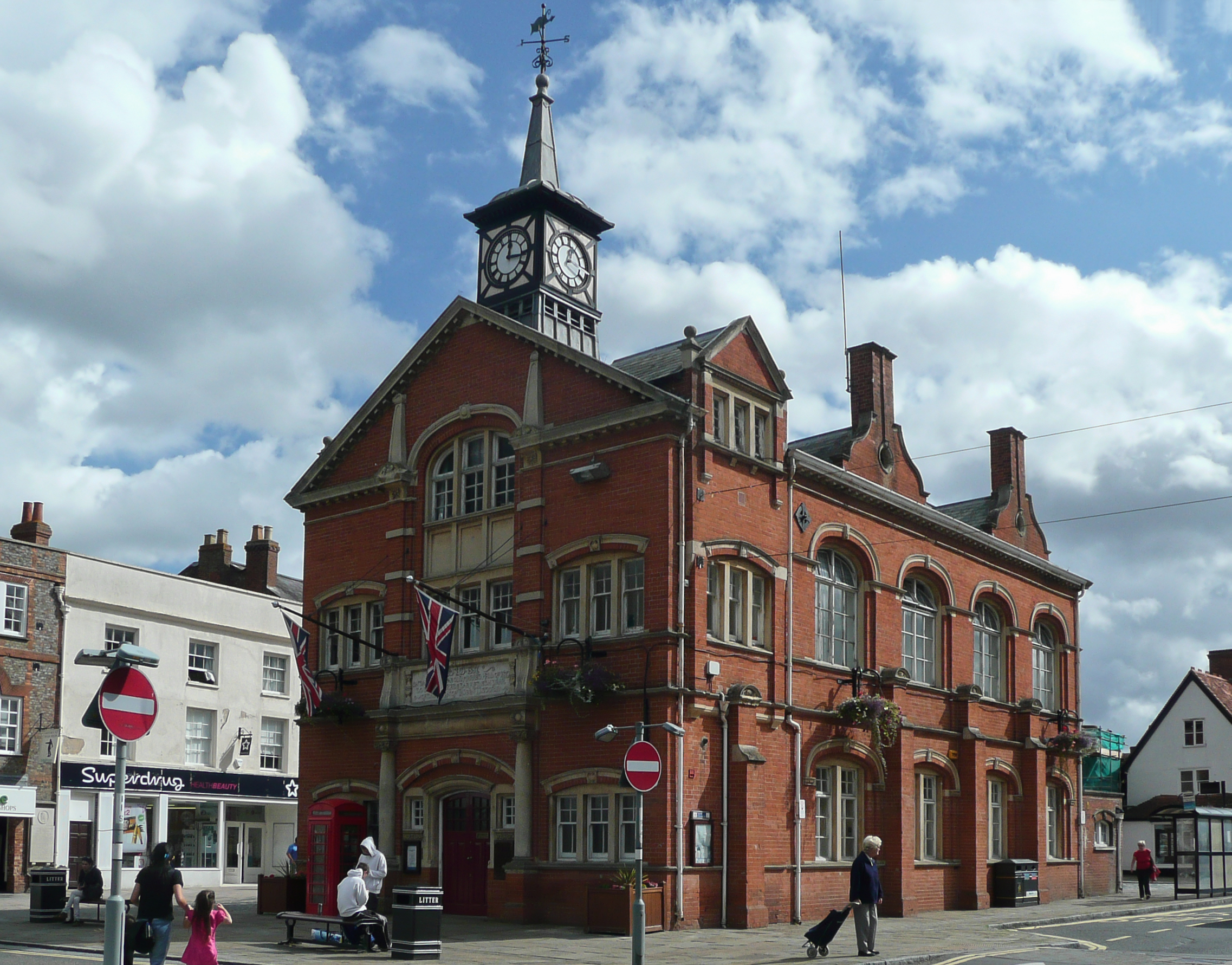

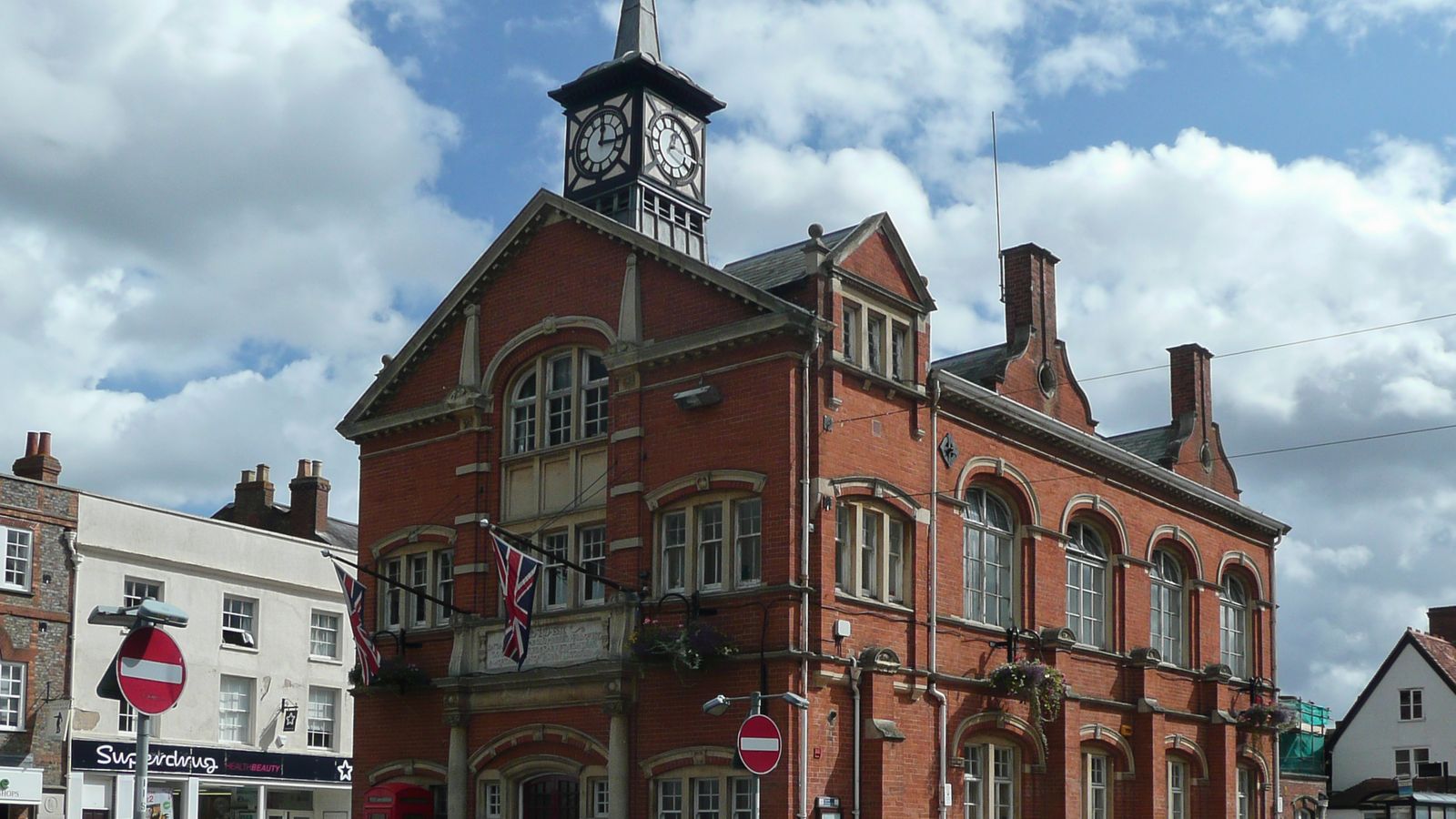
Million-dollar mansions decorated with marble floors, crystal chandeliers, and grand spiral staircases. Near Shanghai, an entire English market town complete with Tudor houses, Gothic churches, even those iconic red telephone booths. A couple hours away, there’s a 263-acre theme park designed to rival Disneyland Shanghai.
These are some of China’s most ambitious construction developments. They’re also completely empty.
Cattle now graze between the luxury mansions in Thames Town. Wedding photographers outnumber residents in the fake English village. Beijing has 20% of its housing stock sitting empty while tiny apartments cost a fortune. China has built 65 to 80 million vacant homes—enough to shelter the entire population of Germany—while millions struggle to find affordable housing.
Key Takeaways
- China has constructed 65 to 80 million vacant homes, enough to house Germany’s entire population.
- Local governments in China rely heavily on land sales for revenue, leading to excessive construction.
- The Chinese government’s focus on GDP growth incentivized officials to build regardless of demand.
- Many Chinese families are trapped in a broken system, paying mortgages on unfinished homes.
- The housing crisis in China highlights the dangers of prioritizing real estate speculation over actual housing needs.
But the numbers only tell part of the story. Behind these ghost cities are real people trapped in a broken system. Elvis Fan, a programmer in Guangzhou, risks losing his prospective marriage as he can’t afford a downpayment on an apartment. Chen from Zhengzhou has been paying a mortgage for a decade on a building that was never completed. Ms. Xu lives in an unfinished apartment with no running water, carrying bottles up flights of stairs daily because she sunk everything into this apartment.
This is what happens when real estate stops being about homes and becomes pure financial speculation. When government officials get promoted for hitting GDP targets regardless of whether anyone actually needs what they’re building. When an entire country mistakes construction for prosperity.
Journey Through the Phantom Cities
Our first stop on our tour through China’s most expensive mistakes is in the outskirts of Shenyang, where we have 260 European-style mansions—each one cost over $850,000 to build. Marble floors, crystal chandeliers, grand spiral staircases… the stuff of the rich and famous you see in movies.
But something’s not quite right here. Are those… cattle grazing between the mansions?
The deeper we go, the more surreal it becomes. Roads designed for Bentleys and Ferraris have been turned into vegetable patches by local farmers. The houses sit completely empty, many never even finished. Those that were have sheets of dust covering expensive leather furniture, imported from Italy, that no one has ever used.
Welcome to the State Guest Mansions—a $238 million luxury retreat built for China’s elite to escape from the congestion and hecticness that is so many of China’s largest cities. Construction began in 2010 but came to a halt less than two years later, leaving a quarter-billion dollar ghost town where cattle wander through what were supposed to be ornate gardens.
If this seems bizarre, we don’t blame you. But here in China, this is just the start of what truly has become the largest misallocation of capital in history.
Drive southeast, and you’ll arrive at Thames Town—a perfect replica of an English market town, complete with Tudor styled homes, cobblestone streets, Gothic churches, and even those iconic red telephone boxes. Statues of Winston Churchill and William Shakespeare stand guard over empty streets. The local fish and chips shop was modeled after the original in Lyme Regis. There’s even a replica of Bristol’s Christ Church.
Developers spent over $700 million creating this fantasy with details so perfect you’d forget you were in China.
Originally built for 10,000 residents, Thames Town is less than 25% occupied today. Its primary occupants? Wedding photographers, who have built quite a business for themselves: the town has become a hot spot destination for soon-to-be-married couples who want exotic photos without leaving the country.
Drive northeast to Tianjin, and you’ll see something even more audacious: the Yujiapu Financial District, a $30 billion attempt to make something of a Chinese Manhattan. Complete with skyscrapers that mimic New York’s most famous buildings and a high-speed rail station connecting the city to Beijing in under an hour, Yujiapu was ambitious to say the least.
The problem here is that the designers got ahead of themselves with the scale of the district—and just a little. Three quarters of office space sits empty. Construction has stopped on many buildings entirely, and many destination sites—such as their would-be enormous mall and IMAX theater—are closed, permanently.
But perhaps nothing captures the scale of this ambition and failure quite like Evergrande’s Cultural Tourism City. Sprawling across 263 acres in Jiangsu province, this wasn’t just a theme park—it was a vision of the future. The project was staggering in its scope: Evergrande wanted to rival Disneyland Shanghai, complete with elaborate rides, themed attractions, and fairy-tale castles that would draw millions of visitors annually. Or so they hoped.
This was just one of fifteen planned “Evergrande Fairyland” projects across the country, part of the company’s $67 billion tourism industry. Each was designed to serve a different region, creating a tourist attraction throughout lesser-visited parts of the country.
Except, like so much else throughout the country, this never materialized. Evergrande defaulted on over $300 billion in debt in 2021, construction stopped on all of their Fairyland projects throughout the country. Today, aerial footage shows the Cultural Tourism City being reclaimed by vegetation, completely abandoned.
These aren’t isolated failures. Across China, you can drive for hours through entire cities with little to no signs of life. We’re talking 65 to 80 million empty homes—this is enough to fit the entire population of many countries.
These phantom cities represent the most expensive mistakes in human history. Complete with water systems, power grids, and internet cables, all built to serve populations that never came. Fifty major developments sit in various stages of abandonment and ruin, monuments to ambition that simply outpaced reality.
How China Broke Housing
So. How does a country end up here? You don’t just wake up one day to find entire cities virtually empty with enough empty housing units to fit the entire population of Germany. This was a crisis decades in the making—the result of a system that broke itself through bad incentives, a relentless focus on growth at all costs, cultural factors that added fuel to the fire, and a government too hesitant to step in before it all went south.
The roots of China’s housing crisis stretch back to 1994, when Beijing implemented “tax sharing reform,” centralizing revenue collection in the capital at the expense of local governments. While much of this is redistributed according to where the central government believes it is best spent, this starved many local governments of much-needed revenue used for day to day operations such as schools, hospitals, and other basic services.
They needed new revenue sources, and fast. One alternative solution presented itself in the form of leasing land: all land in China is officially owned by the state, but it can be leased out to private developers for periods of time. What’s more, the local governments are the ones who do the leasing and keep 100% of the proceeds. This created a simple equation: the more land they sold, and the higher the price, the more money they made.
By the early 2000s, leasing land had become the backbone of local government revenue, accounting for an estimated 60 to 80 percent of their income. In order to maximize this cash flow, officials had strong incentives to drive up the value of the land that they were leasing out—often through large-scale infrastructure projects, regardless of their actual need. A plot of land with a mall and a school was inherently more valuable than an empty plot, even if nobody used it.
This is where the system really went off the rails. Chinese officials were evaluated primarily on economic growth they achieved in their jurisdictions, measured by Gross Domestic Product, almost to the exclusion of everything else including common sense. Miss your GDP targets, and you can kiss that promotion goodbye. Consistently underperform your peers, and you can pack your bags.
Construction became the solution for ambitious officials. Every road paved, every apartment building erected, every shopping mall built directly boosted GDP figures. Whether anyone would actually use these buildings was entirely beside the point—build it and they will come, they said.
In addition to the government’s direct infrastructure investments, Chinese economic policy further incentivized individuals and families to prioritize property above all else. While home ownership had long been a major source of importance in traditional society, the government’s strict capital controls and extremely low interest rate policies made alternative forms of investment difficult at best and unprofitable at worst. The domestic stock market, which is dominated by state-owned enterprises which prioritize political goals rather than returns for the shareholders, has barely kept pace with inflation. In an age of super-easy lending requirements and ultra-low interest rates, savings accounts returned almost nothing.
So, what was left? Property. It became the only viable option for Chinese citizens who wanted any real return on their money. By 2020, Chinese households had 70 percent of their wealth tied up in real estate.
Families didn’t just buy these to live in, either: they frequently were buying second and third properties, and held them long-term like stocks. There is a sharp drop off in value for houses and apartments that have already been lived in, which only exacerbated the issue: many of the units that served as investment vehicles weren’t rented out at all, as it was more lucrative for families long-term to let them sit empty.
This led to staggering vacancy rates. In Beijing, China’s most expensive city, almost 20% of the housing stock sits empty.
In fairness to the government—which nevertheless still retains the lion share of the burden for this crisis by allowing it to escalate to this level—there were other, more deeply-rooted factors at play, too. In Chinese culture, property ownership is seen as nothing short of a prerequisite for marriage. Men frequently need to “win permission” from their would-be-bride’s parents for permission to go through with the marriage, which often centers around the expectation of homeownership.
Making this factor even more crucial—and further extending the property-driven madness—is the demographic crisis that’s been the result of China’s one-child policy. Given the relatively widespread traditional preference for a family to have a son to carry on their lineage—especially if they can have only one child—many used ultrasounds to determine their unborn child’s sex, with abortion being widespread if it was a girl.
The scale of this gender selection was massive: demographers estimate that between 1980 and 2010, approximately 23 million girls were “missing” from China’s population due to sex-selective abortions—as well as female infanticide. China now has roughly 30 to 40 million more men than women. For millions of Chinese men, particularly in rural areas, the math simply means they will never find a wife.
For those who throw their hat in the ring of this skewed marriage market, it further ramps up the expectations for getting married. Families have begun regularly going into debt to help their sons buy an apartment, knowing that without property ownership, finding a spouse would be next to impossible.
Elvis Fan, a 27 year old programmer in Guangzhou, learned this firsthand. He and his long-time girlfriend wanted to get married, but her parents made it clear that he would have to have property of his own to win their blessing. Unfortunately, his salary was not enough to afford a downpayment, even in the relatively cheaper areas around him.
Faced with this daunting math, he turned to his parents. They would have to sell their own apartment to support their son’s prospects. “I once thought about giving up my relationship with my girlfriend,” he admitted. “But I feel that if I give up, I would feel as if I had given up on my goal.”
The situation is much worse in rural areas. Yiguo Jin lives in a rural village of less than 300 people, where 68 of them are bachelors. Unlike Elvis, he can’t turn to his parents for financial support, and his lack of higher education offers little prospect of leaving his farming village. At 33, he has resigned himself to never marrying.
Watch The Project Briefing
Open Video
Video Briefing
China's Rotting Mansion Cities.
In a society where marriage and homeownership are so deeply intertwined, this gender imbalance has intensified the already extreme pressure on families to purchase property. The result? China’s property market isn’t just driven by investment speculation—it’s fueled by demographic desperation.
By 2010, the government had created a monster it couldn’t control. Real estate and related industries contributed to 25 to 30 percent of China’s GDP. Construction employed tens of millions of workers. Steel, cement, and other building materials became China’s largest industrial sectors. Between 2011 and 2013, China consumed more concrete than the United States did during the entire 20th century.
Trapped in a Broken System
Looking at economic figures and eerie ghost cities, it’s easy to forget that this isn’t some academic exercise. Behind every failed development is a real person or family. We’re not being hyperbolic when we say this has literally destroyed lives.
Take Chen, a man in his mid-30s from Zhengzhou. In 2015, he did what millions of young Chinese do: he scraped together enough money for a down payment on an apartment. His entire life savings, combined with money from his parents, all went toward his future home.
A decade on, Chen is still waiting. His apartment exists only on paper—the developer took his money through China’s widespread presale system, began construction, only to run out of cash and walked away. Chen has been trapped in something few can imagine: paying a mortgage, with interest, on a building that doesn’t exist.
“I’m already dead in a social sense,” he told reporters a few years ago. “My life is destroyed.” Without property ownership, Chen puts his chances of getting married and starting a family at almost zero. At 35, he has watched his friends and colleagues move on with their lives while he remains frozen, legally bound to a phantom apartment.
Chen isn’t alone—far from it. An estimated 20 million people across China are paying mortgages on unfinished homes. In Shijiazhuang, a 38 year old woman lost $350,000—her family’s entire financial future—on two presold Evergrande apartments that were never completed.
And then there’s cases like Ms. Xu, who has moved into her unfinished apartment because she lacked any alternative. At 55, she’s hardly living how many would aspire their early retirement years to look like: holes where electric sockets should be, no gas or running water. Every day, she has to bring large bottles down multiple flights of stairs to fetch water for her house from a hose outside the building, only to lug them back up the same stairs.
“All the family’s savings were invested in this house,” she told the media. She lives in the building with about 20 others, who collectively share a makeshift toilet outdoors. She had originally purchased the apartment for her son, with the hope that it would allow him to start a family.
When Evergrande, the now infamous property developer that was the first of its size to go belly-up in 2021, it revealed the true scale of China’s housing fraud. The company had liabilities exceeding $300 billion—larger than the GDP of many countries. But the numbers tell only part of the story.
Evergrande alone left over 800,000 pre sold homes unfinished. Eight hundred thousand families had paid deposits they had worked their entire lives to save up and, in many cases, borrowed from family to put together. These were not whimsical purchases, but likely the biggest purchase they would make in their life.
With this pre sold house system, the company operated essentially as a Ponzi scheme disguised as real estate: sell apartments before building them, use those deposits to fund other projects, then sell more apartments to make up the difference. This system worked perfectly fine—so long as property prices kept rising, so long as new buyers kept lining up, and so long as interest rates remained low.
When all these stopped, the scheme collapsed in a way that makes the 2008 U.S. housing crisis look tame by comparison. Some families, out of options, have moved into unfinished buildings. After years of exposure to the elements, many interiors have begun to rot. Others continue paying their mortgages for homes that may never be completed.
Perhaps the most unusual aspect of all this, as well the cruelest twist for those caught up in it, is that China has built millions of surplus homes they cannot fill, while many are locked out of a home altogether. They suffer the most unique combination of simultaneous over-saturation and underproduction that we at Places have ever seen.
This paradox exists because of China’s unique circumstances. When someone owns an empty apartment in Beijing, which they hold as an investment vehicle that they refuse to rent out, they have no incentive to sell—prices have taken a nosedive in recent years. Selling would lock in those losses, prevent any future recovery, and leave them with cash—something very difficult to get a return on.
Meanwhile, there are entire cities only 10-20% occupied where apartments would be cheaper for young professionals. But what good is a cheaper apartment halfway across the country, when your job is in Beijing or Shanghai?
This is a geographic mismatch of epic proportions that traps everyone. Young professionals spend upwards of 60 percent, sometimes even 80 percent of their income renting tiny apartments in major cities, often sharing single rooms. It hasn’t quite reached the level of “coffin apartments” that has plagued Hong Kong—spaces barely larger than a bed—but the trend is moving in that direction. Meanwhile, luxury towers stand kilometers away, their units empty, mocking those looking on.
Even the developers who built these phantom cities find themselves with few options. They can’t slash prices too dramatically without triggering bankruptcy. Land costs, construction loans, and overhead expenses that racked up over the years are simply too high.
For those watching wondering why anyone should shed tears for these companies—well, you’re right. We shouldn’t. But we also have to be clear-eyed about the ramifications of the fallout from more developer bankruptcies. Remember our friend Chen, who had put his life savings into an apartment and is still waiting ten years on? That’s the fallout from that—it’s not good for anyone.
This whole scandal has broken a core pillar of the Chinese social contract. Families who thought they were securing their children’s future by helping them buy their first home put it all on the table and walked away with nothing. Social mobility—which had become a core promise of China’s economic miracle—has become an illusion for millions trapped in this broken system.
Fighting a Losing Battle
Faced with the largest housing crisis in modern history, the Chinese government could ignore the problem no longer by 2021. Gone are the days of unrestricted GDP growth at all costs, where construction was the only thing that mattered. Over the last several years, Beijing has steadily been upping its game on this issue. But, many fear that this is simply too little, too late. And on some level, their strategy still centers on the idea that they can build their way out of this mess.
When China’s housing market began its spectacular collapse back in 2021, Beijing severely underestimated the scale of the problems at hand and believed it could be addressed through containment of the worst-performing companies. They rolled out limited, targeted support for completing pre sold homes, a few interest rates cuts, and quiet efforts to keep panic from spreading.
This wasn’t enough. After Evergrande, Country Garden—China’s largest developer—started showing signs of distress within eighteen months. Other major players weren’t immune, either—with many having their credit ratings downgraded, making future borrowing even more expensive. Things spiraled when mortgage boycotts spread as families refused to pay for apartments that might never be completed. Local government revenues plummeted as land sales dried up, and construction employment took a downturn.
By May 2024, Beijing realized a gradualist approach wasn’t going to cut it. This had transformed from a localized failure to economic DEFCON-1. They unveiled what state media called a “historic” rescue measure: $42 billion in central bank funding for a broad range of state-owned enterprises to buy unsold homes and convert them into affordable housing, slashed mortgage requirements—because how could that come back to bite anyone? —and authorized local governments to purchase properties.
To their credit, there is a certain logic to this approach: they will help clear the inventory backlog, restart the property market, remove barriers to homebuying to incentivize buying, and use resources to prevent a collapse of the enormous construction industry throughout the country.
But their numbers aren’t in their favor, and it seems all but certain that they are continuing to underestimate the scale of the crisis. Goldman Sachs estimates that returning China’s housing inventory to just 2018 levels would require 7.7 trillion yuan—assuming a fifty percent discount on current market prices. That’s roughly 25 times the size of Beijing’s current plan. Even just completing homes that developers have already pre sold would require $553 billion—more than ten times the current funding they’ve allocated to the problem.
Chinese officials face genuine constraints here. Local governments remain heavily dependent on land sales for 60-80% of their revenue. They’re less than eager to go in with large-scale bailouts of private developers, wanting to avoid a moral hazard of rewarding them for taking on more than they can handle. At the same time, they’re worried about allowing the sector to collapse, given the social upheaval that would cause.
There have been a few bright spots. Zhengdong New Area, which had once been labeled a ghost city, has grown to over a million people after iPhone manufacturing factories moved into the area. The economic activity brought life to a city that for years had consisted of empty buildings and vacant streets.
Most cities won’t be so lucky. Drive through the city of Kangbashi today, and you’ll see it slowly coming to life—but only because the government forcibly relocated top-tier schools there, forcing students, staff, and professors to move. The population has grown from 30,000 to 126,000, but this is still far short of the one million originally planned.
This forced relocation strategy represents Beijing’s most direct intervention in the host city problem. By moving essential services—schools, hospitals, and government offices—authorities can literally force people to populate the empty developments. It’s urban planning on steroids. “Build it and they will come” has begun to transform into “build it and make them come.”
The ornate examples from earlier in our tour have not had any of these successes—they are too small to relocate a school; too expensive to buy for everyday citizens as affordable housing. Thames Town near Shanghai remains a wedding photo destination where couples visit for shoots—and then leave. Almost nobody actually lives there. The State Guest Mansions in Shenyang tell a similar story.
China’s demographic reality paints a bleak future. With population and birth rates declining due to the long-enforced one-child policy, it’s difficult to imagine ghost cities transforming into anything meaningful. They’ll stand there, slowly crumbling, a testament to an era when China believed it could build its way out of just about anything.
Something less discussed is the maintenance of these buildings, towns, and cities. Maintenance on inhabited buildings is bad enough as is, but empty ones? Astronomical. If the heat breaks in the winter of an inhabited building, people know about it immediately. But in these abandoned towers? It might go for weeks or even months, until a pipe freezes and breaks, flooding the whole thing.
The lack of attention paid to these issues by the ghost inhabitants cause homes and buildings to decay much faster than if someone was actually living or working there. The construction quality makes the problem even worse, with cheap materials widely used and the average building designed to last only 30 to 35 years.
It should come as little surprise that ghost cities are slowly decaying into modern ruins. So-called rotten-tail buildings, as they’re known in Chinese, can be found all throughout the ghost cities. China built the most expensive mistake in human history. Now, it’s watching that mistake slowly crumble, one empty building at a time, while millions of families who desperately need housing remain trapped.
Conclusion
We’ve taken a journey through China’s most expensive mistakes. We’ve walked the cobblestone streets of Thames Town, seen the cattle grazing between quarter-billion dollar villas in the State Guest Mansions. We’ve met families paying mortgages on buildings that don’t exist and others living in unfinished apartments without running water.
These ghost cities reveal something crucial about the nature of housing: when homes become purely financial instruments, disconnected from the basic human need for shelter, the results are tragic.
They also expose what happens when governments create harmful incentive structures, both for the private sector and the public. Local officials here weren’t rogue actors going against the system—they were doing exactly what the system had trained them and rewarded them to do. Beijing rewarded GDP growth above all else, so officials became excellent at delivering precisely that. They responded rationally to irrational incentives, and the result was a landscape of perfectly built, completely empty cities.
The human cost is staggering. In addition to the few stories we were able to touch upon, there are millions more whose struggles we can only imagine. In Beijing tonight, young Chinese citizens trying to get their life going spend 80 percent of their income on tiny rooms, while luxury towers sit empty nearby. Across the country, there are hundreds of thousands more cases like Chen, who sunk everything he had into a house that might never be built.
In many rural villages, countless men have given up trying to find a partner given that mathematically it just isn’t possible for many men.
China created an incredible system where families are simultaneously suffering from housing shortages and surpluses, where ghost cities crumble while millions can’t afford homes, where the country that used more concrete in three years than America used all of last century managed to build everything except what people actually needed.
The most expensive lesson in modern economic history may be the simplest: homes must first and foremost be for living, not speculation. Those who ignore this basic truth do so at great peril.
China’s crisis also serves as a stark warning for the rest of the world, particularly in the West. Despite vastly different systems, countries from the United States to Canada to New Zealand face their own housing crises that makes home ownership less and less likely for younger generations.
What does it say when despite all this spending, all this construction, young people globally struggle to afford basic housing? China’s ghost cities may be an extreme example, but they’re a warning of what happens when we lose sight of housing’s fundamental purpose: providing people with places to live.

Simon Whistler
Simon Whistler is one of YouTube's most prolific educational creators, with tens of millions of subscribers across his channels. Places is his expedition into the world's most remarkable locations — from cities carved from salt to islands nobody dares inhabit. He brings a researcher's rigour and a traveller's awe to every field note.
Frequently Asked Questions
What are some examples of China’s empty luxury developments?
Examples include the State Guest Mansions in Shenyang, Thames Town near Shanghai, the Yujiapu Financial District in Tianjin, and Evergrande’s Cultural Tourism City in Jiangsu province.
How many vacant homes are there in China?
China has built 65 to 80 million vacant homes, enough to shelter the entire population of Germany.
What is the primary reason for the high number of vacant homes in China?
The high number of vacant homes is due to real estate being used for financial speculation rather than providing homes, government officials being promoted based on GDP targets, and a cultural emphasis on property ownership.
What is the significance of property ownership in Chinese culture?
Property ownership is seen as a prerequisite for marriage in Chinese culture, with men often needing to own property to gain approval from their future in-laws.
What is the demographic crisis in China related to property ownership?
China’s one-child policy and preference for male children have led to a gender imbalance, making property ownership even more crucial for men seeking marriage.
What are some of the consequences for individuals who have invested in unfinished properties?
Individuals like Chen from Zhengzhou have been paying mortgages for decades on properties that were never completed, leading to financial ruin and social isolation.
What role did the government’s tax sharing reform play in the housing crisis?
The 1994 tax sharing reform centralized revenue collection, starving local governments of funds and pushing them to rely on land leasing for revenue, which led to excessive construction.
What is the current government strategy to address the housing crisis?
The government has allocated $42 billion in central bank funding for state-owned enterprises to buy unsold homes, slashed mortgage requirements, and authorized local governments to purchase properties.
What are ‘rotten-tail buildings’?
Rotten-tail buildings are empty structures in ghost cities that decay rapidly due to lack of maintenance and poor construction quality.
How has the housing crisis affected social mobility in China?
The housing crisis has broken a core pillar of the Chinese social contract, making it difficult for families to secure their children’s future through homeownership and leading to a decline in social mobility.
Sources
- Original Places video: China’s Rotting Mansion Cities.
- Hero image source by Tom Bastin uploaded and derivative work: MrPanyGoff / openverse, by.