
The Russian poet Fyodor Tyutchev once stated that: “Russia cannot be understood with the mind alone.” And this is largely true. European and Asian. Imperial and revolutionary. Full of grand ambition, brutal collapse, beautiful culture, terrible bureaucracy, and a terrible problem with people “accidentally” falling out of windows.
But if you wanted to understand Russia by looking at just one place, you probably wouldn’t choose Moscow. Moscow is the showroom. It’s what Russia wants you to see.
Instead, you’d look east, toward the Ural Mountains, and the city of Yekaterinburg. A city big enough to show the true scope of Russian ambition, but ordinary enough to reveal the rot hiding just beneath the surface. It runs the entire Russian gamut. Imperial, royal, Soviet, industrial—it’s beautiful in so many ways, and yet deeply ugly in so many others. Once a thriving regional capital boasting a unique and vibrant culture, it’s now slowly being dragged back into the darkness by Putin’s terrible war.
Key Takeaways
- Yekaterinburg exemplifies Russia’s contradictions: imperial and Soviet heritage, cultural vibrancy, and political repression under Putin’s regime.
- The city’s cosmopolitan openness made it politically resistant to Kremlin propaganda, prompting targeted crackdowns on protests, independent media, and opposition figures.
- Putin’s war in Ukraine has devastated Yekaterinburg’s economy through labor shortages, military repurposing of factories, inflation, and severed Western diplomatic and academic ties.
- Severe bureaucratic dysfunction, inconsistent enforcement, and corruption stifle urban development and erode public trust in government institutions.
- The city’s decline from thriving cultural hub to isolated, militarized stronghold mirrors Russia’s broader trajectory under authoritarian rule and wartime mobilization.
So, how did Yekaterinburg become one of Russia’s most important cities? Why did this unusually independent place become such a thorn in the Kremlin’s side? And what does its decline tell us about the country’s future?
Welcome to the most Russian place on earth.
The Most Russian Place on Earth?
We’re back in Russia. Did you miss it? Because if there’s one country that we definitely don’t cover enough, it’s the motherland. Of course we are joking—we go to Russia more these days than the average Ukrainian drone. But there’s a reason we’re back again today—this time in the city of Yekaterinburg—because of all the Russian places, this one might be the most Russian, and what we can learn about the city can also teach us plenty about Russia as a whole.
But before we get to all of that, we need to know the basics. So, let’s say privyet, shall we?
Yekaterinburg is very much in the Russian heartland, right at the centre of the Sverdlovsk oblast. Even if it looks pretty far towards the west of the country, it’s actually 1,667 kilometres—a little over 1,000 miles—from Moscow. Russia is pretty big, go figure.
So big in fact that it spans entire continents, and Yekaterinburg lies on the Iset River, just east of the official border between Asia and Europe, and right by the Ural mountain range that dominates this region.
The city itself—known as Russia’s third capital after Moscow and St. Petersburg—is home to just over 1.5 million people, representing the fourth most populous city of the motherland, making up a little over one percent of the total Russian population. Certainly not the one percent—they all live in London or Dubai. However, those who do live here are certainly proud of their city and its unique cosmopolitan charm.
Yes, I know—hearing any place in Russia being described as “cosmopolitan” is like hearing a cat bark at you, but it’s true. There’s a long history here of acceptance of other peoples, traditions, and cultures—no matter how much the government 1,000 miles away wishes that wasn’t the case. It has a monument to the freaking Beatles for crying out loud, because the band had such a large underground following during the Soviet era.
Other landmarks include “monument to a keyboard”—a ginormous QWERTY-style keyboard at a 30-to-one scale made out of solid concrete, because fuck it, why not? It was completed in 2005 and boasts 104 concrete keys. The space bar alone weighs nearly 1000 lbs or around 450 kilograms. Just writing an email must take half the city. See what we mean? Charm!
Yekaterinburg was even recommended as a dream location for a destination wedding by the Economic Times back in 2017. But I’d be cautious before you start booking flights, drinking vodka shots, and saying “I do, comrade” because a lot has changed since then. It’s now a lot less “white wedding” and a lot more “red wedding.” And to be frank, it’s a cold mess.
But in order to understand how things got this bad, we first need to delve into the past of this metropolis, to uncover its history, and to really understand what makes it tick.
And as it turns out, you can’t spell charm without harm.
Ye-What-erinburg?
Evidence of the first inhabited settlement in the place we now know as the city of Yekaterinburg dates back to the Mesolithic period between seven and 8,000 BC, but it wouldn’t officially become Russian territory until the latter half of the 17th century. It began life as a village founded near Lake Shartash by members of a Russian sect known as the Old Believers, which sounds a bit like an insult that Gen Alpha has for Gen Z. Incredible drip though, it goes way harder than it has any right to.
By 1723, Yekaterinburg the city was founded by the decree of Peter the Great, mainly to serve as Russia’s centre for mining and metalworks.
The city is named after Great Pete’s wife, Marta Helena Skowrońska. Because nothing says “I love you” like copious amounts of iron ore. It was customary amongst many European royals to take a new name upon conversion to the Orthodox church. Marta was baptised under her new Christian name, Yekaterina (or Catherine in English) so Yekaterinburg is literally translated to Catherine’s Fortress, which is pretty badass. Today, it’s probably something closer to Catherineville, which is decidedly less badass.
Just as St. Petersburg was to become the window to Europe, Awesome Pete intended for Yekaterinburg to become the window to Asia, placing Russia in a liminal space between continents that it still grapples with to this day. But Yekaterinburg did live up to this idea in time, even if that would only be long after both Peter and Yekaterina were long gone.
As the 19th century came and went and the industrial revolution arrived, the city would become a crucial junction located on the famous trans-Siberian railway’s mainline. Thanks to Yekaterinburg, the suburbs of Moscow were connected to the frozen landscapes of Omsk and Novosibirsk. In fact, the main train station in the city has remained the focal rail hub since 1915 (although it was heavily renovated during the Soviet era.)
Today, it mostly handles passenger transport, whilst another station moves a massive amount of freight between Russia’s vast frigid lands.
The city would also represent a major location in both Soviet and Russian history. In 1918, the October Revolution would see the Russian workers rise up under the banner of a new never-before-tried political system, communism. The Tsar and his empire were toppled by the Bolsheviks, and it would be Yekaterinburg where the Romanov family were moved to. Kept under armed guard in a house that formerly belonged to the Ipatiev merchant family right in the centre of the city, it would be the basement of this dwelling where the Romanov dynasty—and indeed the Russian royal bloodline—would meet its bloody end.
The family—comprising of Tsar Nicholas, Tsarina Alexandra, and their five children—would be moved down into the basement, the windows were blocked, and they were shot at close range. When some of them were found to be still alive, the Bolsheviks descended on them with bayonets before the bodies were later disposed of. It was always believed that incredibly valuable jewels were sewn into the family’s clothing, and that had they escaped, one in particular held by the Tsarina would have been valuable enough to raise an entire army by itself.
Many of the family’s riches were smuggled out of the country, but a lot remain entirely lost to this day. It’s somewhat ironic that a city birthed by Russian royalty would also be the location of its murder. The Ipatiev house was demolished in 1977, but the story of what happened there can never be buried.
A holy site known as the Church on the Blood was built in its place during the 2000s—fitting given just how much was spilled. Today it marks a point of pilgrimage for the religious, Russian history buffs, and royalists wishing to pay their respects alike.
1924 would see the other major Russian tradition for places: renaming shit. Unhappy with its royally-linked name, it was retitled Sverdlovsk after the revolutionary leader Yakov Sverdlov—this is also how St. Petersburg became Leningrad, then St.
Petersburg again years later for example. Maybe some day Yekaterinburg will be renamed Putingrad or something. But for now, Sverdlovsk it would be, and soon it would start to be transformed.
When the Nazis invaded the Soviet Union during Operation Barbarossa in 1941, Soviet Premier and all-around bad dude Joseph Stalin organised for much of Russia’s western industrial infrastructure like factories (50 of them to be exact) to be moved to Sverdlovsk as a safer location deeper within the Russian interior. How on earth you even start to work out how to move factories thousands of kilometres we don’t know. Thank goodness for the trans-Siberian railway… that and gulag-based forced labour of course.
The plan worked, Soviet citizens and the Red Army fought bravely together at the gates of Moscow, and the Nazis were never able to capture the city, their advance proved to be the high watermark for the Nazi’s push into the frozen motherland. But what this inadvertently did was also give Sverdlovsk the financial equivalent of a line of cocaine. Industry levels just exploded.
As one might expect for a place that just had masses of factories relocated there, Sverdlovsk quickly became one of the biggest industrial hubs in the entire USSR, and the city grew rapidly until its commercial, cultural, and scientific achievements were the envy of the rest of Russia, solidifying it as the industrial heart of the Urals. It was deemed so strategically important that for many years during the Cold War, it was one of the USSR’s main focal points for industrial defence, and as a result no foreigners were even allowed to move there—a far cry from the city of international culture it would later become. But remnants of this era still litter the city today: sleek fighter jets are proudly displayed in school courtyards, whilst deadly missiles are neatly arranged outside the city’s military history museum. In fact, it was one of these very types of missiles that would shoot down US pilot Gary Powers and his U2 spy plane in the area during the height of global tensions. The event caused a huge international scandal, and seriously damaged US-Soviet relations at a time when ducking for cover under your kitchen table to hide from nuclear Armageddon was a distinct possibility.
Sidenote, seriously, did anyone ever think that would work, or was it just weapons-grade copium? Everyone knows that it’s waaaaay better to hide in the fridge, Indiana Jones style instead.
It wouldn’t be until 1990 that the city would open to foreigners again with the USSR’s sudden collapse, whereby the city would take steps to reform its economy and open communication links to the outside world. In 1991 Sverdlovsk would cast off its old Soviet title and change it to—you guessed it—Yekaterinburg. They could have just not bothered and saved everyone from having to change their address again, but whatever. Although, the surrounding oblast is still named Sverdlovsk today, so at least it wasn’t all for nothing.
The 90s were—to make the understatement of the century—a difficult and chaotic time for the new but not-really-new Russian Federation. Facing an economy thrown to the wolves of unabashed market liberalisation all at once, the vultures descended to pick the state clean. Crime was high.
Growth was low. Graveyards were full, and bottles became empty. Yekaterinburg was particularly lawless, becoming the capital of all crime in Russia during this time, despite having a fraction of the population of a city like Moscow.
Yekaterinburg, a city defined by Soviet industry for decades, suddenly had no driver of progress, no industrial momentum, and no prospects for the future. Everything came to a screeching halt, and in the absence of a flourishing economy, criminal enterprises grew to fill the Soviet-sized gap in the state. A violent turf war emerged between two rivalling factions—the Uralmash and the Central Gang—as they vied for control over the streets.
Let’s make it clear. The Capulets and the Montagues, this was not. In fact, crime riddled the city to such an extent that there’s even a cemetery there that’s famous for late criminals’ incredibly elaborate tombstones. Seriously, the Shirokorechenskoe cemetery is packed to the rafters with black marble monuments embossed with gangsters in their expensive suits and leather jackets, often holding things like luxury car keys and cigarettes. It’s quite the flex even in death, but as literally gangster as it is, remember they’re on tombstones for a reason—remember crime doesn’t pay.
Unless you’re the leader of the country of course.
Speaking of which, Putin’s rise in the 2000s brought stability, though at the cost of giving up freedom to an authoritarian regime. And nowhere emphasised this change like Yekaterinburg. Many gang leaders were arrested, the unlucky ones were killed, and a fortunate few got the opportunity to legitimise themselves. Oligarchs were able to largely keep their wealth in exchange for loyalty to the regime, whilst the gangsters turned their racketeering profits into more legal ventures, from banks and high-end restaurants, to luxury hotels.
This too is emblematic of Russia as a whole during this period.
But when people say you never leave that life, they mean it. And most gangsters’ luck runs out eventually.
Take Alexander Kukovyakin for example, or “Kuka” to his friends. He was able to become deputy of the Yekaterinburg State Duma after his… “retirement.” It couldn’t last though; he was eventually arrested as an internationally wanted crime boss in Dubai in 2015 and sentenced to five years in the slammer after falling out of favour with Putin.
Better than falling out a window I suppose.
Similarly, one of the leaders of the Uralmash—Alexander Khabarov—founded the Social-Political Union Party, yet he died mysteriously in prison in 2005.
The reality was, there was a bigger, meaner gangster on the block, and his name was Vladimir Vladimirovich Putin.
Regardless, Yekaterinburg went on as it always did thanks to its people, and now with a new charm and cosmopolitan attitude thanks to its opening up to the world. It managed to reinvent itself—not completely—but it was a start. Some firms still paid protection money, but business did return. Culture and art flourished, foreign nationals and students flocked to the city in droves.
Even music festivals and sporting events like the World Cup were hosted there. It had seemed like despite everything this city had been through—its rise, fall, and rise again—that it was going to make it after all.
So then…
On the precipice of such greatness, only one question remains.
What went wrong?
Putin’s Pesky Politics
You see, Yekaterinburg’s newfound cosmopolitan nature and stability was—how should we say… enlightening. Scores of different people from different backgrounds coming together under a single city identity has a way of getting people to see others’ perspectives, and that made it something that Vladimir Putin hated.
It made the people more political.
With more dissenting opinions from faraway places, modern Russian state propaganda wasn’t as effective, and people were more resistant to the idea of simply outsourcing politics to big bad Vlad and his gang of cronies. It made Yekaterinburg somewhat unique in that it stood out as a place in Russia that was both politically diverse and particularly outspoken, with a strong track record of civil independence and pluralism. These are some of Vlad’s pet hates… along with smiling, and being called Vlad, I hope.
They even called it “Yeltsin’s city” for its legacy of openness (at least by comparison to the rest of Russia) and you just know that made the city a target for the Kremlin. What’s more is that Yekaterinburg locals were ready to let the Russian government known exactly what they thought of its egregiously shady practices over the years—resulting in something that Putin deeply fears.
Protests.
And not just local picketing for one cause or another. Thousands of people, coming together, to try and make a difference and even affecting the national discourse. Take May of 2019 for instance, when proposals to build a Russian Orthodox cathedral in Yekaterinburg’s central park caused outrage and demonstrations among the locals, who said it would infringe on rare green space which many people used as a recreational area.
The result was then-mayor of Yekaterinburg Alexander Vysokinskiy suspending the project. Putin said of the project’s cancellation at the time: “If people are against it, that opinion must be respected.”
Watch The Project Briefing
Open Video
Video Briefing
The Endless Ills of Yekaterinburg.
Through gritted teeth one imagines. Just wait until he finds out what people think of the war.
That might seem relatively minor but it was an example of people showing their power against the regime. There are many other examples of various demonstrations arising in Russia during this period too, like when the local government abolished the direct election of the mayor in 2018. Instead, the mayor would from then on be chosen by a city council from a list of candidates prepared by a commission. This was heavily protested also, with locals holding signs saying things like “We need a mayor, not a puppet.”
And that must have scared Putin, because as far as he was concerned, who knows what else they might have chosen to protest against in time. Maybe they could have even challenged him directly someday.
So, Putin did what he does best, and brought the might of the Russian state to bear in Yekaterinburg against his own people. Not with guns, but with propaganda. Yekaterinburg had a natural immunity to it sure, but nowhere could hold out forever under the Kremlin’s targeted campaigns.
Yekaterinburg does have independent media outlets today still (which is somewhat of a miracle itself within Russia at all) including Republic and It’s My City. But the editor-in-chief of both publications—Dmitry Kolezev—was forced to flee Russia and now works from Lithuania in exile. Yet another theme that describes the rest of the nation today.
The Kremlin have since declared Kolezev a foreign agent and an enemy of the state—because that’s what being an outspoken Putin critic does for your job prospects inside of Russia these days. He’s even on a wanted list although his charges are baseless and deliberately opaque. In 2024 he was sentenced to seven and a half years in absentia on charges of spreading “fake news” related to the Russian army in its disastrous war against Ukraine, and in particular the massacre at Bucha that the Russian forces conducted on Ukrainian civilians. Russian authorities deny the obvious war crime, but if that’s fake news, then I have an afro.
In a Telegram post, Kolezev commented on his conviction that: “I thought it would take a couple of days, but it turned out to be some sort of judicial fast food: a verdict reached in two hours.”
How nice of the Kremlin to expedite the process.
Others have seen similar legal backlash. Yevgeny Roisman, former mayor of Yekaterinburg from 2013 to 2018 for example. His successful campaign in 2013 was described as “…the opposition’s biggest electoral victory against Vladimir Putin” by various news publications at the time. He was placed under house arrest for discrediting the military following the invasion of Ukraine, and was since also declared a foreign agent in 2023. Funny how those who oppose the war seem to keep getting that label, isn’t it?
And we could go on, but these examples show how Putin’s crackdowns have largely worked. Protests are far more limited in places like Yekaterinburg these days, and the approach Putin took there, he’s taken with the rest of the country too.
A Different Yekaterinburg
Despite the fact that Yekaterinburg once thrived on its global connections, it’s now being forcefully turned down a far more isolated path because the Kremlin perceives internationalism and cosmopolitan attitudes as liabilities that harm its regime security.
On the more official side of things, Yekaterinburg was once home to various diplomatic missions from all over the world including the west. But since relations with much of the western world have iced over since the invasion, many of these have been suspended. The US Consulate shuttered its doors in December of 2020, whilst then-Czech Prime Minister Petr Fiala announced the closure of consulates in St. Petersburg, Yekaterinburg and the suspension of operations at the Czech Embassy in Moscow.
All on the day of the invasion in 2022.
Meanwhile, other nations have seen an increase in their city presence, ones with decidedly more pro-Russian views. For example, there was the establishment of a Belarusian consulate general approved in 2023 as an expansion of a branch office of the embassy.
China increased its presence as well. Luo Shixiong, the Consul General of the PRC in Yekaterinburg stated in 2024 that Russia and China had become great trading partners and that political trust ran deep between both countries.
India—which has a mixed relationship with the motherland overall—had a new consulate general inaugurated in 2025 in order to extend bilateral support, especially for the diaspora in the region. The result is a change in Yekaterinburg’s dynamics that once made it unique, and turning it into a loyalist stronghold, the same as everywhere else in Russia.
It’s not just these more official international channels that illustrate the city’s step back from its global reputation: international events previously held in the city have been majorly reduced or made into all domestic Russian affairs. INNOPROM was one such event—a formerly huge international exhibition showcasing the very best advanced industrial technologies from all around the world. It’s like comic con, but for engineers—and it’s usually held in Yekaterinburg. But the event has been drastically shrunk in recent years, and it’s now just publicised as “a key event of industrial cooperation in Central Asia” on its website.
Ural Music Night was another, as Russia’s largest multi-format music festival. Back in 2018 it had 2,000 musicians performing 50 genres across 100 venues within the city. It had been able to attract hundreds of thousands of people to attend every single year with some pretty famous international artists of years gone by. Now?
It’s been heavily scaled back, and mostly only includes Russian artists. Other cultural festivals have been cancelled since the early 2020s; the result is that the city has become a hollowed-out shell of its former self from an artistic perspective. The city that once had an underground Beatles cult following… well now it has a cult following of a very different kind.
Or look at Ural Federal University, the main scholastic enterprise within the city. Previously part of the Erasmus plus scheme—it had partnerships with numerous universities across Europe and North America. However, the EU formally froze all academic cooperation with Russia after the invasion.
Currently, there are almost no western students at the university, which means those more dissenting opinions that fuelled protests and that fiercely proud political independence is set to be gradually replaced solely by students from countries that agree with the Russian regime. When you add all of these factors together, it’s clear to see it as a brazen attack on the institutions that once made this city the envy of much of the world. Anything for loyalty, eh Vlad?
And then, there’s the war.
The Elephant in the Room
Believe it or not, there’s something Vladimir Putin once said which we actually agree with. He said in 2018 that: “It is easier to cover up your failures in the economy and social policy with war.”
And that’s exactly what Putin has attempted to do across Russia ever since his “special three-day military operation” turned into a quagmire of blood still being fought over four years later. Yekaterinburg has seen protests since the outbreak of the war, but Putin’s sharp authoritarian turn has sought to eradicate all dissent. One man was even arrested for having that exact Putin quote on a picket sign in the middle of Yekaterinburg. An example of such brass balls, that we’re surprised the Russian army didn’t try to melt them down for parts to help the war effort.
But it’s more than just protests. Yekaterinburg—as an industrial hub—has undergone a significant amount of change since the outbreak of the war, and let’s just say that not much of it has been for the better.
For one you’ve got Russia’s anaemic economic situation. The war has undoubtedly sent the Russian economy into a period of significant decline, with not enough resources to go around, major labour shortages, and higher inflation than a helium balloon convention.
Let’s start on those labour shortages because they’re extremely damaging for the city. Across all of Russia by 2030 there is expected to be a labour shortage of almost 11 million workers, at least according to Russian Labour Minister Anton Kotyakov. And in Yekaterinburg—as across all of Russia right now—industrial commercial manpower is severely lacking.
But that’s what happens when you send over a million of your own economically productive citizens to die on a foreign battlefield. Russia is also experiencing a major brain drain, when skilled employees leave the nation entirely because there are higher wages elsewhere… or because they didn’t want to get drafted, whichever was more important to them at the time.
And other factors are making things worse for Yekaterinburg in particular. Skilled labour from the industrialised workforce is being absorbed into defence industries, leaving major shortages in the civilian sector, which contributes to bringing the quality of life down.
Employers in Yekaterinburg are turning to increasingly desperate solutions in order to bolster the workforce. Andrei Besedin, head of the Ural Chamber of Commerce, announced agreement with India on the ninth of July 2025, stating that by the end of the year up to one million specialists from India, Sri Lanka and North Korea could be invited to Russia and in particular to the Sverdlovsk Region. Haven’t the poor North Koreans suffered enough already?
Employers are also increasingly turning to workers who are outside of the standard soldier age bracket. Retirees are being brought back into the workforce to fill roles, and even young teenagers are beginning to increasingly find jobs to fill employment gaps. An analysis cited by the Russian news site Nakanune showed that job openings tailored to “young applicants”—as young as 14—had soared well over 100% year-over-year in the first quarter of 2024. In 2023 it was a staggering increase of 289%. This equates to tens of thousands of job roles opening up for teenagers. Because when you just need bodies, even the young will do in a pinch. What’s harder to replace is industry experience, and so demand for older workers is growing too. Job openings for specialists over the age of 55 across the Russian economy have been growing as well. No city doing overly well financially is turning to schoolchildren and the retired, but that’s war for you—it has ripple effects society-wide, not just for those fighting in trenches in the Donbass. Here’s hoping Catherine’s Fortress does not have to become a real one in the modern day.
And part of that ripple effect is inflation. High rates of inflation have been a stark reality for most Russians since the start of the invasion in 2022 as direct consequences of wartime inflation, sanctions, supply chain disruption, and the instability of the Ruble. Which has seen inflation rise at around or even over 10% in the years after the war began. As it turns out, it’s hard to stay an economic powerhouse when the things you build keep getting blown up by drones, who’d have thought.
But this is particularly biting for those living in Yekaterinburg, because the average salary in the city is far lower than in places like Moscow and St. Petersburg, whilst prices for everyday goods are similarly expensive.
In 2015, the average salary in Yekaterinburg was 36,000 Rubles per month (or around $500 dollars in today’s money)—today to have the same level of purchasing power, the average salary would need to be around 90,000 Rubles per month (or just over $1200 dollars.) And whilst salaries have largely kept up with this it’s still a one percent decrease in real terms. There’s a few caveats to this as well. For one, this is according to the Russian state source Rosstat—so take it with a metric missile-load of salt. Russian state organisations have a vested interest in making sure the economic situation in Russia appears as positive as possible over the reality. The other thing to factor in is that wages in Russia have been hugely overinflated by soldiers’ war contracts which continue to spiral upwards every month (go figure, over a million casualties hasn’t exactly been a great recruitment driver.) So, whilst we don’t have better sources, there’s every chance that the fiscal situation on the ground for the average Yekaterinburg local is worse than officially reported.
Except the teenagers though, they’re loving it.
The resource diversion is the engine of this fiscal stagnation slash decline, whatever you want to call it. Factories built on the industry that was once moved here from elsewhere in Russia because of war are now going the other way, being entirely repurposed for defence contracts. Take Uralvagonzavod for example.
It had mainly been used for producing civic machinery like farm equipment, road-building vehicles, and railway cars big enough for Putin’s ego to comfortably fit inside. But it’s also Russia’s biggest tank producer, making up around 18% of the production of Russian T-90 tanks back in 2008, but its output for military hardware has reportedly tripled since 2022, reportedly having built around 250-300 rolling death traps in all kinds of variations in 2024. All of that is despite the sanctions.
Or what about its subsidiary Uraltransmash? They used to make things that were actually—you know—useful for Russian society like trams, winches, and pumping units, but in 2023 it saw a sixfold increase in the production of self-propelled artillery. Despite this, current Russian Defence Minister—and person who looks like an AI combined the faces of every Soviet general into one—Sergei Shoigu, still accused the workers of goofing off and not taking the war effort seriously enough when he visited the plant in 2023.
Way to motivate the workers Sergei.
The thing is though, even though these factories always produced some Russian military equipment, now they produce almost exclusively hardware for the armed forces. And everything that was being produced before? Eh? Who needs it! Trams? Pumps? Farming equipment? Building for the economy? Sounds suspiciously like western capitalist propaganda, comrade.
But seriously though, this isn’t great news for Yekaterinburg which is disproportionately affected by this kind of thing. For one, as an industrial hub Yekaterinburg is subject to deep strike targeting by Ukrainian drones—it even happened in late April 2026 for the first time in the war, although according to Reuters it was a drone that hit an apartment building rather than a factory. As Ukrainian capabilities reach deeper into Russian territory you can expect this to be an increasingly common theme.
Also, municipal budgets for Russia’s cities rely heavily on the transfer of funds from the federal government in Moscow. Between the prioritisation of the capital and just good old-fashioned corruption skimming off the top, this leaves regional cities like Yekaterinburg chronically underfunded when it comes to valuable infrastructure that needs constant maintenance.
Of course it’s not just current factories being repurposed for the war. The advent and evolution of drone warfare has seen Russia set up drone manufacturing plants that also take away from the limited resources, manpower, and expertise that exist in places like Yekaterinburg. It’s also really bad for the economy. The kinds of things that Yekaterinburg industry was building prior to the war were things that feed back into the productivity of the economy. Companies buy important equipment and then use it themselves to make money, which is a positive feedback loop. Conversely now, that money goes on military equipment that is increasingly likely to end up a smouldering pile of twisted metal thanks to Ukraine’s… “kinetic sanctions.” From an economic perspective that money then just leaves the economy before it has a chance to really fuel that feedback loop—what this means in practice is Russia is constantly burning through cash. It’s a monetary black hole, and Yekaterinburg is right in its orbit.
The Endless Ills of Yekaterinburg
Sure, it’s fair to say the war is causing the bulk of the problems for Yekaterinburg’s economy right now, but the city is suffering in other ways too these days, and some of it’s not even connected to the war.
How about everyone’s favourite enemy, state bureaucracy? Whether it’s something as minor as getting a pram back from an airline that lost it, or having to go half way around the country for a piece of paper that you could have gotten online, everyone rightly loves to hate bureaucracy. But Yekaterinburg’s inefficiency is a mess to the extent that it feels like something only the Soviets could have constructed. Red tape is red after all.
For example, the city is plagued by bureaucratic delays. To get almost anything done in the city, you need approval from multiple regional authorities, all with different or even contradictory instructions—and if you thought that these authorities talked to each other, you don’t know much about modern Russia. You’d have more luck trying to get the corpse of Vladimir Lenin to explain communist theory to a goldfish.
It’s a very fragmented system where it’s hard to get what you need and even harder to get a hold of the people required to sort out really minor obstacles. But even the smallest administrative hurdles become insurmountable in such systems.
The redevelopment of Soviet-era housing blocks are repeatedly postponed, whilst the Karat microchip manufacturing plant—which had been planned to open in 2026—has since been pushed back to 2027, but construction hasn’t even started. There is a general concept to turn Yekaterinburg into a “smart city” too, with open data tools to increase transparency, and using digital technology for city-wide management. But the initiatives are incredibly ambitious and the implementation dangerously uneven, which risks creating blind spots and infuriating administrative grey areas all wrapped in a cavalcade of overlapping catchment areas and regional authorities. It’s like if you took inspiration for region management from spaghetti junction.
That is all to say, if the bureaucracy is suffocating even for large government operations, contracts, and urban planning, what hope does the average person have?
And not only is the bureaucracy so thick you could chew on it, it’s also inconsistently enforced as hell. Some projects stall whilst others are fast-tracked through slow processes. Some things are blocked on arbitrary grounds whilst others are given various exemptions. It probably has something to do with how much money someone might have to “grease the wheels of government” so to speak. I’m sure it has absolutely nothing to do with what would benefit corrupt government officials, administrative gatekeepers, and even Vladimir Putin himself. It just goes to show that when it wants to, the Russian government are capable of delivering for their citizens, but you have to pay the ferryman to even get in the door. Meanwhile you have large social initiatives that are launched with tonnes of publicity, but they only get funded for a year or two before they get shuttered. It’s part of a whole system that undermines trust and creates an apathy in government—it’s part and parcel of Putin’s system that depoliticises people so they don’t rise up. And it works.
So, after all of that, where does Yekaterinburg go from here? And what does this most Russian of Russian places teach us about the wider country as a whole as well as its direction of travel?
Well, what we have here is a living, breathing contradiction of a metropolis. A place named after a royal but defined by its Soviet history. A place that used to ban foreigners but then became one of the most culturally vibrant and cosmopolitan cities in Russia.
A place where you can be arrested for peacefully protesting, repeating the president’s own words, or opposing a disastrous and needless war that has killed so many. It’s a place where gangsters become politicians and vice versa, where the future is always talked about but the past is the only thing that seems to matter, and where stagnation is the expected norm rather than a symptom of a struggling government.
In the end, you have a city that defines Russia because it sits in that liminal space between success and disaster, between perception and reality, between what it’s supposed to be, and what it really is—like a meandering pendulum that can only choose between extremes.
Yekaterinburg as a city has so much potential, but as long as the current regime stays in place, as long as the war continues, and as long as the population resists total domination, we’re not sure it will ever reach it.
And it’s the people who live there that suffer the most for that.

Simon Whistler
Simon Whistler is one of YouTube's most prolific educational creators, with tens of millions of subscribers across his channels. Places is his expedition into the world's most remarkable locations — from cities carved from salt to islands nobody dares inhabit. He brings a researcher's rigour and a traveller's awe to every field note.
Frequently Asked Questions
Why is Yekaterinburg considered ‘the most Russian place on earth’?
Yekaterinburg is considered ‘the most Russian place on earth’ because it runs the entire Russian gamut—imperial, royal, Soviet, and industrial. It’s described as beautiful in many ways yet deeply ugly in others, representing a living contradiction that sits in a liminal space between success and disaster, perception and reality. Unlike Moscow, which is ‘the showroom’ of what Russia wants people to see, Yekaterinburg is ordinary enough to reveal the rot hiding beneath the surface while being big enough to show the true scope of Russian ambition.
How did Yekaterinburg get its name?
Yekaterinburg was founded by Peter the Great in 1723 and named after his wife, Marta Helena Skowrońska. Upon her conversion to the Orthodox Church, she took the Christian name Yekaterina (Catherine in English), making Yekaterinburg literally translate to ‘Catherine’s Fortress.’
What was the significance of Yekaterinburg in the execution of the Romanov family?
In 1918, following the October Revolution, the Romanov family—Tsar Nicholas, Tsarina Alexandra, and their five children—were moved to Yekaterinburg and kept under armed guard in a house belonging to the Ipatiev merchant family. They were taken to the basement, where the windows were blocked, and shot at close range. When some survived the shooting, Bolsheviks finished them with bayonets. The Ipatiev House was demolished in 1977, and the Church on the Blood was built on the site in the 2000s.
Why was Yekaterinburg renamed Sverdlovsk, and when did it change back?
In 1924, Yekaterinburg was renamed Sverdlovsk after revolutionary leader Yakov Sverdlov, following the Soviet tradition of renaming places with royal connections. The city remained Sverdlovsk until 1991, when it reverted to Yekaterinburg following the collapse of the USSR. The surrounding oblast (region) is still named Sverdlovsk today.
How did World War II transform Yekaterinburg’s industrial importance?
During Operation Barbarossa in 1941, Joseph Stalin organized the relocation of approximately 50 factories from Russia’s western industrial infrastructure to Sverdlovsk (Yekaterinburg) as a safer location deeper within the Russian interior. This transformation, aided by the Trans-Siberian railway and gulag-based forced labor, caused industry levels to ‘explode’ and made Sverdlovsk one of the biggest industrial hubs in the entire USSR. It became the industrial heart of the Urals and was deemed so strategically important that foreigners were banned from living there during much of the Cold War.
What made Yekaterinburg particularly lawless during the 1990s?
After the Soviet collapse, Yekaterinburg—previously defined by Soviet industry—suddenly had no driver of progress, no industrial momentum, and no prospects for the future. In this economic vacuum, criminal enterprises grew to fill the gap. A violent turf war emerged between two rival factions, the Uralmash and the Central Gang.
The city became the ‘capital of all crime in Russia’ during this period, despite having a fraction of Moscow’s population. The Shirokorechenskoe cemetery became famous for its elaborate gangster tombstones featuring black marble monuments of criminals in expensive suits holding luxury car keys and cigarettes.
How did Putin’s rise to power affect Yekaterinburg’s criminal underworld?
Putin’s rise in the 2000s brought stability at the cost of freedom. Many gang leaders were arrested, the unlucky ones were killed, and a fortunate few legitimized themselves. Oligarchs kept their wealth in exchange for loyalty to the regime, while gangsters converted racketeering profits into legal ventures like banks, high-end restaurants, and luxury hotels. Examples include Alexander Kukovyakin (‘Kuka’), who became deputy of the Yekaterinburg State Duma before being arrested in Dubai in 2015, and Alexander Khabarov, leader of the Uralmash, who founded a political party but died mysteriously in prison in 2005.
Why did Putin target Yekaterinburg specifically for political crackdowns?
Yekaterinburg’s cosmopolitan nature and international connections made its people more political and resistant to state propaganda. The city was known for political diversity, civil independence, and pluralism—described as ‘Yeltsin’s city’ for its legacy of openness. This led to significant protests, including demonstrations in May 2019 against building a Russian Orthodox cathedral in central park that succeeded in suspending the project, and protests in 2018 against abolishing direct mayoral elections. Putin perceived this political activism as a threat that could eventually challenge him directly.
What happened to independent journalist Dmitry Kolezev?
Dmitry Kolezev, editor-in-chief of independent Yekaterinburg media outlets Republic and It’s My City, was forced to flee Russia and now works from exile in Lithuania. The Kremlin declared him a foreign agent and enemy of the state. In 2024, he was sentenced to seven and a half years in absentia on charges of spreading ‘fake news’ about the Russian army’s war against Ukraine, particularly regarding the Bucha massacre. Kolezev commented that his verdict was reached in just two hours, calling it ‘some sort of judicial fast food.’
How has the war in Ukraine economically impacted Yekaterinburg’s industry?
The war has severely impacted Yekaterinburg’s economy through multiple mechanisms: (1) Labor shortages from sending over a million economically productive citizens to war, with projected shortages of 11 million workers across Russia by 2030; (2) Factory repurposing—Uralvagonzavod, which produced civic machinery like farm equipment and railway cars, tripled military hardware output since 2022, while subsidiary Uraltransmash saw a sixfold increase in self-propelled artillery production in 2023; (3) Inflation around or above 10% since 2022; (4) Municipal budget underfunding as federal funds prioritize Moscow and corruption; (5) Potential drone strike vulnerability as an industrial hub; and (6) Desperate workforce solutions including hiring retirees and teenagers as young as 14.
Sources
- Original Places video: The Endless Ills of Yekaterinburg.
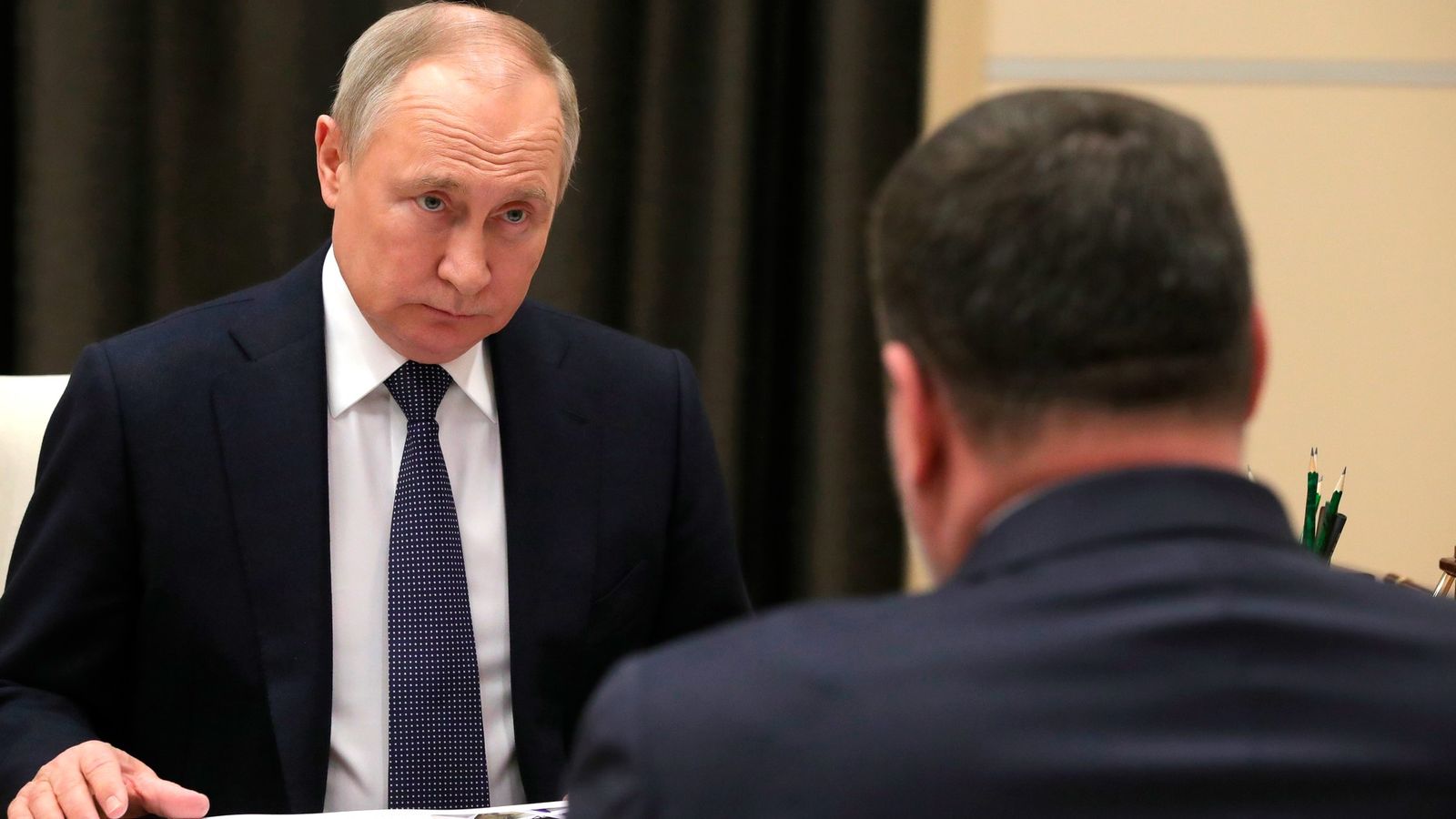
- Hero image source by Presidential Executive Office of Russia / openverse, by.