

Have you ever been to Central Asia?
If so, you may have visited the beautiful Uzbek cities of Samarkand and Bukhara, critical former constituents of the historical Silk Road. You may perhaps have seen the Tian Shen mountain range, which bedecks much of modern-day Kyrgyzstan. Or, you may have spent time in Kazakhstan’s cosmopolitan city of Almaty, or other scenic sites within the vast Kazakh steppe.
The republics of Kyrgyzstan, Uzbekistan, and Kazakhstan have much else to offer other than this—as do other nearby countries of Tajikistan and Turkmenistan. However, there are relatively fewer people who will have visited the latter two. Tajikistan has battled significant instability in recent years and Turkmenistan, well… it’s just rather hard to get in.
Key Takeaways
- The Fergana Valley is a fertile region in Central Asia, crucial for agriculture and resources, but plagued by ethnic tensions.
- Ethnic diversity in Central Asia is high, with significant minorities in each country, leading to complex interethnic relations.
- Soviet-era policies, including forced population transfers and arbitrary border drawing, exacerbated ethnic tensions in the Fergana Valley.
- The Fergana Valley has experienced multiple episodes of violent ethnic conflict since the late 1980s, driven by historical grievances and resource disputes.
- Despite attempts at peace, ethnic tensions in the Fergana Valley persist, with ongoing border conflicts and communal violence.
But even in the more touristic countries of central Asia, there is a region which straddles several of these which you, also, may not have visited—in spite of its rich beauty.
This is the Fergana Valley, a glorious region of peaks and rivers, and one which has been the site of pitched battles between the multiple ethnicities who inhabit it.
Let’s take a look.
The Central Asian Melting Pot
So before we dive into the Fergana and its surrounding regions—as well the troubles long brewing there—it is important to expand a little on the context alluded to in the introduction.
The region of Central Asia is generally defined as the five neighbouring countries of Kazakhstan, Uzbekistan, Kyrgyzstan, Turkmenistan, and Tajikistan—each of them former republics of the Soviet Union. All are nation-states named for the single largest ethnicity residing there, with the Kazakhs, Turkmen, Uzbeks and Kyrgyz respectively all belonging to the wider Turkic ethnic umbrella, with the Tajiks being Persian speakers with ethnic links to the Pashtuns and the Kurds. But the five countries’ populations are very far from uniform—each one having significant minorities of one or another ethnicity residing within their borders.
Of all these, it is Turkmenistan which is the most homogenous. It has about seven and a half million people, of whom 85% are ethnic Turkmen, with the proportion rising over time due to the sealed nature of the state. Turkmenistan is a dictatorship, and one of the world’s most closed-off societies—welcoming only around 14,000 tourists in 2019.
Meanwhile, Tajikistan is thought to be the second-most homogenous, with ethnic Tajiks constituting about 86% of its 10 million-strong population, according to the most recent census. It is also thought that almost as many Tajiks may be living in Uzbekistan—although this has been, controversially, been long-contested by the Uzbek government—which claims less than 2 million ethnic Tajik citizens. Curiously, the absolute highest number of Tajiks actually lives in neither country but in nearby Afghanistan, where they may constitute more than a quarter of its vast population of 42 million.
Anyway, while Tajikistan and Turkmenistan are relatively homogeneous, Kazakhstan, Kyrgyzstan and Uzbekistan are not. All three have large so-called European populations (mostly Russians and Ukrainians), who arrived during the Soviet Era and remained after independence. In all three countries, this amounts to hundreds of thousands of people—with the single-highest proportion in Kazakhstan, where its European population is as high as 25% of the population of 20 million, and a majority in its northernmost regions.
Kazakhstan also has around 600,000 Uzbeks, as well as smaller populations of Uyghurs, Tatars, Azerbaijanis and others. Kyrgyzstan, the smallest country at 5.5 million inhabitants, is no less diverse than its neighbours. Its single-largest minority is the Uzbeks—at around 1 million people—who make up around 15% of the entire population.
But it is Uzbekistan—the largest country of all at 30 million inhabitants—where the ethnic mix reaches an incomparable scale. In addition to millions upon millions of Tajiks, it has about 800,000 Kazakhs, around 750,000 Russians, some 750,000 Karakalpaks (in the autonomous region of Karakalpakstan) and communities of Turkmens, Kyrgyz, Tatars, and Koreans each several hundred thousand strong.
Now, you may be inclined to think—given the great diversity and historic ties between all three—that these communities would have largely good relations with one another.
….No.
Though it varies from place to place, interethnic relations in some parts of Central Asia have been fraught with tension. In some parts, this has spilled into brutal ethnic conflict.
And perhaps nowhere more so than in the lowlands of the lush Fergana Valley.
The Fergana Valley
Now, to understand exactly why the Fergana Valley would be the epicentre of inharmonious ethnic relations, it is important to—at first—understand the aforementioned ethnic circumstances.
…but you could also just look at a map, which would give you a pretty clear picture on its own.
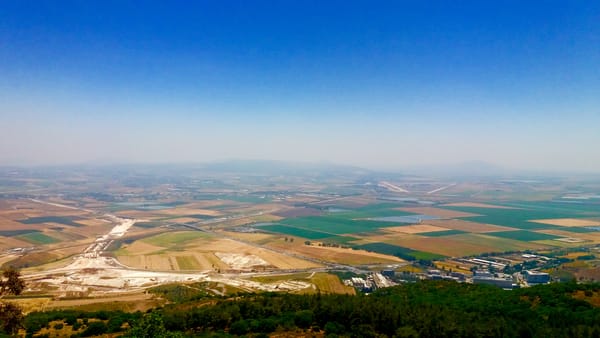
In looking at a relief map, you’d see the endless folds of the Central Asian mountains punctuated by one fairly uninterrupted piece of low terrain right in the middle. Unlike the surrounding parched mountains, the valley is fertile and hospitable to farming: something which also contrasts it with the arid expanses of the steppe, subject to dry weather and a powerful desertifying wind known as the Sukhovey. The valley owes its fertility to the presence of two rivers, the Naryn and the Kara Darya, which run from the east and reach a confluence near the Uzbek city of Namangan, forming the Syr Darya which in turn runs north into Kazakhstan and the Aral Sea.
The region’s fertility allows for cotton cultivation—which is the biggest industry in Uzbekistan and a significant industry also in other countries. The valley also contains some known oil reserves, produces a diverse yield of grains, fruits, and vegetables, and offers a viable region for stock breeding and mineral mining. Without doubt, it represents one of the most important economic areas in all of Central Asia.
Secondly, and perhaps just as importantly, if you were to look at a territorial map of Central Asia, you’d see generally clearly-defined borders everywhere except around the Fergana, where border lines seem to make little-or-no sense.
The valley lies mostly within the borders of Uzbekistan, incorporating parts of three different administrative regions with a collective population of 10 million people. But the Fergana also includes the Tajik region of Sughd—a province with (on its own) about 2.5 million residents. And there are no less than four Kyrgyz provinces which lie at least partially in the valley—including the major cities of Osh and Jalal-Abad, the second- and third-biggest cities in Kyrgyzstan respectively.
If all that weren’t enough, one of the Kyrgyz regions in the Fergana is its southern salient of Batken, which is a multiethnic area containing one of the most complicated territorial patchworks of anywhere in the world. The Batken region contains no less than six enclaves, or portions of territory located entirely in Kyrgyzstan but belonging to a different country. Four of those six belong to Uzbekistan, and two to Tajikistan.
And just for good measure, there is yet another enclave belonging to Tajikistan in the valley, but this one—Sarvan—is located further north, and within the borders of Uzbekistan.
So amidst all this boundary confusion in the Fergana, who actually lives there? Well in short, just about everyone.
Although the estimated 13 million-strong population of Fergana is principally home to Uzbeks, Kyrgyz, and Tajiks, it also contains significant populations of Uyghurs, Tatars, Turks, Russians, and many others.
And relations between ethnicities aren’t very relaxed.
Yet Another Soviet Mess
As you might have expected, a lot of this geographical messiness—just like in many other parts of Asia and Europe—can be traced back to Soviet-era population transfers.
As if the demographic configuration of the Fergana Valley and Central Asia wasn’t already complicated enough before the 20th century, the USSR under Stalin made things even more so by uprooting large populations from elsewhere and dumping them into Central Asia as either a punishment, containment mechanism, or a sort of indentured workforce. As a result, large numbers of Chechens, Ingush, Germans, Crimean Tatars, Kalmyks, Greeks, and Turks wound up in various parts of the wider region. While many of these found themselves in the underpopulated expanses of the Kazakh steppe, some also ended up in the Fergana Valley. And this—like many other population transfers—would lead to problems.
In fact, even before the transfers, Stalin had introduced a series of measures which equally led to chaos down the line. As the Soviet People’s Commissar for Nationalities between 1917 and 1923, he was charged with delineating the boundaries of various constituent republics of the USSR. This he did with characteristic scant regard for circumstances on the ground, prioritising—above all—the interests of the state above the delicate social balance in parts of the Caucasus and Central Asia.
The Fergana Valley, being the most central, most diverse, and most populous part of the Central Asian region, represented a major worry for Stalin—who feared that disloyalty to the state might fester there if not strictly controlled. And so the capitals of the newly-established Kyrgyz, Kazakh, and Uzbek Soviet Socialist Republics would be specifically designated as locations located safely away from the confines of the valley.
Watch The Project Briefing
Open Video
Video Briefing
The Central Asian Region Where People Can't Stop Fighting...
Uzbekistan’s capital—previously the Silk Road city of Samarkand, located west of the Fergana—was switched to the northern city of Tashkent in 1930. It remained as such throughout the entire Soviet Era and afterwards, even though Tashkent was blitzed to smithereens by a powerful earthquake in 1966. Elsewhere, the capital of the Kazakh SSR was set as the city of Alma-Ata (now simply Almaty) in 1929, located several hundred kilometres from the Fergana at the foot of the Alatau mountains. And when the Kirghiz SSR was established in 1936, its capital became the city of Frunze (since renamed as Bishkek)—similarly located on the other side of rugged mountain ranges and a cosy 200 kilometres from the other major Soviet power base in nearby Almaty.
Another tactic of the Soviet leadership was to redraw territorial boundaries all across the USSR—something which notably led to war with Finland in the late 1930s, and havoc in parts of the southern Caucasus at both ends of the 20th century. Well, Central Asia was not much different. In the 1920s, the Tajik SSR emerged from Uzbekistan, with its newly-established region of Sughd cutting straight through the Fergana, and isolating it from cities such as Samarkhand, Bukhara, and Jizzakh.
At the time, Moscow was labouring to suppress anti-Soviet uprisings which were largely centred there—especially the notorious Basmachi Rebellion, which lasted throughout the entire 1920s. The addition of the Sughd region also meant that the Fergana was inaccessible even from the Uzbek capital Tashkent without transgressing through Tajik territory, unless done via the narrow and mountainous region of Namangan, which contained precious few roads, with multiple bottlenecks that could easily be blockaded or blown up if required.
Somehow, Soviet meddling didn’t end there. In the early part of the 20th century, the Fergana Valley was home to yet another group of people, an obscure ethnicity collectively referred to by Kazakh and Kyrgyz nomads as the Sarts. These spoke a tongue somewhat similar to the Uyghur language, and which was by-and-large incomprehensible to the nearby Uzbeks in spite of several common features of both cultures.
But in the 1920s, the Soviets decided not to waste any more time in figuring out who exactly this ethnicity were, and simply labelled them Uzbeks. The community assimilated in the following years, and the term Sart took on a pejorative, insulting personality—especially when used by the Kyrgyz and Kazakhs against external ethnicities.
With time, and especially during the Second World War, the USSR continued to send undesirable populations to live in the Fergana—as well as rather more desirable populations such as Russians and Ukrainians: who were seen as loyal to the Soviet ascendancy and unlikely to partake in any new rabble-rousing against the centralised system. Some of the smaller ethnicities of the region, however, became the subject of festering resentment due to their perceived economic prosperity and higher social status.
This included newly-arrived Turks and long-established communities of Jews, who would become the subject of xenophobic targeting as the years of the Soviet Era drew to a close.
The Violence Erupts
In 1989, the USSR was on the brink of unravelling. As it faltered, long-suppressed ethnic tensions across the union began to explode. And in the Fergana Valley, populations long harbouring antipathy for one another wasted no time in getting stuck right into communal violence.
Over the course of only nine days in June 1989, the region saw its first episode of wanton brutality, with what became known as the Fergana Massacre. Uzbek youths went on a rampage which resulted in the destruction of around 1,000 properties, and the deaths of 107 people. The targets of the unrest were Meskhetian Turks, a subgroup of Turkish people who’d previously inhabited the region of Meskheti in Stalin’s home country of Georgia.
These were shipped to Central Asia—like many others—on the Soviet leader’s orders in 1944. But also targeted were the Bukharian Jews—a small, Persian-speaking group who’d inhabited the Fergana Valley for many centuries. In the wake of the massacre, and as the Soviet Union began to come apart at the seams, emigration by the Jews to Israel took off at pace.
Sensing instability and local resentment, ethnic Russians also began to migrate back to Russia. The Turks, for their part, left the Fergana for safer pastures in Turkey, Azerbaijan, and elsewhere in Central Asia. After Georgia became independent in 1991, calls were made to repatriate the community back to Meskheti.
Georgia said no.
Back in Fergana, the violence was not over. In fact, it was only getting started. And this time, it was the Uzbeks who’d be the targets—only a handful of kilometres away, but across a state border in the Kyrgyz province of Osh.
The Osh region, composed largely of a Kyrgyz majority and large Uzbek minority, had also seen simmering nationalism rise as the USSR waned. In June 1990, disputes between the principal ethnic groups erupted into two days of runaway, bloody mayhem. Pitched battles between civilians spread rapidly across the region, as state security forces effectively collapsed and their members simply joined the violence alongside their respective kin.
The border was shut to prevent Uzbeks from crossing and joining the melée alongside their brethren, and pillaging and sacking of settlements began to take place. In some parts of the countryside, Kyrgyz herders stormed across territory on horseback to ransack nearby Uzbek villages. The riots led to a state of emergency which lasted several months—and by the end, officials estimated that around 300 people had been killed, mostly ethnic Uzbeks.
This was, however, almost certainly an extreme undercount. Unofficial estimates suggested a figure of several thousand—and possibly as high as 10,000—dead due to the brutal violence.
The events impacted gravely on interethnic relations in the region. The 1990 Osh Riots would live long in the memory of the local Uzbeks—whose lingering outrage at the violence and the response of Kyrgyz authorities would play a role in what would follow years later.
Peace? No.
In the years after both the Fergana Massacre and the Osh Riots, a tense peace largely seemed to reign.
But all was not well. The suppressing influence of the communist system had allowed ethnic tension to fester but not be released. With this system now abandoned, nationalism rose, and drifted across the hamfisted state boundaries to infect mixed regions of the Fergana. Many ethnicities, sensing the danger, began to abandon their homes and seek refuge elsewhere. Others sought a replacement unifying ideology—which some found in Islamic Fundamentalism.
With time, Islamist groups in the post-Soviet Central Asian space emerged, and this would lead to another major episode of violence in 1999. That year, hundreds of Islamic Movement of Uzbekistan militants seized villages in Kyrgyzstan in order to launch attacks into Uzbekistan proper, before being counterattacked by Kyrgyz authorities, leading to scores of deaths and massive displacement.
Tajikistan, for its part, seemed to remain untouched by the ethnic violence—but only because a full-blown Civil War had erupted between the government and an Islamist-dominated opposition in 1992. The Civil War lasted seven years, resulting in tens of thousands of deaths, and the mass migration of many of Tajikistan’s minorities—including the Russians, who dwindled from a height of 388,000 in 1989 to less than 70,000 in 2000.
Back in the Fergana Valley, in 2005, protests erupted in the Uzbek city of Andijan in response to claims of state corruption, economic instability, authoritarianism and police brutality. But security forces, in an act which did little to prove the protests misguided, opened fire on the crowds—who they claimed were supported by members of the Islamist Movement of Uzbekistan and the fundamentalist organisation Hizb Ut-Tahrir. Several hundred died, in what became known as the Andijan Massacre.
Amidst all this, ethnic tensions spiralled further. Back in Osh, Uzbek outrage at their community’s fate in 1990 had not diminished—and was likely only contained by the threat of a new Kyrgyz state crackdown. But when President Kurmanbek Bakiyev was ousted in April 2010, the region dived headfirst into another episode of ferocious interethnic strife.
On this occasion, Uzbekistan acted quickly to carry out a limited troop incursion in Kyrgyzstan, but soon withdrew to allow Uzbek refugees to flee inwards. The 2010 riots killed nearly 420 people, again mostly Uzbeks—but also local populations of Uyghurs, Russians, Turks, and Dungans (a Chinese-speaking Muslim minority). Thousands of houses were torched, and some 80,000 people were displaced—amidst a string of abductions, forced disappearances, and torture allegations.
Human Rights Watch detailed disproportionate arrests of Uzbeks in the wake of the events, as well as the ill-treatment and deaths in custody of several young detainees. And once again, although only 420 people were reported dead, unofficial estimates put the figure much higher—at around 2,000 total fatalities.
The Tensions Live On
In the period since, interethnic tension along the margins of the Fergana Valley have not much improved—if anything, communal violence has been the only consistent theme, amidst a string of state captures and internal instability.
By the late 2020s, cross-border conflicts erupted once more, on this occasion between the Kyrgyz and Tajik populations in contested border areas of the south Fergana. The checkerboard region of Batken became the epicentre of the strife, as both countries accused one another of border trespasses and provocative military exercises in, or close to, the territory of the other. The year 2021 saw border clashes erupt which claimed the lives of several dozen Kyrgyz and Tajik civilians.
The following year saw yet another episode of similar violence, with 100 more deaths and yet more displacement of populations. Other than territorial concerns, much of the violence came to centre on the region’s much-desired central resource—water—hotly contested by several countries due to its much-needed supply in the parched environs of the region’s perimeter. And the resulting antipathy began to spread to other parts of each country as well.
Most recently, in 2024, anti-foreigner riots broke all the way north in the Kyrgyz capital Bishkek, sparked by a dispute between locals and a group of Egyptian students. The violence increased, causing several countries to pull their citizens out of Kyrgyzstan, and leading to condemnation by the foreign governments including Egypt and Pakistan.
Today, the tensions remain—as do lingering cross-border raids and civilian clashes, which constantly risk erupted once more into wider violence across the divided portions of both the Fergana Valley and the Wider Central Asian region.
And what was set in motion by the haphazard restructuring of the region, punctuated by centuries-old rivalries, resentment, and hostility, may be unlikely to abate anytime soon.

Simon Whistler
Simon Whistler is one of YouTube's most prolific educational creators, with tens of millions of subscribers across his channels. Places is his expedition into the world's most remarkable locations — from cities carved from salt to islands nobody dares inhabit. He brings a researcher's rigour and a traveller's awe to every field note.
Frequently Asked Questions
What countries make up the Central Asia region?
The Central Asia region is generally defined as the five neighboring countries of Kazakhstan, Uzbekistan, Kyrgyzstan, Turkmenistan, and Tajikistan.
Which Central Asian country is the most homogeneous?
Turkmenistan is the most homogeneous, with about 85% of its population being ethnic Turkmen.
What is the Fergana Valley known for?
The Fergana Valley is known for its rich beauty, fertile land, and significant economic importance due to its agricultural and mineral resources. However, it is also known for being a site of pitched battles between multiple ethnicities.
What are some of the major ethnic groups in the Fergana Valley?
The Fergana Valley is principally home to Uzbeks, Kyrgyz, and Tajiks, but it also contains significant populations of Uyghurs, Tatars, Turks, Russians, and many others.
What historical events contributed to the ethnic tensions in the Fergana Valley?
Soviet-era population transfers and boundary redrawing, as well as long-standing ethnic rivalries and resentments, have contributed to the ethnic tensions in the Fergana Valley.
What was the Fergana Massacre?
The Fergana Massacre occurred in June 1989, where Uzbek youths rampaged, resulting in the destruction of around 1,000 properties and the deaths of 107 people, primarily targeting Meskhetian Turks and Bukharian Jews.
What happened during the Osh Riots in 1990?
The Osh Riots in 1990 involved two days of violent clashes between Kyrgyz and Uzbek ethnic groups in the Kyrgyz province of Osh, resulting in an estimated 300 to 10,000 deaths, mostly ethnic Uzbeks.
What was the Andijan Massacre?
The Andijan Massacre occurred in 2005 when security forces opened fire on protesters in the Uzbek city of Andijan, resulting in several hundred deaths. The protests were in response to claims of state corruption, economic instability, authoritarianism, and police brutality.
What recent conflicts have occurred in the Fergana Valley?
In the late 2020s, cross-border conflicts erupted between Kyrgyz and Tajik populations in contested border areas of the south Fergana, with clashes in 2021 and 2022 resulting in dozens of deaths and displacement of populations.
What is the current state of ethnic tensions in the Fergana Valley?
The tensions remain, with lingering cross-border raids and civilian clashes that constantly risk erupting into wider violence across the divided portions of both the Fergana Valley and the wider Central Asian region.
Sources
- Original Places video: The Central Asian Region Where People Can’t Stop Fighting…
- https://worldpopulationreview.com/countries/turkmenistan
- https://en.wikipedia.org/wiki/Batken_Region#/media/File:Enclaves_in_Kyrgyzstan_EN.png
- https://en.wikipedia.org/wiki/Sarvan,_Tajikistan
- https://cooper-thomas.com/a-tale-of-two-cities/
- https://www.washingtonpost.com/archive/politics/1990/11/02/central-asian-violence-spurs-russian-exodus/5d6c8615-6091-4767-99c3-6a541ead6697/
- https://www.hrw.org/report/2010/08/16/where-justice/interethnic-violence-southern-kyrgyzstan-and-its-aftermath
- https://en.wikipedia.org/wiki/Namangan_Region
- https://en.wikipedia.org/wiki/Sughd_Region
- https://www.refworld.org/reference/annualreport/hrw/1999/en/23014
- https://www.hrw.org/report/2010/08/16/where-justice/interethnic-violence-southern-kyrgyzstan-and-its-aftermath
- https://en.wikipedia.org/wiki/2021_Kyrgyzstan%E2%80%93Tajikistan_clashes
- https://www.rferl.org/a/Why_Is_The_Ferghana_Valley_A_Tinderbox_For_Violence/2074849.html
- https://www.bbc.com/news/world-asia-62950787
- https://en.wikipedia.org/wiki/Tourism_in_Turkmenistan#:~:text=Tourism%20is%20a%20small%20industry,over%2014%2C000%20visitors%20in%202019
- https://minorityrights.org/communities/tajiks-2/
- https://www.encyclopedia.com/history/encyclopedias-almanacs-transcripts-and-maps/sarts
- Hero image source by Petar Milošević / openverse, by-sa.