
Today we’re going to talk about a place so intolerable that you may find yourself wondering why on earth would anybody deign to live there. Let’s see if it can take the crown away from a place like North Sentinel Island, which (for now) remains as the most inhospitable place you could decide to go to — they will kill you.
Now let’s see how you’d fare in Chukotka: Russia’s Most Inhospitable Region.
Introduction
Dos Vidanya comrades! Ah Russia, with your bear wrestling, your topless politicians, and your absolutely unhinged music, it’s a country that feels less like a nation, and more like thousands of stereotypes wearing a trenchcoat.
Key Takeaways
- Chukotka, Russia’s most inhospitable region, is isolated and neglected with a harsh climate.
- The region has a rich history of Soviet industry but faces severe economic decline.
- Chukotka’s population has drastically decreased, with many settlements abandoned.
- Despite natural resources, Chukotka struggles with poor infrastructure and health issues.
- The region’s future looks bleak due to ongoing challenges and lack of political will.
But strip away the spectacle, the pageantry, the clichés and go east. Past the cities, past the roads, past everything, and you will eventually find the region of Chukotka — isolated, utterly neglected, and dying.
So how did a once-thriving bastion of Soviet industry end up with closed mines and shattered dreams?
How did a region with 10% of Russia’s gold reserves end up so poor?
And why does nothing anyone does seem to make it any better?
As it turns out, the motherland isn’t all that motherly.
Because for Russia’s most isolated region, this is where hope goes to die.
Chukotka the Land
Ok, so what is there to know about Chukotka? Well where do you start? Its full title is the Chukotka Autonomous Okrug (okrug is just a fancy Russian word meaning district) and it’s one of four in all of the Russian Federation, although to the Putin regime the word “autonomous” doesn’t always mean what we think it means — but we’ll get to that later.
Russia is often seen as one continuous, homogenous country, but that couldn’t be further from the truth; it’s full of differing regions, oblasts, ethnic groups, languages, cultures and interesting little carve-outs. For example, despite being one of four okrugs in Russia, it’s the only one not subordinate to a larger oblast (think of these like a state or a county), meaning that it effectively acts as an oblast whilst not being one.
It’s also the most remote region in all of Russia, located right at the northeast tip of Siberia, about as far east as you can possibly go on Russia’s mainland at least. In fact it even touches the Bering strait, meaning it’s the only part of Asia that technically extends into the Western hemisphere. If you were a Russian or Soviet dissident sent to a Siberian gulag, Chukotka is the sort of place you’d end up. It’s cold, it’s remote, and it’s empty.
And you know what else? It’s big. The region is around 737,700 kilometres squared or around 285,000 square miles, which makes it a bit bigger than Texas. And everything is bigger in Texas. If it were to become its own country tomorrow, it would be the 40th largest by land area in the entire world. That’s bigger than Myanmar, Afghanistan, and Somalia just to name a few. It makes up around 3.2% of Russia’s total territory, and it makes up around just under 0.5% of all land on earth.
And you’d never even heard of it. But that’s why we’re here! You lucky people.
Chukotka has two main cities (yes in an area that size.) The capital is a port city called Anadyr, there’s an inland city called Bilibino which used to have a nuclear power plant, and there’s also Pevek, the northernmost city in all of Asia. And that’s it pretty much. There are also 15 townships and 45 villages amongst its six administrative districts, but as far as major settlements you could call cities, it’s just three. Most places this size end up with more cities than that by accident but not Chukotka.
And that’s partly because its so remote, and partly because of its intense climate. We’re talking further North than your average white walker’s house. Permafrost, arctic mountainous tundra, long harsh winters, short summers, tonnes of storms, and a wind chill that could freeze a campfire in minutes are just some of the lovely holiday destination-like conditions you can expect. Winter tends to last from October to May — no that’s not a joke — and snow covers large portions of the region all year round. Anything that isn’t white is green, whether its tundra vegetation or some stunted forests when you travel further south. The average winter temperature (which I’ll remind you is eight months of the year) is a frigid minus 19 degrees Celsius (that’s negative two degrees Fahrenheit) – in summer the average is a scorching… eight degrees Celsius (or about 47 degrees Fahrenheit). But those storms don’t arrive for no reason, Chukotka has some of the largest temperature variances between seasons in the world. The highest of highs can reach a particularly tropical 30 degrees Celsius (86 degrees Fahrenheit) but it can drop as low as negative 49 degrees Celsius (that’s minus 56 degrees Fahrenheit) which is sure to give all the residents temperature-based whiplash every year.
But because its so remote its also a biodiversity hotspot. Even the name “Chukotka” is derived from an indigenous word meaning “rich in reindeer.” It’s home to narwhals, grey whales, wolves, Arctic fox, Pacific walrus, brown bears, polar bears, and wolverines. But it’s not the X-men you should be worried about here; it’s those polar bears. According to Sergey Uvarov, a project coordinator for the WWF (that’s the wildlife people, not the wrestling people) he said:
“You can run into a bear when taking out the trash or taking the children to school. You might not even be able to leave home because there’s a huge beast waiting by the entrance.”
Polar bears have even moved into an old abandoned weather station in Chukotka, and their pictures show them looking particularly smug. Wouldn’t you be? It’s hard to get on the property ladder these days.
Chukotka isn’t just rich in wildlife, but also natural resources. It’s the leading area for gold in all of Siberia, containing 10% of all gold deposits in Russia. It also has an abundance of tin, copper, tungsten, platinum, silver, coal, oil and gas, which are central to its economy.
Time zones? Got you covered. Chukotka observes Petropavlovsk-Kamchatsky Time (PETT) all year round which is 12 hours ahead of Greenwich Mean Time. It’s just the nine hours ahead of Moscow. It has no daylight savings, but let’s be honest for a good portion of the year there’s no daylight to save. The winter months see minimum sunlight, with Chukotka only experiencing 12 hours of daylight in the entire month of December.
Here’s a fun one, Alaska’s time zone is minus nine hours out from GMT, meaning that it is about 21 hours behind Chukotka, even though you could get to Alaska from there in a fraction of the time it would take to get to Moscow. In fact that’s where the whole Sarah Palin quote about being able to see Russia from Alaska comes from, she’s talking about Chukotka.
And she might have been exaggerating a little, but also maybe not. On the mainland the closest points of Chukotka and Alaska are about 55 miles apart. But, there are two islands in the Bering Strait known as Big Diomede on the Russian side, and Little Diomede on the American side separated by the international date line – and no that’s not the number you call for your mail order Russian bride. Big and Little Diomede, also known as “Tomorrow Island” and “Yesterday Isle” are just 2.4 miles or 3.8 kilometres apart, despite being 21 hours out of sync with one another. During the winter months, sea ice actually creates a natural bridge between both islands and although travel between the two isn’t allowed for geopolitical reasons, you could theoretically walk between them very easily. So thanks Chukotka for one of the strangest geographical oddities on earth.
But that’s enough about the land, what about the people who make up this place? Who lives in this hostile an environment?
Chukotka the People
Well to be honest? Almost nobody for the size of it. According to a 2021 census (we don’t have more accurate data because of that war about 10 hours west of here) Chukotka has a population of around 47,490 people. For reference, that is fewer people than live in American Samoa. The tiny African island nation of Cape Verde has ten times that many people despite having a landmass roughly 1800 times smaller.
Of the okrug’s population, ethnic Russians make up around 54%, the indigenous Chukchi people make up about 28%, Ukrainians 3.2%, Yupiks 3.1%, the Even people make up 2.7%, the Chuvan 1.6% and everyone else is below a single percentage point. So quite a diverse region with a large indigenous population for Russia. As we said the main minority are the Chukchi people.
The Chukchi are traditionally divided into two ethnographic groups: the Reindeer Chukchi and the Maritime Chukchi. The name “Chukchi” are where the name Chukotka comes from, and in their language that translates to “a man who is rich in reindeer,” although there are also “maritime” Chukchi who focus more on fish. We’re simplifying here because there’s a lot of diverse cultural history to this region, everyone has their own names for themselves and each other, their own languages, cultures, traditions, and more. Most of the non-indigenous populations arrived during the Soviet era, but Chukotka has been experiencing something of a population drought in the last 30 years. The population has decreased by over two thirds in the last three decades due to a number of factors that we’ll explain shortly. For now we just want to get across just how remote Chukotka really is.
Chukotka’s population density is 0.06 people per square kilometre, or around 0.17 people per square mile. Let’s put it this way. You all know Manhattan, right? Downtown New York, a famously busy place. It has a population of around 1.6 million people. If Manhattan had the population density of Chukotka, do you know how many people would live there? Four. Yes you heard that right, four.
Or look at somewhere like Mongolia, which is famously sparse of people, a place where you can not see anybody for days on end. It’s even a similar region geographically, and it has 30 times the population density of Chukotka. Or what about the Sahara Desert? one of the most notoriously inhospitable regions on the entire planet, absolute nobody lives out there its so empty. Even it has a population density that is six times greater than Chukotka. If you scattered every person across Chukotka evenly, they would have 15 square kilometres, or just under six square miles to themselves, equivalent to four and a half Central Parks worth of land each, with nobody else in sight.
So yeah, it’s pretty empty today.
But it wasn’t always as empty as it is now, Chukotka has been through a lot even in the last century, so why don’t we tell you about it?
Chukotka the Past
So people have likely lived in or traversed the region now known as Chukotka for thousands of years. In fact given how close the region is to Alaska, some of the indigenous people of Chukotka may have migrated over the now submerged Bering land bridge, which would showcase why some of the native peoples are similar to native Inuit populations in Alaska and Canada today despite being a continent apart.
But we’re not going to go back quite that far, instead we’ll start in the 1920s and the rise of the Soviet Union. During the decade, Vladimir Lenin promoted the policy of indigenisation, which sought to encourage the growth of indigenous languages and cultures in Russia, which included training local elites in how to govern, the official okrug of Chukotka was first created in 1930 which brought formal governance to the area for the first time.
But that all changed when Stalin came to power. Indigenisation was repressed, leaders were purged, reindeer herding was collectivised, communities were forced into state farms. The nomadic natives who roamed the region with their reindeer were forced to stay in one place. Those local had barely just been recognised as part of the Soviet Union, and they were crushed under its heel just as quickly.
Watch The Project Briefing
Open Video
Video Briefing
Chukotka: Russia's Most Inhospitable Region.
Chukotka would prove vital to the USSR’s military efforts during World War Two, the region was able to provide resources like tin, gold, furs, and food. It also was a strategic location for allied supplies to be flown through via Alaska. But it wasn’t all sunshine (especially in a place that barely has any,) numerous mining and construction projects here were built using forced labour. What we said about gulags and Siberian exile wasn’t a joke.
Military bases, radar stations, and airfields would all become part of the military infrastructure here as a result.
By 1958, gold would start to be extracted on an industrial scale for the first time, which fittingly marked the start of Chukotka’s golden age. And by the 1960s construction and development was happening everywhere. New mines, ore processing plants, industrials enterprises, power stations, roads, settlements, resorts, and schools were popping up all over the place.
Chukotka would become a net exporter of electric power. Fuelled by its resources, the region went from strength to strength. People were encouraged to move to Chukotka and work there from what was known as the “Northern Bonus” – which meant salaries in Chukotka were considerably higher than the national average, and they were even higher than in other Arctic regions.
Chukotka was soon awash with qualified, competent professionals who would swell the regions numbers considerably, to the extent that by the 1970s the population became majority non-indigenous.
But the good times couldn’t last. Stagnation in the 80s followed, and people started to leave. In 1991 the Soviet Union collapsed, and with it all of Chukotka’s progress did too.
As market doors were thrown open to the new Russian Federation, Chukotka suffered severe economic depression and depopulation. The incentives to move and work there were gone. Construction had come to a standstill, the mining industry that propped up the region economically completely imploded as gold mining was no longer profitable.
Unemployment skyrocketed, food and fuel became scarce. Reindeer breeding was drastically reduced as the once-flourishing hunting and fur trade declined rapidly. Many settlements became totally abandoned or deserted.
Healthcare and education floundered. Hospitals didn’t have enough equipment, schools didn’t have enough textbooks, and nobody had enough money. The population fell quickly into a depression, many turned to the bottle which made things even worse.
From the highest of highs for such a remote region, Chukotka was on the edge of ruin.
And then, a reprieve from an unlikely source. Roman Abramovich, one of the new class of oligarchs who benefitted from state enterprises being sold off for pennies on the dollar in private auctions, became the governor of the region in late 2000. When he arrived, Chukotka was destitute, bankrupt with enormous debts equivalent to four times’ its annual budgets. State employees hadn’t been paid in half a year.
Abramovich was a rockstar who bought football clubs and superyachts, not normally the sort of person you’d expect to bail out an Arctic backwater. And yet when he arrived, he brought with him a genuine willingness to turn the region around. In 2001 he organised humanitarian help, ensuring each resident received 20 kilograms of sugar, five kilograms of salt, a sack of flour, a sack of potatoes, five kilograms of butter, and five kilograms of dried fruits.
In such a poor region where supplies were scarce such charity was invaluable to the people living there. Next he organised bringing business back to the region, registering three branches of the Sibneft oil company that Abramovich owned in Chukotka. Large scale construction would also be renewed.
During Abramovich’s tenure between 2001 and 2008, 100,000 square metres of housing was built, 18 new schools went up, and 28 medical facilities like hospitals began operations. In new houses hot water, flush toilets, and double glazing were all mandatory which genuinely improved people’s quality of life.
Schools were given brand new computers, access to the internet, televisions, textbooks, free food, and free health services. The Chukchi language and culture – at this point teetering on the edge of extinction – were reintroduced into the school curriculum, breathing life back into a region that had little hope for the future. And on top of that, each year every single child (about 6,000 of them in total) would be sent on a free summer vacation by the Black Sea.
Even just by moving to the region, Abramovich added some tens of millions of dollars in tax revenues to Chukotka’s meagre budget. There was a phrase in Chukotka at the time, “God sent Abramovich” – but academic Alexey Dudarev would go one further, quoting:
The Chukchi revered Abramovich as the source of many good things; some even considered him a deity to be prayed to.
Now, despite his good deeds its important to note that Abramovich was no saint. He has close ties to the Kremlin (how do you think he became a governor in the first place). His wealth has been tied to Israeli west-bank settlement groups and industries that benefitted from war with Ukraine. Abramovich himself is a complicated figure who also tried to help negotiate an end to the Ukraine war early on in 2022.
But at least for Chukotka, his philanthropy was very real, and even though it couldn’t fix everything, it made a real difference to people living there.
But what couldn’t be fixed, no matter how much money you throw at it?
Chukotka the Dying
Today, Chukotka is still awash with a great menagerie of complicated problems that make it a very difficult place to live. The first one, above all being just how isolated the place still remains. A part of the population lives in tiny remote villages that are hard to access. They’re dependant on transportation but the climate makes that seriously unreliable and unpredictable. Due to the permafrost there’s a distinct lack of railways and roads in the region. Chukotka currently has zero road or rail connections to any other Russian region whatsoever. 90% of all freight is moved by sea and air there, which leaves the people highly susceptible to supply lines faltering in bad weather, which Chukotka gets an awful lot of. There’s only one year-round link to Moscow via an eight hour long-haul flight from the capital of Anadyr. That’s it. This isn’t your average secluded area; this is like putting a village at the end of the world. It’s like putting a settlement at the edge of a map in the 1500s with people afraid to visit it for fear of falling off the edge.
Without sustainable transport links that can connect Chukotka to the rest of the country, it will continue to struggle.
Next in the long line of issues is depopulation. After the USSR’s collapse, Chukotka experienced one of the sharpest population declines of any region in the entire Russian Federation – and if you know anything about Russian population decline, that is a difficult scoreboard to be near the top of. In 1989, just before everything fell apart for Chukotka, its population peaked at around 162,000 people.
It’s now at 47,000 or so based on that 2021 census, and because of the war in Ukraine’s desperate need for soldiers it now could be even lower. Disregarding the war for a moment, even if nobody had been called up whatsoever to fight, the population of Chukotka would have declined by around 70% in just the three decades and change since its peak. That’s less so an emigration crisis and more of a total population collapse.
Because of the end of Soviet subsidies and Northern benefits, a large number of the non-indigenous population saw little reason to remain in such a harsh and remote environment without adequate compensation. Chukotka’s settlement network had been built almost entirely around Soviet-era resource extraction and military installations. So when the money and work dried up people just left. The result of this was that much of Chukotka’s previous settlements, military installations, and other infrastructure is now totally abandoned, with ghost towns littering the landscape slowly being reclaimed by the snow. Take little settlements like Leningradsky for example, this former gold-mining settlement was closed and evacuated in the early 2000s when the mine became unprofitable, now its houses have collapsed under the weather with no upkeep, its machinery rusts out in the open, and any remnants of the life that was once sustained by this place is now gone. As much as Abramovich was able to help stem the tide by bringing back basic services, paying the workers who had been waiting months for their money, and by providing some much needed upgrades, places like Leningradsky still litter Chukotka today. There’s only so much wealth can do alone. You can’t stop the rot without people, and Chukotka just doesn’t have enough of them. It’s a vicious cycle – industry can no longer sustain its people, and then the people can no longer sustain their industry. No wonder the polar bears moved in.
And so despite Abramovich’s reforms and his money he was able to bring, the socio-economic conditions for most in Chukotka are pretty bleak. Most settlements can’t get the supplies they need like fuel, foodstuffs, and electricity. The people are fiercely self-reliant.
They’re able to go out and hunt or fish for food, but there’s little opportunity to do more than either survive or leave. Many settlements out in the wilderness struggle with a poor water supply, sanitation, and housing. With a landscape so harsh and hard to build on, and with so little money, Chukotka’s residents aren’t able to supply themselves with anything other than basic infrastructure that they can build themselves.
For all intents and purposes its like they’ve been abandoned, because there appears to be no political will to improve things. Because their settlements are so reliant on heavy industries like metal ore mining, the regions’ financial future is completely at the whims of corporate decisions, price swings, political decisions, and even things like international sanctions – which if you know anything about Russia are pretty common. And that’s before you get to the corruption which no doubt helps a select few skim off the top.
Just look at Zemtek mining company for instance, which in May of 2025 failed to pay over 1,000 temporary workers in remote Chukotka town of Bilibino. These are workers who were brought from elsewhere in the motherland to do the necessary hard labour. Zemtek pledged to pay the workers but there was no indication that this happened. Our most recent information suggest that there at least 700 still stuck there, with the workers making appeals to President Putin to help arrange their return home, some have alleged that those who refused to continue working without pay were denied food for at least 36 hours. We’ll never know if the company genuinely couldn’t pay their workers as a result of economic circumstances or because someone stole the money – we’re willing to bet it was likely both. And it just shows what Chukotka has become.
But you might be tempted to say that yes there are some abandoned settlements, but isn’t having Chukotka remain as a mostly untouched paradise a good thing? Well it would be, if that were true. Industry has taken its toll on the natural world of Chukotka. Outside the capital the land still needs a serious cleanup from what Soviet-era industry has left behind.
Scrap metal, junk, and hundreds of thousands of rusted-out oil barrels pollute this beautiful region, especially in the coastal regions. Nothing says “natural paradise on earth” like a pristine Arctic landscape carpeted with Soviet scrap.
The final massive issue that continues to plague the region, is mostly related to poor public health, alongside poor livestock health to boot. Zoonotic diseases (diseases that pass from animals to humans) remain problematic. A good example of this is Brucellosis, a bacterial infection that affects a lot of the wildlife and livestock in Chukotka. At its peak it was reported to be endemic in about 50% of reindeer farms, which for a place literally named after being rich in reindeer, is really not good. The disease which can cause severe health complications in animals puts the reindeer, their herders, and their breeders at risk. In people, it causes flu-like symptoms that can be mild to severe. Veterinary help is often hampered by the harsh conditions, and as a result it continues to be an issue to this day.
Among the indigenous population, there’s a high rate of sexually transmitted illnesses, with gonorrhoea rates among Indigenous people being between three and six times higher than the Russian national average. That’s a lot of warts, and its sure to make people’s lives even more miserable. In 1998, three cases of AIDS were recorded for the first time here, which for a region this remote and with so few people that’s a major threat with the possibility of it spreading quickly amongst small close-knit communities. The conditions, the hopelessness, the infection, the poverty – it all compounds into this region in Russia having the highest levels of alcohol consumption in all of Russia. If you know anything about Russia, that is simply staggering. But it’s not just drinking, it’s everything that comes with too much of it. In 2024, the Russian state-owned news publication RIA Novosti reported Chukotka had the highest incidence of alcoholism and alcoholic psychosis in Russia as well. In Moscow, this happens at a rate of around 15.9 per 100,000 people, in Chukotka the rate is 247.8 per 100,000 people, which is almost 16 times higher. Remember this is Russia, the place where alcoholism is a character trait and people drink like fish.
Even health issues of the past have been dealt with poorly. Because this region isn’t hostile enough to the average human being, it also has an anthrax problem. Between 1985 and 2008, 72 cases of anthrax occurred among humans living in Siberia, including Chukotka. Cattle that are infected can spread the disease to other animals and humans. Past outbreaks have been linked to the deaths of 1.5 million deer that were buried in some 13,000 burial sites that do not reportedly meet federal sanitary and safety standards. Bacillus anthracis, the bacteria that causes anthrax infections, are known to survive between 60 and 70 years, but because of the permafrost it’s likely to be longer or even indefinitely. Melting of the permafrost sped up by climate change will then release this dormant anthrax back into the populations of animals and people. It’s like there’s an enormous anthrax grenade under the ice, and the pin was pulled years ago.
And unfortunately for Chukotka, as time wears on, it seems things are only going to get worse.
Chukotka the End?
So where does that leave Chukotka today and for the future? Well we can’t sugarcoat it, it’s not good.
In the present, the population are suffering from everything we’ve talked about today, and it’s not been helped by the fighting going on in Ukraine. Whilst you might expect the effects of the war to not be felt very much so far from the frontline, war doesn’t really work that way. The international sanctions continues to make the region poorer, and the war needs men.
The further east you go in Russia, you find ethnic minorities and their settlements disproportionately targeted with mobilisation campaigns. Russia’s manpower problem in Ukraine is very well-known, necessitating some limited conscription – but to ease the unpopularity of such a policy, the regime have instead begun to offer increasingly large salaries and signing on bonuses which amount to lifechanging money for most of the Russian population. And how do you think such offers go down in Chukotka, where people are poorer than most, and with fewer opportunities than most to make anything close to decent money?
The benefits are very good…if you survive. And if you don’t your family gets a lot of money in compensation. So in every settlement in Chukotka a number of men have seen the government’s offer as too good to refuse.
And those who don’t come back only further push the region into further decline as the population shrinks even faster.
The war this far east is generally popular thanks to intense state propaganda, and those who have been killed who were from Chukotka are considered heroes, but recruitment drives have rattled some of the population. Some do have mixed feelings but this is Russia, and dissenting opinions aren’t welcome here. Those who live here might be considered the closest thing to those who live under a rock, but they’re not stupid.
In truth there’s no way to know exactly how many people from Chukotka have chosen to go to war for one reason or another, but estimates based on numbers in other regions and generally extrapolating for underreported deaths mean it could be anywhere from a few hundred to a little over a thousand people. And Chukotka just can’t afford to lose that many. Many of the men who go are adept hunters who helped provide for their communities. When they don’t come back the settlements lose valuable members of their communities with the skills needed to help everyone survive.
And for the future, it seems like Chukotka is expected to continue its spiral of decay and decline. Sure, it might be a little less isolated in the future with companies like Severaero launching helicopter passenger and cargo services between Chukotka’s remote districts in 2027, but it’s a day late and a dollar short now, it’s not going to reverse the damage that’s been done.
Unfortunately it’s a simple story for Russia’s most isolated region. One of hardship, industrial boom and bust policies, and of extreme post-Soviet decline. Without the political will, hard decisions, hard work, the money, or the time to make things better, those settlements in Chukotka might soon cease to exist completely.
And the great Russian bear will have swallowed another victim.
Simon Whistler
Simon Whistler is one of YouTube's most prolific educational creators, with tens of millions of subscribers across his channels. Places is his expedition into the world's most remarkable locations — from cities carved from salt to islands nobody dares inhabit. He brings a researcher's rigour and a traveller's awe to every field note.
Frequently Asked Questions
What is the full title of Chukotka?
The full title of Chukotka is the Chukotka Autonomous Okrug.
How large is Chukotka in square kilometers?
Chukotka is around 737,700 square kilometers.
What are the main cities in Chukotka?
The main cities in Chukotka are Anadyr, Bilibino, and Pevek.
What is the average winter temperature in Chukotka?
The average winter temperature in Chukotka is minus 19 degrees Celsius.
What is the population of Chukotka according to the 2021 census?
The population of Chukotka according to the 2021 census is around 47,490 people.
What is the population density of Chukotka?
The population density of Chukotka is 0.06 people per square kilometer.
What is the primary economic activity in Chukotka?
Chukotka’s economy is primarily based on natural resources, including gold, tin, copper, tungsten, platinum, silver, coal, oil, and gas.
What time zone does Chukotka observe?
Chukotka observes Petropavlovsk-Kamchatsky Time (PETT), which is 12 hours ahead of Greenwich Mean Time.
What are some of the major issues facing Chukotka today?
Chukotka faces issues such as isolation, depopulation, poor infrastructure, economic decline, and health problems including high rates of alcoholism and zoonotic diseases.
What is the significance of the Diomede Islands in relation to Chukotka?
The Diomede Islands, known as Big Diomede (Russian) and Little Diomede (American), are separated by the international date line and are only 2.4 miles apart, despite being 21 hours out of sync with each other.
Sources
- Original Places video: Chukotka: Russia’s Most Inhospitable Region.
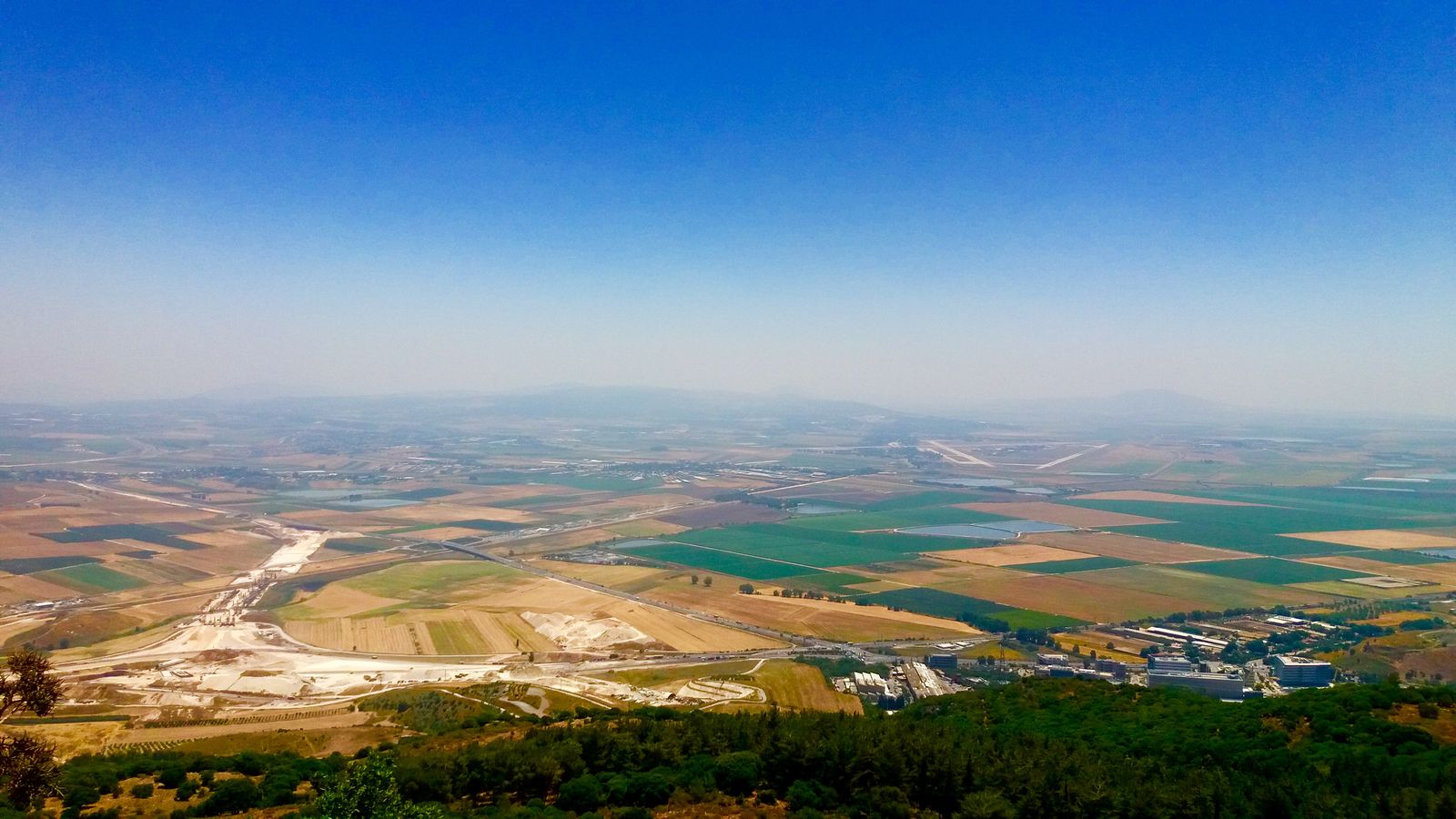
- Hero image source by Saga1111 / openverse, by-sa.