

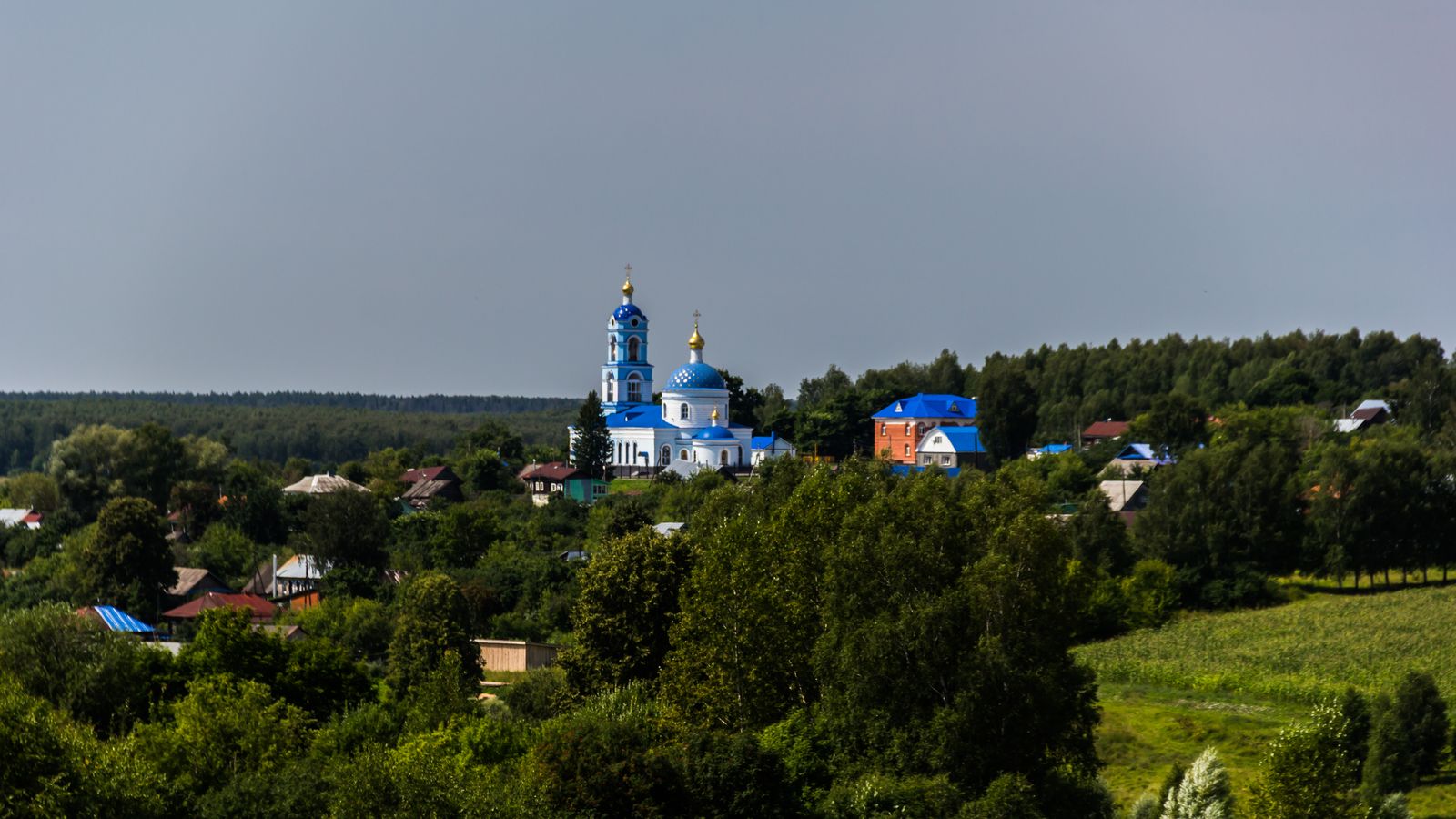
Chemicals. Everything is made of them. We all need them and some are certainly better than others. The science of chemistry has led to the creations of many great man-made miracles, such as medicines, soaps, detergents, automotive products, computer components and even some foods. Yes, chemistry is a dream.
But it can also be a nightmare. You see chemistry can make some wonderful, innovative and truly destructive things. But it’s the things that it can leave behind on an industrial scale that reveal true horror. We’re going to take you to the place where Mother Nature was brutally murdered; a place where the life expectancy is almost 20 years lower than everywhere else in Russia. What happened here? Who caused this widespread destruction? And who are the people living in this city’s rotting corpse today?
The area that Greenpeace called the most polluted place on earth. A chemical wasteland more toxic than any other.
Key Takeaways
- Dzerzhinsk, Russia, is infamous for its severe pollution, with life expectancy significantly lower than the national average.
- The city’s pollution stems from decades of chemical weapon production and industrial activities, leading to toxic waste dumps and contaminated water.
- Residents of Dzerzhinsk face high rates of diseases and cancers due to prolonged exposure to hazardous chemicals.
- Efforts to clean up the city have been slow and insufficient, with cleanup projects delayed by the war in Ukraine.
- The population of Dzerzhinsk has been declining, partly due to the city’s toxic environment and economic struggles.
No, not your ex’s house.
Dzerzhinsk.
A Secret Soviet City
Dzerzhinsk is a small city in western Russia located in the Nizhny Novgorod Oblast and lies around 230 miles east of the Russian capital of Moscow. It sits on the Oka River, which is one of two main tributaries of the Volga, Europe’s longest and Russia’s most important river. Today, its population is around 218,000 people. It was previously known as Rastyapino, but in 1929 it was renamed in honour of Feliks E.
Dzerzhinsky, the first head of the Ceska or Soviet secret police organisation. How unfortunate that the same secrecy would lead to the widespread pollution of the landscape.
You see Dzerzhinsk for a long time was a secret Soviet city, as they were manufacturing things there that had to be kept secret. Chemical weapons. That secrecy persisted for a very long period of time.
So much so, outsiders were still barred from entering the region even decades after chemical weapons were no longer manufactured there. Even now, for a foreigner to visit the city, you technically need a VISA and an invitation from someone within the municipal government that oversees the region. Dzerzhinsk’s own website does mention tours of the city, but it is unclear whether this is meant for visiting Russians from other parts of the nation or whether this would extend to foreigners.
The industrial use of chemicals was also common here. By 1939, the Soviet’s first Five-Year Plan under Joseph Stalin came into effect. It massively boosted the city industrially, technologically and economically.
In a little over a decade, Dzerzhinsk evolved from a settlement with fewer than 10,000 residents in 1926, to a city with over 100,000 residents by 1939. This transformed it from small Russian backwater in the Nizhniy Novgorod oblast to a chemical industrial hub feeding the wider USSR.
But that feeding took a dangerous toll on the landscape and the people. The regulations were lax and within just a few short decades the city of Dzerzhinsk went from one of Soviet pride to national shame. But why exactly is this small slice of Russia so polluted? And what are the consequences for the people that live here?
The Toxic Wasteland – Why is Dzerzhinsk so Polluted?
Manufacturing of chemical weapons started in 1941 and officially ended in Dzerzhinsk in 1965, with large amounts of waste material including arsenic and countless other toxic pollutants being buried in dumps directly on the sites of factories. Full dismantling of a facility that manufactured the chemical agent known as yperite, or mustard gas, commenced in 1994. However, as of 1998, the production unit of the poisonous gas lewisite had still not been completely disassembled.
As you can see this isn’t relegated to just one area or factory, it’s an ongoing theme across the city of Dzerzhinsk. Toxic dumps are everywhere.
Dzerzhinsk’s largest factory is the Sverdlov plant. It is a Russian federal state enterprise and is on the presidential list of the country’s strategic enterprises. It creates munitions, battle and industrial explosives as well as chemicals for industrial uses.
Another factory named Korund JSC used to produce cyanide before producing corundum for lasers but it was eventually shuttered in 2004 owed to bankruptcy. Various other factories litter the landscape all with their own toxic chemical processes, which combined with shoddy Russian regulations and poor sanitation enabled by the state, has led to it becoming a toxic wasteland over time. Dangerous chemicals have been slowly seeping their way into the groundwater beneath the city that many use as drinking water with disastrous results.
In an excellent documentary from a little YouTube channel known as “Vrpo World Stories”, Jelle Brandt and his team travelled to the city in 2018 to see what life is like there. His footage documents the tap water in hotels coming out in a disgusting grey colour.
The Blacksmith Institute, an international ecological NGO, released a report on Dzerzhinsk in 2007, labelling it as one of the most polluted cities in the world. The Guiness Book of World Records went one step further, tagging it the most polluted city in the world in the same year. Blacksmith’s report states that the life expectancy in Dzerzhinsk is shockingly low (at least as of 2007) with women living to an average age of 47 years old.
Meanwhile men only live to an average of 42. The Life expectancy in the rest of Russia was around 64 years old at that time, a full 20 years ahead of Dzerzhinsk. In 2003, the city’s death rate exceeded the birth rate by 260%.
Meaning that for every person born in Dzerzhinsk that year, 2.6 people lost their lives. The death rate was reported as being 17 per 1,000 people, as opposed to the rest of the nation which sits at 14 per 1,000 people, equating to hundreds more deaths every year than elsewhere in Russia. Once sworn to secrecy, Dr Muradian, of the city’s maternity hospital told the BBC in 2003: “This year the death rate exceeds the birth rate by 2.6 times.
If, on average, six to eight babies are born each 24 hours, 15 to 18 people die. The situation is simply catastrophic.” The Blacksmith Institute also names sarin, lewisite, sulfur mustard, hydrogen cyanide, phosgene, lead, and other organic chemicals among the worst pollutants.
Some reports place up to 150 different highly dangerous foreign chemicals in Dzerzhinsk’s water supply. The Director of the Regional Ecological Monitoring Centre at Dzerzhinsk, Sergei Ditatiev, admitted some horrifying figures to the BBC when discussing the sheer scale of the situation: “Over 1,150 sources of pollution have been discovered. Of these more than 150 are of the most dangerous type.
Among them, 24 main pollutants were specified as deadly dangerous for our health.” It’s a miracle anyone makes it to 50.
But wait, Blacksmith’s report gets worse. Parts of Dzerzhinsk’s water are contaminated with dioxins and phenol – two highly dangerous substances that are at levels seventeen million times the safe limit for humans. Dzerzhinsk’s environmental agency according to Blacksmith estimates that almost 300,000 tons of chemical waste were dumped in the city between 1930 and 1998.
And you thought your best friend’s relationship was toxic. The Committee on Ecology of the Russian State Duma also considered Dzerzhinsk among the top ten cities with disastrous ecological conditions in a report that came out in 2004. In that same report, it was recommended that ten affected cities (of which Dzerzhinsk was one) would need 7 billion Rubles, or 238 million US dollars, every year for 10 years in order to clean them up.
Suffice to say that they did not get that funding. Alexander Kosarikov, deputy chairperson of the Committee on Ecology stated in 2007 that Dzerzhinsk is “among the ten most ecologically unfavourable territories of the Russian Federation.” He also added that poor ecology can shorten the lives of Russians by up to four years, and in regions where “the environmental issue is critical” the figure is twice as high, lending some credence to the life expectancy numbers.
This shows even the Russian state themselves were a little concerned about the situation in Dzerzhinsk at the time. Or at the very least, one state bureaucrat was. The Russian state has done little to amend the situation since.
Clearly concern does not always equal action.
The White Sea and the Black Hole
When you get into the specific landmarks and details of Dzerzhinsk, things do not improve. “The White Sea” is a local 100-acre lake full of toxic sludge caused by the dumping of vast amounts of chemical waste. It’s called the White Sea because of the appearance of the waste; the toxic chemical soup has gained a white colour that sits on top of the lake and the name stuck.
It is so polluted that it makes Victorian London look like a 21st operating theatre. If you went swimming in it, we can only imagine you would catch every disease known to man like that one episode of Doctor Who with the cat nurses. Of course, that would be before your body completely dissolved into the chemical soup like in that one episode of Breaking Bad, before what was left of you evolved backwards into a primordial ooze.
What’s worse is it’s not the only site in Dzerzhinsk so polluted it earned a nickname.
That honour would go to the “Black hole” waste heap, which is reported as being 30 feet deep and despite being smaller than the White Sea, is host to thousands of tonnes of hazardous industrial waste. It comes in third place to Reactor three at Chernobyl and the White Sea on my list of places I do not ever wish to visit. Both the black hole and the White Sea cause even more chemicals to seep into the groundwater around Dzerzhinsk, contaminating it so it can no longer be used by the city’s people.
But what is the solution for a place this toxic? It is hard to go and clean up 300,000 tonnes of chemical waste, some of which was dumped almost a century ago. The fact that the city’s industry is gradually fading further is, perhaps paradoxically, adding to the problem.
Because a number of industries are no longer in operation in Dzerzhinsk, local groundwater levels have risen, bringing the chemically contaminated water closer to the surface where it feeds Dzerzhinsk’s waterways like the Oka. This poses a substantial hazard to the Volga River basin, which is fed by the Oka releasing massive amounts of arsenic, mercury, lead and dioxins into the water supply. The Volga is Europe’s longest river, but more locally is the primary source of drinking water for the nearby major city of Nizhny Novgorod, which currently houses over a million people.
In short, the damage is already done and inaction only exacerbates the problems downstream. According to a BBC short feature including a woman who once lived there, residents in Nizhny Novgorod often joke about the two-headed purple skinned people who live in Dzerzhinsk. Whether it’s just a bit of banter between regional urban centres, or a genuine misunderstanding of the geography, the irony cannot be lost on the residents of Nizhny Novgorod that the polluted rivers are flowing directly into their city also.
Life in the Wasteland
Most affected by all of this of course are the people who live in and around Dzerzhinsk and the Oka River basin. Blacksmith’s report estimates that a quarter of the city’s population work in the factories that produce the chemicals poisoning the landscape. This means that when most of these people go home, they don’t escape the toxicity; they live it 24/7 and their bodies have no time to detox.
The chemicals then build up over time and manifest as health problems. WorstPolluted.Org, an NGO and subsidiary of Blacksmith, reported that residents of Dzershinsk suffered from increased levels of diseases and cancers of the eyes, lungs, and kidneys, all of which contributed to the shockingly low life expectancy. It also reported that a 2013 study found that 35% of those residents living adjacent to an industrial or mining area had experienced a chronic cough with sputum, compared to just 18% of those residents who did not.
This is a difficult quagmire that the people in Dzerzhinsk are unable to escape from without physically leaving the city, which also contributes to the declining population. And unfortunately, it doesn’t appear just having more children is the solution to this waning industrial city. On top of the pollution likely affecting pregnant women and their unborn children disproportionately, many do not live long enough to form stable families of their own.
For those who are still alive and want to start a family, that too can be difficult. The BBC’s feature on Dzerzhinsk led them to speaking with several residents of the city, one of which was Olga who had something to say about the sex lives of people in Dzerzhinsk, quoting here: “Our men are poor sex performers. This is a real tragedy for our women.
It’s a chore for them to drag their husbands to bed.” But as humorous as that might be to hear on the surface, this is no laughing matter. Jelle Brandt spoke to a doctor at the city’s maternity clinic, who stated that the death rate for men was three times the birth rate, that there was an increase in male infertility, and increased prevalence of growth defects among infants, including ectopia cordis, whereby a baby is born with their heart on the outside of their body.
However, the doctor comments that this was much more common during the Soviet era than today. The contaminated drinking water alongside other factors are facilitating a self-fulfilling cycle of decline in Dzerzhinsk.
Another person the BBC spoke to was Serafim, who having notched up 53 years working in the city is practically a fossil for Dzerzhinsk. Serafim has taken a stand against the environmental issues since retiring. He described how one neighbour lost their cow, again quoting here: “She bought a young, strong cow, for breeding. Because she was busy getting ready for work, she didn’t have time to give it water, so she hung a bucket on the cow’s neck.
The cow drank from it twice and dropped dead.” Serafim’s entire family has worked at the local factory.
Watch The Project Briefing
Open Video
Video Briefing
Dzerzhinsk: Russia's Insane Chemical Weapon Wasteland
Independent journalist Stanley Greene wrote a feature for the International Festival of Journalism on Dzerzhinsk which further paints the pictures of everyday horror that the people here are forced to live with. Children fish and swim in the Volga River, which is directly downstream from the aforementioned, toxic sludge lake, known as the White Sea. Many of these children unsurprisingly develop skin ulcers from the water.
Dioxin infects mothers’ breast milk, rendering it toxic to newborns who are yet to fully establish a functioning immune system. Although, an immune system here is like putting on safety goggles before a piano comedically falls on you. You’re going to be glad to have it but it’s not going to do much.
The same cattle that drop dead from the water consumption also graze in fields that toxic waste is buried underneath. Every facet of life and society is adversely affected by the staggering pollution here.
Another resident Jelle Brandy spoke to, commented that things were at their worst in the early 2000s. “If you left the water to settle it turned brown instantly,” the man said. Though interestingly enough, the same man later comments that the water is “better now”, despite standing next to a pale of decidedly brown water he had been pumping by hand to take home. Another said, “of course I worry, for my kids too, you would too,” when commenting on the extent of the pollution.
But what are the Kremlin and local government officials going to do about it? Well, given their frankly extensive portfolio of…nothing so far, it doesn’t appear like the residents of Dzerzhinsk are going to receive much support from their local and national governments. One resident was quoted as saying: “We have no hope in the government at all. When we made a request to Moscow for money to buy a water filtering system, we were told our town no longer existed and had been demolished in 1965.”
This nicely lines up with when chemical weapon production ended. I’m sure many inhabitants of Dzerzhinsk would be shocked to learn of when their town was destroyed, given the 200,000 plus people still living there today.
Controversy, Cleanup and Dzerzhinsk Today
However, not everybody is keen to accept the idea that Dzerzhinsk is the world’s pollution capital. City officials from the municipal government disagree with Blacksmith’s 2007 report on the city. They cite the reason for discrediting the report is that sarin has never been produced there, casting doubt on the legitimacy of the rest of the report.
They also disagree with the shocking life expectancy statistics. Dzerzhinsk officials claim that the average life expectancy in their city was 64 in 2006, which would align it with national figures across the country at the time, if true. Furthermore, the public Russian ecological organisation known as DRONT, Russian for “dodo”, is also reported as being a source for Blacksmith’s work.
However, the leader of this organisation, Askhat Kayumakov, claims that they had never provided Blacksmith with any data for their report. Although it is clear that the organisations have had some collaborative work together, as they are frequently mentioned in the same circles and Blacksmith’s report even suggests as such. A highlight from it reads as follows: “Blacksmith has also funded the establishment of a steering committee led by a local NGO (DRONT), in cooperation with the Nizhniy Novgorod municipal government, to begin the design of a large-scale remediation and pollution mitigation plan for the entire affected area.”
Similarly, Kayumakov doesn’t deny working with Blacksmith, but specifically not giving them any data. It’s a strange line to pedal. One could be led to assume that the municipal government and DRONT were involved in some way to try and sanitise the image of the city.
But what benefit would an ecological NGO have in covering for the government in this way? There’s no way to know what happened here for sure, but somebody isn’t telling the truth.
Let us assume for a minute though that these criticisms of the Blacksmith report are in fact valid. What causes Dzerzhink’s population decline? Well, lots of things can contribute to a major population decrease in an area over time, especially in the post-Soviet world. Economic downturns, closure of factories and the slowing down of industry from its heyday will certainly be a factor in the city’s decline.
Those who need jobs will go elsewhere to get them if there aren’t enough in the city, leading to a small brain drain. Another reason could even be the reputation of the city itself. Who wants to move to and work in a city that has been dubbed the most polluted in the whole world, where apparently men and women alike regularly don’t reach their 50s. It’s no place to settle down and raise a family.
Would you move there? I wouldn’t either.
To test this then, we need to look at a similar city in terms of size, scope, population and industrial history in order to compare them and see if there is a similar population decline there also. That brings us to the Russian city of Cherepovets. It is a good comparison site to test this hypothesis.
It’s also a middling-sized former industrial hub with some strategic importance to Moscow. It is a similar distance away from Moscow, sitting 230 miles due North of the capital. It has experienced a similar Soviet-era industrialisation which has since somewhat fallen away (although Cherepovets does have a more stable economic base than Dzerzhinsk today).
In a similar vein to Dzerzhinsk, it is also the site of serious pollution, appearing on the same 2004 report published by the state Duma’s Committee on Ecology about polluted areas of Russia. Last but not least, in 1989, it even had a similar population to Dzerzhinsk, sitting just over 300,000 people whilst Dzerzhinsk was just under. For all intents and purposes, this almost identical city is the ideal location to assess the population decline between two urban centres and determine whether the specific chemical pollution in Dzerzhinsk is having an influence on it.
And the results are pretty conclusive.
Despite the same set of circumstances and even intense pollution in the area itself, Cherepovets in 2021 had over 100,000 more people living in it than Dzerzhinsk does. The population there plateaued after the Soviet collapse, whilst in Dzerzhinsk, every census since 1989 has showed a steep and regular decline in population. In just 32 years, Dzerzhinsk has lost 67,000 people, roughly equivalent to a loss of between a quarter and a fifth of the peak population.
It’s important to note that this will not account for the differences in the areas that we can’t quantify with data which might also be contributing to the fall in population. For example, Dzerzhinsk’s location to the east of Moscow versus Cherepovets’ in the north, or the Kremlin favouring one city over the other for whatever reason and therefore ensuring it received more resources. Even the local state apparatus and its relative efficiency could go some of the way to explaining the difference in population today, if one city was run exceptionally well and the other exceptionally poorly.
However, the sheer stark contrast in numbers between both places makes it very hard to simply overlook the specific level of chemical pollution in Dzerzhinsk as a contributing factor to the city’s population decline, alongside its economic slide. Sorry municipal government, it’s not looking good for your excuses. It may ultimately be that municipal government officials intend to change the narrative around Dzerzhinsk, as accepting the situation for what it really is would only make the city poorer and less equipped to manage more people leaving.
Some of their points may be valid, like Blacksmith’s sarin question, but the overwhelming evidence from everybody else who comes here tells us that the place is a toxic wasteland.
Cleanup Efforts and Modern Dangers
Even the Russian government appears to agree with this through the small actions they’ve taken. If the pollution there was otherwise not an issue, the Russian government would not have given companies an invitation to bid to clean up the “black hole” garbage dump in 2016. It was won by a company called GazEnergoStroy. Which brings us nicely into our next topic; how are cleanup efforts in Dzerzhinsk actually going?
Well, it’s hard to tell how much cleaning up has really happened. Blacksmith laid out plans to provide residents of the city with safe drinking water in 2004, as the contamination in the groundwater has made the natural water toxic. Given the purported Russian state official’s dismissal of the city, it’s hard to know if this was ever implemented. There are reports of a few small water treatment systems being built around that time for a few villages in particularly affected areas, but the scale of the problem in Dzerzhinsk means that it was like putting a band-aid on the San Andreas fault.
GazEnergoStroy started cleaning the “black hole” waste heap in 2016 when they won the bid, but progress has been slow. The original deadline was 2019 to clear up the waste, but reports state that, whilst waste was supposed to be neutralised around the clock, equipment downtime accounted for 49% of the time spent on site. Furthermore, more waste than expected was discovered there, which then required an extra 238 million Rubles to clear up…A 238 million Rubles that was not granted by the Russian Ministry of Natural Resources.
The deadline for cleanup was pushed back to mid-2021 but, given the speed of cleanup so far, it was always unlikely it would be finished by this time. By early 2022, the Russian government had become very busy over the war in Ukraine, which has delayed any cleanup for the rest of the city, let alone just one bad spot. There have been no reports of other cleanup efforts since.
Rest assured that the Sverdlov plant will have been churning out munitions for the Ukraine conflict though. So much in fact that the factory itself is one of the many entities sanctioned by the US. The US Department of State considers Sverdlov to be classified as a “Defense Industrial Base”.
However, Russia’s “special military operation” has presented the city with a new kind of danger. Owing to its strategic purpose as a hub for conventional munitions manufacturing, it has increasingly become the target for Ukrainian attacks. Unconfirmed reports on Russian Telegram channels have marked explosions in the city in recent years. So now the water in the city isn’t the only thing that will kill you prematurely.
Given how Russia treats its ammunition depots, leaving them open and vulnerable to long range attacks, the people of the city simply have another thing to fear. There were videos published in 2022 during Russia’s mass mobilisation that took many men from Dzerzhinsk to fight in Ukraine. For what its worth that might have actually increased their life expectancy. At least the recruits from there will already be well-versed in chemical warfare.
This is not the first time explosions have rocked Dzerzhinsk. In 2019, a large explosion caused one of the JSC Kristall Research institute’s plants to be wiped off the map. Fortunately, no people were reported to have been killed in the blast, which is believed to have been caused by stored ammunition in the facility detonating. However, 78 people were injured and 180 nearby homes were damaged.
The Future of Dzerzhinsk
Dzerzhinsk today is trying to rebuild itself. It now has a sushi bar and a McDonalds since opening up its doors to foreigners. Many there believe that the issues they face today are not as bad as during the Soviet era when biohazards were simply a byproduct of the state’s chemical weapons production. Indeed, things in Dzerzhinsk may finally just be starting to return to some semblance of normal. But the reality is without extensive help the landscape and water is going to be poisoned for a very long time.
That’s it for Dzerzhinsk. It will remain for now as having a legacy as the most polluted city in the world, whether or not it actually deserves that title today. Cleanup efforts continue to be slowed by the war, but also a general apathy towards this city that at one time was at the forefront of Soviet industrialisation and innovation. The population, now lower than it was in 1970, is a clear indicator that this toxic wasteland’s best days are behind it, but the people are still there, scratching out a living with what they have.
They’ve been left to deal with a mess they didn’t make and there just isn’t the political will to change that right now and certainly not with the war ongoing. Simply put, Dzerzhinsk is going to stay this way until somebody does something serious about it. Let’s hope that comes soon for the sake of the people living there.

Simon Whistler
Simon Whistler is one of YouTube's most prolific educational creators, with tens of millions of subscribers across his channels. Places is his expedition into the world's most remarkable locations — from cities carved from salt to islands nobody dares inhabit. He brings a researcher's rigour and a traveller's awe to every field note.
Frequently Asked Questions
What is Dzerzhinsk known for?
Dzerzhinsk is known for being one of the most polluted cities in the world due to its history of chemical weapon manufacturing and industrial pollution.
What was the life expectancy in Dzerzhinsk in 2007?
In 2007, the life expectancy in Dzerzhinsk was shockingly low, with women living to an average age of 47 years old and men to an average of 42 years old.
What are some of the major pollutants found in Dzerzhinsk?
Some of the major pollutants found in Dzerzhinsk include sarin, lewisite, sulfur mustard, hydrogen cyanide, phosgene, lead, dioxins, phenol, and other organic chemicals.
What is the ‘White Sea’ in Dzerzhinsk?
The ‘White Sea’ is a 100-acre lake in Dzerzhinsk filled with toxic sludge caused by the dumping of vast amounts of chemical waste. It is called the ‘White Sea’ due to the white color of the toxic chemical soup.
What is the ‘Black Hole’ waste heap in Dzerzhinsk?
The ‘Black Hole’ waste heap is a 30-foot-deep site in Dzerzhinsk that contains thousands of tonnes of hazardous industrial waste. It is one of the most polluted sites in the city.
What are some of the health issues faced by residents of Dzerzhinsk?
Residents of Dzerzhinsk suffer from increased levels of diseases and cancers of the eyes, lungs, and kidneys. They also experience chronic coughs, male infertility, and growth defects among infants.
What is the current population of Dzerzhinsk?
As of the information provided, the population of Dzerzhinsk is around 218,000 people.
What is the Sverdlov plant in Dzerzhinsk?
The Sverdlov plant is a Russian federal state enterprise in Dzerzhinsk that creates munitions, battle and industrial explosives, and chemicals for industrial uses. It is considered a strategic enterprise by the Russian government.
What is the current status of cleanup efforts in Dzerzhinsk?
Cleanup efforts in Dzerzhinsk have been slow. The Russian government invited companies to bid on cleaning up the ‘Black Hole’ waste heap in 2016, but progress has been delayed due to various factors, including the war in Ukraine.
What is the impact of the war in Ukraine on Dzerzhinsk?
The war in Ukraine has delayed cleanup efforts in Dzerzhinsk and made the city a target for Ukrainian attacks due to its strategic importance as a munitions manufacturing hub.
Sources
- Original Places video: Dzerzhinsk: Russia’s Insane Chemical Weapon Wasteland
- Hero image source by Senin Roman / openverse, by.