
Russia. It’s the largest nation on planet Earth, spanning eleven time zones across two continents, sharing over-land borders with fourteen countries, and laying claim to seventeen million square kilometers across forests, mountains, and freezing Arctic tundra. Its coastline stretches nearly as far as the circumference of the Earth, it dwarfs not one, not two, but three other continents, it touches three oceans half a world apart, it’s home to a quarter of the world’s fresh water, and by surface area, it’s the same size as the entire dwarf planet of Pluto.
And for a nation so vast as this one, a nation so mind-bogglingly big, it might seem as if all this space should be enough…right? Well, actually, no, because no matter how long you pore over your map of the world, staring at the gigantic Russian landmass…you’re still going to miss a spot. Zoom out from Russia, head west toward Europe, and hone in on the Baltic Sea, where Finland and Sweden stretch down toward the Baltics and Poland. Look a little closer, and the three Baltic states will come into focus, but look closer than that…and between Lithuania and Poland, there’s a little part of the map without a label. Look closer, and closer, and closer…and you’ve found Kaliningrad, a 223-square-kilometer exclave that swears allegiance only to Moscow, and to the same ruler that commands the rest of Russia’s great expanse.
So today we’re going to try and figure out this little geographic anomaly: why it exists, why it’s part of Russia instead of the rest of Europe, and how in the world a place like this can survive, when it’s encircled by an alliance Russia so fears, at a time when Russia, and therefore Kaliningrad, is very much at war.
Key Takeaways
- Kaliningrad is a strategically important Russian exclave on the Baltic Sea, surrounded by NATO countries.
- Historically, Kaliningrad has been a fortress, changing hands multiple times and serving as a key military stronghold.
- The region has faced economic struggles and isolation, with attempts at economic revitalization yielding mixed results.
- Kaliningrad’s military capabilities include a significant Baltic Fleet and nuclear-capable Iskander missiles, posing a threat to nearby nations.
- Despite its strategic importance, Kaliningrad’s future is uncertain, with potential conflicts and shifting geopolitical dynamics.
The Forever Fortress
The land today known as Kaliningrad has changed hands several times over the course of history, but one thing has remained constant there for a millennium, and perhaps even longer. Kaliningrad, no matter its allegiance and no matter what name that territory has been called, is a fortress. Situated at the base of a small peninsula jutting out into the Baltic Sea, where the landmass of continental Europe turns a corner from the dense forests of Lithuania to the rolling plains of Poland, it’s had real strategic value as a defensible position for a very long time, and as such, it’s been a military installation that has morphed and changed with history…but never went away.
A thousand years ago, though, this little stretch of Baltic land didn’t go by the name Kaliningrad at all. Instead, it was called Twangste, a modest fort held by a minor tribe of the Baltic people known as the Old Prussians. That minor tribe were called the Sambians, and in essence, they were Vikings, exercising control over two unique land bridges that still define Kaliningrad’s surroundings to this day.
Those land bridges, the Vistula Spit and the Curonian Spit, are very narrow forested shoals estimated to only be some five thousand years old themselves, protecting a northward lagoon and a southward lagoon that provided ample fishing grounds for the people who lived on their shores. The Sambians weren’t the only tribe in the area, but they appeared to be among the most powerful, helped along by their control of Twangste and other forts in the area. They were leading amber traders, known to be at least relatively wealthy for the time, and with their valuable control over amber, they were able to enjoy furs, honey, and other imports that passed through their lands as Scandinavia and the Baltic tribes conducted trade with Germania.
But in the year 1255, Germania would assert itself against the Sambians in devastating fashion. The conquest of Twangste came during the Prussian Crusade, as the Teutonic Knights swept northeastward into the Baltic region in an attempt to colonize and convert the pagan population of the area. Against the might of the Teutonic Order, the Sambians were unable to stand firm, and when their fort was taken, it was converted into a military stronghold for its new captors.
They would name the new citadel Königsberg Castle, and build a city around it, welcoming wave after wave of German and Polish settlers who turned the local population to a minority. From there, the Teutonic Order struck outward against pagan Lithuania, eventually conquering the territory there too. Like the Sambians before them, the Teutonic marshal and diocese in Königsberg enjoyed lucrative and far-reaching trade relationships with the surrounding kingdoms and duchies, and with the arrival of a well-respected nunnery, the city began to build its reputation as a center for education and intellectualism.
The city would trade hands a few times over the next few centuries. In 1440, it became a founding member of the Prussian Confederation, an organization to push back against the rule of the Teutonic Order and the exploitative regime it imposed. Fourteen years later, it was incorporated into Poland, with which it joined the Thirteen Years’ War against the old and corrupt holy order.
The city was captured by the Teutonic knights, and was the site of multiple battles over the course of the conflict. After the war’s end, Königsberg would become the capital of what remained of the Teutonic Order’s landholdings, and in the early 1500s, as the city’s religious faith shifted during the Protestant Reformation, it eventually joined the new Duchy of Prussia under the territory’s coat of arms, the black Prussian eagle.
With wars and political realignments finished for a time, Königsberg became one of central Europe’s great port cities. A functionally autonomous territory, Königsberg had its own currency, its own parliament, and vibrant cultures rooted in the Polish, German, and Lithuanian languages. Like the Sambian tribe that came before, Königsberg became a flourishing trade center, and a critical interlocutor between the kingdoms of western Europe and the Polish-Lithuanian Commonwealth. As a cultural and economic bridge between the two sides of the European continent, Königsberg became a hub for intellectualism, with a city university founded in 1544, and with the next several centuries seeing Königsberg punch way above its weight when it came to churning out scientists, mathematicians, writers, and philosophers. As part of Polish Prussia, Königsberg featured prominently at times in the internal power struggles of the Prussian nobility, but it was the city, not any particular noble, that ultimately came out on top of the conflict. Poland placed firm legal protections around Königsberg’s autonomy, and invested heavily in fortifying the city against potential Swedish attack.
During the Thirty Years’ War, Königsberg would see Prussia become independent, and although the city would deal with plague, reductions in trade, and even a brief annexation by the Russian Empire in the late 1750s, it would end the eighteenth century as the same booming city it had been at the start. During the years of the Napoleonic conquest, Königsberg would host King Frederick William III of Prussia after he fled Berlin, and it would become a critical center of the anti-Napoleon political movement. A few decades later, it became part of the German Empire when the Prussian monarchy eventually unified it, and as part of the unification, Königsberg was fortified even further.
It would be surrounded by a series of fifteen lesser forts, all oriented around the city. By then, Königsberg was surrounded by three separate defensive belts, making it among the most well-defended cities in all of Europe, and easily the best-defended of the German Empire.
And unsurprisingly for a city of such military investment, it became a point of considerable strategic value when World War I broke out. With the Russians pressing in on the Germans from the east, Königsberg was the place that simply could not be lost, lest a Russian conquest of such a vital point cause a cascade into subsequent Russian victories, a morale crisis on the home front, and the means for the Tsar and his men to completely overrun Germany’s other static defenses. With no other choice, the Germans resolved to stand and defend the city, and from their perspective, it was a good thing they did.
Out beyond their supply lines, hungry and low in morale, the Russians walked into a trap at the Battle of Tannenberg, not far from Königsberg. 120,000 Russians would be killed, wounded, or go missing in the battle, a figure representing nearly ten for every one casualty on the German side. After that, the war didn’t threaten Königsberg in any substantive way, and the fortress city notched another de-facto victory, by nature of its own survival.
The Weimar years between the World Wars saw the end of the Kingdom of Prussia, and the destruction of the German Empire. Yet Königsberg, despite being far from the heart of the lands now called Germany, wasn’t relinquished to the Poles or the Russians or the Lithuanians. Along with the rest of East Prussia, it was recognized as a geographically isolated part of the German nation, separated from the rest of the nation’s territory by a strip of Polish land that reached to the Baltic coast. Königsberg and the surrounding area were the site of substantial infrastructure investments, less to do with reconstruction and more to do with preparing East Prussia for its survival off on its own…but when one particular German man, with a little toothbrush mustache and a bad hairdo, started looking for axes to grind against the Weimar state, East Prussia’s predicament seemed to fit the bill.
Königsberg was a prime target for Hitler’s original groups of paramilitaries, even before he took power, and the city’s intellectual class got the worst of it, owing to their role in the ideological side of the Weimar Republic. Jews had lived among the other residents of Königsberg peacefully for centuries, and so the city’s Jewish population was a prime target for Nazi confiscations, discrimination, and, eventually, purges. When they were deported to concentration camps and death camps, Auschwitz became the most common destination once it opened in 1940.
All the while, Königsberg featured prominently in Hitler’s rhetoric whenever he visited or touched on East Prussia, discussing Königsberg as a perfect location for the Hitlerian ideal of agrarian settlement by small-time German farmers. When Germany invaded Poland, Poles in Königsberg were tortured and executed, at times even by guillotine in the streets. Nearly seventy thousand among their number were forced into slave labor just inside Königsberg itself, in horrific conditions where death was common.
As the Second World War drew to its conclusion, Königsberg was among the cities to be subjected to the full force of British bombing, with the vast majority of the old city, including its castle, its universities, and its economic centers, razed to the ground. Then, it was the Red Army’s chance to take its turn with the city, putting it under siege in the early months of 1945. By then, the Soviets were well aware of Hitler’s desire to turn Königsberg into a museum of sorts, showing off the innumerable spoils of war that Hitler thought he would secure during the Nazi invasion there.
So, too, did the people of Königsberg know full well that the Soviets had committed massacres and numerous other atrocities over the course of their conquest. After three months besieging a city that most civilians had long since fled, Königsberg fell under the control of the Soviets, despite fanatical resistance from many of the Nazi troops there. Eventually, the fortress had to declare its surrender, an exceptionally rare event in its thousand-year history.
Of the pre-war population of roughly 120,000 German civilians, just one in five would live to see the siege’s end, with three out of every four dead killed by hunger. Over the coming few years, its remaining German population would first be whittled down via forced migration, and then the remainder would be expelled outright by 1950, written off as lifelong fascists who could never be reformed.
Soviet Rule
When peace was finally restored on the European continent, Königsberg became a de-facto territorial holding of the Soviet Union, and eventually, it received its new name: Kaliningrad, named after a Bolshevik revolutionary called Mikhail Kalinin who had no real relation to the city. Kalinin was, by that point, a very-high-ranking Soviet leader, and the Union apparently felt he was in need of a city to honor his legacy. Actually, he needed three cities; two in the Soviet Union already bore his name.
At that time, Kaliningrad was something of a legal grey area; it wouldn’t be assigned to the Soviet Union formally until 1990, and although it eventually was regarded as a piece of the Russian Soviet Socialist Republic or SSR, that was rather unusual. On the eastern side of the Iron Curtain, most territory that hadn’t belonged to a Soviet SSR in the past was kept at least nominally independent; by example, Poland was placed under the control of a puppet government called the Polish People’s Republic. Kaliningrad, though, had been an isolated pocket of a conquered nation, stuck deep in territory under Josef Stalin’s control, and if Stalin decreed that it was to be part of the Russian SSR, then so it was.
But that new reality for Kaliningrad brought with it a second, and far more welcome change, for the people who lived there. Unlike Berlin or Warsaw, Kaliningrad would see little in the way of heavy-handed Soviet oversight in its early years, largely owing to the mass expulsion of Germans and a wave of Russian settlers. The Red Army stuck around for a while, but by 1948, the vast majority of the city’s population hailed from Russia, Belarus, or Ukraine.
Many of them were collectivist farmers who were enticed to the city by a variety of intriguing offers, from the promise of new homes, to a free cow, to tax breaks, to travel passports that were exceptionally hard for agricultural workers to come by. Those promises largely turned out to be empty, with the ‘houses’ they were promised actually consisting of ruins, but in a way, that was the point. By then, they’d already arrived, and so it fell to that wave of new arrivals to rebuild the city, its infrastructure, and most of all, its factories.
After that wave of arrivals, the next round would come by way of assignment, shipped off by order of community leaders back in Russia. Those leaders, incentivized to get rid of the farmers who’d been causing problems for their collectives and keep the ones that were productive, used cities like Kaliningrad to get rid of the poorly educated, heavy drinkers, petty criminals, the physically weak, and others who were deemed to be of lesser working value.
For Kaliningrad to be sent so many people who had been deemed castoffs from the Soviet system, wasn’t exactly a great sign on where the territory was headed—but it was the sort of thing that could be overcome, with communities banding together and resolving to find ways forward despite an imperfect situation. The larger problem came from Moscow, when in the immediate post-war years, Kaliningrad was treated as little more than an afterthought. It wasn’t the sort of place that got a special shout-out in the first post-war Five-Year Plan, and in fact, it wasn’t even the sort of place that got budget allotments.
Despite the Russian population flowing in, it was a place with not nearly enough laborers to carry out a full reconstruction and socialist reform, and nor did it have the money to do either. In Kaliningrad, that was especially frustrating; back when it was Königsberg, it was the sort of modern city that far outstripped anything the Soviet Union had on offer, and both the basic infrastructure and, before their expulsion, the German experts and engineers who could have helped to rebuild it, were right there waiting for an investment. Instead, the new wave of settlers had no clean water, only minimal electricity, and nothing more than ruins at the heart of the city.
The plans for reconstruction, drawn up in large part by the people living there, were grandiose in their imagination. The city was to be entirely de-Germanized, not just getting rid of Nazi symbolism, but dispensing of parts of the old town that had been built in the German style, or kept as architectural relics of the medieval period. The ruins of Königsberg Castle would be demolished for good in the late 1960s, by direct order of then-Soviet leader Leonid Brezhnev.
Instead, the new Kaliningrad would resemble Moscow of the 1930s: grand, wide boulevards that came out in spokes from the central square, and a great tower topped with a statue of Lenin at its peak. In reality, though, the people of the city would need several decades to rebuild the city center, and so, for a very long time, the real hub of the settlement was located out in the suburbs. What most regions of the world would consider to be a true city, Kaliningrad wouldn’t resemble again for a very long time, and the million-odd people who lived in the territory by 1950 would have to make do with less.
Fishing became a dominant industry, propping up the region’s economy, and oceanography slowly became the leading scientific focus of the intellectual culture that still existed there.
During the Cold War, Kaliningrad was a closed city, one of a number of Soviet settlements that banned visits from foreigners, barred most Soviet citizens from entry, and functioned largely as a self-contained human ecosystem. While other such cities in the Soviet Union were closed because of the military-industrial work happening there, like in arms plants that developed new, secret Soviet capabilities and nuclear research sites that built atomic bombs, Kaliningrad’s situation was a bit different. It was closed, instead, for security reasons, preserved as a stronghold that couldn’t be compromised in the same way as, say, Poland or East Germany could be.
It had tremendous military value to the Soviets, with its strategic location on the Baltic Sea and its ability to defend the Baltic SSRs in the event of a war with the global West. Not only that, but pro-Western Baltic residents were kept separate from the rest of Europe, courtesy of this little Russian peninsula. And beyond that strategic value, it had little else to offer, so, closed it was.
And closed, it would remain, through quiet Soviet years that saw stagnation, slow reconstruction, and very little more than that.
Federation, Isolation
Kaliningrad’s dreary monotony would be broken for the first time in nearly half a century, in 1991, when the Soviet Union fractured beyond all hope of recovery, and ceased to exist. When the Union collapsed, Kaliningrad was left as an official holding of Russia, in an arrangement that Moscow had made sure to get officially finalized in 1990. In another history, Kaliningrad might have become part of Lithuania, as the Lithuanian SSR had played a key role in overseeing it, and had lent it a large proportion of the support that it did receive. But now, Kaliningrad was part of the Russian Federation, with Lithuania to the north and east, Poland to the south, Latvia and Estonia just a short coastal hop away, and Germany, Sweden, Denmark, and Finland encircling its holdings on the Baltic Sea.
But Russia’s enthusiasm to keep Kaliningrad hadn’t been an accident. Although it didn’t comprise the entirety of what used to be the Soviet Union, Russia would retain the vast majority of military assets and infrastructure, including a vast nuclear arsenal that still granted it strategic parity with the United States. Russia, at that time, was in no place to assert a multipolar world order, and the rest of the globe knew it, but given that they did still have those military assets, it was going to be a good idea to at least leave themselves the option to use them.
In that sense, Kaliningrad was absolutely vital. Russia has very little means to access the Atlantic Ocean; its Arctic sea routes are blocked off by ice, its northernmost Atlantic seaside between Estonia and Finland is frozen for much of the year, and while it can sail ships through the Black Sea, its ability to pass from the Black Sea into the Mediterranean is granted at the pleasure of Turkey, the owner of the narrow Bosphorus Strait and a proud member nation of the North Atlantic Treaty Organization, better known as NATO, since 1952. Kaliningrad was the answer to that problem, with the territory’s more southerly towns being Russia’s only dependably ice-free, sovereign-held outlet to the Atlantic.
When the Russian Federation took the reins in Moscow, Kaliningrad became home to Russia’s Baltic Fleet, a formidable and historically well-valued institution that had 350 warships to its name in 1991. But like everything else in Russia at that time, the fleet was in sharp decline, and four years later, not even a third of those vessels would still be operable. Though it had the firepower, on paper, to be considered a dangerous specter for the Western world, it was little more than a paper tiger in practice, at least during those years.
At the same time, Russia’s land forces in the area diminished in similar fashion. But even still, the amount of firepower stored up in Kaliningrad ensured that it was just as much a fortress then as it had ever been. It wasn’t about to be launching any invasions of NATO countries, but nor was it worth the alliance’s trouble to start a war over, with several thousand warheads still pointed in their direction.
When Poland and Lithuania joined the alliance, and then the European Union, it may have represented a nominal increase in the risk that Kaliningrad faced, but in practice, the situation was fundamentally unchanged from the exclave’s perspective.
Well-protected from any threat of NATO interference, Kaliningrad was all but certain to survive the coming years, but how it would thrive, was a much harder question to answer. Russia was able to secure special transit arrangements for Kaliningrad’s citizens, who had to travel through the rest of Europe if they wanted to go to the rest of Russia via a land route, but those arrangements could be undone with the snap of a finger if Europe saw fit. No, Kaliningrad needed to be just as important to the Europeans as it was to Russia—and in the mid-1990s, there was a prime example of how to do just that, located halfway around the world. At that time, Hong Kong was just about to be handed back to China as a special economic zone, and under Russian then-president Boris Yeltsin, the idea of turning Kaliningrad into a Russian Hong Kong seemed to be a good one.
To that end, Russia designated Kaliningrad in 1996 as the Yantar Special Economic Zone, with “yantar” translating to amber in Russian, recalling the millennia-long wash of amber onto Baltic shores. Located closer to Berlin and Stockholm than it was to Moscow, Kaliningrad was a natural fit with the European economy, and Moscow sought to help that process along, implementing a customs-free zone with low corporate profit and property taxes. It even drew international praise as exactly the concept Russia had hoped, the “Hong Kong on the Baltic Sea.” But unfortunately, that idea turned out to be short-lived, and it would only be a couple more years before Kaliningrad was back in the mud.
There were a few reasons for failure there, all compounding at once to doom the idea. The laws that protected corporations and free trade were vague, with ample loopholes and blind spots that made international and Russian entities nervous to do business there. It didn’t have very much to export, and attempts at making it into a manufacturing center largely failed, meaning that before long, it turned into an entity that basically existed to purchase German and Polish goods and send them to the rest of Russia.
Then, Russia’s economy crashed in 1998, just two years after the Yantar SEZ was designated, basically dooming the entire thing. Kaliningrad held that special label until 2016, but by then, it hadn’t been good for much. In a practical sense, it built Kaliningrad’s reputation back in Russia, because it could take goods that were produced in the EU and shipped in, and re-label them, “made in Kaliningrad.”
Plus, tax-free status never hurt a corporation, and Kaliningrad’s enterprises had very much enjoyed its perks. But the Yantar SEZ led to almost no large-scale change in Kaliningrad, and when the designation was revoked, it made little practical difference to the rest of the world.
Since then, Kaliningrad has weathered multiple ups and downs, some owing to the aftereffects of the Yantar SEZ. The Putin regime has helped in ways, after Russia’s current president first came to power in the year 2000, and the regional economy did grow significantly during Putin’s first two terms. In 2007, the region opened a brand-new airport terminal, at a pricetag equivalent to 45 million US dollars at that time.
But broadly, Kaliningrad’s economic growth has been confined to certain sectors instead of being spread across the population. Kaliningrad was unable to shake its unattractive reputation among both Russians and foreigners, as a minimally useful free-trade zone that wasn’t particularly necessary, on account of how the rest of European trade was, in a broad sense, doing just fine. Not only that, but it was propped up on shaky economic foundations by routine cash injections from Moscow, with Muscovite leaders unwilling to tolerate local officials in Kaliningrad who didn’t act as the Kremlin saw fit.
The global financial crisis of 2008 was a major nail in the coffin, sending unemployment climbing and lowering the region’s fortunes overall. In 2015, the then-governor of Kaliningrad, a man named Nikolai Tsukanov, insisted that Kaliningrad’s quality of life and wages were on par with Lithuania, but the real situation was far worse. Kaliningrad’s top job became a revolving door of Kremlin toadies, each of whom would come in, take a look at the territory, find out it couldn’t really be helped, and then get booted out in favor of whatever optimists hadn’t yet had a chance to actually look at the books—and still thought they could fix it.
And in the 21st century, Russia has taken pains to wall off Kaliningrad from Western ideology, in a move that’s seen the enclave get far more insular in both intended, and unintended ways. The territory hasn’t been able to grow into the sort of regional negotiation ground between Europe and Russia that it might have become; instead, it’s been kept painstakingly out of European affairs by Russia. Russia’s attempts to block off information about Kaliningrad’s relative economic deprivation from its own people, then led to a decision by Poland to wall Kaliningrad off for a while—a change that just so happened to coincide with far lower petty crime and smuggling in Poland, after the change was made.
The visits that Kaliningrad citizens routinely make to EU nations have grown more contentious, and more likely to draw suspicion. Conversely, EU nations have held it more and more at arm’s length, as massive political corruption scandals have become synonymous with the exclave’s leadership and money-laundering appeared to have become commonplace.
At the core of it all, seems to be Russian fears that Kaliningrad could attempt secession if it’s not kept tightly within Vladimir Putin’s fist. “Decentralization” is not a concept that Moscow has ever done particularly well with, and even less so during its twenty-some years of Putin in command. Even beyond the man himself, Putin’s regime has been noted for its paranoia and its seeming certainty that it must hold Russia together with force if it’s going to be held together at all.
And perhaps, that’s deserved; staring outward at prosperous Sweden, rising Poland, stable and peaceful Lithuania, and its other Western neighbors, it’s not inconceivable that the people of Kaliningrad might long for greener pastures, even if the exclave’s behavior thus far indicates that it actually quite likes being part of Russia. Yet for Moscow, letting go of Kaliningrad is the sort of fearsome prospect that must be addressed with strength—not just because of the considerable black eye that might come with losing it. Far more important, is the fact that losing Kaliningrad—now, as much as ever throughout its history—means losing a fortress.
A Strategic Holding
Watch The Project Briefing
Open Video
Video Briefing
Kaliningrad: Why Russia Owns a Random Piece of Europe
We’ve alluded plenty to the military value of Kaliningrad throughout this discussion so far, but it’s time that we really zoom in, and examine just how much of a stronghold this little exclave really is. And in doing so, we’ve got to emphasize that it hasn’t been such a military powerhouse during the early years of the Russian Federation, although Russia might have wanted it to be, but in the years of turmoil and division that followed after Russia’s 2014 annexation of Crimea, the territory has been built up into one of the most well-defended stretches of land in the world.
For Kaliningrad, all discussions of military might must begin with the Baltic Fleet. As of 2022, the Baltic Fleet was estimated to include a grand total of fifty-two surface warships, including no fewer than four highly potent Steregushchiy-class corvettes. These are ships that can engage in naval battles with enemy vessels, attack and defend coasts, hunt down submarines, and more.
Of the nine Russia has built so far, four are assigned to the Baltic, each crewed by ninety sailors on a 343-foot-long, 104-and-a-half-meter vessel displacing some 1,800 tons of water. They’ve got very powerful onboard anti-ship cruise missiles, plus anti-submarine and anti-ship torpedoes and a whole range of big guns, and they’re a favorite of Russia to sail around the world in order to show off the nation’s military power. Also part of the Baltic fleet are the significantly larger, Soviet-era Neustrashimy-class frigates, of which only two are still active, both of which are central to the fleet in Kaliningrad.
They’ve got enough offensive hardware to take down half a dozen enemy ships with direct anti-ship missile hits, or to bring down some thirty-plus enemy aircraft if their aim is particularly good, not to mention several highly potent torpedoes. The fleet also included a range of impressive landing craft, protective corvettes and minesweepers, small and stealthy missile boats, and at least one Kilo-class attack submarine. Altogether, that military force has been more than enough to directly challenge the Polish Navy through the end of the 2010s, nullify the navies of all three Baltic states and Finland, and give a very hard time to the vessels of the Swedish navy, despite that country’s proud ownership of five stealth corvettes by 2015.
As of 2021, Kaliningrad also hosted Russia’s 11th Army Corps, with an estimated strength at that time of anywhere between twelve and eighteen thousand troops. Along with the 11th came Russian main battle tanks, artillery pieces, and other heavy-duty warfighting equipment. They were joined by a substantial air arm, under the command of the 336th Guards Naval Infantry Brigade, with four squadrons’ worth of fighter jets to its name.
Those included the modernized Su-30SM, an advanced fourth-generation aircraft roughly comparable to America’s F-15E Strike Eagle, along with the Su-27 air superiority fighter and the ground-attack Su-24. At least on paper, those four squadrons would be enough to establish air superiority over all three of the Baltic states, Lithuania, Latvia, and Estonia, or cause serious trouble for the Polish Air Force of that time. Even worse for a potential military adversary, Kaliningrad at that same time was home to no fewer than four battalions of Russia’s vaunted S-400 surface-to-air missile system, a number that’s since climbed up to a purported total of six.
It’s important to emphasize that any one-time look at what Russia had in Kaliningrad, or for that matter, what Russia has at any of its military installations, does not represent what it’ll have there at any point in the future. Russia is known to move its military hardware around a fair bit, and the specifics on what a person might find in Kaliningrad, if they were to go looking, would almost certainly be a bit different from what we’ve laid out here. But more important, is the sheer amount of military equipment present on this little slice of the Baltic coast.
Between its aircraft, its coastal defense vessels, and its substantial number of available troops and heavy machinery on the ground, it’s the sort of place where Putin himself can rest assured that NATO would never attempt to take by force—if, of course, you suppose that NATO has much interest in it at all. Not only that, but it’s been regarded as a very powerful symbol of Russian offensive potency in the Baltic, a body of water that would otherwise be regarded as a “NATO lake.” That’s been especially relevant prior to the mid-2020s, when neither Finland nor Sweden were NATO nations, and the presence of Russian forces in Kaliningrad were critical to Russia’s ability to disrupt Swedish and Finnish ideas that they might, in a sense, get all the NATO defensive benefits without signing the paperwork.
A snarling Russian bear on the doorstep has a certain way of disrupting those illusions.
Now, with all that being said, there has long been reason for the Western world to suspect that Russia’s forces in Kaliningrad may not be quite so potent as Russia may have wanted everybody to believe. Take, by example, the flagship of the Baltic Sea, a Soviet-era destroyer that should, on paper, pose a considerable threat even by itself. Displacing some 6,600 tons, and clocking in at a length of 156 meters or 512 feet, the Nastoychivy, as she’s known, comes with a complement of 350 crewmen operating a very dangerous arsenal of big guns, anti-ship and anti-aircraft missiles, and torpedoes. The only problem, though, is that she hasn’t really done much since the early 2010s, and since 2019, she’s been stuck in a sort of purgatory of ongoing repairs, mirroring the fate of a number of Russian vessels that the country doesn’t seem to have the capacity to get back into active service.
And the asterisks around the big, scary Baltic Fleet go a good bit further than that. Take, by example, its relative lack of submarines, with its sole attack submarine having been commissioned all the way back in 1990. Its Kilo-class of submarines have seen many among their number decommissioned years ago, and it’s unclear whether the sub is in fighting shape at all. For a good indicator of why it may not be, take the Russian nuclear submarine Kazan, which has, at the time of writing, been making international headlines for having been sailed to the coast of Cuba, and observed falling apart on the way. While the Kazan is a different class of submarine than the one the Baltic Fleet’s got, it’s also supposed to be traveling abroad as a Russian show-piece, paraded in front of an American audience for reasons of grandstanding and intimidation…and even that vessel is falling apart. Meanwhile, the Baltic Fleet is known to have had problems with its readiness levels in the past, with the fleet’s pre-2016 commander dismissed in June of that year, along with his chief of staff, for “serious training shortcomings and distortion of the real situation.”
And finally, there’s the simpler reality of what the Baltic Fleet comprises, as compared to Russia’s three other principal fleets. Although it’s certainly meant to look big and threatening, it’s the smallest of the four overall, in terms of its warships and submarines—and certainly, it lacks teeth compared to the Black Sea Fleet, the Arctic Northern Fleet, and the Pacific Fleet. Its relative level of intimidation toward Europe is helped along by proximity, where its base in Kaliningrad means that it’s constantly menacing NATO directly…but just how much of a menace it actually is, is a different question entirely. In an actual military engagement, it’s widely expected to fill a primarily defensive role in a hypothetical conflict with NATO, doing its best to hold out until Russia can roll through the Baltics and turn it into a forward operating base once it’s connected to the rest of Russia by land. The idea that it could outright win naval battles against nearby nations, only holds water as long as we forget that an attack on NATO members would trigger a massive response from all of NATO, which would include the sort of immediate retaliation that would see the Baltic Fleet wiped off the map very quickly. The idea that the Russian ships could ever pass the Danish strait and escape the Baltic in wartime, perhaps to cause havoc among North Atlantic shipping lanes, is even more laughable.
But Kaliningrad still does pose a real offensive threat to Europe, for one other military reason: its arsenal of nuclear-capable Iskander missiles, which were made permanent in 2018. A mobile ballistic-missile system, the Iskander is believed to have a range of roughly 500 kilometers, 300 or so miles, bringing Warsaw, Stockholm, and Berlin into its crosshairs. Also in range are most parts of the three Baltic states, and a large radius within Poland.
Russia first deployed the missiles to Kaliningrad years prior to 2018, as a temporary measure designed to protest what Russia perceived as the buildup of NATO and US troops in the Baltic—owing largely to the installation of a ballistic-missile defense system there. According to most NATO members, the move to place Iskander missiles there at all has been perceived as an implicit threat, and making the missile placements permanent, made the threat permanent too. Per still images released in June of 2024, those missiles are still there, and while Russia doesn’t disclose whether it keeps nuclear weapons in Kaliningrad at all, a site that appears to actively store nuclear weapons appears to have been conveniently renovated, just in time for the permanent Iskander deployment in 2018.
Alongside the Iskander, another Russian coastal defense system, called the Bastion-P, is advertised by Russia to be so powerful that it can attack the entrance to the Baltic Sea from the Atlantic, potentially sealing off the body of water and forcing Europe to deal with Kaliningrad using only the ships it already stations around the Baltic coast.
C’mon Bro, You’re Making Us Nervous
So, while the ships, aircraft, and other military assets stationed in Kaliningrad are perhaps more of a threatening show-piece than a force that could conquer the nations of the Baltic all by itself…those nations still have ample reason to be nervous when it comes to the territory. And if tensions were high in Europe as Russia was annexing Crimea and supporting a low-grade insurgency in 2014, then they rose all the higher, when it appeared as if Russia’s Ukrainian ambitions might set off the first major land war in 21st-century Europe.
Around that time, in the years just before Russia’s full-scale invasion of Ukraine, the threat Kaliningrad posed wasn’t so much that it would cause trouble by outright attacking its neighbors. Back then, Russia was expected to roll through Ukraine with authority, but even that would have been a far cry from actually opting into a land war with Europe. But what Kaliningrad could do, was meddle with other goings-on across Europe in order to occupy, distract, or deter NATO from getting involved.
One such way Kaliningrad could have done so, was to combine Russia’s broader Ukraine offensive with a simultaneous, and far smaller crisis in the Baltic. By example, as we’ve already mentioned, Sweden and Finland weren’t NATO member nations at this time, and while landing troops on the mainland of either nation would have been a royally bad idea, those nations also happen to have a whole lot of islands. In a best-case scenario, the Baltic Fleet certainly could have pushed a few landing craft’s worth of troops onto an uninhabited or sparsely populated island or two, threatening to annex it and dividing Europe’s attention in the process. In a far more dangerous scenario, the Baltic Fleet probably could have occupied, say, the Swedish island of Gotland, a 3,200-square-kilometer, 1,229-square-mile island with a population of sixty-one thousand, as of 2023. Although Sweden happened to re-establish its Gotland Regiment for potential defense of the island, with the not-so-coincidental timing of the year 2018, the regiment was only expected to have a full strength of 350 soldiers by 2020, and Gotland has no known air or naval defenses to speak of. Take that, and the military assets of Kaliningrad would have handed Moscow a valuable bargaining chip: we’ll give Sweden its island back, when you agree to recognize Russia’s annexation of Ukraine. All that, without pissing off any NATO member nations directly, and without triggering an alliance-wide response.
Just as potent as an attack on other Baltic nations directly, was the Kaliningrad fleet’s ability to conduct hybrid attacks undersea. While the Baltic Fleet is, as we’ve established, not the most threatening naval power in practice, it’s got a robust capacity to engage in all types of undersea mischief, from attacks on Internet cables and telecommunications lines, to the disruption of energy infrastructure. Highest-risk of all, is the Baltic Connector, a bi-directional natural gas pipeline that went online at the end of 2019, just as Russia’s desire for Ukrainian conquest was growing increasingly overt.
A 151-kilometer, 94-mile pipeline, the Baltic Connector can ship up to 2.6 billion cubic meters annually between Finland and Estonia, and it’s a very important piece of infrastructure for both nations, as well as for Latvia further south. Damage the pipeline, or sever it entirely, and the Kaliningrad fleet could have caused major issues for that part of Europe. Threaten to do so, and just like with a potential Gotland invasion, Europe might have found itself somewhat more willing than usual to accept unfavorable terms for a Russian peace.
Even before the Ukraine war broke out, Russia was known to be mapping out the seafloor in the Baltic, potentially in efforts to identify potential targets should they be needed.
And even if Kaliningrad didn’t become a particularly active player in the coming war, it still had the capacity to be a thorn in NATO’s side for the long term, as an emboldened Russia would invariably turn its attention to territory it saw as rightfully its own. That included the nations closest to Kaliningrad: the Baltics, which had been Soviet Socialist Republics during the Cold War, and Poland, where Russia had long asserted its claim of rightful leadership. Ships and aircraft based in Kaliningrad were more than capable of conducting the sort of nuisance fly-overs that can generate global headlines on a weekly basis, and the sorts of grandiose spectacle, parking warships just off NATO coasts in international waters, that contribute to perceptions of Russia as unpredictable, militarily powerful, and genuinely threatening.
If NATO ever did need to use force against Russia, Kaliningrad could quickly turn into a sort of spring-loaded trap, using its military forces to burst out in all directions and cause chaos that would obstruct NATO’s ability to defend Poland and the Baltics at all. Kaliningrad could very quickly go from an isolated exclave, to the linchpin of a Russian land-grab in NATO nations.
Fittingly, NATO member nations—and particularly the United States—made clear their own willingness to take out Kaliningrad’s defenses and render it functionally useless, in the event that large-scale hostilities did break out. When the then-commander of US Air Forces in Europe, General Jeff Harrigian, spoke about the territory in 2019, it was by assuring Western defense reporters that the US could take Kaliningrad out, using well-practiced plans that were, as yet, unspecified. Per Harrigian, those assaults would come by air, land, sea, and cyberspace, in a lightning offensive that would see radars and communications networks brought to their knees, nullify the S-400 defense systems and Iskander missiles on Kaliningrad’s territory, and open the door for large-scale bombing attacks. Mock attacks conducted by the US Air Force in 2019 saw B-52 bombers fly simulated nuclear cruise-missile attack runs, although it was expected at that time that a strike to dispatch Kaliningrad probably wouldn’t involve nuclear weapons if it didn’t absolutely have to.
By the start of the year 2022, Kaliningrad and Russia had enticed the nations of Europe into a Mexican standoff. Russia was pointing its guns at Ukraine, and Ukraine was pointing its guns at Russia. NATO, too, was pointing its guns at Russia proper, but also at Kaliningrad, which was pointing its own guns at all the nations of the Baltic rim. Any disruption to that fine balance, risked setting the whole thing off…and when the war eventually came, in February of that year, it risked drawing the entirety of Northern Europe into a new and massive conflict.
Life in Kaliningrad
Luckily for all parties involved, the full-scale invasion of Ukraine did not result in a showdown between Kaliningrad and the Baltics. The fleet at Kaliningrad’s naval port remained in place, and the anticipated steamrolling of Ukraine didn’t go nearly as Moscow had planned it. With none of the major military success that they’d anticipated, NATO was not faced with the imminent prospect of Russian tanks lining up on the border and staring down the Baltic states, nor streaming into a new, long standoff between Russian troops surged into Belarus and occupied Ukraine on one side, and Poland, Romania, Slovakia, and other NATO member nations on the other. Kaliningrad’s dastardly services would, in fact, not be needed, at least not yet, and continental Europe could rest easy knowing that Ukraine was still responsible, for a time, for its collective defense.
But while the Russo-Ukrainian War didn’t massively shift the state of affairs across Europe, it was a rather immediate problem for Kaliningrad, where, now that the tables were turned, the enclave was one part fortress…and one part hostage. Far from Russia’s land borders, and cut off from maritime routes due to sea ice for much of the year, Kaliningrad’s reliance on Poland and Lithuania for supplies became a massive issue. Because it’s not nearly agriculturally productive enough to support itself, Kaliningrad could now be starved, and even if it wasn’t, the threat that it might be was enough to grant the EU some powerful leverage of its own. Isolated and encircled, Kaliningrad had little means to resist becoming cut off from Moscow, and with the Ukraine war raging on, that’s where Kaliningrad has been since the start of the conflict.
It’s at about this time, that we’d like to turn to the people who call Kaliningrad home today—and see what, if anything, we can glean about their lives in this profoundly unique set of circumstances. Now as ever, Kaliningrad is not an easy place for Western media to reach, but we do at least know some things, and they’re worth sharing, to try and get a sense of what it’s like to live in a place quietly, and informally, under siege.
First, we’ll run through the basics. Kaliningrad is a region of some one million or so people, living in an area that measures a hair over 15,000 square kilometers. Kaliningrad city itself is home to some 450,000 people or thereabouts.
In Kaliningrad, a person drives on the right-hand side, with a license plate starting in either 39 or 91, and they quite likely live in an urban area, rather than a rural one. A woman in Kaliningrad can expect to live to age seventy-five; for men, age sixty-six. Per capita, Kaliningrad pulls in about ten thousand US dollars for every person there annually, although the returns that locals see are a good bit lower than that.
People who live there are likely to work in the fishing industry, in engineering, in paper-making, or in the lumber trade. Some, though, still may work in the amber trade, where Kaliningrad remains the world’s leading producer of the stuff, with over 90 percent of the world’s known deposits located there.
Over the course of the last few decades, Kaliningrad has never been an easy place to live. In the 1990s, it was a miserable place to be, with a poverty rate well over fifty percent. At that time, Kaliningrad held the dubious record of hosting the highest HIV rate in all of Russia, alongside a narcotics-centered drug abuse problem that far outstripped what most global cities had to deal with.
It had been a place of economic and cultural isolation even before the fall of the Soviet Union, and with the Russian economy in shambles following the Union’s breakup, Kaliningrad became a mere afterthought in the worst way. A hotbed for organized crime, Kaliningrad was used for its legal grey areas and loopholes, along with its relative obscurity and distance from Moscow, in order to do, out in the open, what would have to be done behind closed doors elsewhere. In the 2000s and 2010s, the city’s attempts at an economic boom have raised the prospects of Kaliningrad Russians generally, with crime dropping down to fairly low rates, and improved, though not fantastic job prospects.
Relative to the rest of Russia, quality of life and resource availability are relatively high, owing to its close proximity to Europe, and for Russians, it’s generally considered to be a rather nice place to live.
Yet after the war began, Kaliningrad came under a far-reaching, but entirely predictable sanctions regime by Lithuania. As the primary nation transiting goods directly into Kaliningrad, Lithuania unilaterally announced in mid-2022 that it would put a stop to the transfer of sanctioned goods into Kaliningrad, including everything from coal to metals to luxury goods to advanced technology. The announcement drew swift condemnation from Moscow, with the Kremlin deriding it as an “unprecedented and illegal” move, and the leader of Russia’s Security Council vowing that the sanctions would lead to major repercussions for Lithuania.
Yet in Kaliningrad, the announcement wasn’t taken with nearly as much concern or gravitas—not because the people there didn’t believe it would have an impact, but because it didn’t call for the sanctioning of critical supplies. Food and medicine would continue to enter Kaliningrad as usual. Said one Kaliningrad resident about the sanctions, when asked by EuroNews: “Of course, the sanctions - as the previous ones - will leave a mark on our region… scarce goods will probably not disappear but it will be for a short time and I think the government will find a solution to this situation very quickly and everything will be resolved in the near future.
We aren’t panicking.” Said another resident: “I am not worried because everyone was already prepared for it. I don’t know why the government is talking about it only now and why they are so shocked.”
In some ways, Kaliningrad has proven more resilient than most Russian regions to Kremlin propaganda. The people who live there are well-accustomed to dealing with Europeans, especially Lithuanians, and the wash of spiteful coverage that Russian state media brought cascading onto Europeans after 2014’s annexation of Crimea, largely fell on deaf ears. In Kaliningrad, attempts to demagogue European nations don’t tend to go nearly as far as they do with Russians who’ve never traveled to Europe, or have only done so a few times in their life.
Import controls from inside Russia, which attempted for a long time to prohibit Kaliningrad residents from accessing many European foods, instead drove people to get well-acquainted with Polish supermarkets. This is a place where skepticism against the Putin regime is higher than almost anywhere else, and in fact, that skepticism has led to some Kaliningrad residents being relatively understanding of the sanctions imposed upon them—viewing them less as the actions of a misguided or devilish European Union, and more as a reasonable progression of a two-sided conflict.
But social control remains stringent across the exclave, especially since that 2014 annexation. Since then, local authorities in Kaliningrad have taken a far more active role in trying to tamp down on potential sources of dissent. Independent media, even that without an explicitly anti-Putin bent, have largely been run out of the exclave or otherwise shut down, while the region’s political opposition has been choked to the point of non-existence. Nationalism has played more and more of a role in the region’s sanctioned politics, as authorities within Kaliningrad attempt to explain their own exclave as a place increasingly forced to stand firm against a rising tide of international opposition. In the eyes of some, the story of Kaliningrad is the tragedy of Kaliningrad, a place cut off from the Russian nation to which it so rightfully belongs. The stance of Kaliningrad’s skeptics, though, can be summed up nicely in a quote from a Guardian article, published in 2018: “Ahead of trips to Moscow, people will routinely say ‘I’m going to Russia’; one local laughed when I pointed out he was already there.” More and more, attempts to recognize Kaliningrad’s historical, political, or even geographical separation from Russia have been derided as Germanization, in reference to the Prussian heritage there that Russia so disdains—and Germanization, by Russia’s same logic, is just a short step away from separatism.
Since Lithuania imposed its sanctions on Kaliningrad, the exclave does not appear to have grown more fervent in its support for Moscow. Although the sanctions regime broadened somewhat in July of 2022, expanding to include wood, alcohol, and a few other, more important goods than had been restricted before, even those changes weren’t the end of the world. The sanctions were amended to allow Russia to ship significant amounts of sanctioned goods back and forth to Kaliningrad annually, including things like steel, antifreeze, and fertilizers that are, in fairness, pretty important for civilian infrastructure.
And since then, they haven’t been expanded, they haven’t been diminished, and despite some analyst predictions that the Kaliningrad economy would begin to crumble…it largely hasn’t. Unfortunately, the effect hasn’t gone the opposite way, either; the EU’s continued engagement with Russia over Kaliningrad has not led to much productive movement toward a fair peace settlement in Ukraine, and it’s not likely to. But Kaliningrad remains a grey zone in Russia’s escalating tensions with the EU, a place where the realities and implications of the war in Ukraine have the potential to very quickly change life as residents know it…but where not much has actually shifted.
The status quo in Kaliningrad, despite the war, still remains constant.
Future of the Exclave
When it comes to the future of Kaliningrad, it’s critically important to understand one key detail: Peace now, does not necessarily equal stability in the future. Kaliningrad’s ability to maintain a tenuous balance with the European Union, despite its status as a full-on Russian military stronghold, has been a welcome surprise for those who value peace in the Baltic region…but it’s not a guarantee, and with Russian ambitions not yet sated, the potential remains for Kaliningrad’s fragile peace to be upended very quickly. As we speak, the nations of NATO, particularly in the eastern half of the European continent, widely expect Russia to be ready for a full-scale war with the alliance by or before the end of this decade.
Some estimates place the date by which Russia might consider a probing capture of NATO territory, to gauge a potential response, as soon as 2027. If that happens, whenever it happens, it’ll place Kaliningrad back at just the same spot it was in around early 2022, a pawn in geopolitical machinations that could very well lead to major war.
Over the course of the Ukraine war, Kaliningrad has not been immune from attention around its potential military role. In October 2023, the undersea pipeline we mentioned earlier, the Baltic Connector, was indeed damaged, in a suspected sabotage attack that just so happened to come as the world was distracted by Hamas’ October 7 attacks in Israel, just one day prior. In that incident, the pipeline and a nearby telecoms cable were significantly damaged, in an act that investigators later described as “mechanical, not an explosion.” Suspicion fell quickly on the Baltic Fleet in Kaliningrad, and even though the incident has since been tied to a Chinese cargo ship called the NewNew Polar Bear, which allegedly dragged its anchor across where the pipeline was located in a likely intentional act, it still heightened awareness of just how much of a nuisance Baltic Sea adversaries to NATO could still be.
And in the event of a future conflict, all those prospects we discussed previously around the Kaliningrad military forces are still on the table. That includes everything from an occupation of now-NATO-allied Gotland, to sabotage around the Baltic rim, to a potential delaying military defense while Russia takes other NATO nations, to even a direct attack to the strip of Polish and Lithuanian land, roughly 40 miles long, that divides Kaliningrad from Russia’s close ally Belarus. As long as Kaliningrad sits on its little slice of Atlantic coast, it will remain a military inevitability in any potential Russia-NATO conflict, no matter how disinterested the actual residents of Kaliningrad may be in the prospect of war.
Yet there’s also reason to believe that Kaliningrad’s wartime potency may be reduced in the coming years. The 11th Army Corps, a long-time fixture of Kaliningrad’s ground assets, was dispatched to Ukraine under colonel Ivan Popov, where the 12,000-strong Corps was gutted by October of that year. It’s estimated to have been nearly completely destroyed, used up as cannon fodder and taking with it the hundred-or-so main battle tanks and several hundred fighting vehicles and rocket launchers that had previously protected Kaliningrad. As of 2024, the corps is still believed to be fighting Ukraine, with no replacement ground troops shifted around to compensate for Kaliningrad’s exposure. On the other hand, Russia’s air and naval assets in the exclave have been far luckier, generally avoiding the shift to Ukraine so far. Although several of the exclave’s large landing ships have been sent to the Black Sea Fleet and at least one, the Minsk, was severely damaged in 2023, it’s still believed to have its cruisers, its corvettes, and enough landing craft to overwhelm, say, 350 ill-equipped Swedes stationed on Gotland. Its air assets are largely thought to be intact, and while it’s expected to lose some aircraft and ships in the coming years as they’re phased out, it may also receive several Lada-class advanced submarines if their construction continues as planned.
As a result of its continued threat, Kaliningrad has been a primary factor in the increased militarization of nearby nations, especially Poland. Warsaw made sure to place US-made HIMARS rocket batteries close to Kaliningrad at the start of the war in Ukraine, and has kept them there, while embarking on a massive expansion of its military capabilities that’s included everything from artillery to warplanes to tanks. Today, with thirty-two fifth-generation F-35 fighter jets on order, plus forty-eight advanced T-50 Golden Eagle fighters from Korea, 180 incoming Korean-made Black Panther tanks, and the expected capacity to build itself 820 more of the tanks from within Poland very soon, Warsaw is in position to steamroll Kaliningrad by itself within under a decade, while its anticipated eight total Patriot missile batteries and its existing naval fleet should be enough to prevent Kaliningrad from doing much damage in return, barring the launch of a nuclear-armed Iskander missile. The Baltic states are not quite so formidable, but the addition of better-armed Sweden and Finland to the NATO alliance has gone a long way in ensuring that if the Russian forces in Kaliningrad did try and cause major trouble, they’d quickly be hemmed in and pinned down.
As Europe continues to shift into a war-ready posture, it’s likely that the strategic value of Kaliningrad to Russia will diminish in the long run, rather than be elevated. As Europe re-discovers what it means to stare across a border at a dangerous and ambitious potential adversary, it’s begun to disrupt the dirty little secret that enabled Kaliningrad to be such a fortress at all. Put simply: Kaliningrad has worked, and Kaliningrad can only work, if the relatively limited military infrastructure there can pose a real problem to the Baltic rim nations. And Kaliningrad can only pose a real problem to those nations, if those nations have taken the same lackadaisical approach to defense that they’ve done over the last few decades. Now, that balance has shifted, and it’s proved a lot harder for Russia to expand its forces in Kaliningrad while actively fighting a ruinous war elsewhere, than it’s been for NATO nations to build their own capabilities during what is, to them, still a time of relative peace.
There are some things about Kaliningrad’s value to Russia that will not change anytime soon. It’s Russia’s only ice-free route to the Atlantic north of Turkey, and it’s still got the potential for those more minor sorts of meddling that we discussed earlier—the sabotage, the small-scale occupations, that sort of thing. But more and more, the shifting balance of power in Europe has made Kaliningrad into a strategic liability for Russia, a place that Russia is duty-bound to defend, and where there would be hell to pay among the Russian people if this relatively well-off, even prosperous part of the country were to be taken by NATO force…but as for whether Russia can actually stop that?
It’s far harder to say, and as NATO gets better and better at constraining Kaliningrad, the exclave will increasingly be a factor that weighs heavy on the Kremlin when considering future military action. Conduct probing attacks against NATO, and lose Kaliningrad; it might ultimately be that simple.
What that means for the people of Kaliningrad, the million or so Russians who live atop this strange geopolitical balancing act, it’s tough to say. Perhaps the exclave’s vulnerability will push Russia to act sooner than later, to get ahead of a cascading series of setbacks before they become too much to bear. Or perhaps it’ll be the opposite, that the prospect of a NATO-occupied Kaliningrad is a powerful enough deterrent that it may motivate Moscow to avoid future conflicts, not seek them out.
We certainly hope that the latter is true, and that Kaliningrad’s now-reduced potency as a military stronghold, might finally clear its way to becoming something else, something better for the people who live there. But, in a continent that seems to imagine itself more and more each day to be on the precipice of war, the threat remains. If that war does come, then it may come sooner than later…and if it comes sooner than later, then it will be Kaliningrad, and its people, caught in the middle.

Simon Whistler
Simon Whistler is one of YouTube's most prolific educational creators, with tens of millions of subscribers across his channels. Places is his expedition into the world's most remarkable locations — from cities carved from salt to islands nobody dares inhabit. He brings a researcher's rigour and a traveller's awe to every field note.
Frequently Asked Questions
What is Kaliningrad?
Kaliningrad is a 223-square-kilometer exclave that swears allegiance only to Moscow, and to the same ruler that commands the rest of Russia’s great expanse. It is situated at the base of a small peninsula jutting out into the Baltic Sea, where the landmass of continental Europe turns a corner from the dense forests of Lithuania to the rolling plains of Poland.
What was the original name of Kaliningrad?
The land today known as Kaliningrad was originally called Twangste, a modest fort held by a minor tribe of the Baltic people known as the Old Prussians.
What is the strategic value of Kaliningrad?
Kaliningrad has real strategic value as a defensible position for a very long time, and as such, it’s been a military installation that has morphed and changed with history but never went away.
What is the history of Kaliningrad’s name changes?
The city was originally called Königsberg Castle, then it became part of the Duchy of Prussia under the territory’s coat of arms, the black Prussian eagle. After World War II, it was renamed Kaliningrad, named after a Bolshevik revolutionary called Mikhail Kalinin.
What is the economic situation in Kaliningrad?
Kaliningrad has weathered multiple ups and downs, with attempts at economic growth confined to certain sectors. It has been propped up by routine cash injections from Moscow, but it has struggled with economic deprivation and political corruption.
What is the military significance of Kaliningrad?
Kaliningrad is home to Russia’s Baltic Fleet, which includes a range of impressive landing craft, protective corvettes and minesweepers, small and stealthy missile boats, and at least one Kilo-class attack submarine. It also hosts the 11th Army Corps and a substantial air arm, making it one of the most well-defended stretches of land in the world.
What is the current population of Kaliningrad?
Kaliningrad is a region of some one million or so people, living in an area that measures a hair over 15,000 square kilometers. Kaliningrad city itself is home to some 450,000 people or thereabouts.
What is the life expectancy in Kaliningrad?
In Kaliningrad, a woman can expect to live to age seventy-five; for men, age sixty-six.
What are the main industries in Kaliningrad?
People who live in Kaliningrad are likely to work in the fishing industry, in engineering, in paper-making, or in the lumber trade. Some still work in the amber trade, where Kaliningrad remains the world’s leading producer of the stuff, with over 90 percent of the world’s known deposits located there.
What is the political climate in Kaliningrad?
Social control remains stringent across the exclave, especially since the 2014 annexation of Crimea. Independent media have largely been shut down, and the region’s political opposition has been choked to the point of non-existence. Nationalism has played more and more of a role in the region’s sanctioned politics.
Sources
- Original Places video: Kaliningrad: Why Russia Owns a Random Piece of Europe
- https://www.cna.org/our-media/indepth/2023/05/kaliningrad-impregnable-fortress-or-russian-alamo
- https://www.bbc.com/news/world-europe-18284828
- https://www.britannica.com/place/Kaliningrad
- https://exarc.net/venues/ancient-sambia-ru
- https://www.haaretz.com/archaeology/2021-12-28/ty-article/the-amber-elites-in-ancient-kaliningrad-went-to-eternity-with-their-horses/0000017f-dc08-d3ff-a7ff-fda861510000
- http://www.world-ocean.ru/en/monuments/posolstvo/past.php
- https://www.britannica.com/event/Battle-of-Tannenberg-World-War-I-1914
- https://www.bbc.co.uk/history/worldwars/wwone/battle_tannenberg.shtml
- https://www.thecollector.com/battle-of-tannenberg/
- https://www.jstor.org/stable/44560758
- https://www.jstor.org/stable/10.7591/j.ctv2k88tj4
- https://www.economist.com/prospero/2019/08/29/commemorating-the-devastation-of-konigsberg
- https://alexseev.sdsu.edu/RussiaInAsia/ZATO.htm
- https://ucentralasia.org/media/l2ffkgw2/uca-ippa-wp75eng.pdf
- https://ahf.nuclearmuseum.org/ahf/history/soviet-closed-cities/
- https://www.carnegie.org/publications/opening-the-closed-cities-of-the-soviet-union/
- https://ecfr.eu/article/commentary_special_no_more_kaliningrad_on_life_support_7169/
- https://ecfr.eu/article/commentary_kaliningrad_russias_stagnant_enclave_6052/
- https://www.theguardian.com/cities/2018/may/31/kaliningrad-the-russian-enclave-with-a-taste-for-europe
- https://nationalinterest.org/blog/buzz/russian-submarine-left-cuba-looks-be-falling-apart-its-soundproofing-panels-missing-211512
- https://www.reuters.com/article/idUSKBN1FP22B/
- https://www.dw.com/en/russia-deploys-nuclear-capable-missile-system-in-kaliningrad-reports/a-42474925
- https://www.reuters.com/world/europe/russia-says-its-non-strategic-nuclear-drills-involve-iskander-missiles-2024-06-12/
- https://fas.org/publication/kaliningrad/
- https://nationalinterest.org/blog/buzz/russias-kaliningrad-territory-armed-teeth-nato-wants-crush-it-war-81716
- https://nationalinterest.org/blog/buzz/bastion-p-mobile-anti-ship-missile-key-russias-a2ad-europe-142832
- https://www.washingtonpost.com/world/2022/06/21/kaliningrad-lithuania-eu-blockade-russia-nato/
- https://www.euronews.com/my-europe/2022/06/23/inside-kaliningrad-russian-exclave-at-the-centre-of-ukraine-war-sanctions-row
- https://www.washingtonpost.com/world/2022/06/21/kaliningrad-lithuania-eu-blockade-russia-nato/
- https://www.reuters.com/world/europe/problems-remain-with-kaliningrad-transit-despite-eu-deal-russia-2022-08-09/
- https://www.bbc.com/news/world-europe-67070389
- https://www.politico.eu/article/probe-into-pipeline-damage-entered-on-chinese-ship-finnish-investigators-say/
- https://www.bbc.com/news/world-europe-67209754
- https://www.theguardian.com/world/2023/oct/11/nato-vows-to-respond-if-finland-estonia-gas-pipeline-damage-is-deliberate
- https://www.economist.com/the-economist-explains/2022/06/06/is-kaliningrad-russias-exclave-surrounded-by-eu-countries-an-asset-or-a-liability
- https://www.reuters.com/investigates/special-report/ukraine-crisis-russia-base/
- https://www.forbes.com/sites/davidaxe/2022/10/27/12000-russian-troops-once-posed-a-threat-from-inside-nato-then-they-went-to-ukraine-to-die/
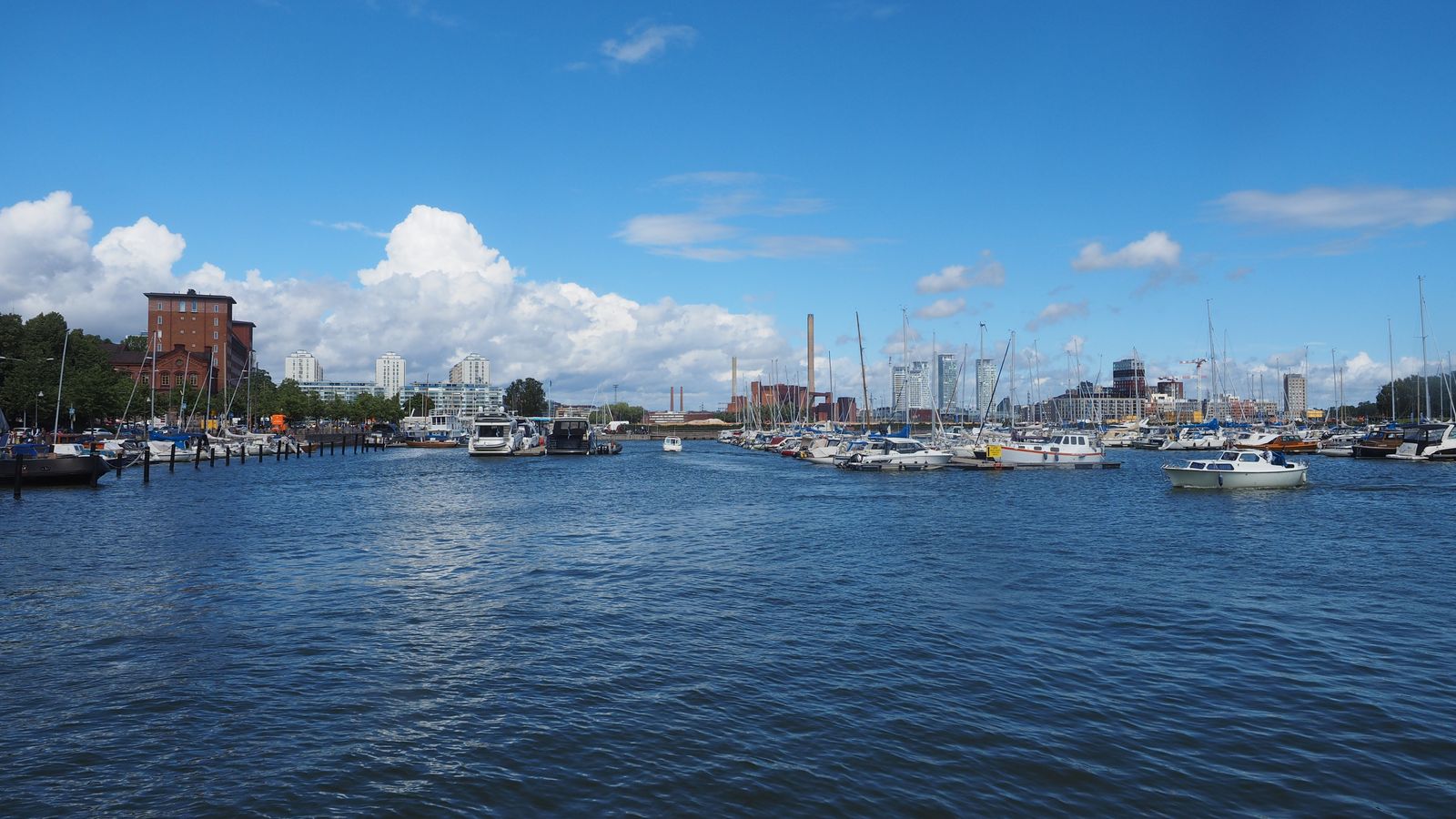
- Hero image source by JIP / openverse, by-sa.