
In all the world, there was no other place like it. Tucked away into a corner of British Hong Kong’s Kowloon quarter, on the remnants of what had once been an old military fort, the Kowloon Walled City was not quite a city, not quite a slum, but a hive of humanity. Built haphazardly on top of itself over the course of decades, dreaded as an ungovernable nest for crime and anarchy, and so completely packed inside that not even daylight could reach its outdoor alleys at the lower levels, the Kowloon Walled City was truly one-of-a-kind.
One part favela, one part living, breathing organism, the city was so tightly packed that no place on Earth—before, during, or since—has ever even come close to its sheer population density. That figure, by the way? Two million people per square kilometer.
This is a tale of two cities. We’ll explore the crime den, the public monstrosity, the geographic and demographic anomaly that was Kowloon Walled City, from the outside. And we’ll explore the strange mystique, the almost magnificent invention, and the fundamentally human experience that was Kowloon Walled City, from the inside.
Key Takeaways
- Kowloon Walled City was a densely populated, self-built community in Hong Kong, known for its high population density and lack of government oversight.
- The city was initially a refuge for Chinese refugees after World War II, evolving into a complex, interconnected urban environment.
- Despite its reputation for crime, the Walled City had a strong sense of community, with residents forming mutual aid societies and developing unique social norms.
- The city’s infrastructure was haphazardly constructed, leading to significant safety and health issues over time.
- Kowloon Walled City was demolished in the early 1990s, replaced by a public park, and its legacy lives on in media and cultural references.
Finding the Walled City
To visit Kowloon Walled City today, you’ll first need to arrive in Hong Kong, today still nominally a special administrative region inside China. Once you arrive at the international airport, you’ll board a metro train called the Airport Express, and ride it all the way to the part of the city called Kowloon. From there, you’ll hop the number-eleven bus and ride it for about ten stops, eventually arriving outside the Regal Oriental Hotel—where, if you’re so inclined, we imagine you’re probably welcome to book a stay.
From there, walk about half a kilometer, maybe some five to seven minutes if you’re taking your time, and you’ll finally come to the place you’ve traveled halfway across the world to reach. You round the corner, eager and ready, and finally cast your gaze outward…upon a public park.
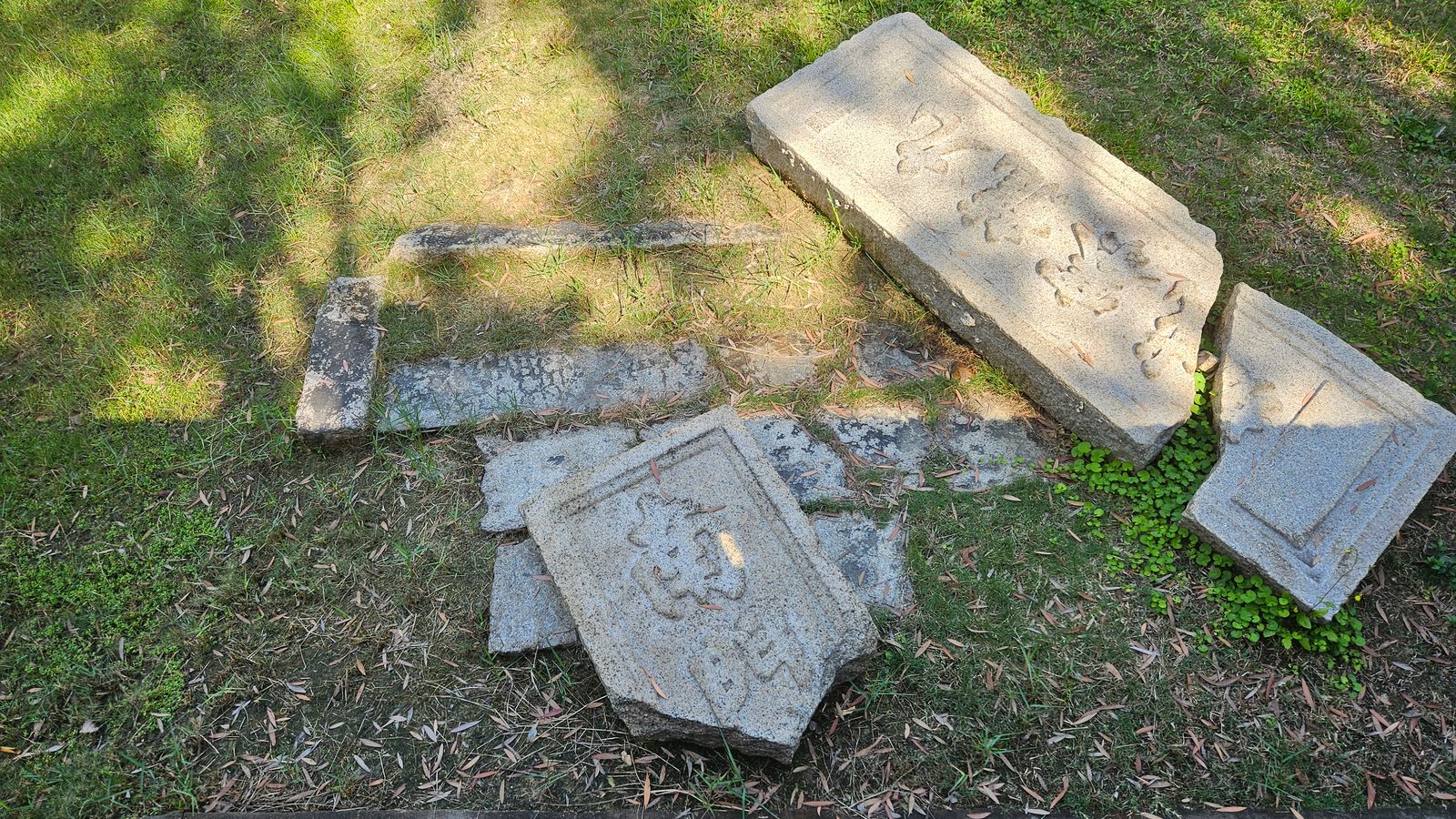
If passers-by notice you at all, they might chuckle and tell you that you’re about thirty years too late to see what you came for. These days, the best you’ll get is a leisurely walk around the Kowloon Walled City Park, although you might find a couple of old landmarks and mementoes that have survived. You might also be able to enjoy a little exhibit about the walled city of old. Alas, we’ve got to spoil the ending for you here; Kowloon Walled City was dismantled completely a very long time ago, before Hong Kong even became part of China in the first place.
In order to travel to the place Kowloon Walled City was born, we’ve got to travel back in time, to the years immediately following the conclusion of World War II. By then, the city of Hong Kong had already been a British protectorate for just a hair over a century, ceded to the Crown at the conclusion of the First Opium War. Since then, it had become a centerpiece of Britain’s holdings in Asia, and a lauded destination for foreign travelers.
The local Chinese population didn’t exactly have an easy few decades, but it was at least kept mostly immune from the bloodshed of China’s civil war. Hong Kong had spent most of World War II under direct occupation by Japan, in a brutal and repressive few years during which many people starved. But after the war, Hong Kong bounced back far faster than mainland China, and as Britain poured resources into the territory in order to try and consolidate its strategic position in the Indo-Pacific, Hong Kong also received a second, simultaneous deluge: refugees.
The proclamation of the People’s Republic of China in 1949, the political instability on the mainland, and the hardship of reconstruction-era China after World War II all drove Chinese refugees toward Hong Kong. On the one hand, this was a massive help when it came to the city’s post-war revitalization; many of the refugees were intellectuals and skilled workers trying to get out ahead of the coming Communist purges, while others were rural peasants who could provide cheap labor in vast numbers. Factories popped up, local industry took off, and before long, Hong Kong turned into a powerhouse for manufacturing. Simultaneously, a tourist industry started to open up again, and high-rise apartment buildings began to spring up all over as a public-housing program kicked off.
But in one corner of the city, the situation was a little bit different. The location had been designated as a military outpost all the way back in the Song Dynasty, somewhere prior to 1279 CE, and it had been built up during the 1800s. After it was kept as a little legal exception under Chinese control after Britain was granted the rest of Hong Kong, it eventually was stormed by the British and brought into their possession too, but it languished under British authority over the following decades, used by squatters and at one point an old folks’ home until World War II. During the war, the stone walls of the fort had been dismantled by the Japanese in order to aid in the construction of an airport, although the informal name, “Walled City”, remained in the aftermath.
But after the end of the war, after the flood of refugees toward Hong Kong had started to arrive, and before public housing programs were established in force, the little fort in Kowloon was prime territory for people to try and eke out a living. By the time the British decided to do something about the people there, the fort was already taken over by thousands of mostly Cantonese-speaking refugees and immigrants, none of whom had any intention of leaving. The British colonial leadership certainly wasn’t amenable to the idea of leaving the slum as it was; even the territorial governor, one Alexander Grantham, had a clear enough idea of the slum to describe it as, quote, “a cesspool of iniquity, with heroin divans, brothels, and everything unsavory.”
In 1948, Britain attempted to push the squatters out of the fort, but they were unsuccessful, and police action at the site prompted riots from the people living there. Not only that, but the squatters’ plight was noticed and taken up by the mainland Chinese population. In China, a British consulate was set on fire, and official envoys were dispatched to encourage the refugees in person to keep on fighting.
After some internal discussion on just what to do with the situation, Britain eventually threw up its hands and decided that the fort wasn’t worth the trouble of clearing out.
Two years later, the remnants of the fort were already home to tens of thousands of people, so when disaster struck, it caused ruin on a massive scale. In January 1950, the makeshift slum was ravaged by fire, destroying some 2,500 ramshackle wooden huts and displacing some seventeen thousand people. The loss of what little these people had been able to collect was devastating.
Even worse, no help was coming; the refugees there no longer had a Chinese government to advocate on their behalf, but they’d also been a little too successful in getting the British territorial government in leaving them alone. Whatever was next for them, this patchwork of an informal community was going to have to go it alone—but they did have one thing going for them. Like wildfire in a forest, the fire inside their slum had devastated the sensitive ecology they’d been able to build…but it had also cleared away rot, and created room for that same land to begin brewing something greater.
Building the Walled City
Now, we’ve got to be clear that even before it acquired its later reputation, the bare bones of the place that would become Kowloon Walled City was already a tough area. Even despite the refugee crisis of the late 1940s and early 1950s in Hong Kong, this little area of Kowloon was not somewhere that a person would go if they can help it. Gangs were active in the area, particularly the Chinese triads; sex work was common; and drugs were both very easy to access, and very easy to abuse.
Certainly, not everybody within this pocket of Kowloon—and in fact, not even most people—were involved in illegal industry, but like any number of slums around the world, the place had a reputation. Desperate people who found themselves there had typically done what they could to avoid ending up in the slum’s confines until there was literally no other place to go. Ask the British governate, and their community was a blight; ask the rest of Hong Kong’s refugee population, and it was a place of misery and darkness; ask Obi-Wan Kenobi, and it was a wretched hive of scum and villainy.
We mention all this, because it’s important to understand just what sort of infrastructure did exist inside the little slum when it came time to rebuild. Two sorts of work existed there: the subsistence work of food supply, medical care, basic education, and other services that sustain any community, and illicit industry. For the criminals in the slum, some of their clientele might come from within, but the vast majority was going to need to come from the rest of Hong Kong. Nobody from the rest of the city was eager to try and pour their money or their dreams into the slumland, nobody from the British governate was going to try to intervene, and even if anybody in the rest of the slum might not have agreed with the idea of becoming part of a criminal haven, what other choice did they have?
This time, the creation of the slum city was far more deliberate than in the first go-round. Instead of a constant trickle of new arrivals from China, the population was stable and knew what it had signed up for, even if there was still some growth over time. While the refugees there had nowhere near enough money to get homes elsewhere, they at least had enough saved up to purchase cheap construction materials.
Those who could rely on builders from elsewhere in the city did just that; those who had no such resources, would simply have to do it themselves. Hong Kong had since given up attempting day-to-day administration of the land, and because of the complete lack of regulations, planning systems, and building standards…the people there could basically do whatever they wanted. In this place, a “developer” was anybody who had a little bit of concrete, a little bit of money, and an idea, and all their ideas, good and bad, were going to have to be played out in order to see how well they worked.
Construction of Kowloon Walled City took place in three basic stages: building outward, building upward, and then, building together. The first stage was the simplest to understand: residents cleared out the debris from the fires, and built new dwellings on the land that had once been the roughly six-and-a-half-acre, two-and-a-half hectare grounds of the old fort. With so many people in such a small space, the building-outward phase ended quickly, and with no more room to lounge out, the residents had to go upward.
When they did, it was by throwing together whatever building materials they had, and hoping for the best, in their rough approximation of the upward construction happening in Hong Kong around them. Building foundations were comically inadequate to hold the weight they’d eventually bear, support structures were lacking at best, and regardless of the risk of collapse, buildings kept on springing upward. Finally, the building process reached a third phase: building inward, into all the nooks, crannies, and empty space that didn’t already have anything going on inside it.
Reinforcement, when it did exist at all, often came in the act of joining multiple buildings together, practically lashing them to each other with the materials required to make a new building in the middle. On the bright side, the superstructure was incredibly creative; on the down-side, it was a bit of a death trap.
Inside, the walled city was about as ad-hoc as it gets. Electricity was wired into a web of legal and illegal connections, some of which were insulated, and some of which were lucky; water was mostly piped to the lower floors and had to be carried upward; and propane was used in canisters all around the superstructure, with so many individual little explosive cans that it’s a miracle nothing catastrophic ever happened. Air circulation and fire egress, in many parts of the building, were punchlines rather than requirements.
Many parts of the superstructure, even dwellings, had no access to daylight or fresh air, and waste disposal was, pun very much intended, a crapshoot. All the while, the ground beneath the behemoth was unstable, leading some buildings to settle far into the ground, while others slipped this way and that. But in an outcome one part structural, and one part metaphorical, the slipping and sliding around of all the buildings in Kowloon Walled City led many to lean and rest on each other, in so-called “lover’s buildings”.
Much like the residents of the walled city would have to do, even the buildings themselves were forced to rely on each other to avoid total collapse—and, as unlikely as it may seem, the settlement managed to reach equilibrium.
Inside the walled city, this grand, seething organism lurched into life. Alleys were built over with the floors of the buildings above, stairways were made into strange combinations of stairway and dwelling, new buildings didn’t just grow upward but sideways and occasionally downward. Corridors were built to connect the upper parts of the structure, saving residents a trip down to the ground in order to see their next-door neighbor, and the rooftop, established firmly by regulations over building height to accommodate a nearby airport, was transformed into playgrounds, gathering spaces, and greenery.
The walled city got a postman, with its longest-serving postal officer, Mr. Lui, working there for some fifteen years. The city’s social norms flexed and bent to accommodate a living situation where property lines were both hazy and fluid, and the people of Kowloon Walled City proved their ability to do the one thing humans do better than possibly anything else: they formed a community, and a shared home, amidst this bold experiment they’d stumbled their way into.
Viewed from the Outside
With the rest of Hong Kong embracing all the trappings of an advanced, modern city, the contrast alone with a place like Kowloon Walled City was always going to give rise to disagreements. But when viewed from the outside, the lack of regulation, law enforcement, taxation, or any other intervention inside the walled city made it seem like something else entirely. There, opponents of Hong Kong’s legal structure and leaders of illicit industry could very obviously find quarter. Among them, one particular sort of organization would take precedence over all others: the triads.
Anyone familiar with organized crime in East Asia today, would struggle to miss the Triads, a massive transnational crime syndicate with its base in mainland China. Present in many international Chinese communities, especially in Hong Kong, the Triads of the mid-20th-century, as well as today, worked in counterfeiting, drug trafficking, money laundering, fraud, extortion, prostitution, smuggling, and just about everything else that could earn them money from the shadows. They feature a clear leadership structure, strictly regimented internal organization, and rituals and customs like, say, the Mafia of other nations, although their specific codes of conduct are unique to them. Like the mafia organizations of Western nations, though, the Triads weren’t exactly cohesive internally; different organizations and families within their ranks were all too happy to squabble or even fight directly in order to control the illegal market.
In Kowloon Walled City, there were five major triad gangs at work, all using the walled city for their own purposes. The Sun Yee On gang, one of Hong Kong’s dominant organizations within the Triads, would boast thousands of members inside Hong Kong at that time, while the 14K triad, Sun Yee On’s main rival, were known for direct confrontations with the British administration along with the mass production of opiates. The King Yee gang, the Wo Shing Wo gang, and the Tai Ho Choi gang were all active in and around the walled city as well.
As for what they did there…well, obviously, lots and lots of crimes. Specifically, the walled city’s status as a no-go zone for the authorities made it ideal for the manufacture and sale of opiates, especially heroin. The Triads also operated a network of brothels inside the city, sold prohibited animal meats, and ran other operations, like counterfeiting and gambling, inside the walls.
Not only that, but the walled city offered the Triads an opportunity to do their business in private, both when it came to peaceful matters and forceful ones. Settling scores was a whole lot easier with the guarantee that the authorities wouldn’t intervene, no matter how bad the violence got. Before too long, the Triads controlled internal matters inside the walled city, as the only people with both the organization and the muscle to impose their will in what was essentially a lawless space.
Landlords, employers, and every other person in a position of power inside the walled city could basically act as kings on their own territory, setting up shops and makeshift factories where the conditions, for the workers there, were not up for debate.
Hong Kong’s attempts to deal with the walled city were as infrequent as they were ineffective. For the first few years of the walled city’s existence, Hong Kong didn’t even exercise jurisdiction over the place, something that was only established in 1959 when a murder trial established that Hong Kong did have responsibility for the slum. Police raids were intermittent and starkly limited, with most public officials more than happy to take bribes in order to look the other way.
In 1963, Hong Kong tried to get rid of some shacks that were sitting at the fringes of the walled city, something that immediately prompted organization from the residents. Hong Kong provided mail delivery and water to the walled city, it provided electricity, and it could grant limited other public services, but it was impotent when it came to providing health or education services.
Watch The Project Briefing
Open Video
Video Briefing
Kowloon Walled City: Inside the Most Crowded Place on Earth
And all the while, Hong Kong had to play nice with the residents inside, mostly because if the territorial government wanted to start just about any fight with the population, then the logical conclusion of those disagreements would almost always end with the dismantling of the city. As much as Hong Kong’s leadership might have wanted to do that, it just wasn’t feasible. Hong Kong had ample reason to be frustrated when it learned that the walled city residents were digging private wells, and selling off the water they collected, with little consideration or even awareness of the problems that might cause.
The walled city’s electrical infrastructure wasn’t just haphazard; it was outright dangerous to tamper with, especially for electricians who didn’t have the luxury of understanding the whole electrical system—an understanding that was hard to acquire, when much of the city’s population didn’t take kindly to city workers showing up. Many of the people who’d worked to build the walled city claimed that their buildings were safe and code-compliant, and while that certainly wasn’t always false, one very quick look at the superstructure was enough to prove that it wasn’t always true.
And that wasn’t by accident. The construction process to build the walled city hadn’t been managed by the people who lived inside, or at least not directly; instead, it had been done by contractors, often ones with plenty of prior experience, but no incentive to stay true to regulations in what was basically an unregulated space. If a person could build a dwelling inside the walled city, they were almost certain to find a tenant willing to put up with the conditions in order to secure low prices—and that had created a powerful financial incentive for builders to do the bare minimum to make a livable space, and then move on.
Those who controlled property inside the walled city, could make a whole lot of profit while providing basically no services to their tenants, who, if they didn’t like the landlord, could try their luck in the rest of Hong Kong’s more expensive market. In a rare bright spot for the Hong Kong municipal government, the local fire department did establish a relationship with the walled city that allowed them to come in and check on factory conditions, but when they had advice to give out on how to make things safer, those were mere suggestions rather than instructions.
With no means to exercise power within the walled city itself, Hong Kong was left to regulate it from the outside. Humanitarian organizations were allowed in, especially in the 1970s and 1980s, and initiatives to reduce the crime rate, done in partnership with the city’s younger residents, were ultimately successful. In 1973 and 1974, the police were able to step up their raids, ultimately carrying out 2,500 arrests or more and confiscating some 1,800 kilograms of drugs in the process.
Over the course of decades, Hong Kong and the criminally unaffiliated residents of the walled city were able to work together and reduce the influence of the triads. But all the while, Hong Kong understood that it was best served keeping the peace, and tolerating what amounted to an anarchic, stinking trash heap in the middle of its Kowloon quarter.
All this isn’t to say that the authorities in Hong Kong didn’t have some sympathy for the people inside the Walled City—which, by all accounts, they did seem to. But actually acting upon that sympathy wasn’t an easy ask. Many officials within the city were reluctant to invest resources in rebuilding it, for fear that investing any materials or financial wealth in the space would legitimize the claims of the residents to their homes.
Realistically, the city would have much preferred to see it gone than fixed, and starting to fix it would have all but ensured that the city would have to commit to continual renovations and repairs. Not only that, but Hong Kong didn’t exactly need these people to be living on this particular plot of land, either. Hong Kong’s housing system, while still deeply imperfect, now had the resources that had been lacking when the walled city first rose up out of the ground.
The problem had now become that disrupting or dismantling the walled city itself would mean breaking up a community, destroying a way of life for tens of thousands of people, and quite possibly forcing them to give up much of what they had in the process.
Life on the Inside
By the time that the Kowloon Walled City had reached its prime, it had gone from improvised settlement to a massive behemoth. In some parts of the walled city, buildings rose fourteen stories high, although, to be fair, the height of a building story inside the walled city was a lot less consistent than it would be anywhere else. The entire ground level, and most of the second and third levels, were shrouded in darkness except for one central courtyard.
On balance, the entire walled city was estimated to supply about seven square feet of floor space per individual person. Externally, it wasn’t exactly a pretty sight, but it was certainly a memorable one, overlaid with a mess of balconies, paint jobs, cages, concrete walls, and tiny filler buildings crammed in between the larger ones that had been built earlier in the superstructure’s history.
But life on the inside, while certainly tough or even dangerous at times, wasn’t nearly so dark or hopeless as Hong Kongers on the outside seemed to believe. At its core, the walled city was a community organized by people with few options, but just as much humanity as might be found anywhere else. There were families there, schools, doctors and dentists, and a clear, distinct culture that was unlike anywhere else.
Sure, there were plenty of caveats; those doctors and dentists, by example, were ones who preferred to operate in places where nobody was going check and see whether their papers were in order. That’s not to say that they were amateurs; just that they’d been trained in China but hadn’t been able to take the qualifying exams that would allow them to practice from Hong Kong. But despite the many, many, many elements within the walled city that operated around the law, the place was a whole lot more than a crime den.
It was a whole world unto itself.
In fact, while the Triads did maintain a strong presence inside the walled city, they were typically more than happy to share the space with other residents. Many former denizens of the walled city have explained that they only rarely saw members of the Triads, and found out what they were up to even less frequently. And besides the organized crime in the walled city, the place was a hotspot for entrepreneurship and manufacturing.
In its heyday, the walled city accounted for hundreds of perfectly legitimate factories, where low rents, nonexistent labor regulations, and an abundance of people willing to work, made what a pure capitalist would call a near-perfect situation. Laborers were willing to work in appalling conditions, for long hours, with the labor force often involving children…but goddamn, it was profitable, and the productivity was incredible. Goods manufactured in the walled city were widespread around the rest of China, especially plastics, textiles, and even food, which was often grown or prepared inside the slum.
As goods went out, aid organizations, religious societies, welfare groups, and more, all found their way in. People developed customs, an internal culture, and deep bonds not just to their families and neighbors, but to their home itself.
When Hong Kong had come calling in 1963, trying to tear down some of the tents at the outer fringes of the walled city, the people there didn’t just respond with organized protest. They created what’s called a kaifong organization, a society of mutual aid, that granted them a structure not just to push back against overreach from outside, but to support each other within the city walls. The organization served to provide medical care, education, vital supplies, and coverage for living expenses for the desperate inside the city, often at very low cost or even for free. Quality of life, personal safety, and the well-being of each other’s neighbors, were all priorities, both for benevolent reasons and practical ones. Ensuring that illnesses didn’t fester in one particular corner of the walled city, ensured that they wouldn’t spread elsewhere; ensuring that everybody’s homes didn’t fall too deeply into disrepair, thus ensured that homes wouldn’t start to collapse. Like people living anarchically in just about every instance across human history, the people of the walled city took it upon themselves to create a society, and care for those around them, even when it was difficult, expensive, or simply inconvenient to do so.
With the kaifong, social order soon followed. Even though Kowloon Walled City was but a blip in the much larger territory of Hong Kong, it was nonetheless a very self-contained community, and like other close-knit communities of that kind, rules of cordiality became very important for everybody there to follow. A neighbor was a neighbor, whether they were a Triad member or a factory worker or a landlord or a refugee; no matter the disputes or the profit potential of today, they’d still be your neighbor tomorrow. The unwritten rules of the walled city were highly varied, sometimes hyper-specific to matters like water sharing or trash disposal in such a crowded space, and sometimes broad enough that they were simply meant to maintain decency among the community. The place was still rough, still unpleasant, but it had to be something all parties could live with, or else internal divisions inside the walled city could see the whole thing torn apart. By all accounts, the people on the inside did a very good job at avoiding those divisions as much as they possibly could.
And beyond its unique social structure, beyond its one-of-a-kind environment, testimony by many of those who’d lived there speaks to a deeper allure inside the walled city. Perhaps it was a matter of its sheer uniqueness, a place where traversing lower floors meant walking with umbrellas to avoid the rain-like cascade from the pipes above, and where children growing up inside its walls could play endless make-believe in an architecture that was one part Blade Runner’s Los Angeles, and one part Harry Potter’s Hogwarts castle. And luckily for us in the 21st century, the legacy of the Kowloon Walled City is still fresh enough that plenty of former residents’ stories are still there to be found.
Take Heung Yin-King, eldest of several daughters in a family of six who’d moved there in the 1960s. Telling her story to The Travel Club, Heung related what it was like to live in a seventy-square-foot room with her family, in part of a two-story flat that was shared with seven other families. Quote: “We had the best times in the first house, even though the rooms were so tiny there wasn’t space for a dinner table.
We ate from a board laid over the knitting machine and sat on the bed. Everyone got along, and it was great to have so many kids to play with.” Another former resident interviewed for the same article, one Albert Ng Kam-Po, recalled from his own childhood: “We didn’t know it was so dangerous.
We’d just play ping-pong in the hallway. The kids would go up onto the roofs and leap from building to building, or we would drag discarded mattresses to the roof and jump on them. It was a happy time.”
And said another former resident, Ida Shum, about the closeness of her community even despite hardship, quote: “We all had very good relationships in very bad conditions. Even now, many people stay in touch with each other even though some old friends are overseas. People who lived there were always loyal to each other.
In the Walled City, the sunshine always followed the rain.”
Other former residents have had their tales catalogued by their relatives, after moving elsewhere. Writer Sharon Lam, authoring an article that would be published via architectural magazine ArchDaily, wrote about her father’s recollection of the walled city: quote, “A smirk broke across his face as soon as the name was mentioned, and I was surprised to learn that his primary school was just next door from this ‘crazy’ mass of drugs, gangs and crime. In fact, most of our conversation focused on the food that you could find there. He describes the place as ‘very special’ […] Smiling, he recalled the constant dripping of water leaks everywhere and the surreal disappearance of the sky once you entered. He also went on about the many unregulated businesses there, with special mention to the many unlicensed dentists that could operate liability-free, and also the dog meat stalls, which found success while canine cuisine was illegal in the rest of Hong Kong.” Later in the same article, Lam refers to the people of Kowloon Walled City making fun of an Austrian camera crew making a film in the 1980s; quote: ”[…] Their attempt at shock-horror is heckled by the background Cantonese, with children wittily mocking the camera crew.”
But even with all the strange, but undeniable magic of the walled city, the situation was far from perfect. While the physical infrastructure of the city was able to hold itself mostly upright, the building process still put major pressure on electrical wiring, water pipes, and more. Moisture and mold festered, water built up in places it shouldn’t, and because of how haphazard the walled city’s construction had originally been, it would have been a nightmare to try and refurbish.
The pockets between buildings were progressively filled up with years upon years of trash, leading to both a truly incredible smell, and a biohazard problem for people living on the lower floors. While the walled city was not the miserable pit that much of the world believed it to be, it also wasn’t sustainable for anybody who lived there, and the end would have to come sooner than later.
A Sudden Demise
For Kowloon Walled City, the beginning of the end came on December the nineteenth, 1984. On that date, the governments of China and the United Kingdom had agreed on a joint declaration to return Hong Kong to China’s control, as of July the first, 1997. Although it wasn’t clear to the people of the walled city at the time, Britain was going to get rid of the establishment before China took over.
For the decades that the walled city had been built up, it had been a consistent sore spot between Britain and China, and given that it was lagging badly behind the rest of Hong Kong in terms of sanitation and living conditions, both nations agreed that they’d rather see it gone. On the fourteenth of January, 1987, Britain and China announced that they’d agree that the walled city would be taken apart, and turned into a public park.
Hours after the announcement, cordons went up across all the streets and alleys that provided access to Kowloon Walled City. Four hundred representatives of the Hong Kong Housing Department entered the city, all at once, to speak to every resident there and explain the decision. The walled city was surveilled for six months, until the authorities felt they finally had an accurate head count on all the people coming in and out.
During that time, they drew up their plans in secrecy, arranging for the demolition of the structure but ensuring that word about compensation didn’t spread before the British were ready. Ultimately, a compensation package equivalent to nearly three billion American dollars was allotted for the walled city; each individual flat would net its inhabitants about 380,000 dollars American, just north of a million dollars in today’s money. While a few hundred households would spend years negotiating and trying to hold out, the vast majority accepted the British government’s terms long before that.
With the money granted to them by the territorial administration, the people of Kowloon Walled City were generally able to really improve their situation, and many would begin new lives in Hong Kong or even travel around the world in the coming years.
For those who remained, the destruction of Kowloon Walled City became an inevitable process, rather than an act of cooperation. In July of 1992, riot police escorted the city’s remaining residents out by force, and once they were gone, the whole thing was enveloped in a tall wire fence. The city sat empty for the better part of a year, until March 23, 1993, when, in a ceremonial occasion meant to signal the end of Kowloon Walled City, a wrecking ball was swung in one single blow against the outer shell of the superstructure.
Outside the fence, foreign diplomats and members of the Hong Konger elite cheered and clapped; a few residents who had showed up in protest, voiced their displeasure. Over the coming months, Kowloon Walled City would be taken apart piece by piece, until the only thing left was a much older building, a relic of pre-British Hong Kong, that had survived across the fort’s entire history.
Today, the land that was Kowloon Walled City, and the legacy of Kowloon Walled City, have taken starkly diverging paths. The land itself now comprises the Kowloon Walled City Park, opened in late 1995; there, people can visit a pavilion, play the chess-like game of Xiangqi, wander around gardens, and see the remnants of the city’s South Gate. It’s not a celebrated place inside Hong Kong; nor is it a particularly feared one, or even a notable one at all. Meanwhile, the walled city’s legacy has taken on a new life in Western media; it served as the inspiration for a walled neighborhood in the 2005 film Batman Begins, and it’s shown up in the video game Call of Duty: Black Ops II, alongside a range of books, films, games, and television shows.
Every once in a while, former residents of the walled city still visit the park. Today, there are no cramped flats to house them, no dank, halfway-flooded tunnels under tons of concrete, for them to call home. Nor is there any other place on Earth quite like the Kowloon Walled City; there never has been, and there will likely never be.
For as long as it lasted, it was an anomaly, at once a bold and successful experiment in peaceful anarchy, and a reflection of the failures of British Hong Kong to give a massive group of refugees any option for relief, except the very last resort. It was one part dystopia, it was one part experiment, it was one part home, and it was truly, completely, one of a kind.

Simon Whistler
Simon Whistler is one of YouTube's most prolific educational creators, with tens of millions of subscribers across his channels. Places is his expedition into the world's most remarkable locations — from cities carved from salt to islands nobody dares inhabit. He brings a researcher's rigour and a traveller's awe to every field note.
Frequently Asked Questions
What was the population density of Kowloon Walled City?
The population density of Kowloon Walled City was approximately two million people per square kilometer.
How did Kowloon Walled City originate?
Kowloon Walled City originated on the remnants of an old military fort in British Hong Kong’s Kowloon quarter. After World War II, refugees fleeing mainland China started settling in the fort, leading to its transformation into a densely populated slum.
What was the British government’s initial response to the squatters in Kowloon Walled City?
The British government attempted to push the squatters out in 1948, but they were unsuccessful. The squatters’ plight was supported by the mainland Chinese population, leading Britain to decide that the fort wasn’t worth the trouble of clearing out.
What was the impact of the fire in January 1950 on Kowloon Walled City?
The fire in January 1950 destroyed about 2,500 ramshackle wooden huts and displaced around 17,000 people. It cleared away rot and created room for the land to begin brewing something greater.
How was Kowloon Walled City constructed?
Kowloon Walled City was constructed in three stages: building outward, building upward, and then building inward. Residents cleared debris from fires and built new dwellings, then constructed buildings upward and filled in empty spaces with more structures.
What role did the Triads play in Kowloon Walled City?
The Triads controlled internal matters inside Kowloon Walled City, operating various illegal industries such as drug trafficking, prostitution, and gambling. They were the only ones with the organization and muscle to impose their will in the lawless space.
How did the residents of Kowloon Walled City form a community?
The residents formed a community through mutual aid and social norms that accommodated their living situation. They created a kaifong organization to provide medical care, education, and vital supplies, ensuring the well-being of each other’s neighbors.
What was the British government’s final decision regarding Kowloon Walled City?
The British government decided to dismantle Kowloon Walled City and turn it into a public park. They offered a compensation package to the residents, and the demolition began in March 1993.
What is the legacy of Kowloon Walled City today?
The legacy of Kowloon Walled City lives on in Western media, inspiring settings in films, video games, and other forms of entertainment. The land itself is now the Kowloon Walled City Park, opened in late 1995.
What was the significance of the kaifong organization in Kowloon Walled City?
The kaifong organization was a society of mutual aid that provided medical care, education, vital supplies, and coverage for living expenses to the residents. It helped maintain social order and ensure the well-being of the community.
Sources
- Original Places video: Kowloon Walled City: Inside the Most Crowded Place on Earth
- https://www.loc.gov/loc/lcib/9708/hongkong.html
- https://www.jstor.org/stable/23890234
- https://www.pbs.org/wgbh/commandingheights/lo/countries/hk/hk_overview.html
- https://link.springer.com/chapter/10.1057/9781403981615_4
- https://www.jstor.org/stable/2170629
- https://www.archdaily.com/493900/the-architecture-of-kowloon-walled-city-an-excerpt-from-city-of-darkness-revisited
- https://www.archdaily.com/361831/infographic-life-inside-the-kowloon-walled-city
- https://www.nytimes.com/2019/07/24/world/asia/hong-kong-triads-protests.html
- https://www.britannica.com/topic/Triad-Chinese-secret-society
- https://www.archdaily.com/800698/heres-what-western-accounts-of-the-kowloon-walled-city-dont-tell-you
- https://www.cnn.com/travel/article/kowloon-walled-city/index.html
- https://www.thecollector.com/kowloon-walled-city-lawlessness-and-claustrophobia/
- https://www.thetravelclub.org/articles/travelogues/664-kowloon-walled-city-life-in-the-city-of-darkness
- https://www.sciencedirect.com/science/article/pii/S0264837718301340#sec0030
- https://99percentinvisible.org/episode/episode-66-kowloon-walled-city/
- https://allthatsinteresting.com/kowloon-walled-city
- https://www.architectural-review.com/essays/city-of-darkness-surreal-photographs-of-day-to-day-life-inside-kowloon-walled-city
- https://www.vice.com/en/article/kbzwvm/a-new-look-at-kowloon-walled-city-the-internets-favorite-cyberpunk-slum
- https://medium.com/@gmichaelhenriquez/kowloon-walled-city-the-city-inside-of-a-city-b11850b8ec79
- https://www.minneapolisfed.org/about-us/monetary-policy/inflation-calculator
- https://www.ncbi.nlm.nih.gov/pmc/articles/PMC5732597/
- https://www.atlasobscura.com/articles/kowloon-walled-city
- https://www.thecollector.com/kowloon-walled-city-lawlessness-and-claustrophobia/
- https://www.discovermagazine.com/the-sciences/the-lasting-legacy-of-hong-kongs-kowloon-walled-city
- https://history.howstuffworks.com/world-history/kowloon-walled-city.htm
- https://www.jstor.org/stable/23891943
- Hero image source by 姒姓賢寧 / openverse, by.