

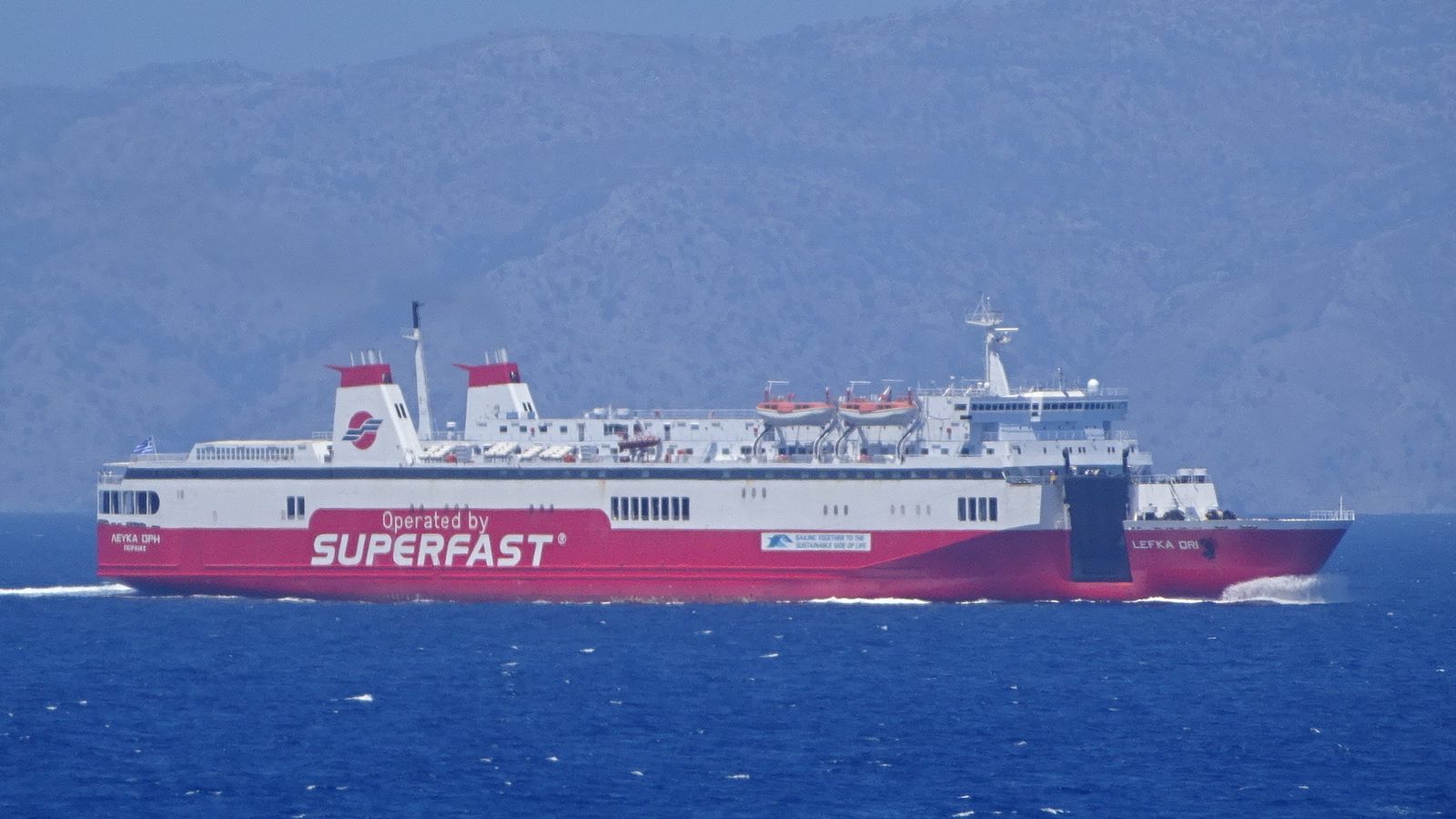
If you happen to be a person living on this planet called Earth, chances are you owe a huge debt of gratitude to the merchant crews toiling for a hard-earned paycheck in the Straits of Malacca and Singapore—a stretch of sea also known as ‘SOMS’.
It is estimated that at least one third of global trade—your food, your clothes, the raw materials which will be worked into your favourite products—will have to sail through the SOMS at some point. To say nothing of 80% of the fuel keeping Japan and China alight and mobile!
So, those crews sailing through the SOMS have a lot of responsibilities on their shoulders. In addition to working long hours, and having to negotiate narrow chokepoints amidst heavy maritime traffic, these merchant sailors have incurred—and still incur—in the constant risk of being attacked, getting robbed, held at gunpoint, held hostage, or even kidnapped.
Key Takeaways
- The Straits of Malacca and Singapore (SOMS) are crucial for global trade, with one-third of it passing through.
- SOMS is notorious for piracy, with 53% of global piracy raids occurring in these waters.
- Historically, pirates in SOMS have been active since the 5th century, evolving from independent raiders to organized crime syndicates.
- Piracy in SOMS surged in the late 1990s due to economic crises and political instability, peaking in 2000.
- International cooperation and increased patrols significantly reduced piracy from 2016 to 2018, but it resurged due to economic hardships from the COVID-19 pandemic.
Those of the Caribbean may have taken centre stage in popular culture.
The Somalis may have attracted most headlines.
And yet, by sheer numbers alone, the dubious honour of most active, most prolific, more dangerous pirates belongs to the criminals roaming these sea lanes.
Welcome to the Straits of Malacca and Singapore, the most pirate-infested waters in the world.
Sea Peoples and Pirate Princes
Let’s sort out the geography first. As the name suggests, the Straits of Malacca and Singapore, or SOMS, is a long and narrow waterway in South East Asia, running between the littoral states of Malaysia, Singapore, and the Indonesian island of Sumatra. The SOMS is some 900 km long, but it squeezes down to a mere 1.7 km at its narrowest point. Moreover, the SOMS’ coastlines are littered with thousands of little islands, reefs, inlets and mangrove swamps.
All these features make sailing through this passage a very complicated affair, made even more bothersome by the insane amount of maritime traffic plodding along the Straits. Merchant crews traversing this chokepoint have a good reason to be there: this is the most direct route from India to China, and as such has been one of the busiest trade routes for centuries.
Every year, some 120,000 ships sail through these waterways, carrying 40% of all goods shipped to and from Japan, more than 60% of all maritime trade from China, and about $3.5 trillion worth of US imports and exports.
Based on those figures alone, you may realise the strategic importance of this chokepoint. Any disruption to its—literal—smooth sailing can have serious consequences on global trade, fluctuation of oil prices, even energy shortages. It would make sense for shipping companies to perhaps hedge their bets and explore other sea lanes … But any alternative would require longer travel times, implying higher costs in fuel and salaries for the crew.
That’s why merchant ships stick to the SOMS, despite it being a playground for a very scary breed of occupational hazard: pirates.
Throughout the 1990s, and up to the early 2010s, the public’s imagination was captured by the actions of Somali pirates, and their high visibility hijackings. And yet, during the same period, Somali raids on the high seas accounted for only 28% of all pirate attacks worldwide.
Over the same period, the pirates of the SOMS barely made it to the headlines. And yet, their marine robberies accounted for 41% of all pirate attacks, and resulted in an estimated 136 murders!
As of today, the Straits of Malacca and Singapore play backdrop to 53% of global piracy raids, making these waterways the most pirate-infested waters in the world.
It is fair to wonder what would make this environment so pirate-friendly. Luckily, we have a rather straightforward answer from Professor Barbara Watson Andaya, University of Hawaiʻi at Mānoa: ‘The geographical environment, the nature of local societies and the growth of global seaborne commerce coalesced to create a distinctive space that locates the Malacca Strait at the centre of any discussion of Asian piracy’
To expand on these thoughts, we could say that the convenient location of the Straits have always attracted thousands of vessels, carrying a rich cargo. Then, the socio-political factors of the littoral states, throughout history, have encouraged many individuals to pursue piracy as a profitable business. And the very geography of the coastline, punctuated by islets and inlets, has allowed those very pirates to set up convenient hideouts.
According to Prof Watson Andaya, the earliest written mention of piracy in the Strait of Malacca dates back to the fifth century AD. These early sources clearly identify the culprits for mischief at sea: the orang laut, or ‘sea people’, communities living amongst the small islands, reefs and rocky outcrops which pepper the southern end of the Strait.
The orang laut conducted their activities according to a rigid seasonal schedule, regulated by the direction of the winds. From February to April, during the northern monsoon season, the ‘sea people’ stuck to fishing, collecting seaweed and salvaging cargo from shipwrecked vessels. But from June to October, as the southern monsoon started blowing, the coastal dwellers took to piracy: carried up the Strait by the favourable winds, they attacked passing ships, before disappearing amongst thousands of natural hiding places.
In the 10th Century AD, the Song dynasty in China promoted sea trade with India, which was great news for the orang laut. Traffic in the Strait boomed during that period, filling the sea lanes with plenty of booty, ripe for merciless plunder. At this stage, the modus operandi of the Straits’ pirates was simple:
Step one: attack a ship.
Number two, murder the crew!
Next: steal their cargo. And four: Vanish!
But the rulers of local polities flanking the Straits took notice of these pirates’ proficiency, adding a layer of complexity. These rulers controlled competing sea lanes and ports, seeking to benefit from the India-China trade. Fair competition can only go so far, and thus these local monarchs took to hiring fleets of orang lauts to disrupt competitors’ trade routes. Thus, the once-independent pirates became privateers for hire.
In the 15th Century, they experienced another evolution, as they realised that one need not murder the crews. How humane of them. Instead, it was much better to kidnap them, and sell them into slavery! The pirates-slash-slave traders of the Straits found an eager clientele amongst the early European powers rocking up in these waters, the Portuguese first, and the Dutch later.
After the 1640s in particular the Dutch East India Company, or VOC, became the dominant power in the region, with an unquenchable thirst for slave labour in their plantations and outposts.
The pirates of orang laut origin, however, by this time were facing fierce competition from the anak raja. These were the non-first-born sons of local monarchs, especially those whose coffers could not bankroll their numerous offspring. Cut off from their dads’ allowances, many anak raja rolled up their sleeves and took to the seas for an honest career in maritime armed robbery, kidnap, and murder.
The anak raja were essentially ‘Pirate Princes’, with a well-defined code of conduct. For example, they had to follow royal guidelines on which ships they could or could not attack. And they had to abide to the practice of mencari rezeki which may be translated as ‘To seek one’s fortune’
According to this practice, the anak raja had to devolve part of their loot to their aristocratic patrons and overlords on dry land.
The orang laut and anak raja exercised their trade pretty much undisturbed until the 1790s, when new, ruthless competitors made their appearance, attracted by the incessant procession of bountiful ships across the Straits.
These were the raiding fleets of the Iranun, a group hailing from the Sulu archipelago and the Mindanao islands, now part of the Philippines. The main aim of the Iranun pirates was to kidnap sailors to be sold into slavery, but they had no qualms in mutilating and murdering their ‘human merchandise’.
A local account of the time tells us about the fate of a merchant following an Iranun attack:
‘Encik Bakak resisted with all his might, but what chance did he have, a trader, against weapons of war? During the attack he was killed and his [fishing boat] plundered. He himself was strangled with his shoulder sash and left to rot. His penis was cut off and stuffed into his mouth. His companions were killed, some were beheaded and some were tied up to be sold.’
Since those early, extremely violent eras, piracy may have gone dormant at times, as local and European powers increased their patrolling efforts or brought more fire-power to the area.
It may have changed modus operandi, with pirate fleets opting to exercise only the threat of violence to collect tributes in exchange for safe passage.
But pirates never really left the SOMS area. Their activities somewhere went under the radar, overshadowed by the popularity of fictional Caribbean buccaneers, and the all-too-real exploits of Somali sea raiders.
21st Century Pirates
The SOMS pirates really entered global consciousness only in the late 1990s, when the annual number of reported attacks at sea went from close to zero to 75. This surge may be explained by two factors.
First, the 1997 Asian financial crisis. The impact on local communities was debilitating, pushing many Indonesians and Malaysians to turn to piracy to make a living. The crisis also led to political instability and reduced government budgets, especially in Indonesia. Which in turn led to a weakening of police and naval military forces.
The increased ‘operational tempo’ of the SOMS pirates eventually resulted in high profile cases, such as the hijacking of the Malaysian vessel Petro Ranger, in April 1998.
Which takes us to the second factor: before the Petro Ranger, ship owners and crews may have under-reported pirate attacks in the area, perhaps to keep insurance premiums down. But after that watershed, crews simply started to report on an issue that had been there all along!
The late-1990s, early-2000s piracy attacks fell into three main categories: the robbery of cargo from vessels; the hijacking of vessels; or kidnapping crews for a ransom.
Robberies usually took place at night or just before daybreak. A group of five to 10 pirates would board their target with grappling hooks, neutralize the crew, and then steal whatever could be seized quickly: mainly cash and high-tech navigation equipment.
Hijacking operations were conducted by larger, and much better organised crews. Pirates would first gather detailed intelligence on a ship’s route and type of cargo. Next, they would pre-arrange a secure port, as well as a willing buyer for the stolen goods. Finally, the gang would take action, seize the entire ship and sail it to their safe haven, where they would unload the cargo and sell it to their buyer.
In more violent cases, pirates were known to kill entire crews, so they could repurpose their vessel as a ‘phantom ship’. After giving it a paint job, a new name, and a new set of forged documents, the ship would be ready to be re-sold at another port.
Finally, in kidnapping cases, armed pirates would temporarily seize their target vessel, abduct two or three senior crew members, and then take them ashore to hold them at ransom. Pirates would then start negotiating with the crew’s employers, making initial demands up to $200,000, but eventually accepting payments between $10,000 and $20,000.
Watch The Project Briefing
Open Video
Video Briefing
The Malacca Straits: The Most Pirate-Infested Waters in the World
The intensity of piracy attacks reached their peak in the year 2000, prompting the international community to put pressure on Indonesia, Malaysia and Singapore, for them to sort out the problem. Especially Japan and the US indicated their willingness to contribute, and to participate in joint patrols of the SOMS.
In March 2004, the then commander of the US Pacific Command, Admiral Thomas B. Fargo, issued a proposal for a ‘Regional Maritime Security Initiative’
The initiative would involve the active participation of American naval forces. In Fargo’s words:
‘We’re looking at things like high-speed vessels, putting Special Operations Forces on high-speed vessels to conduct effective interdiction in … these sea lines of communication’
Local authorities were not so thrilled. Malaysian Prime Minister, Abdullah Ahmad Badawi, commented:
‘I think we can look after our own area.’
Both Malaysia and Indonesia saw the problem of piracy as a purely domestic one, and were adamant about defending the sovereignty of their territorial waters. Which is an absolutely legitimate concern, but in this case it became a significant hurdle towards international cooperation.
According to maritime security expert Catherine Zara Raymond, writing for the Naval War College Review, there were other reasons which prevented littoral states, and particularly Indonesia, from taking decisive action.
Indonesia had been particularly harmed by the impact of the 1997 financial crisis, which ‘Manifested itself in a public denial of the reported scale of the piracy problem in Indonesian waters.’
Moreover, the crisis had severely depleted the country’s military budget. According to the Indonesian Navy’s Chief of Staff, Admiral Slamet Soebijanto, the country’s patrol fleet was only at 30% capacity. As a result, several units had resorted to illegal activities to replenish their exhausted coffers. And can you guess what was one of those activities? According to Prof Carolin Liss, writing for the Austral Policy Forum, well … It was piracy!
Eventually, the three littoral states of Malaysia, Singapore and Indonesia joined forces in the Trilateral Coordinated Patrol, or MALSINDO, launched in July 2004. The three countries’ navies and Coast Guards would perform patrols in a coordinated fashion, which was all fine and dandy, but there was a major glitch: the MALSINDO agreement did not include any rule on cross-border pursuit.
A pirate gang operating in Indonesian territorial waters, if pursued by the local navy, could just sail into Malaysian waters to shake those annoying patrol boats off their tails. The Indonesians could radio their Malaysian colleagues for support, sure. But what if a Malaysian naval unit was not around to help? The pirates would be free to zoom into the horizon, laughing off the MALSINDO efforts.
This is what happened on most occasions, and the initiative did not reduce the number of pirate attacks in the SOMS, with 38 raids reported in 2004.
Then, on December 26, 2004, a catastrophic event struck the area, one which made no distinction between merchant sailors, pirates, or ordinary inhabitants of the coastal areas. This was the Indian Ocean earthquake and tsunami, a disaster which caused widespread death and destruction across 14 countries, claiming almost 230,000 victims.
In the weeks following the disaster, the number of reported pirate incidents in the Straits dropped to zero. The impact of the tsunami had devastated the coastal communities in Malaysia and Indonesia, killing thousands of inhabitants, and devastating their livelihoods—regardless if they were fishermen or pirates.
And the impact was felt throughout 2005, as the annual number of pirate attacks dropped by 68%, from 38 to just 12. Naval authorities expected piracy to return to previous levels of activities, and yet reports on raids continued to decline from 2005 to 2007.
This longer-term decline may be related to the tsunami’s impact on the Indonesian province of Aceh. This region had been the theatre of a decades-long conflict between the separatist Free Aceh Movement and the Indonesian government. After the natural disaster, both combatants tabled talks to discuss relief operations, a step which led to a peace deal signed in August 2005.
Under its clauses, the Free Aceh Movement had to dissolve its armed units and renounce their weapons, while the Indonesian military would withdraw most of their forces from the area.
According to the already quoted Raymond:
‘Given that both rebels and Indonesian troops had been accused of carrying out piracy, this development may well have played a part in the reduction in the number of attacks in the Malacca Strait.’
Further factors contributed to the decline in piratical actions. In September 2005, the three littoral states introduced the Eyes in the Sky plan, or simply ‘EiS’, which consisted of joint air patrols. In April 2006 the MALSINDO and EiS plans came together under a joint operation, the Malacca Strait Patrols.
In the same year, Singapore and Japan heralded the creation of the Regional Cooperation Agreement on Anti-Piracy, or ReCAAP, hosting its Information Sharing Center, the ISC. ReCAAP has been joined by 21 states as of 2025, including India, China, the Philippines, and the US among others. While the agreement is yet to be ratified by Malaysia and Singapore, both countries have been informally participating in ReCAAP’s main activities: combating the threat of piracy through ‘Information sharing, capacity building, and cooperative arrangements.’
And that’s ReCAAP’s main weapon of choice: information, shared amongst ‘focal points’ connected via a secured network. Thanks to a constant exchange of data and incident reports, both authorities and shipping companies are always made aware of the gangs’ activities, and can take the necessary countermeasures, from prevention to investigation and prosecution.
A New Modus Operandi
The combined effects of the Tsunami, the Aceh peace talks, and international cooperation clearly had a positive impact. Piracy, however, was far from being eradicated. Law enforcement and naval units had partially regained control of the water, sure, but had failed to disrupt the pirates’ bases and support networks on land.
It was only a matter of time before the pirates returned—with a vengeance. And with a new modus operandi!
In 2010, the SOMS were the setting of only two pirate raids. But in the first half of the 2010s, attacks soared, just when the infamous Somali pirates appeared to be going out of business.
The world took notice once again of the problem by the end of 2013, when ReCAAP reported a staggering total of 125 cases of piracy.
What was worse, pirate crews appeared to be more efficient, much better organised. Their attacks were clearly planned in great detail, and did not rely on improvisation and opportunity.
Take the case of the shipping tanker Orapin 4. On the night of May 28, 2014, the ship was calmly sailing from Singapore to Pontianak, Indonesia, transporting a large cargo of fuel. Two hours before dawn, a speedboat approached its side, unseen and unheard. Ten men, armed with guns and machetes, burst onto the Orapin’s deck and quickly subdued the crew. After locking them below deck, the assailants smashed the communications system, and then proceeded to change the ship’s name. Or rather, they just scrubbed off the ‘O’ and the ‘N’, so that the newly christened ‘Rapi’ could not be identified.
This ruse was intended to buy the pirates some time—and it worked! Over the following 10 hours, another cargo, controlled by members of the same gang, was sailed close to the captured ship. The pirates then seized the loot they were after: 3,700 metric tons of fuel, which was siphoned from the Orapin into their own ship.
When coast guards patrols eventually came to the rescue, they found the 14 crew members still locked away, but unharmed. The pirates had long gotten away with their payday, $1.9 million worth of stolen fuel!
Two weeks later, on June 14, the tanker Ai Maru was quietly minding its business, steaming along some 50 km off the Malaysian coast. At 9:15 pm, a speedboat overtook the ship, and seven armed men jumped on board. Some of the pirates held the crew at gunpoint, whilst others destroyed the radio. A second tanker pulled alongside the Ai Maru, and the pirates got down to their main business: siphoning off 620 tons of marine gas oil.
You should have picked up a trend by now: in the early to mid-2010s the SOMS pirates had radically changed their modus operandi, specialising in well-organised, large-scale, carefully planned attacks. Rather than kidnapping the crew, attempting to steal random cargo, or the ship itself, this new breed of pirates was laser-focused on pilfering fuel from tankers.
An investigation by magazine Time found that this type of heists first gained prominence in 2011. By the end of 2012, there had been 14 reported attacks against tankers in the Straits. Of these, four had targeted the same company, a coincidence which led maritime experts to ‘Suspect … a collusion between either the shipping company, or some members of the crew, and the alleged attackers.’
Press agency Reuters confirmed this suspicion by quoting unnamed regional security officials, who warned of ‘Armed gangs prowling the Malacca Strait [who] may be part of a syndicate that can either have links to the crew on board the hijacking target or inside knowledge about the ship and cargo.’
In 2013, the fuel tanker robberies were investigated also by Karsten von Hoesslin, a special-projects manager working for Risk Intelligence, a maritime security firm. While in Pontianak, Indonesia, von Hoesslin learned how a ship’s chief engineer and its captain had been selling information about an oil consignment to a local crime syndicate. With this knowledge, the gang had been able to seize the ship at the right time, and then steal the precious liquid cargo.
Having the right intelligence is key to the success of these piracy operations. According to a separate enquiry by CNBC, nefarious crews can obtain vital info not only from corrupt merchant officers … but even from government and military officials.
After committing their spectacular maritime heists, pirate crews have two priorities in mind: first, make a clean escape; second, make a profit off their stolen goods.
In the mid-2010s, the SOMS pirates had perfected the art of vanishing in plain view. Taking advantage of the extremely high density of merchant vessels in the Straits, they would just blend in the crowd, much like pickpockets in a busy city square.
Once they reached a safe area, crews would proceed to a meet-up with their pre-arranged buyers. This is an essential element of the entire business: without securing a willing buyer, pirates would not even lift a finger!
Very often, these buyers would have no idea that they were purchasing stolen oil from a bunch of sea-rascals. To act as legitimate merchants, often pirate crews would legally buy a small supply of oil before a heist. After stealing fuel off a tanker, they would mix both batches, and then sell them to their buyers. But why go to such trouble?
The fact is that individual batches of oil can be analysed, and their origins traced back to a stolen shipment. By mixing pilfered and legit fuel, pirates could effectively cover their tracks!
Decline and Resurgence
From 2013 to 2015 the number of similar pirate attacks rose steadily: 22 incidents in 2013, rising to 82 in 2014, and then peaking at 135 in 2015. These accounted for 44% of all pirate attacks, worldwide.
And mind you, these figures are likely marred by severe underreporting. Even so, the 2015 numbers firmly put the SOMS at the top of the world’s most pirate-infested waters! In fact, at the time the notorious Somali and West African pirates were virtually out of business, handing over their mantle of infamy to their Southeast Asian colleagues.
We are sure that the pirate crews involved greatly enjoyed the ill-gained profits of their well-planned, large-scale, high-stakes raids. But while those guys were too busy counting their big bucks, they failed to realise that well-planned, large-scale, high-stakes raids also tend to attract much scrutiny and attention from every country that has a vested interest in shipping cargo through the Straits.
The spike in piratical activity contained the seeds of its own demise, as the member countries of ReCAAP dramatically increased their investment in law-enforcement activities in the area. Some countries like the US and Japan took an active role in patrolling the areas of the SOMS which did not fall within the territorial waters of the littoral states. As per Malaysia and Indonesia—whilst not part of ReCAAP—put to good use international funding to conduct additional patrols and crack downs against sea robber gangs.
In 2016, reported attacks dropped to just 21. In 2017, there were only 9 cases. The following year, pirates attacked a measly eight ships.
If today’s story ended here, it would be one of success, attesting the effectiveness of the joint efforts of information exchange championed by ReCAAP, as well as the increased coastal patrols. But as of the mid-2020s, piracy in the SOMS has made a significant comeback, marking the area as a cause of concern for the littoral states and shipping companies worldwide.
According to ReCAAP reports, the Covid-19 pandemic negatively impacted the economy and livelihoods of coastal communities in Malaysia and Indonesia, leading them to pursue maritime crime to supplement their incomes. Reports of pirate raids rose steadily throughout 2020, climbing to 70 attacks in 2021, before peaking at 72 in 2022.
The number of incidents then declined in 2023 and 2024, with 63 and 62 incidents reported. Despite this decline, the SOMS still accounted for 53% of all pirate attacks worldwide. And early trends for 2025 signalled a new surge, with 35 reports filed in the first quarter of the year.
Luckily, according to ReCAAP, the vast majority of current attacks are not violent: pirates are not armed, and the merchant crews do not suffer any injuries. Moreover, the pirates appear to content themselves with stealing relatively light items of cargo, scrap metal or engine spares. All in all, these appear to be opportunistic crimes, perpetrated by loosely organised even improvised gangs, unlikely to benefit from connections with organised crime or corrupt officials.
To recap, in the latest years and months, the SOMS pirates have significantly increased the quantity of their raids, but have displayed an equally significant reduction in the intensity of their individual raids, preferring non-violent methods and low-risk, low-value targets.
Nonetheless, this resurgence is a symptom of economic decline in the area, one of the leading causes of piracy—and crime in general, for that matter.
In the analysis of Muhammad Faizal bin Abdul Rahman, Research Fellow for Cyber and Homeland Defence at Nanyang Technological University, Singapore, the international community has thus far addressed only ‘The symptoms and tactical aspects, rather than the underlying causes of [piracy in the SOMS].’
Those ‘underlying causes’ being the economic hardships resulting from the pandemic, whose long-term effect might aggravate security risks in the area. Until those hard-hit communities recover from such hardships, piracy might still make it to the headlines well into the third decade of the 21st century.

Simon Whistler
Simon Whistler is one of YouTube's most prolific educational creators, with tens of millions of subscribers across his channels. Places is his expedition into the world's most remarkable locations — from cities carved from salt to islands nobody dares inhabit. He brings a researcher's rigour and a traveller's awe to every field note.
Frequently Asked Questions
What is the Straits of Malacca and Singapore (SOMS)?
The Straits of Malacca and Singapore, or SOMS, is a long and narrow waterway in South East Asia, running between the littoral states of Malaysia, Singapore, and the Indonesian island of Sumatra. It is approximately 900 km long but narrows to just 1.7 km at its narrowest point.
Why is the SOMS strategically important?
The SOMS is strategically important because it is the most direct route from India to China and has been one of the busiest trade routes for centuries. It handles about one-third of global trade, including 80% of the fuel keeping Japan and China mobile.
What makes the SOMS a hotspot for piracy?
The SOMS is a hotspot for piracy due to its geographical environment, the nature of local societies, and the growth of global seaborne commerce. The narrow waterway, heavy maritime traffic, and numerous hiding places make it an ideal location for pirate activities.
Who were the orang laut and what role did they play in piracy?
The orang laut, or ‘sea people,’ were communities living amongst the small islands and reefs in the southern end of the Strait of Malacca. They conducted piracy during the southern monsoon season, attacking passing ships and hiding amongst natural hiding places.
What are the anak raja and how did they contribute to piracy?
The anak raja were non-first-born sons of local monarchs who took to piracy due to lack of financial support from their fathers. They followed a code of conduct and had to share part of their loot with their aristocratic patrons.
What was the impact of the 2004 Indian Ocean tsunami on piracy in the SOMS?
The 2004 Indian Ocean tsunami devastated coastal communities in Malaysia and Indonesia, leading to a significant drop in pirate attacks. The number of reported incidents dropped to zero immediately after the disaster and remained low in the following years.
What is the Regional Cooperation Agreement on Anti-Piracy (ReCAAP)?
ReCAAP is an agreement involving 21 states, including India, China, the Philippines, and the US, aimed at combating piracy through information sharing, capacity building, and cooperative arrangements. It hosts an Information Sharing Center to facilitate data exchange and incident reports.
How did piracy in the SOMS change in the mid-2010s?
In the mid-2010s, SOMS pirates adopted a new modus operandi, focusing on well-organized, large-scale attacks on fuel tankers. They would steal fuel and blend it with legally purchased oil to cover their tracks and sell it to unsuspecting buyers.
What factors contributed to the decline in piracy in the SOMS from 2016 to 2018?
The decline in piracy was due to increased law-enforcement activities, international cooperation through ReCAAP, and additional patrols funded by international support. These efforts disrupted pirate operations and reduced the number of attacks.
What is the current state of piracy in the SOMS as of the mid-2020s?
As of the mid-2020s, piracy in the SOMS has resurged, with a significant increase in the number of attacks. However, these attacks are generally non-violent and target low-value items, indicating opportunistic crimes by loosely organized gangs.
Sources
- Original Places video: The Malacca Straits: The Most Pirate-Infested Waters in the World
- https://www.ibtimes.co.uk/pirates-hijack-japanese-oil-tanker-malacca-strait-before-stealing-millions-litres-1445678
- https://www.cnbc.com/2014/09/15/worlds-most-pirated-waters.html
- https://karenwarrenauthor.com/pirates-malacca-strait.html
- https://time.com/piracy-southeast-asia-malacca-strait/
- https://tbr.ie/2024/02/02/the-forgotten-pirates-of-the-straits-of-malacca/
- https://www.nbcnews.com/news/world/strait-malacca-worlds-new-piracy-hotspot-n63576
- https://moderndiplomacy.eu/2021/07/19/the-persistence-of-piracy-and-armed-robbery-against-ships-in-the-straits-of-malacca-and-singapore/
- https://typeset.io/papers/dark-passage-the-strait-of-malacca-343eih2yfo
- https://www.researchgate.net/publication/290981728_‘The_Dark_Passage’_History_Piracy_and_the_Melaka_Strait
- https://www.iias.asia/sites/default/files/2020-11/IIAS_NL36_10.pdf
- https://www.recaap.org/resources/ck/files/news/2024/Press%20release%20-%20ReCAAP%20ISC%20annual%20report%20(2024)%20-%20final.pdf
- https://www.sciencedirect.com/science/article/pii/S0308597X23001550
- https://maritime-mutual.com/risk-bulletins/straits-of-malacca-and-singapore-piracy-armed-robbery-attacks-continue-into-2025/
- https://www.recaap.org/resources/ck/files/reports/annual/Single-sheet%20summary%20for%20Annual%20Report%202023.pdf
- https://www.recaap.org/resources/ck/files/reports/weekly/2025/ReCAAP%20ISC%20Weekly%20Report%20(1-7%20Apr%202025).pdf
- https://wwwcdn.imo.org/localresources/en/OurWork/Security/Documents/MSC.4-Circ.267_Annual%20report_2022.pdf
- https://www.recaap.org/reports
- https://www.lloydslist.com/LL1152373/Singapore-Strait-armed-robbery-wave-continues-into-2025
- https://theses.ubn.ru.nl/bitstreams/732089a1-7ff6-418e-98e1-c2a11290b484/download
- https://digital-commons.usnwc.edu/cgi/viewcontent.cgi?article=1688&context=nwc-review
- https://www.maritime-executive.com/article/straits-of-singapore-and-malacca-report-piracy-declines-in-2024
- Hero image source by Pjotr Mahhonin / openverse, by-sa.