

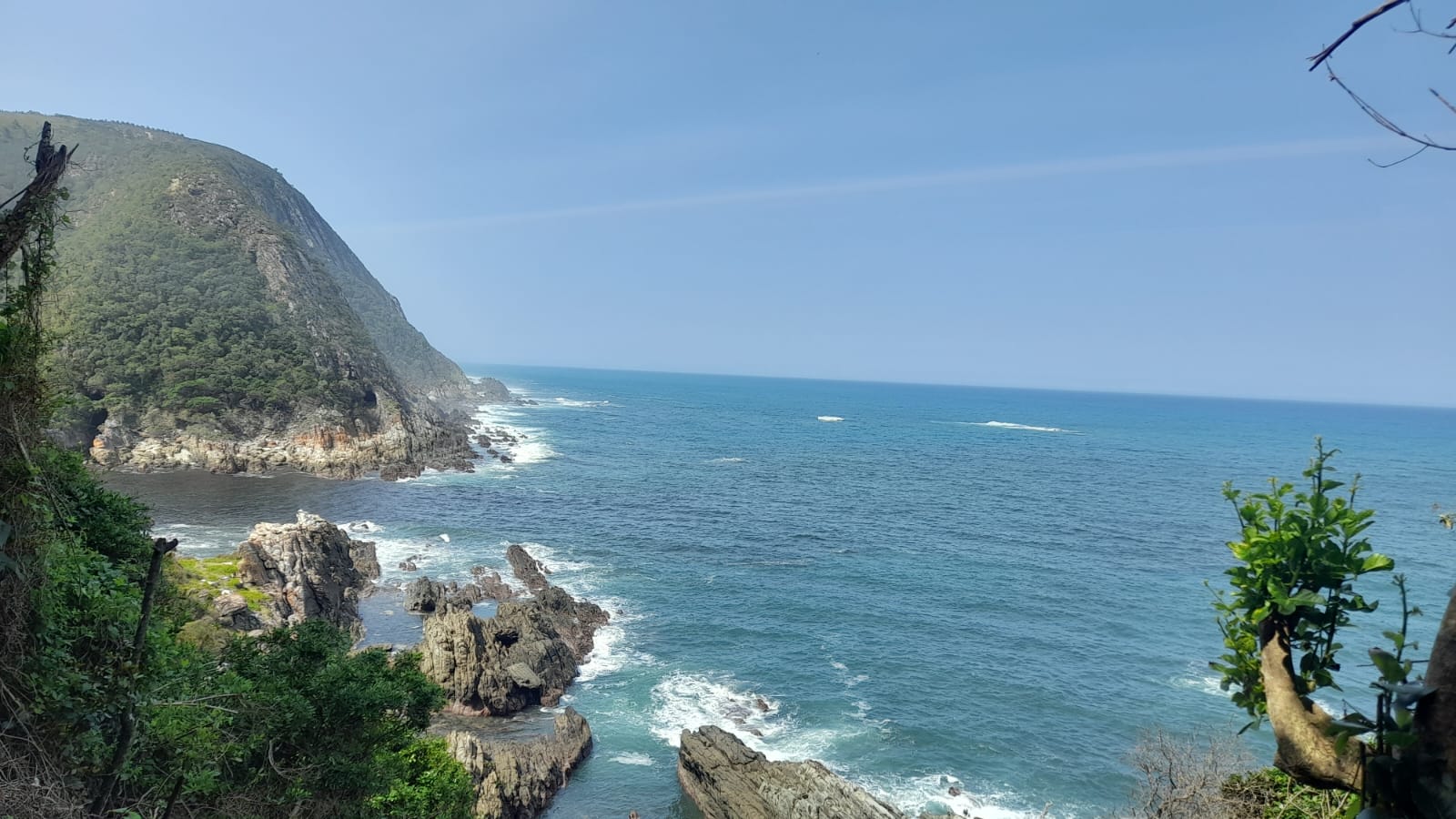
In November 2018 an almost unknown island attracted the attention of the media, springing into general consciousness apparently out of nowhere.
That’s when news outlets widely reported the tragic story of an American missionary who had been killed by the native population of Sentinel Island, a remote islet in the Indian Ocean. And that’s also when much of the general public first heard about the Sentinelese, described as ‘stone age savages’, violent and hostile towards anyone attempting contact from the outside world.
As it is often the case, media reports were not entirely accurate, offering little clarity on the history of the Island, its population and especially the history of their contacts with outsiders.
Key Takeaways
- The Sentinelese of North Sentinel Island have a history of hostility towards outsiders, often depicted inaccurately as ‘stone age savages’ by media.
- The island’s inhabitants have maintained isolation, resisting contact with the outside world since documented encounters began in 1771.
- Early interactions with the Sentinelese were marked by violence and misunderstandings, with both sides often resorting to defensive actions.
- The Indian government has implemented a ‘hands off, eyes on’ policy to protect the Sentinelese from external threats and diseases.
- The Sentinelese’s language and origins remain largely mysterious, with limited understanding of their social structure and beliefs.
Where did the Sentinelese originate from? Had they always been so isolated? What was the reason for their hostility? And had they always been so antagonistic and violent towards visitors?
In this article we will seek to address these complex questions, bearing in mind that there are no easy answers. In particular, there is no easy answer to the main dilemma. What is the right thing: should we just leave these remote populations alone, or seek to know them, to understand them, in the name of science?
Island of Good Fortune
North Sentinel Island, also simply known as Sentinel Island, occupies a surface of about 60 square km, approximately the same size as Manhattan. The Island is surrounded by coral reefs, and is a western outlier of the Andaman archipelago, a group of some 500 isles stretching along a north-south axis, roughly dividing the Bay of Bengal from the Andaman Sea.
Only six of these islands are inhabited by natives, divided into four ethnic groups: the Andamanese, the Onge, the Jarawa and the Sentinelese. And while the archipelago is relatively close to the coast of Myanmar, these lands and their inhabitants are under India’s jurisdiction.
As pointed out by author Adam Goodheart in his 2023 book ‘The Last Island: A Story of the Andamans and the Most Elusive Tribe in the World’, the origin of the toponym ‘Andaman’ is uncertain.
For centuries, the archipelago has been known to Asian and European cartographers, but awareness of its existence has fluctuated over time, and the islands have been known under different names: Caracuffaya, Dandemos, the Islands of Man, the Islands of the Satyrs, the Naked Land or Angamanain.
Awareness of Sentinel Island in particular, and the Sentinelese, has somehow been more persistent, since ancient times. It seems that cartographers and explorers had a predilection to depict this small community as a band of primitive, extremely dangerous, even cannibalistic individuals.
The oldest maps referencing Sentinel dates to late-mediaeval times, and according to Goodheart, these charts derive from the work of a Romano-Egyptian geographer, Claudius Ptolemy, active in the 2nd Century AD.
Ptolemy chose to name the island Insulae Bonae Fortunae — or ‘Island of Good Fortune’. Which sounded promising. But Ptolemy saw it fit to add a warning to his map, quoted by his mediaeval fanboys: the inhabitants of the island are cannibals.
Arab travellers in the 8th Century AD held similar beliefs about the inhabitants of the entire archipelago, and preferred to brave the storms in the open seas rather than seek shelter on the sandy beaches and paradisiacal groves of the Andaman.
It is not known if these convictions were founded on truth. What is certain is that tales of flesh-eating natives may have inspired Venetian explorer Marco Polo — who never visited the archipelago — to describe as such the Andamanese in 1296:
‘A most brutish and savage race, having heads, eyes, and teeth like those of dogs. They are very cruel, and kill and eat every foreigner whom they can lay their hands upon.’
First Contact
For the first, documented contact, between the Sentinelese and the outside world, we have to wait until 1771.
While sailing at night in the area, an East India Company vessel named ‘The Diligent’, passed by the island, sighting several lighted bonfires along its shore. The captain did not approach to investigate, but he did sketch the outline of the island and bestowed its current name, noting how it appeared as a sentinel, guarding a broad strait.
For a more eventful encounter, we must skip to 1867. At the end of the summer monsoon season, the Indian merchantman ‘Nineveh’ was wrecked on the coral reefs surrounding North Sentinel.
The crew of 20 sailors and their 86 passengers rowed to safety on the beach. But after two days of calm, they were attacked by the locals. As reported by the captain:
‘The savages were perfectly naked, with short hair and red painted noses, and were opening their mouth and making sounds like ‘pa on ough’; their arrows appeared to be tipped with iron’
It is widely agreed that the Sentinelese have not mastered metallurgy to this day, but they may scavenge iron from flotsam washing up on their beaches. The captain had no time for such considerations, however, as he and the shipwrecked party fought back the locals with sticks and stones.
At the time the Andaman archipelago was part of the British Empire, and Great Andaman Island had been converted into a penal colony in the 1850s. Hence, the waters were patrolled by the Royal Navy, and a rescue party was already on its way. The Nineveh crew and passengers were saved on time, and there were no recorded casualties of the encounter.
On March 18, 1896, three convicts serving under the colonial Forest Department on the island of Baja-Jagda decided to bail out. They boarded a makeshift raft, and drifted for some 20 nautical miles, until they reached North Sentinel. Two of them simply vanished, probably having drowned during the voyage.
The body of the third convict was found on March 30, on the southern edge of the island. He had been pierced by several spears and arrows, and his throat had been cut.
The dead convict was found by the local colonial administrator, M.V. Portman, during a visit to the island.
According to the website of Survival International, the global movement for tribal peoples’ rights, Mr Portman led several expeditions to Sentinel, to try and establish contact with the locals. He took care of bringing along inhabitants of Great Andaman and members of the Onge tribes, in an effort to befriend the Sentinelese, but to no avail.
In one particular expedition, Portman’s party came across abandoned camps, but the natives were nowhere to be seen. They eventually found an elderly couple and a group of children, who were forcibly taken to the regional capital of Port Blair, on Great Andaman.
The problem with completely isolated communities is that they are particularly vulnerable to the most common infectious diseases, as lack of exposure leads to lack of immune defences. Predictably, the elderly couple soon fell ill and died in Port Blair. The children were taken back to Sentinel with a load of gifts, but Survival International points out that
‘It’s likely that the children would have passed on their diseases and the results would have been devastating. Intergenerational trauma from this experience may account for the Sentinelese’s continued hostility and rejection of outsiders.’
It appears that after this event, the Sentinelese adopted a policy of avoidance and retraction, making themselves scarce rather than seeking confrontation when someone visited the island.
On their side, the British administration decided to leave them alone. After all, the tiny patch of land held no strategic or commercial importance, and was protected by a ring of submerged reefs which made navigation impractical.
In Search of Man
After India gained independence in 1947, the country took over Britain in the administration of the Andaman archipelago, as well as the Nicobar islands to its south. In 1956, the Indian government issued the Andaman and Nicobar Protection of Aboriginal Tribes Regulation, under which North Sentinel was declared as a ‘tribal reserve’.
The intention of this piece of legislation was to prevent potential violent incidents involving the locals. Most of all, it was intended to protect the Sentinelese from exposure to infectious diseases carried by unauthorised visitors.
In the spring of 1974, Sentinel was visited by an authorised party, consisting of anthropologists, police officers, a National Geographic photographer, and a film crew, shooting the documentary ‘Man in Search of Man’.
The anthropologists’ plan was to gain the natives’ trust, with friendly gestures and plenty of gifts.
As the expedition approached on a motorised dinghy, their friendly gestures did not sit well with the Sentinelese, who responded with a volley of arrows. The boat made a landing out of reach of the ‘Sentinel Defence Force’, and the policemen quickly disembarked to lay down their gifts: coconuts, a miniature car, a live pig, a doll and some aluminium pots.
Again, the reaction was not the most positive one. The Sentinelese fired more arrows, wounding the documentary director in the leg. They then speared the pig, mutilated the doll, and buried both gifts in the sand. The cookware and coconuts, however, appeared to have been well received.
The following year, an amateur anthropologist of renown was escorted by local dignitaries for a boat tour around North Sentinel. Wary of arrows fired in their direction, the officials kept at a safe distance from the beach, although a Sentinelese did aim his bow at the guest of honour.
The adventure deeply amused the amateur scholar. Whose name, by the way, was Leopold — formerly known as Leopold III, the exiled King of Belgium!
‘Lives not Guaranteed’
The Sentinelese would have another close encounter with the outside world in 1981. On the night of August 2nd, the Primrose, a 16,000-ton freighter registered in Panama, was sailing in the Bay of Bengal, transporting chicken feed to Australia. Shortly before midnight, a powerful storm made it run aground one of the reefs surrounding North Sentinel.
Luckily, none of the 31 crewmen was hurt during the shipwreck. But after spending two days stuck on the Primrose, the sailors on lookout spotted a group of dark, small, yet athletic men observing them with menacing intent from the nearby beach.
Thousands of miles away, in the offices of the Regent Shipping Company in Hong Kong, a radio operator received a distress call from the Primrose. The ship’s captain Liu Chunglong was asking for an urgent airdrop of firearms for his crew, as they prepared to defend themselves against
‘Wild men, estimate more than 50, carrying various homemade weapons’
Who were apparently preparing wooden boats to attack the Primrose.
‘Worrying they will board us at sunset. All crew members’ lives not guaranteed.’
Apparently news of an impending battle was not taken seriously in Hong Kong. A local official commented that the Primrose captain had ‘gone bananas’, while the local press speculated that Captain Liu was about to face a band of cannibals!
The Indian Navy displayed a more level-headed approach. They issued a press release, dispelling the unfounded myth that the Sentinelese were cannibals. And then dispatched a tug boat and a helicopter to rescue the crew of the Primrose.
While waiting for the rescue party, Captain Liu and his sailors had armed themselves with axes, pipes and flare guns. But luckily the bad weather prevented the Sentinelese from approaching the wrecked ship, and no blood was shed on either side.
Well, not in August of 1981, at least. The details are nebulous, but according to Survival International, the presence of the Primrose attracted the attention of several wreckage salvagers, who visited the island in the late 1980s and early 1990s. Many of them carried guns, and ended up killing an unspecified number of Sentinelese.
According to another version of the events, reported by The Economic Times, the ‘wreckage salvagers’ were actually authorised scrap metal dealers, contracted by the Indian Government to dismantle the wreck of the Primrose. Apparently, the contractors and the Sentinelese bonded over a gift of bananas, and eventually the two groups worked side by side aboard the ship.
The scrap dealers got on with their job of disassembling the ship, while the Sentinelese collected bits of metal to use for their tools … and presumably their arrowheads.
A Friendly Gesture
Throughout the 1980s government-sponsored parties regularly interacted with the locals. The visitors would land at a safe distance from groups of locals, deposit coconuts, bananas and bits of iron, and then leave almost immediately. Sometimes, the Sentinelese reacted with their usual volleys of arrows, but on other occasions they made friendly gestures.
Watch The Project Briefing
Open Video
Video Briefing
North Sentinel Island: The Truth Behind the World's Most Isolated Tribe
On January 4, 1991, an anthropological expedition reached the beaches of Sentinel Island, determined to establish a durable, friendly rapport. This time, the expedition featured an unprecedented asset, a member of a particular social group thus far completely excluded from landing parties: a woman.
Anthropologist Dr Madhumala Chattopadhyay, research associate at the Anthropological Survey of India was indeed the first woman to make contact with the Sentinelese.
So, let’s go back to that January 4, 1991.
At around 8am, a small team of 13 including Chattopadhyay, a medical doctor, a director of tribal welfare and support crew, reached the waters of North Sentinel aboard a small craft. Before reaching land, the team started dropping coconuts in the water, which attracted the attention of some Sentinelese men on the beach.
The locals sprinted into the water, scooping up the tasty gifts and erupting in a chant of ‘Nariyali Jaba Jaba’.
No one had ever studied in detail the Sentinelese language to that point. However, Dr Chattopadhyay, was proficient in several Andamanese languages and recognised a similarity with a dialect of the Onge tribe, also residing in the archipelago.
In the Onge dialect, the chant translated as ‘More and more coconuts’.
The Sentinelese became bolder, getting closer and closer to the boat. A rapport was being established … but there is always that one guy who has to ruin everything. In this case it was a young local man, who had been sitting on the shore.
He stood up, raised his bow and aimed it at the landing expedition. Dr Chatthopadhyay, unfazed, made eye contact with the bowman, smiling at him and gesturing to come and collect his share of coconuts.
But the hostile youth had already nocked an arrow and was about to release it. Providentially, a Sentinelese woman intervened, forcefully shoving the bowman aside. His arrow completely missed the mark and landed in the water.
The first contact could have ended in tragedy, but resulted in friendship.
Dr Chattopadhyay returned to Sentinel on February 21st, and this time her expedition was welcomed enthusiastically from the start. The locals approached the craft without hostility nor suspicion to collect their share of coconuts, and no arrows were nocked, let alone shot.
As reported by several Indian publications, the success of the expeditions in early 1991 can be ascribed to the presence of Dr Chattopadhyay, her knowledge of Andamanese dialects and her ability to establish a non-threatening rapport with the Sentinelese women, even at a distance.
The Indian government, however, did not take advantage of these successes to strike the iron while it was hot. The Andaman and Nicobar administration acknowledged the implicit risk in increasing contact with the Sentinelese: that of causing a deadly outbreak of infectious diseases unknown to the locals.
In fact, in September of 1991, the local authorities decided to severely limit any expedition to the island. Moreover, they declared a 5 km exclusion zone around Sentinel, to protect the locals from poachers, fishermen, or any unauthorised visitor. Regular gift-dropping missions continued until 1996, when the Andman and Nicobar administration decided to put an end to them.
After all, the Sentinelese appeared healthy and self-sufficient. Continuing the visits would have only increased the chances of epidemic outbreaks, or outbursts of violence from the locals.
Poachers vs the Palaeolithic
The Indian Navy and Coast Guard remained actively engaged in ensuring the Sentinelese were undisturbed, regularly patrolling the surrounding waters.
Following the devastating Indian Ocean tsunami, on December 26, 2004, the Coast Guard flew a helicopter above Sentinel, to check if there had been any casualties.
The team realised that the tsunami had impacted the geography of the island, causing several stretches of coral reefs, submerged thus far, to rise above the surface. But the locals appeared to be alive and well, very well indeed: one of them was photographed in the act of aiming an arrow against the chopper. The pilot wisely decided not to fly any closer to the ground, but the Coast Guard team returned to base with the striking photo of a warrior from a forgotten past. As described by author Adam Goodheart:
‘None of his features are visible, but the man’s blurred silhouette, his tensile black body poised against the stark white sand, has the timeless immediacy of a Palaeolithic cave painting’
The photo was widely circulated, and Sentinel made it again to international newswires since the days of the Primrose wreck.
Barely 13 months later, on January 26, 2006, the island would become infamous again. Two Indian fishermen, Sunder Raj and Pandit Tiwari, were found dead on the shores of Sentinel, pierced by spears and arrows. The subsequent investigation found that the fishermen had braved the exclusion zone to poach in the waters around the island, but their boat had drifted onto the shore, attracting the attention of the Sentinelese.
It appeared that the presence of poaching fishermen was a common occurrence, as the Sentinel waters were, and are, rich in lobsters and sea cucumbers. Years later, in November 2014, seven Burmese fishermen were apprehended by the Coast Guard in the vicinity of the island. According to one report, at least one of them had actually made it on shore.
Tragedy and Forgiveness
But now, let’s dive into the event which cemented Sentinel Island’s place into the cultural zeitgeist, the John Allen Chau incident.
On November 17, 2018, the 27-year-old US citizen John Allen Chau was reported dead on the shores of North Sentinel Island, apparently killed by a volley of arrows.
According to the Andaman and Nicobar police, Chau had illegally entered the exclusion zone with the help of local fishermen. A press release by Survival International, described his visit to the island as the result of a temporary lift on restrictions by the Indian government.
Early newspaper reports of the event stated that Chau was a Christian missionary, who had been trying to make contact with the Sentinelese on numerous, previous occasions to convert them to Christianity. However, according to Mundayat Sasikumar, writing for the Journal of the Anthropological Survey of India
‘Union Home Ministry sources clarified that Chau was an adventure sports enthusiast and there was no evidence of him being an evangelist’
Nonetheless, his friends described him as a fervent Christian, who had done volunteer work in South Africa, Kurdistan and Burma. Thus, it appeared that John Allen Chau was a truly altruistic individual, whose motivations were rooted in a profound spiritual belief.
Chau had first visited the Andaman archipelago in 2015, but it took him three years to finally reach the shores of Sentinel. According to local police, on November 14, the young American reached the island aboard a rented boat, crewed by some fishermen. Apparently, Chau had been helped by a local contact person in his plans, identified as K.S. Alexander.
On the morning of the 15th, Chau used a foldable kayak to make a solo landing on Sentinel, carrying gifts such as fish and footballs.
According to his own diary, Chau found a population of about 250 Sentinelese, living in groups of 10 people, each into one hut. The visitor attempted to speak to them:
‘My name is John, I love you and Jesus loves you.’
The first encounter did not go well at all. John noted in his diary that
‘a kid probably about 10 or so years old … shot me with an arrow-directly into my Bible which I was holding at my chest’
On the morning of the 16th, Chau swam back to the rented boat, close to shore, where the fishermen were waiting for him. Apparently, he had been injured by arrows, but he refused to return home. He entrusted his diary to the fishermen, collected some fresh supplies, and then returned to Sentinel.
The following morning, the fishermen observed the locals burying a body under the sand.
The fishermen then alerted Chau’s local contact, K.S. Alexander, who then alerted the victim’s friends in the US. News finally reached the American embassy in Delhi and local authorities. The police quickly found out that John Allen Chau had not secured the necessary permits to visit North Sentinel, and opened two enquiries: one for murder, against unknown perpetrators on Sentinel; and another against those who had helped John in his expedition.
Eventually, the Andaman and Nicobar police decided not to prosecute the natives, in line with the Indian Government’s official ‘hands off, eyes on’ policy. According to this approach, the government decided to maintain a vigilant eye on Sentinel to protect the locals from the outside world — and vice versa. But at the same time, government contact and interference should be kept to a minimum.
For the same reason, the police decided not to retrieve John’s body — an epidemic outbreak being their main concern.
As per John’s family, they expressed the wish that all involved in the case be released.
‘We also ask for the release of those friends he had in Andaman Islands. He ventured out of his own free will and his local contacts need not be persecuted for his own actions’
As per the murderers of their son, the Chaus wished to forgive them.
Following the killing of John Allen Chau, the Indian government made all visits to North Sentinel strictly illegal, reinforcing Coast Guard patrols around the exclusion zone. Outsiders, less than ever before, are no longer welcome.
What Do We Know About the Sentinelese?
As you may guess, this state of affairs is particularly frustrating for anthropologists worldwide, seeking to crack the mystery of the Sentinelese. Where did they originate from? What is their social structure? What are their beliefs? How did their language evolve over thousands of years of isolation? Why do they alternate periods of hostility to openness to contact?
The already quoted M. Sasikumar perfectly describes what makes this community so fascinating and unique:
‘The Sentinelese are, perhaps, the only truly isolated hunter-gatherer tribal community in the world today. Their isolation is not geographic because of the inaccessible location of their habitat; it is so because they resist outsiders from landing in their island … They remained steadfast in opposition to all the efforts of the colonial and post-colonial administration to contain them with the might of their bows and arrows.’
All we know about them is a collection of scattered direct observations, and inferences derived from the knowledge of other, less isolated native groups on the Andamans.
We know that the tribe on Sentinel is very small, numbering between 50 and 400 people, believed to be organised in three bands.
Most of them live in large communal huts, housing several families, but visitors have also noticed smaller shelters, erected on the beach, suitable for one family at a time. Their items of clothing appear to be limited to fibre strings, tied around their waists, necks and heads.
Observers consistently describe them as extremely fit and healthy — as you would expect from someone who lives in close contact with nature! But their small numbers could be completely wiped out by the most banal of infectious diseases, such as the seasonal flu or the common cold, as observed in other tribes of the archipelago.
According to Survival International’s Director Stephe Corry, speaking in November 2014:
‘The Great Andamanese tribes of India’s Andaman Islands were decimated by disease when the British colonised the islands in the 1800s. The most recent to be pushed into extinction was the Bo tribe, whose last member died only four years ago. The only way the Andamanese authorities can prevent the annihilation of another tribe is to ensure North Sentinel Island is protected from outsiders.’
We also know that the Sentinelese sustain themselves by fishing, hunting and gathering food in the forest, which explains why men always carry spears, bows and arrows, tipped with salvaged iron. They have mastered the art of making outrigger canoes, that is canoes featuring lateral support floats. But they have not developed the use of paddles, and rather steer their crafts with punts, meaning that they cannot venture beyond shallow waters.
As a consequence, they have never even attempted contacts with other island tribes, let alone developed trade.
Based on observations dating back from 1771, we know that the Sentinelese use fire, but anthropologists speculate that they don’t know how to actually make it.
All these factors have contributed to the media describing them as ‘Stone Age savages’, a description which Survival International disagrees with:
‘There is no reason to believe the Sentinelese have been living in the same way for the tens of thousands of years they are likely to have been in the Andaman Islands. Their ways of life will have changed and adapted many times, like all peoples.’
The genetic origin of the Sentinelese has not been ascertained with certainty, although Philip Endicott, from the Henry Wellcome Ancient Biomolecules Centre, University of Oxford may have come close.
In his paper ‘The Genetic Origins of the Andaman Islanders’ published in 2003, he sought to trace the origins of all groups present in the archipelago.
Endicott noted that Andaman inhabitants display an ‘extremely distinctive phenotype, typified by a small average height, gracile build, dark pigmentation, and unusual hair morphology.’
He also found that the languages spoken in the archipelago have a limited affinity with others found in Papua New Guinea and eastern Indonesia, although there isn’t a widely accepted relationship between these separate linguistic families.
Endicott also reviewed the Andaman populations’ epigenetic data, that is the impact of behaviours and environmental factors on how genes work. Based on this, he theorised that the Andamanese tribes — including the Sentinelese — originated from either two colonisation events, or a ‘single founding population that has been subdivided for an extended length of time.’
In other words: the archipelago was either colonised on two separate occasions, by two separate ethnic groups, or a single group who landed over a long time period.
These original settlers probably may have travelled from Indonesia, Oceania or Melanesia. But based on an analysis of two specific haplotypes — or genetic determinants — Endicott ventures modern-day Bengal and other areas in the Indian subcontinent as possible places of origin.
In any case, the colonisation event happened thousands of years ago, with the oldest possible date being about 39,500 years ago.
Finally, we come to the language.
As mentioned earlier, Dr Chattopadhyay was able to establish a link between the Sentinelese and the Onge dialects.
The reality is that no one can really understand or categorise their language, and linguists agree that the Sentinelese would have to be considered ‘unclassified’.
The closest speculation that can be made is that it’s a combination of the Onge and Jarawa dialects, based on the agglutination of morphemes, rather than phonemes. To clarify, this describes the process of stringing together linguistic units which refer to a meaning, rather than individual sounds.
The Sentinelese may have evolved morphemes borrowed by the Onge and Jarawa in a completely different direction, however. Back in the late 1800s, colonial administrator M.V. Portman brought along representatives of the Andamanese tribes in his expeditions to Sentinel, but the different tribal groups could not communicate with each other.
As is the case with other aspects of this mysterious community, also their speech appears unique, and linguists agree that it should be placed on its own branch of the language family tree.
Conclusion
The history of relationships between North Sentinel Island and the outer world is a story of frustrated knowledge, misunderstanding and violence, interspersed with glimmers of hope and friendship. This takes us to the final dilemma: considering that the future may offer a similar outcome, what stance should the Indian Government and the scientific community take towards the Sentinelese?
Should the modern world seek to establish a permanent presence on the island, to study a secluded population which may provide us valuable information on our own, remote past? And maybe extend over them the long arm of our laws, bringing to justice those who killed their rare visitors?
Or should we perpetuate the current hands-off policy, and maintain the island as a tribal reservation? In other words, maintain a status quo designed to protect the last uncontaminated vestiges of a tribal way of life — and to protect intruders from iron-tipped arrows.
Brighter minds than ours have not found an answer to this conundrum.

Simon Whistler
Simon Whistler is one of YouTube's most prolific educational creators, with tens of millions of subscribers across his channels. Places is his expedition into the world's most remarkable locations — from cities carved from salt to islands nobody dares inhabit. He brings a researcher's rigour and a traveller's awe to every field note.
Frequently Asked Questions
What is North Sentinel Island?
North Sentinel Island, also known as Sentinel Island, is a remote islet in the Indian Ocean with a surface area of about 60 square kilometers, roughly the size of Manhattan. It is a western outlier of the Andaman archipelago and is surrounded by coral reefs.
Who are the Sentinelese?
The Sentinelese are the native population of North Sentinel Island, described as one of the most isolated tribes in the world. They are known for their hostility towards outsiders and have resisted contact with the outside world for centuries.
What is the origin of the name ‘Andaman’?
The origin of the toponym ‘Andaman’ is uncertain. The archipelago has been known by various names over time, including Caracuffaya, Dandemos, the Islands of Man, the Islands of the Satyrs, the Naked Land, and Angamanain.
When was the first documented contact with the Sentinelese?
The first documented contact between the Sentinelese and the outside world occurred in 1771 when an East India Company vessel named ‘The Diligent’ passed by the island and sighted several lighted bonfires along its shore.
What happened during the encounter with the ‘Nineveh’ in 1867?
In 1867, the Indian merchantman ‘Nineveh’ was wrecked on the coral reefs surrounding North Sentinel. The crew and passengers were attacked by the Sentinelese after two days of calm. The crew fought back with sticks and stones and were eventually rescued by the Royal Navy.
What is the ‘hands off, eyes on’ policy?
The ‘hands off, eyes on’ policy is the Indian Government’s approach to the Sentinelese, maintaining a vigilant eye on Sentinel to protect the locals from the outside world and vice versa, while keeping government contact and interference to a minimum.
What is known about the Sentinelese language?
The Sentinelese language is unclassified and unique. It is believed to be a combination of the Onge and Jarawa dialects, but it has evolved in a completely different direction. Linguists agree that it should be placed on its own branch of the language family tree.
What is the genetic origin of the Sentinelese?
The genetic origin of the Sentinelese is not certain, but they are believed to have originated from either two colonization events or a single founding population that has been subdivided for an extended length of time. They may have traveled from Indonesia, Oceania, or Melanesia, with possible origins in modern-day Bengal and other areas in the Indian subcontinent.
What happened to John Allen Chau?
John Allen Chau, a 27-year-old US citizen, was killed on the shores of North Sentinel Island in November 2018. He had illegally entered the exclusion zone with the help of local fishermen and was attempting to make contact with the Sentinelese. He was reportedly killed by a volley of arrows.
What is the current policy regarding visits to North Sentinel Island?
Following the killing of John Allen Chau, the Indian government made all visits to North Sentinel strictly illegal, reinforcing Coast Guard patrols around the exclusion zone. Outsiders are no longer welcome, and the policy is to maintain a status quo designed to protect the last uncontaminated vestiges of a tribal way of life.
Sources
- Original Places video: North Sentinel Island: The Truth Behind the World’s Most Isolated Tribe
- https://scroll.in/article/1057359/why-the-civil-world-failed-so-often-to-establish-contact-with-the-sentinelese-in-the-andamans
- https://theamericanscholar.org/the-last-island-of-the-savages/
- https://www.survivalinternational.org/tribes/sentinelese
- https://www.survivalinternational.org/news/12031
- https://www.survivalinternational.org/news/11764
- https://www.survivalinternational.org/news/10556
- https://www.survivalinternational.org/news/1367
- https://northsentinelisland.com/north-sentinel-history/
- https://www.news.com.au/travel/travel-updates/incidents/hair-raising-story-behind-mysterious-shipwreck-off-north-sentinel-island/news-story/5f4ea5d4b5de2a27a84ea725807be60a
- http://gurneyjourney.blogspot.com/2013/07/north-sentinel-island.html
- https://www.scmp.com/culture/article/2177003/shipwrecked-hong-kong-sailors-brush-indian-island-tribe-killed-john-allen
- https://www.nzherald.co.nz/world/hair-raising-story-behind-mysterious-shipwreck-off-north-sentinel-island/7UWWHDCA35XKJ2Q3PGRXMBXYNQ/
- https://www.upi.com/Archives/1981/08/25/Twenty-eight-sailors-shipwrecked-for-nearly-two-weeks-off-a/1381367560000/
- https://journals.sagepub.com/doi/10.1177/2277436X19844882?icid=int.sj-challenge-page.similar-articles.1
- https://www.mynation.com/news/sentinelese-andamans-john-allen-chau-madhumala-chattopadhyay-pj1oxq
- https://probashionline.com/madhumala-chattopadhyay-first-friendly-contact-with-the-sentinelese-jarawa-andamans/
- https://www.cell.com/ajhg/pdf/S0002-9297(07)60516-3.pdf
- https://books.google.com/books/about/Primitive_Tribes_in_Contemporary_India.html?id=foQK2klkzIcC
- https://www.jstor.org/stable/40455833
- https://sites.psu.edu/psych256001fa21/2021/11/20/the-language-of-the-sentinelese-tribe/
- https://thelanguagecloset.com/2021/10/23/what-do-we-know-about-the-sentinelese-language/
- https://www.google.co.uk/books/edition/The_Last_Island/4IWazQEACAAJ?hl=en
- Hero image source by M J Hurter / openverse, by.