
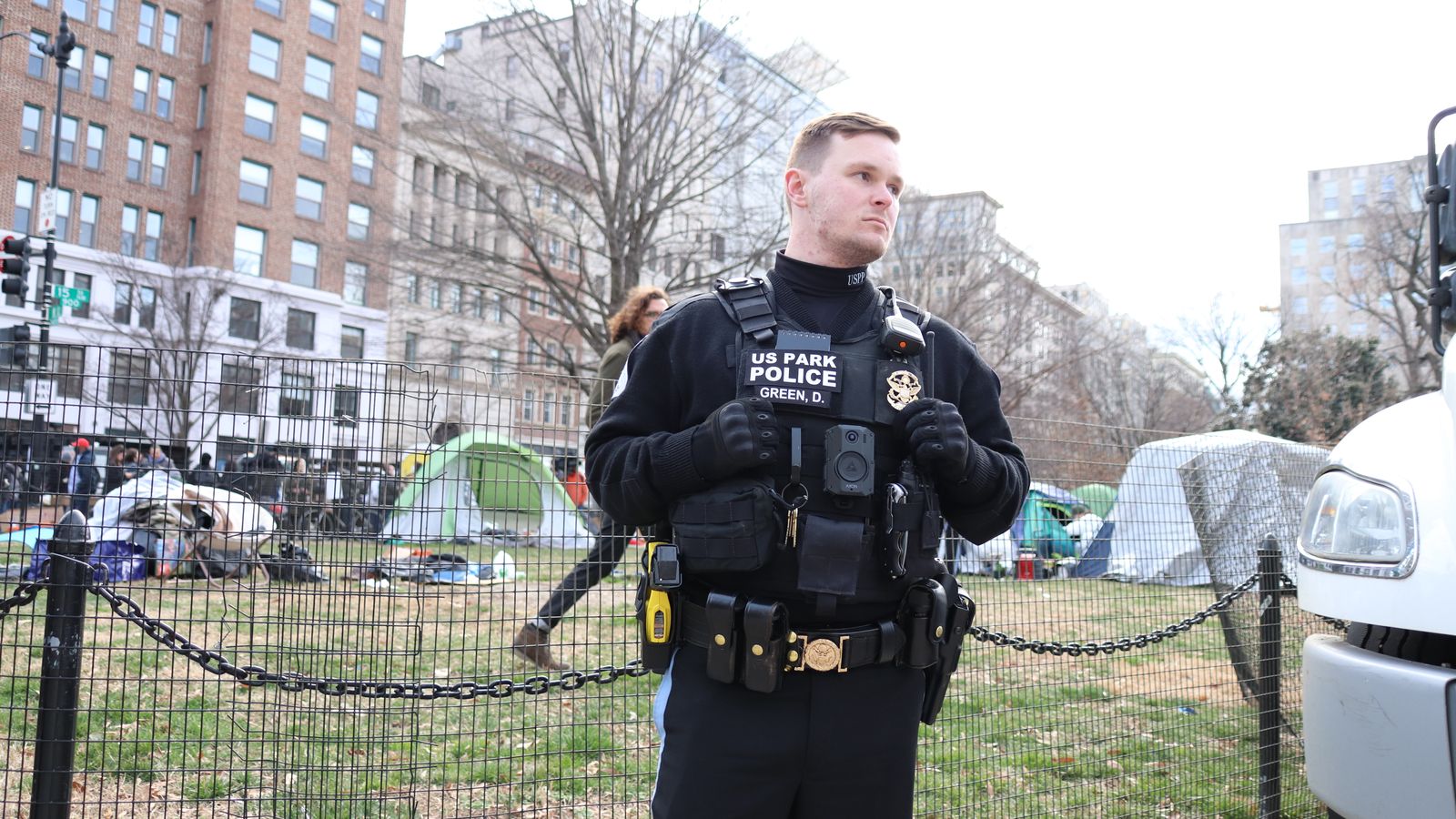
We’ve all seen the images and video footage. Vast tent encampments in the heart of the city. Record levels of homelessness. Human faeces to such an extent that an app was created to track it all. Rampant crime. San Francisco, the pearl on the Bay, the bastion of liberal ideals, has collapsed in on itself.
Move over, Detroit, the U.S. has a new failed city.
This narrative has become so enshrined in news outlets and on social media that most now simply take it as gospel. San Francisco has become a nightmare, a disaster, a place you certainly wouldn’t go with your children because of the risk of them being eaten by some crazed fentanyl lunatic.
Key Takeaways
- San Francisco’s issues, including homelessness and crime, have been exaggerated by media and social platforms.
- The city’s homelessness problem is severe but improving, with a significant portion of homeless individuals now sheltered.
- Tech-driven economic growth has exacerbated housing inequality and gentrification in San Francisco.
- Drug use and related issues, such as public defecation, have been highly visible but are slowly being addressed.
- Public trust in San Francisco’s government has been eroded by corruption and mismanagement, but recent measures aim to rebuild it.
And there’s certainly some truth to this. San Francisco has indeed suffered badly over the last decade, and just about every negative you hear about the city is true to some degree, but that doesn’t tell the whole story.
You see, the United States is now a country of deep polarising ideals, and like the rest of the world, has developed a fetish for negativity. Bad news travels faster and gets more clicks, and it won’t require you to stretch your mind too far to believe that individuals or media outlets that have a certain left or right leaning might not be averse to the odd piece of angry rhetoric to knock their opponent down a peg or two.
So what is the truth about San Francisco? Is it a lawless city with a vast army of homeless drug addicts stalking the streets, or a city that has suffered its fair share over the last decade but is slowly pulling itself out of the mess? Is it all true, or are we being told to believe a narrative that fits an ulterior motive?
The Cultivation Theory
This could easily have been a video that followed a set storyline. Why not? There are plenty of examples on YouTube that do so and do well, but what’s the point in simply regurgitating, especially if things don’t entirely line up?
The set narrative surrounding San Francisco is that it is essentially now a disaster zone where all the evils of the world come to play in one giant liberal cesspit. That might sound harsh, but look at some of the media reporting over the years, and it’s difficult to argue with it.
However, there is something called the ‘Cultivation Theory’– developed by George Gerbner in the 1960s – that states that repeated exposure to the same types of media messages gradually shapes how people perceive reality, especially around fear, risk, and safety.
When certain images or narratives are shown often enough, audiences begin to treat them as normal and all-encompassing, even if they reflect only a small part of actual conditions. This isn’t complicated manipulation or propaganda, and we see examples all around us. After an air accident, people suddenly develop a fear of flying, but have no problem driving at 80mph in a car in bad conditions. Terrorism is another one.
Once news outlets start looping reports on a recent attack, we’re all suddenly terrified about the strange person on the other side of the street behaving a little suspiciously.
But perhaps the biggest is crime. Across most sections of the Western world, violent crime is lower than it has been for decades, but ask people how safe they feel, and they’ll reel off a list of potential nasties. Now, that’s not to say that there isn’t crime, and often there absolutely is, but our perception has been warped.
From roughly 2019 onwards, footage of smash-and-grab thefts, open drug use, and street encampments in San Francisco flooded the internet, and social media loved it. And, let’s be honest, it looked appalling. Certain parts of the city suddenly looked almost third-world, but when news outlets returned to the same locations again and again, the result was a compressed image of the city, where a few streets stood in for an entire population of more than 800,000.
In 2023, surveys showed San Franciscans reporting feeling just as unsafe as residents did in 1996, a year when the city recorded nearly four times as many homicides. It wasn’t that people were more scared of being murdered because it was more likely; it was the fear attached to tents, homelessness, and drug abuse. And let’s be clear, those are valid reasons to be worried and fearful, even in your own city.
With San Francisco, the situation is complicated. Issues like the housing crisis, homelessness, crime, drug problems, mental health concerns, collapse of trust in politicians, and plenty more are all real; there’s no denying that. But how real are we talking about?
Homelessness
Whether we’re discussing San Francisco or other cities across the United States, homelessness has become an issue that seemed marginal a decade ago, but it is now quickly spiralling out of control. In the U.S., there are about 770,000 homeless people, but the situation is different around the country.
Broadly, Republican states report lower numbers of homeless people compared to Democratic states, but we need to be careful with this. Sometimes this is down to how figures are correlated, and at other times it’s because of a tougher stance on homelessness.
The big difference, unsurprisingly, comes down to ideology. Democrats are more likely to blame homelessness on systemic issues, while Republicans are more likely to see it as a personal choice, often fuelled by bad decisions. I know that’s a sweeping statement, but statistical analysis does support this. It’s not set in stone, and there are probably thousands of exceptions, but if you’re looking for an overriding rule to explain the difference, this is one of the strongest.
States that are more likely to see homelessness as a societal problem rather than a personal one are more likely to be lenient towards it. And as a result, large, very public encampments have sprung up in Democratic cities that you don’t always see in Republican cities because they would be torn down quickly and the people moved on.
So we come to San Francisco, a place that is about as Democrat as you can get. Here, the 2024 PIT count found 8,323 people experiencing homelessness, with around 38,000 in the broader Bay Area. We should point out that this is only what could be counted, so the figure is almost certainly higher, but it’s not clear by how much.
What is important is that of those counted, around half were sheltered, meaning in some kind of temporary accommodation, with half registered as unsheltered, basically meaning on the streets. This was also a 7.3% increase from 2022, not huge, but certainly big enough when that figure is people living in tents on the streets. Despite that increase, the number of people sleeping visibly unsheltered on the streets has actually dropped, with more people in shelters than the previous year, and the number of tents counted also fell sharply.
So things are improving? Yes, but only marginally. And when you take into account how much the city spent last year on the homeless crisis – an eye-watering $846.3 million – marginal isn’t good enough. That figure gets worse when you think of what that equates to per homeless person – somewhere in the region of $100,000 a year.
So how does it compare with other cities? San Francisco’s homeless rate per resident remains among the highest in the U.S. New York and Los Angeles have figures in the tens of thousands, but also have significantly higher populations.
If we think about it in terms of media representation, it’s not hard to see why such a negative view prevailed. If we go back to 2019, the homeless figure was almost exactly the same, so it’s not like the city fell off a cliff in the wake of COVID-19. What often happens is that you have very concentrated areas of homelessness in San Francisco, particularly in the Tenderloin and SoMa areas. When these areas are filmed by a news outlet or even simply social media users, the situation looks much worse than it actually is.
What we often see on screen may be a true representation of a small part of San Francisco, but not of the city as a whole. Over the past five years, San Francisco’s overall homelessness rose only about 4%, while over roughly the same period, homelessness grew much faster nationally, with 15% and in California, with 20%. It may be one of the most visible issues, but it’s certainly not the worst.
Housing Crisis & Tech-driven Disparity
San Francisco, like pretty much everywhere in the United States, is a place of great disparity. The gulf between rich and poor nationwide is growing rapidly, with the top 10% of earners taking home about 49–50% of all U.S. income and the bottom 50% earning roughly 13–14% of total income. That’s just the way things are at the moment, and, to be honest, we’re not going to get bogged down in it. The right and wrong and tax trickle down argument is for another video.
When it comes to San Francisco, and its massive tech industry that has ballooned over the last three decades, this disparity is now causing several issues that contribute to the city’s current state. San Francisco’s economy has been completely reshaped by the technology sector. Venture capital flooded in, startups scaled rapidly, and salaries at the top of the labour market rose far faster than wages elsewhere. The city grew richer on paper, but it was in a narrow bracket.
From the early 2010s onwards, San Francisco added high-paying jobs at a pace its housing, transit, and social systems could not absorb. New wealth competed for limited space, which pushed rents into the outrageous category and accelerated house prices. Those who could afford it battled it out and probably ended up paying more than they were hoping to, but for many others, prices became too unreasonable.
All of this meant that housing prices soared to ridiculous levels, and by the early 2020s, San Francisco had some of the highest housing costs in the world. Median home prices hovered well above $1 million, and rents routinely exceeded $3,000 a month for a one-bedroom apartment. For the average household, San Francisco’s housing bubble consumed more than 30–40% of income, a level economists define as a severe cost burden, and everybody else defines it as complete madness.
If you had a high-paying tech job, you were probably OK, but the middle class was squeezed. This hit small businesses, raised mental health strain, and, in turn, worsened homelessness and addiction.
As tech compensation soared, entire segments of the workforce were priced out. Teachers, service workers, artists, and public-sector employees found themselves competing in a market designed for six-figure salaries. Many left. Others stayed by crowding into smaller units or commuting long distances.
The city’s population became wealthier and more polarised at the same time. During the pandemic, prices dipped slightly as remote work allowed people to leave, but it was all short-lived. By 2023–2024, rents began rising again — yet there has been a small shift in policy.
The city has managed to get out of its own way — kind of, at least — streamlining approvals for some housing types, reducing discretionary review in specific cases, and beginning to push office-to-residential conversions downtown. It’s a start, and far from perfect, but it’s better than the embarrassment it once was. State housing targets now require San Francisco to add more than 80,000 new homes by 2031, including a large share designated as affordable, so let’s see whether that happens.
But housing is only part of the disparity. The tech influx has created a barbell labour market, which means that job creation tends to focus at the high-wage/high-skill and low-wage/low-skill ends, while middle-income jobs vanish. If I was going to put it bluntly, it means the Silicon Valley developer and the barista that serves her coffee in the morning.
And this creates almost two versions of the city; one where the developer can live, pay rent, and afford those $12 juices, and the other where the barista resides, with prices significantly lower. Middle-wage jobs are becoming rarer in the city, because the cost of living in areas once deemed middle cost is now too high, forcing middle-class families and jobs out of the area.
Then there is the dreaded G word that haunts every city — gentrification. Whether you’re in London, New York, Tokyo, Rio de Janeiro, or Cape Town, you will have experienced some degree of gentrification, and San Francisco is right up there. Gentrification in the city accelerated sharply from the late 1990s onwards, then surged again during the tech booms of the 2010s.
Historically working-class neighbourhoods, like The Tenderloin, Mission District, Dogpatch and Western Addition, saw property values skyrocket, meaning long-term residents faced rising rents, evictions, and cultural displacement. And because there wasn’t enough reasonably priced housing to get around, people began leaving the city.
And it wasn’t always pretty. California’s Ellis Act allows landlords to remove rent-controlled tenants if they exit the rental business. In practice, it became a tool for clearing buildings, selling units as condos, and resetting rents at market rates. And you probably won’t be surprised to hear that eviction spikes closely tracked tech hiring cycles.
All this angered people over a decade ago. The San Francisco tech bus protests emerged around 2013–2016 as a response to rapid tech-driven change in the city. At that point, private shuttle buses operated by companies such as Google, Facebook, and Apple would pick their employees up in San Francisco and whisk them through the streets to their leafy campuses outside the city. Non-tech city residents began to see these buses as symbols of gentrification because they connected high-income workers to jobs while many long-term residents faced rising rents and displacement.
Basically, people found it slightly obnoxious that tech employees were granted such convenience while everybody else battled to make ends meet in the city. Did they have a point? Sure. Would most of you watching get a free shuttle bus directly to your job, saving you an hour and a half driving in traffic?
Probably.
These are all issues that haven’t really gone away, and continue to exacerbate problems to this day. But that’s also the wider story of the United States, and even the world. Whether it’s luck, hard work, or a combination of the two, your socio-economic level has a huge bearing on so many factors in your life. If you work for OpenAI in San Francisco, your experience of living in that city is significantly different from if you worked in Starbucks.
The Drug Crisis
Many of the most shocking images and videos to emerge from San Francisco in recent years were not vast tent cities or violent crimes, but rather the brazen drug use that has swept parts of the city.
Almost everywhere has its own version of a drug crisis, but in San Francisco, that problem is often displayed in full view for all to see. The sight of people slumped in doorways became common; people would smoke crack behind the bins, or sometimes or even while walking along the street in the Tenderloin neighbourhood.
People love to wax lyrical about homelessness caused by an unfair system and high rent, but evidence suggests that addiction, followed by trauma, plays a much bigger role than many will admit. Documentaries have interviewed people in encampments, and the reason they are there rarely comes down to, ‘I couldn’t pay my rent.’
Watch The Project Briefing
Open Video
Video Briefing
San Francisco is Becoming a Nightmare
And there’s a new nasty decimating lives. Fentanyl, a powerful synthetic opioid 50–100 times as potent as morphine, is a wrecking ball of a drug that many initially get into when prescribed opioids are taken off the table. Approximately 72,776 people in the U.S. died from fentanyl overdoses in 2023, and while it’s spreading, you do have worrying pockets.
Overdose deaths in San Francisco rose sharply after 2019 and 2020, more residents died from overdoses than from COVID-19. The numbers remained high through the pandemic and spiked again in 2023, with fentanyl involved in the majority of deaths. Many of those occurred outdoors or in temporary housing. Emergency responders became a constant presence in certain neighbourhoods. It was a sad, sad situation.
But this is far from a San Francisco problem. Scores of cities and towns across the United States have been blighted by both legal and illegal drugs; regular good-old-fashioned prescribed opioids, heroin, crack, fentanyl - choose your poison. If we want to look purely at overdose statistics, parts of Appalachia, particularly areas of West Virginia, had higher numbers than San Francisco, as did cities like Philadelphia, Baltimore and St Louis. San Francisco wasn’t great, but it was far from the worst.
However, it seemed that way because drug use was so much more visible than in other areas of the country. You could walk down a street in Tenderloin and see multiple people openly jacking up, smoking crack, or popping fentanyl pills, and for a long time this went pretty much unchecked. It was as if the police agreed to conveniently turn a blind eye to behaviour that would get you arrested in many other parts of the country. But why?
For years, the city emphasised harm reduction: distributing clean needles, providing supplies, and prioritising overdose prevention. And these measures were good, they saved lives and reduced the spread of disease, but at the same time, enforcement against dealers and public consumption remained limited — some would argue they were virtually non-existent. City officials decided to take the soft approach to a rapidly escalating drug problem, and the results were unpleasant.
Suddenly, news crews were filming open drug taking on the streets of San Francisco that used to be reserved for inside private properties. And it tested the patience of even the most crunchy granola San Francisco liberal.
One of the saddest, but also quite humorous offshoots of this problem was faeces – human faeces on the streets of San Francisco. Homeless people and those slumped somewhere in the drug hazes also crap, and there was a lot of it. In 2023, there were more than 33,000 reported cases of human excrement on the streets of San Francisco. Interactive maps of poo were created, as well as the now famous SnapCrap that invited San Francisco residents to take pictures of human crap they come across and tag them with a GPS location, which would then be sent to the San Francisco Department of Public Works.
Now, this all started with good intentions, but soon became a caricature of the lunacy and stick-your-head-in-the-sand policies that the city was muddling through. The fact you had residents paying some of the highest rents in the world photographing human crap on their doorstep was absurd when you really think about it. San Francisco tried to be the kind, tolerant city that embraced all, but literally got shit all over it as a result.
Since 2023, however, the city’s approach has shifted. Law enforcement against users and dealers has intensified, often with state and federal support. Visible drug taking in most areas has declined, and city officials seem to have finally figured out that handing out clean needles and then looking the other way was a recipe for disaster. Overdose deaths plateaued, and have actually declined slightly.
But before you start thinking the city is out of the woods, we’re talking about a decline from a number that was already very high. In 2023, San Francisco recorded 810 accidental overdose deaths. In 2024, that dropped to 635, and went down further to 621 in 2025. These are still big numbers, but the situation is slowly improving.
Crime
The notorious twin brother of San Francisco’s drug problem is something that most people closely associate with it — crime. If you were an avid viewer of pretty much any news channel during the years immediately before the pandemic and during the pandemic itself, you would have been absolutely certain that San Francisco was a city on the verge of anarchy. Think Escape to New York or even Mad Max. It was a place where drug-related crime was rampant, and it was unsafe to walk the streets. But how true was it all?
Firstly, let’s look at the broad crime statistics for major cities in the U.S. And we can do this because, while there have always been regional differences, there is a very clear arc. The late 1960s saw a steep rise in crime that continued for several decades, with national violent crime rates nearly doubling between 1965 and 1991. And this was across pretty much every big city. New York saw 2,245 murders in 1990, LA, over 1,000 in 1992, and Chicago, 950 in 1992.
Burglary rates were much higher, roughly 3 times what we see today, while sexual violence and kidnapping also surged. However, we should point out that sexual violence numbers have also risen because it was being reported and investigated more. It’s shocking to think that, in most states, marital rape was still legal in the 1970s and the final two, North Carolina and Oklahoma, didn’t do away with it until 1993.
So the point is that things were getting significantly worse across the U.S., with the early 1990s the real low. And San Francisco followed the pattern to a T. But then things changed and crime pretty much across the board plunged during the 1990s and 2000s. In 2017, New York saw 292 murders, down from 2,245, just 27 years before.
Car theft and burglary rates dropped by more than 60% nationally from their 1990s figures, while reported rape rates fell by roughly 50–60% nationally. And again, San Francisco followed exactly the same pattern, but never reached crime figures as high as LA or cities on the East Coast.
Then we had COVID, and with the pandemic we saw a nationwide increase in crime. It was nowhere near the Wild West days of the early 1990s, but it was still sizable. The U.S. saw the largest one-year increase in homicides ever recorded, going up 30%, but then things dropped pretty quickly after 2021 and is still far below 1990s levels. Compared to those figures, homicides are down 40–45%, burglaries are down 80%, motor theft is down about 55–65% and robbery is down 80-85%, and reported rape is down 25–40%, depending on methods of reporting.
So that’s the U.S. as a whole, but what about the city on the Bay where drug fiends are lurking behind every corner? It’s exactly the same. San Francisco has its anomalies, as each city does. In this case, there are slightly higher property crime and larceny rates, but generally lower homicide, burglary, and sexual assault than other major cities.
The issue again comes down to visibility. In terms of raw data, San Francisco was a far more dangerous, crime-ridden place in 1990 than it is today, but all those years of rampant and open drug taking in certain areas made everybody feel so much worse than current statistics actually imply. Then, of course, you’ve got the 24-hour, sensationalist-driven news channels who cherry-pick the very worst stories of the day and then broadcast them to us in a way that makes us believe that this is real life — that San Francisco is a lawless hellhole and that simply walking to the local shop is taking your life into your own hands.
Downtown — Doom Loop
San Francisco’s downtown was once an exciting, bustling place. Nearly half a million daily commuters would come into the city, as well as domestic and international tourists, with numbers ranging between 50,000 and 70,000 a day. In 2019, downtown San Francisco was buzzing.
Then COVID-19 came. Like most cities, San Francisco soon became a ghost of its former self as the world sought to ride out the pandemic. But the problem was, once the situation eased, people didn’t rush back. More and more people were working from home, especially in the tech industry, which seemed to embrace a work-life balance a little more than other sectors.
Those pre-pandemic numbers, close to half a million, were down to 150,000 by 2022, and the knock-on effects were seismic. Cafés, bars, shops, juice bars, everything suffered badly because you can’t just remove two thirds of a customer base and hope that everything will work out. As we’ve already seen, rental costs are absurd in San Francisco, which many businesses could just about cover with the army of commuters and tourists every day, but not after the crash. Slowly, more and more businesses closed their doors, moving, or simply going out of business.
Cushman & Wakefield, one of the world’s largest commercial real estate services firms, compiled a report in 2025 that stated San Francisco was experiencing 34.8% overall office vacancy, which is insane when you think about how popular this city is — or was, I’m not quite sure. That means that when you walk down the streets downtown, 1 in 3 office or shop spaces are vacant. And this problem compounds in certain areas. While some streets might still seem vibrant, others have seen multiple closures because footfall tends to decrease as desirability declines.
It’s a Catch 22.
In 2023, Westfield, which has large malls in most major cities, abruptly walked away from San Francisco, citing a 43% drop in foot traffic, high vacancy rates, and a 35% decline in sales. The company even defaulted on a $558 loan as a result, and left the historic San Francisco Centre, which struggled on without it. However, in early 2026, the Centre itself announced that it would be closing its doors for good, due to poor sales, a lack of business interest, but also a large spike in non-violent crime.
But didn’t we say that San Francisco’s crime was going down early? Yes, overall, but the southern district, where the centre is located, has experienced a jump of 92 percent in crime year-on-year. Larceny-theft reports made to the San Francisco Police Department’s Southern District, between January and August 2025, almost doubled during the same period in 2024, going from 955 incidents to 1,876.
The retail vacancies have created a doom loop that the city can’t seem to find a way out from. The San Francisco Chronicle reported that San Francisco’s sales tax revenue in 2022 was about $141 million, down about 22% from inflation-adjusted $181 million in 2019, with downtown the weakest area. Lower tax revenue means tighter spending.
Mayor Daniel Lurie directed city departments to cut roughly $400 million from the general fund, with a focus on protecting essential services like public safety, clean streets, transit, and homelessness response. Programs outside those areas, such as arts and culture funding, event support, youth and elderly programs, and advocacy work, have all been affected. And remember, this is San Francisco, a city with a long, proud history of artistic and cultural expression.
Compared with other major cities across the United States, San Francisco is among the worst when we’re comparing vacancy rates. Nationally, overall office vacancy rates are high— roughly 20.8 % in many downtowns—which puts San Francisco well ahead. New York, by contrast, has a 14.8% vacancy rate, which is almost back to where it was pre-pandemic. On the West Coast, other tech-oriented cities like Seattle and Portland have experienced similar problems, but neither have experienced in the 30+% range.
This is where San Francisco really is in a league of its own.
Public transport has been another area to take a real beating. San Francisco’s transit agency has faced large budget gaps — over $300 million annually. This is largely down to a reduction in ridership after COVID-19, with numbers currently around 75% of what they once were. That might not sound too bad, but if you cut off 25% of any budget, you’re going to struggle.
Add on that, fare compliance is only around 80%, and you can see why there’s such a big financial black hole. California Governor Gavin Newsom recently approved a $590 million rescue package, but that’s little more than a very costly band-aid.
Downtown San Francisco continues to be in real trouble, and while crime, drugs, and homelessness might grab the headlines, this is one of the city’s biggest concerns. Market Street, Union Square, and the Financial District are the parts of San Francisco most photographed, filmed, and visited by outsiders. When those areas struggle, the images travel, and empty malls and boarded storefronts become a visually obvious sign of citywide failure.
Downtown accounts for a small fraction of San Francisco’s total land area, but it dominates the narrative. While many residential neighbourhoods remained stable, busy, and low-crime, downtown, on the other hand, became symbolic of San Francisco’s nightmare that the city is yet to wake up from.
Collapse of Public Trust
Long before San Francisco’s streets became a national talking point, confidence in City Hall had already eroded, collapsed, and been replaced with a deep distrust. We are not talking about a cash-strapped city. We’re talking about a city that spends more per resident than almost any major U.S. city and has an annual budget that exceeds $14 billion. If spending was a panacea to all of a city’s problems, San Francisco would be sitting pretty — but it’s not.
Housing projects were stalled for years, the homeless problem received a huge amount of money, but didn’t really improve. Public transit cut service despite urgent climate and congestion goals, while downtown deteriorated and planning debates dragged on in ways that only planning debates really can. Small problems that gradually morphed into a larger anger.
But let’s start with the headlines. Public trust took a direct hit through a series of high-profile governance failures and there were few as seedy as the case involving Mohammed Nuru, the former head of the city’s Public Works Department. Nuru was first arrested by the FBI in 2020 on charges of corruption, bribery, kickbacks and side deals — basically exactly what you imagine a corrupt politician or civil servant is doing—and was later convicted and sentenced to 7 years. And when the details emerged, they were as unpalatable as you might imagine: a $10,000 bottle of liquor with a Chinese billionaire during a dinner party, holidays in lavish resorts where private guards waited outside Nuru’s room — you get the drift,
And that was just the start. Sandra Zuniga, Bernard Curran, Harlan Kelly, Gerald Sanguinetti, Tom Hui, Cyril Yu, Rodolfo Pada — honestly, I could go on, but there’s only so many corrupt officials that you can cram into a video. And it wasn’t just individuals; HomeRise, a major supportive-housing provider, was accused by the Controller’s Office of wasteful spending and mismanagement while running large chunks of city-funded housing.
They reportedly paid out $200,000 in bonuses, granted pay rises in the region of 20% for those at the top, and created several new corporate positions, all while San Francisco was experiencing a very real and very visible housing and homeless crisis. The CEO of the United Council of Human Services (UCHS), a San Francisco homeless service non-profit, has also recently been charged with misappropriating more than $1.2 million in public funds, which involved paying herself a sneaky double salary.
Now, let’s be clear, scandal and corruption happen everywhere, but there seemed to be a high concentration of tomfoolery occurring in San Francisco between 2017 and 2023, which just so happened to be the period where the city was struggling. And people were understandably furious.
Corruption cases had to be handled by the authorities, but anger was often seen through direct action such as voting. San Francisco voters recalled three school board members in 2022, following public outrage over school closures and perceived mismanagement, a city planning supervisor the following year, and the city’s district attorney, driven by concerns about prosecution policy and public safety.
Then there was the fact that San Francisco’s bloated system of getting anything done often saw responsibility split across boards, commissions, departments, and elected offices. It took years for simple decisions to move from one committee to another and in that time, because of a change in office or new direction, that initial proposal would then be shelved. It was madness that was significantly amplified when stories about city officials lining their pockets with public funding started emerging.
But the thing we need to remember, when everything is going well, when there are plenty of jobs and the number of people smoking crack and defecating on the street is fairly low, people can take a scandal or two. We understand that corruption eats into politics and pretty much any sphere of power, but when you see images on the news that show the Tenderloin lined with tents and drug addicts, and you find out that people supposedly charged with affecting the homeless crisis are blindly stealing, it’s not a good mix.
Public trust crashed badly in San Francisco, and it became a conservative banner city of what happens when you let the liberals run wild. Of course, that’s not to say there haven’t been scores of corrupt Republicans — I’m looking at you, George Santos — but when you combine corruption with very visible signs of decay and mismanagement, it ignites fury like nothing else.
In March 2024, Proposition D was approved by San Francisco that tightened the city’s ethics laws. As if it wasn’t clear already, the amendment placed restrictions on gifts to city officials and closed loopholes that previously allowed questionable payments and favours. It also strengthened anti-bribery rules, making it easier to prosecute attempts to influence city decisions through money or perks.
Disclosure rules also changed, forcing officials to report more personal and financial conflicts. Much of this may have seemed absurdly common sense to most people, but as we’ve seen, these “grey areas” provided just enough deniability for many a city official. But if you ever need an example of just how peculiar the human race can be, these anti-corruption measures passed with 88% in favour, which is high, but what are the other 12% voting against it for?
As is often the case in San Francisco, things can be confusing.
But as with many aspects of this story, things are changing. Over the past two years, leadership has moved toward clearer priorities: public order, housing delivery, and administrative follow-through. Messaging has become more direct, sometimes blunt, about past failures, enforcement actions have increased, and performance metrics are referenced more often.
This has not restored full trust, but it has altered expectations. Polls show an improvement in residents’ confidence and quality-of-life ratings. The recalls have shown politicians and city officials in San Francisco that if you screw around, you’re out. There’s still a long way to go, but the best way to rebuild trust seems to be to pull the city out of its recent malaise and get it back on track.
San Francisco is Becoming a Nightmare (or is it?)
So now that we’ve looked at all these factors, where does that leave us? Is San Francisco the liberal dream turned Fentanyl-laced dystopian nightmare that many try to portray it as? Or is it right-wing sensationalist news reporting that only focuses on the negatives?
Well — neither. Firstly, it’s important to highlight that what San Francisco was 3, 5, 7 years ago, isn’t exactly the same now. Like every city, every town, every neighbourhood, San Francisco is evolving, and the footage of endless rows of tents, drug addicts, and would-be thieves from 2018 to 2023, isn’t necessarily accurate today. Of course, there are issues: homelessness, crime, housing inequality, drug addiction, and corruption, but the city is slowly making progress on most of those fronts, albeit at a slow rate in some cases.
Crime continues to trend downwards, homelessness too is inching down, though it remains higher than many would like, and the police are taking a much more proactive approach to enforcement that most would agree was badly needed during the worst days. Drug overdoses are down, as they are across the United States, but drug use has remained relatively steady since 2021. In these respects, San Francisco is following the general trend across the nation.
A Feb 2026 poll showed 64% of residents feel the city is on the right track, up from 22% the previous year, which is quite a remarkable jump. But there are obvious and sizable obstacles to overcome. Of all the problems that San Francisco has faced, the housing crisis, downtown’s doom loop, and tech disparity aren’t the sexiest.
These news stories are far less gripping or repulsive than those about drugs and theft and the impending zombie homeless apocalypse. But these are the real issues that the city still faces, and if you cast your eyes across a map of the U.S., you’re going to find similar stories everywhere. Wherever you look, poorer people are being forced further and further from newly cool urban centres, and the disparity between the haves and have-nots continues to grow at an alarming rate.
San Francisco may have woven perilously close to a nightmare, but it is slowly clambering back to its feet and backing away from the precipice. But it’s also far from sunshine and rainbows. The city still faces stark problems that may well redefine its very soul. Like other cities across the United States and the world, it is undergoing a gentrification transformation. The San Francisco of the past is probably never coming back, but if you look at how major cities evolved, this is how it has always been.
Olivier Guiberteau
Simon Whistler
Simon Whistler is one of YouTube's most prolific educational creators, with tens of millions of subscribers across his channels. Places is his expedition into the world's most remarkable locations — from cities carved from salt to islands nobody dares inhabit. He brings a researcher's rigour and a traveller's awe to every field note.
Frequently Asked Questions
Is San Francisco as dangerous as media portrays it?
While San Francisco has faced significant issues with crime, homelessness, and drug use, the media portrayal often exaggerates the extent of these problems. Crime rates have generally been trending downward, and the city is slowly making progress on addressing its challenges.
What is the current state of homelessness in San Francisco?
As of 2024, San Francisco had around 8,323 people experiencing homelessness, with about half sheltered and half unsheltered. The number of people sleeping visibly unsheltered on the streets has actually dropped, and the number of tents counted also fell sharply.
How does San Francisco’s housing crisis compare to other cities?
San Francisco’s housing crisis is severe, with median home prices hovering well above $1 million and rents routinely exceeding $3,000 a month for a one-bedroom apartment. The city has some of the highest housing costs in the world, making it difficult for middle-class residents to afford housing.
What role has the tech industry played in San Francisco’s housing crisis?
The tech industry has significantly contributed to San Francisco’s housing crisis by driving up housing prices and rents. The influx of high-paying tech jobs has created a disparity where only those with high incomes can afford to live in the city, pricing out middle-class residents.
How has the drug crisis affected San Francisco?
The drug crisis in San Francisco has been visible and severe, with open drug use and overdoses becoming common in certain neighborhoods. The city has struggled with fentanyl overdoses, which have been a significant contributor to drug-related deaths.
What is the ‘doom loop’ affecting downtown San Francisco?
The ‘doom loop’ refers to the cycle of declining foot traffic, increased vacancies, and reduced sales tax revenue in downtown San Francisco. This has led to a significant number of businesses closing and a decrease in the overall vibrancy of the area.
How has public trust in San Francisco’s government been affected?
Public trust in San Francisco’s government has been severely eroded due to high-profile corruption cases and perceived mismanagement of issues like homelessness and housing. Voters have recalled several officials in response to these concerns.
What steps has San Francisco taken to address its issues?
San Francisco has implemented stricter law enforcement against drug use and dealers, increased spending on homelessness, and streamlined housing approvals. The city has also passed measures to tighten ethics laws and improve transparency in government.
How has the perception of San Francisco changed over time?
The perception of San Francisco has been heavily influenced by media portrayals that often focus on the city’s problems. However, recent polls show that a growing number of residents feel the city is on the right track, indicating a shift in public sentiment.
What are the main challenges facing San Francisco today?
The main challenges facing San Francisco today include the housing crisis, the ‘doom loop’ affecting downtown, tech-driven disparity, and ongoing issues with homelessness, crime, and drug use. The city is working to address these problems but still faces significant obstacles.
Sources
- Original Places video: San Francisco is Becoming a Nightmare
- Hero image source by Elvert Barnes / openverse, by-sa.