
The Democratic People’s Republic of Yemen was the first communist nation to ever exist in the Arab world. In the heart of the Cold War, when conflicts for hegemony were being waged all over the globe, a little corner of the Arabian Peninsula did something that no-one in the region had ever done before. And for a generation, this country, that nobody really understood, worked and lived proudly for its citizens, becoming involved at the centre of international affairs. But how did this remarkable turn of events come to be?
How would the government blend secular socialism with the population’s traditional religious values and cultures? And why was it simply never going to last? This is South Yemen. As bright as the Arabian sun, but as cold as the desert night.
When One Becomes Two
As you may well know, Yemen is a country located on the Arabian Peninsula. A coastal nation, it watches over the Persian Gulf, the Gulf of Aden, and the Red Sea as it travels up towards the Suez Canal. It exists on a vital route for global shipping, it’s been fighting a brutal civil war since the mid-2010s, and half the country has been taken over by rebels. The humanitarian crisis there is one of the worst in the entire world.
Key Takeaways
- South Yemen became the first communist nation in the Arab world during the Cold War.
- The Democratic People’s Republic of Yemen was formed in 1967 after British colonial rule ended.
- South Yemen implemented significant socialist reforms, including nationalization and social welfare programs.
- The regime was marked by severe human rights abuses, including widespread surveillance and torture.
- Unification with North Yemen in 1990 led to renewed conflict and the current civil war.
But, being observant, you probably realise that this Yemen isn’t the subject of our video today.
No, the Yemen we’re seeking out used to be a bit smaller. You see before Yemen was one, it was two. And a little history of the region can show you how our beloved South Yemen came to be.
Yemen’s history is very long, but luckily South Yemen’s really isn’t. It starts in the 19th century, back when the British Empire had set up a protectorate around the port city of Aden, as a stop off on the way to India via the Suez Canal. Yemen at the time was more of a loose confederation of tribes and communities, not really a nation. So, when colonists came, they took control of it themselves.
The Ottomans took a Western section of the country, whilst the British colonised the rest. A small group of Zaidi imams would appear in the Western section who would go on to be the original members of the Houthi paramilitary movement still plaguing Yemen to this day. But this small group actually declared independence for a new kingdom, as it rose out of the dying Ottoman Empire’s body like an alien chest burster. They were now self-governing.
But that was in the West, our story is in the East. It’s impossible to split both Yemens apart in terms of history because they are so prevalent in each other’s stories. Telling the history of only one side would be like telling the story of Bonnie and Clyde without Clyde.
So, whilst that Western kingdom of Yemen would go on to become known as North Yemen, or the Yemen Arab Republic, the Eastern part would later go on to become South Yemen, or the Democratic People’s Republic of Yemen. The North and South monickers are just a useful shorthand to describe both countries in the time in which they mostly existed during the Cold War, but we’ll get to that.
The South wouldn’t gain its independence until 1967, but the seeds of conflict were planted years earlier. In the early 60s, thanks to a wave of Arab nationalism across the Middle East, a group of left-wing intellectuals would start a group called the National Front in South Yemen. It was originally a protest group, but eventually turned into a full-on guerilla fighting force by 1963, known as the National Liberation Front.
They sought to rise up against British colonialism. The British Empire, just like the Ottoman one before it, was weakening by the late 60s. The British pulled out of Aden in late 1967, and the same day, South Yemen was born.
The North, meanwhile, would be embroiled in a civil war with different nations backing different sides for most of the decade. Two years later, the NLF came to power formally, and it became The People’s Democratic Republic of Yemen. This was no ordinary Arab country.
This was the only Arab country in history to ever go fully communist. And in this part of the world, there was only really one question for that. Why?
Why Communism?
Ultimately there were a few reasons why South Yemen came to be. The first is that South Yemen as we know it, didn’t really exist before independence. When the British controlled it for access to Aden, it was a loose patchwork of tribal peoples and small communities that rose up via the NLF.
The NLF were founded by left-wing intellectuals and revolutionaries who wanted to see change for the large number of workers in South Yemen. They were anti-imperialist, anti-feudal, anti-tribal and anti-capitalist, which deeply resonated with large numbers of people living in the region at the time feeling exploited by colonialism.
It would also make sense for these revolutionaries to be anti-western given the British control over large swathes of territory and the protracted conflict it took to get rid of them. This, plus the leftist bend meant they were the perfect candidate for the good ol’ USSR to continuously fund. Having an ally in the Middle East was important, as the US and Israel were finding out at the time.
The revolution to drive out the British was also part of a larger pan-Arabist movement pushed by Egypt’s leader Nasser. Nasser’s words had influence in Yemen, and stoked an Arab nationalism and radicalism, that would go on to define the region for decades to come. As you can see it was really the perfect storm of circumstances and history that led South Yemen to be founded at all.
The Marxist-Leninists, in founding South Yemen as the first Marxist-Leninist state in the middle east, would model a one-party republic after East Germany and the Soviet Union proper.
Some might say, why not have both Yemens unify straight away post-independence? Well South Yemen as we stated barely existed then, and leftist sentiments were completely opposed by North Yemen, known as the Yemen Arab Republic, which had just fought a brutal civil war to be recognised as a fragile, but conservative Islamic nation backed by the West. The two countries could not be more different.
Lest we forget that they were both at war in the mid-60s to different factions, it wasn’t exactly an ideal time to invite each other round for tea and sort that whole unification thing out. There would be plenty of time for that anyway.
Ok so we know what the DPRY was and why it formed. But what did life on the ground look like for the average Yemeni during the South’s reign?
From Education to Execution
The PDRY’s rule of Yemen was defined by significant reforms in line with the government’s socialist ambitions. The government grew dramatically, and there was an established extension of government control in all significant economic entities. Banks, insurance companies, major trading companies, Aden port services, and most importantly, petroleum distribution companies were seized and reallocated to the government under nationalisation.
Any foreign-owned properties were nationalised also and close ties were established with the communist world. Yemen was largely subsidised by the USSR and East Germany, although they also had a relationship with Cuba as well as Mao’s China.
It wasn’t just financial institutions that were drastically re-allocated either. As land across the nation was also redistributed to serve the state’s needs. Assets like housing, farmland and fisheries were all gobbled up by the state to be run by the government. You see the PDRY were going to do this properly.
They were Marxist-Leninists, after all, and so they introduced socialist principles across society, facilitating significant public investment as a result of nationalising the entire nation’s economy. The plan was to bring South Yemen into the 20th Century.
The state provided basic social needs for its citizens. There was a mass literacy campaign alongside specific educational reform to bring the population up to the level required for increased industrialisation. Minimum wages and price regulations were introduced to keep goods cheap, and since the nation was subsidised by its communist allies, the Yemeni Socialist Party running the nation didn’t have to think about the cost too much.
Even still they also introduced other social reforms like expanding health services across the country, changing marriage laws, and expanding the rights of women in 1974. There were many other significant efforts at rebuilding the nation along those socialist lines.
But it wasn’t out of the goodness of their own hearts that the DPRY’s government were doling out standardised healthcare and women’s rights. If you were more cynical (and I am) you would call it a happy coincidence. Part of South Yemen’s goal in the establishment of a communist state was to replace the tribalism and Islam, which was common in the region, with loyalty to the state itself, as well as the state ideology and the Yemeni Socialist Party. The nation would need loyal workers, and women added much-needed bodies to the workforce.
It just so happened that these reforms were something that was popular with many people and could more easily than alter those cultural values in favour of the state. A happy accident.
But those reforms were ultimately successful in their implementation. Women were included in parts of the government. The number of women wearing the veil declined. Schools became mixed as more women entered the education system, whilst bureaucratic institutions took control of the traditional authorities previously held by elders, sheiks and sultans. The Yemeni Socialist Party was saying “Don’t worry about any of that rubbish. Let the government take care of you. We got this.”
Or at least that was what was happening on the surface.
Because beneath these reforms and enlightened ideals, like in all communist nations, there was a rot. Within the government was systemic corruption, abuse of authority, paranoia, and a brutal indifference towards the suffering of others.
A report by Amnesty International in 1976 put it the state of human rights in the nation in pretty stark terms. A wide scale campaign of surveillance, police brutality and human rights abuses had led to thousands of people being arrested or disappeared suspected of being political opponents. Other guerilla groups like the Front for the Liberation of Occupied South Yemen (FLOSY) were some of the targets, even though the FLOSY had fought alongside the National Liberation Front against the British.
Other potential political opponents deemed worth disappearing were those associated with the colonial federal government, criminal offenders or the relatives of any of these groups. Many of which had done nothing wrong.
Watch The Project Briefing
Open Video
Video Briefing
South Yemen: When the Arab World Tried Communism...
And it’s not like there was really any due process going on here either. There was large-scale detention of individuals without trial, whilst corrupt officials and police abused the new systems of power and enforcement to settle old scores. There were no adequate legal safeguards, there was no right to representation and no right of appeal. If the government said you were guilty, you were guilty, and that made you as good as gone.
South Yemen even used the death penalty, despite it being outlawed in the nation’s constitution, and many political prisoners were either directly or indirectly killed. This was a nation gripped with paranoia, surrounded on all sides by potential enemies, and highly suspicious of any foreigners, leading to the detention of innocent foreign nationals like US citizens for years under the accusation of spying.
And those who were sent to prison were not just given three meals a day and a hard bed to sleep on, they were mercilessly attacked by those in charge of the secure facilities housing political prisoners. Torture was common for trying to garner information out of people, with many occurrences resulting in the individual’s death. The victims were burned with cigarette butts, beaten with fists, rulers, sticks, leather straps, and rifle butts.
Victims were kicked, they had their eyebrows plucked out one by one, as well as tugging on eyelashes and nails. They were given electric shocks, injected with harmful drugs, semi castrated, left in solitary confinement, forced to maintain painful stress positions, various kinds of psychological torture including things like staging mock executions, and gross neglect.
This is why we say people were killed directly and indirectly by this regime. Because some prisoners were simply so poorly treated that they died even when the state wasn’t trying to kill them. Many of the prisons in the country had abysmal conditions, the people inside them had no rights whatsoever and others were subjected to solitary confinement for months on end. This is that brutal indifference to the suffering of others manifested by the Yemeni Socialist Party.
And this general indifference meant that the nation was rarely a bastion of stability, frequently being plunged into the fighting now ongoing for so long that it has warped the nation’s legacy. The first Yemenite War between the North and the South was in 1972, when the North sent a mix of forces into South Yemen to invade. Several hundred of them were killed as the South Yemen military drove them back to the border after three weeks.
The second Yemenite War was in 1979. President of the North Ahmad Al-Ghashmi was assassinated with an exploding briefcase, and two days later a South Yemeni politician was murdered as well. Tensions were rising between the nations as the South were accused of supplying rebels in the North known as the National Democratic Front.
As the tensions grew, troops began having small skirmishes over the border, but before long this escalated into a full-on military campaign. The South got the better of the North again on this occasion, suffering fewer casualties, fewer POWs and destroying vast swathes of North Yemeni materiel including aircraft, tanks, and radar stations. This conflict also lasted about three weeks, before the Arab League stepped in to mediate a ceasefire.
But that wasn’t even the end of it for the South, as in 1986, the South Yemeni civil war erupted as a result of a failed coup. There were dissenting opinions amidst the Yemeni Socialist Party on policy, with some more and less radical or aggressive. But these disagreements ultimately led to the bodyguards of one Yemeni politician opening fire on the politburo as it was due to meet. Four members of the politburo would lose their lives this day, with three of them dying in the shootout.
Fighting within the nation lasted for just 12 days but it is believed that between 4,000 and 6,000 people were killed in the chaos.
So, it certainly wasn’t all roses for the first communist nation in the Arab world. It was beset on all sides by an ineffective and paranoid regime constantly on the edge of conflict with everything around it. A regime that as much as it was championing social progress, also considered the Geneva conventions more as Geneva suggestions as it routinely trampled on human rights of innocent people.
But as we know, today we do not have two Yemens, we have one. So how did the two nations put aside their enormous differences and unify into one? And why was it a total and utter failure?
Unity… But at What Cost?
By 1990, the writing was on the wall for the People’s Democratic Republic of Yemen, because the Cold War was coming to an end. Being a part of the communist world, its Arab neighbours only traded with the nation cautiously and rarely. South Yemen was being economically propped up by East Germany, the Soviet Union, China, and other communist countries.
In 1990 though the Soviet Union, the lynchpin in the whole operation, was beginning to falter following numerous countries rejecting communism in the 1980s. For Yemen, when perestroika took over the landscape, the money simply stopped flowing, as a result unification may well have looked like a lot more positive a deal than it might have done previously.
And during this time the two nations relationship had begun to repair and grow after 1980, but the seeds of unification were planted well before. During the wars in the 70s, both conflicts ended with greater agreements for cooperation and even mentioned unification, though the idea was quickly shelved on both occasions. Across the 80s both countries were increasingly cooperative on economic and administrative matters, they even demilitarised their border. So, by the time 1989 rolled around and a final plan for unification was agreed, it couldn’t come too soon for the DPRY, who were losing allies left and right.
So, that was that then, the two nations became one and they lived happily ever after, never arguing about anything ever again… right?
Well… no. It actually got a hell of a lot worse.
You see, South Yemen’s legacy is actually one of relative peace for a nation so defined by conflict. Soon after unification, the agreements on power sharing between the formerly North and South administrations broke down. The North ended up dominating the landscape politically and militarily. During the South Yemen 1986 war, much of the leadership of the Yemeni Socialist Party cadre were replaced, resulting in a weaker government in 1990 and a weaker negotiation as a result.
Tensions quickly rose and after another short civil war, the North was victorious. After that the Houthis would descend to cause more chaos and take over much of what North Yemen’s borders used to be.
A house divided cannot stand, and so Yemen after the Arab Spring successfully ousting the dictator Ali Abdullah Saleh, collapsed into infighting in 2015. This is the basis of the Yemen Civil War that is an ongoing conflict within the nation today. An international blockade stops vital supplies from getting through to people for fear of them containing Iranian weapons.
Fighting is constant, even at low levels. War crimes are common, and a fog of war has swept onto the landscape masking some atrocities forever. Hospitals are routinely attacked, there is not enough food or water and people are still dying every single day.
Houthis are attacking international shipping, prompting Western retaliatory airstrikes to add to the Saudi coalitions’ own. The conflict within the nation has lowered to a simmer these days, but the Houthis are still strong, and fears that the conflict will bubble up again are significant.
The South is a region that is rich in resources. It has oil and gas, making it strategically valuable, so it’s not a case of the South just splitting off and starting again.
Or is it?
Because the power vacuum created when Yemen collapsed in 2015 has led to a multitude of different factions all vying for control over the country. One of these is known as the Southern Transitional Council. It was founded in 2017 and is a secessionist movement seeking to re-split Yemen back into its North and South territories, with the South as its own standalone independent country. And this makes sense to many in the South, the South has its own resources and military resources, it could hold its own.
Perhaps these are simply just two nations destined to be apart, maybe they really are just too different now.
The Southern Transitional Council is just one of the many factions fighting amidst the spiderweb of chaos that is Yemen today. It is broadly aligned with the anti-Houthi camp within the nation. It has fought against the Houthis but has at times also fought the internationally recognised government of Yemen backed by the Saudi coalition enforcing the blockade. The group did join the Presidential Leadership Council in 2022, perhaps with a view of eyeing independence once order can be restored inside the country.
But that at the moment is a long way off. South Yemen as it would stand today is surrounded on all sides by political pressure. The Houthis sit just to its West and the Red Sea is beyond that, which draws extra pressure from the international shipping in the region. To the North is the heart of the coalition in Saudi Arabia, responsible for just as much bloodshed and violence at this point as the Houthis.
You have Iran trying to influence things from the shadows, Western partners of the coalition launching their own airstrikes, and a generally unstable Middle East as a whole.
What will happen to Yemen in the future? It’s impossible to know. Perhaps differences will be reconciled and unity becomes the order of the day. Or perhaps everything is too far gone and the country must rebuild itself from the ground up, with the landscape divided. Two things are for certain however, there will be no rebuilding until the fighting ends, and the South and the North will continue to be ever interlocked by their shared history and tragedy.

Simon Whistler
Simon Whistler is one of YouTube's most prolific educational creators, with tens of millions of subscribers across his channels. Places is his expedition into the world's most remarkable locations — from cities carved from salt to islands nobody dares inhabit. He brings a researcher's rigour and a traveller's awe to every field note.
Frequently Asked Questions
What was the Democratic People’s Republic of Yemen?
The Democratic People’s Republic of Yemen was the first communist nation to ever exist in the Arab world.
When did South Yemen gain its independence?
South Yemen gained its independence in 1967.
What was the National Liberation Front?
The National Liberation Front was a group of left-wing intellectuals who started a protest group in South Yemen in the early 60s, which eventually turned into a full-on guerrilla fighting force.
Why did South Yemen adopt communism?
South Yemen adopted communism due to a combination of factors including anti-imperialist, anti-feudal, anti-tribal, and anti-capitalist sentiments, as well as influence from the USSR and Arab nationalism pushed by Egypt’s leader Nasser.
What reforms did the PDRY implement in South Yemen?
The PDRY implemented significant reforms including nationalization of financial institutions, redistribution of land, mass literacy campaigns, educational reform, minimum wages, price regulations, expanded health services, and women’s rights.
What human rights abuses occurred in South Yemen?
South Yemen was marked by widespread surveillance, police brutality, and human rights abuses, including arbitrary arrests, detentions without trial, torture, and executions of political opponents.
What conflicts did South Yemen face?
South Yemen faced several conflicts, including the first Yemenite War in 1972, the second Yemenite War in 1979, and a civil war in 1986.
Why did South Yemen and North Yemen unify?
South Yemen and North Yemen unified in 1990 due to the end of the Cold War and the economic struggles faced by South Yemen after the Soviet Union began to falter.
What is the Southern Transitional Council?
The Southern Transitional Council is a secessionist movement founded in 2017 seeking to re-split Yemen back into its North and South territories, with the South as its own standalone independent country.
What is the current situation in Yemen?
Yemen is currently in a state of ongoing conflict, with various factions vying for control, including the Houthis and the Southern Transitional Council. The country faces significant humanitarian crises and political instability.
Sources
- Original Places video: South Yemen: When the Arab World Tried Communism…
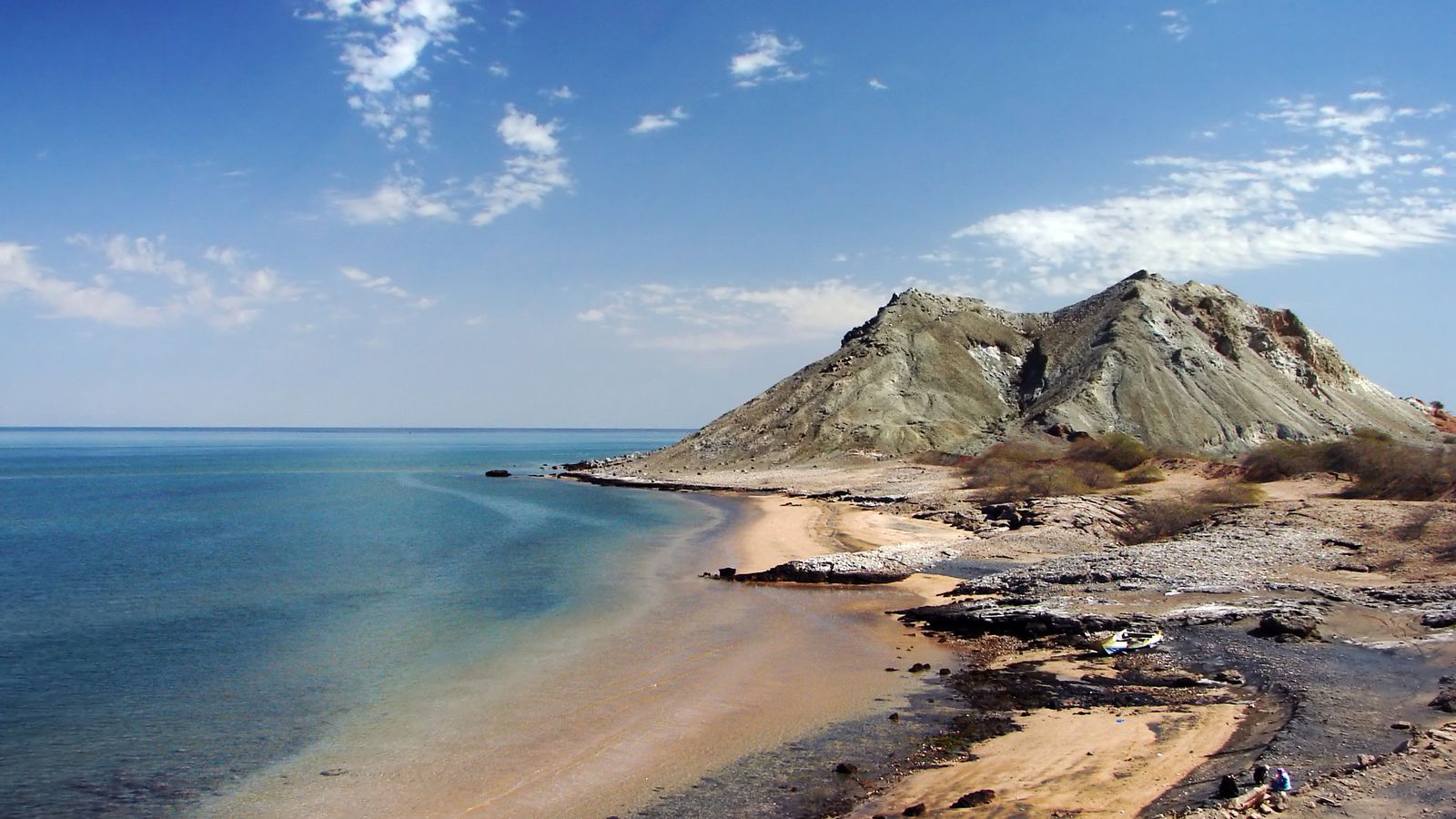
- Hero image source by Hamed Saber / openverse, by-sa.