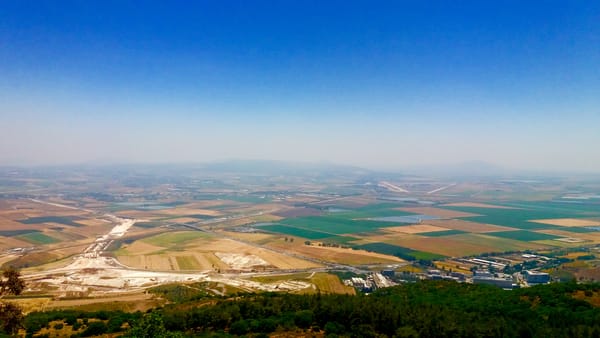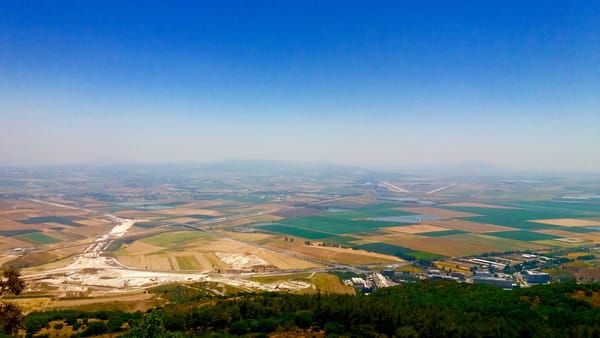

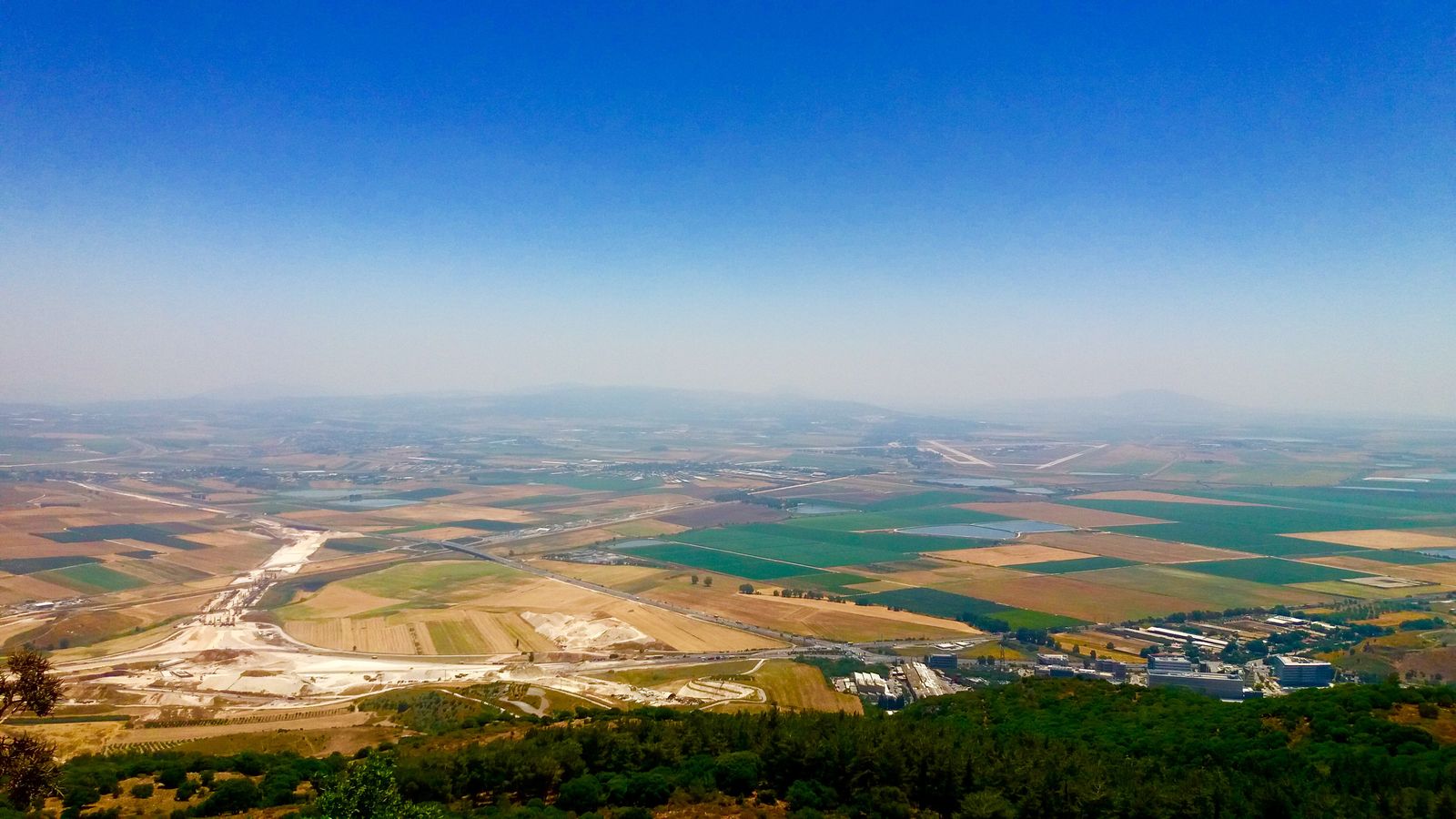
Imagine, if you will, a place deep inside the jungles of Myanmar, a well-hidden pocket of land inside a nation at war. It’s not like the rest of its nation, and in fact, it’s barely a part of that nation at all. It’s a place ruled neither by military regime, nor Myanmar’s many freedom-fighters, but as a sovereign communist state. It’s a place that swears allegiance to Myanmar, but makes clear that its loyalties lie to the north, with China. And if you’ll excuse us getting a little bit meta, it’s a place where the mere mention of what goes on there, in the first couple of minutes of a YouTube video, is a fantastic way to get demonetized. So, use your imagination, and we’ll try to set the scene: Not only is it a semi-autonomous communist region, nestled into a small and relatively tranquil pocket of a nation very much at war, but it’s a place that survives, and thrives, on the sale of one particular sort of extremely neurologically spicy blue rock.
Today on Places, we’re headed to Wa State, a breakaway, communist province of Myanmar that’s quickly becoming the crystal you-know-what capital of the world.
Finding Wa State
To find our way to Wa State, we’ve first got to travel to Myanmar, a nation nestled into the crook of southeast Asia. Situated south of China, east of India, north of the Bay of Bengal, and west of Thailand, Vietnam, and southeast Asia’s other nations, much of Myanmar is blanketed in thick jungles, and defined by the great monsoons that roll across its landscape. Known by some as Burma, the nation’s long-time name before a military regime suddenly renamed it in the late 1980s, modern-day Myanmar is a nation of some 55.7 million people.
Key Takeaways
- Wa State is a semi-autonomous communist region in Myanmar, thriving on crystal meth production.
- The region’s stability is crucial for its survival, providing protection from external interference.
- Wa State maintains neutrality in Myanmar’s civil war, avoiding conflicts with neighboring militias.
- China’s support, including military aid and financial backing, is vital for Wa State’s autonomy.
- The region’s drug trade is highly organized and resilient, with extensive smuggling routes and diversified markets.
Rich in national resources, with a deep and complex cultural history, Myanmar boasts thriving cities of global repute like Yangon and Mandalay. But alongside its human potential, Myanmar is a nation at war.
The Myanmar Civil War will play a central role in the story of Wa State, and although we’ll reserve the in-depth military analysis for our sister channel Warographics, we’ve got to at least know the basics for our purposes today. Myanmar hasn’t not been at war in a very long time, with some level of low-grade insurgency ongoing in the country for generations, but the current conflict is on another level entirely. Fought between Myanmar’s ruling military regime and its supporters on one side, and a complex patchwork of dozens of ethnic armies big and small on the other side, the civil war has reached a fever pitch in the last year or so. At the time of writing, Myanmar’s rebel insurgency controls a high proportion of the country’s land territory, with the military regime pushed into the biggest cities and a pocket of territory at the heart of the country, backed up onto the Indian Ocean. Tens of thousands have died, millions are internally displaced, and while momentum is firmly on the side of the rebels, the military regime’s defensible position inside the big cities means that there is no end in sight.
But although the story of Wa State cannot be told without the civil war, Wa State is also among the rare parts of Myanmar that has escaped the civil war thus far. It’s a territory split into two parts, with a pocket to the north that borders China, and a part to the south that borders Thailand, and at least at the time of writing, it deals with a range of potential adversaries on its borders. The bulk of its territory, the territory to the north bordering China, is most of the way encircled by resistance armies, including three particularly powerful groups, the Shan, the Ta’ang, and Kokang. But lest they side with the rebels, they’ve also got reason to fear; a significant part of their northern borders, and their entire southern enclave, are surrounded by the military government. Rather than take sides, Wa State remains staunchly neutral in the conflict, and makes no secret of its preferred approach: to keep its head down, maintain as favorable relationships with its neighbors inside Myanmar as possible, and work actively to keep the local peace, one day at a time. So far, that strategy has worked; Wa State is tolerated, at the very least, by all sides of the conflict, or at least all sides with a troop presence nearby. And for the vast majority of the world, Wa State is all but forgotten—if, that is, it was ever noticed at all.
Behind the veil of global disinterest, the basics of Wa State can be summed up relatively quickly. It’s home to about three-quarters of a million people, including a bit over 550,000 in the northern part of the state, and roughly 200,000 in its southern enclave. It sprawls over an area of 30,000 square kilometers; that’s 12,000 square miles for those that prefer Imperial, and about the size of Belgium, Armenia, Taiwan, or Haiti, for those that prefer a straight comparison.
The capital city, in the north, is Pangkham, population just fifteen thousand, and its largest city, Mong Pawk, is in the north as well. There, people drive on the right-hand side, share a time zone with the rest of Myanmar, and split their land into a handful of counties and special zones.
But it’s in the basics, that Wa State immediately begins to stand out—partly, because of its status as a one-party socialist government. Wa State does not make any claim to its own sovereignty, and it’s been insistent that it’s happy to be part of Myanmar regardless of who happens to control affairs in Naypyidaw—be they military dictatorship, civilian government, or anybody else. But it’s entirely self-governing, independent from the rest of Myanmar in all but name, and maintains its own political system as well as its own standing army. Running most of its affairs in modern-standard Mandarin, Wa State is home to a major Han Chinese population, and for all intents and purposes, it exists at the pleasure of the Chinese Communist Party.
Relying on the Chinese yuan to do business in the north, and representing an ethnic Wa majority that splits between the territory of Myanmar and that of China, Wa State has far more in common with its northern neighbor than with the rest of its own country. Its single, unchallenged ruling party is based directly on the architecture and organization of the CCP, and it accepts major financial support from China, governing itself as a strictly communist system based on, quoting here, “Maoist state-building”. In China, Wa State is referred to as a shanzhai, a mountain fortress, but with overtones that suggest it’s less of an honorable bastion for the CCP’s ideals, and more of a cheap, knock-off version. But knock-off or no, the ruling United Wa State Party maintains very, very close relations with Beijing, relying not just on China’s money but its military intelligence, its weapons, and its major diplomatic influence over its smaller neighbor, Myanmar. In the eyes of the ruling military junta and the nation’s many rebel armies alike, the message on Wa State is clear: For everybody’s sake, it’s best not to mess with them, lest their sponsor get involved.
Becoming Wa State
The story of Wa State is one that begins relatively recently, and it’s a story that starts not with neolithic ancestry or ancient dynasties, but with geography. The critical thing to understand about Wa State, both now and across time, is that it’s a highly isolated place by nature of the land its people call home. Wa State is made up of soaring highlands, through which cuts the Nam Hka river valley, and that same river valley forms Wa State’s modern and historical border with the rest of Myanmar.
Travel from the river’s eastern shores toward modern-day China, and the land is all but impassable in many places. Speaking to NPR in 2024, a reporter named Patrick Winn explained his travels around the modern landscape as follows; quoting now: “You’re not going to be driving in there. Usually people will go in on dirt footpaths and extremely, I would say almost violently sculpted terrain.
So we’re talking about mountain ranges that are really, really severe, in parts as severe as, say the Rockies”. From the perspective of people from other eras of human history, this is land that was too much trouble to conquer, too remote to be meaningful to any nearby historical empire, and so spread-out and depopulated that the people there left little evidence of ever having gathered into a geopolitical force of their own. The Wa people claim the land, and part of China nearby, as their ancestral home, and they’re believed to have lived for centuries or even millennia as some of their people still live now: as subsistence farmers, cultivating rice and walnuts, breeding and sacrificing water buffaloes, practicing old and complex religions, and keeping a history orally, rather than in writing.
As a result of that oral history, the people of Wa State understand much of their own history through legends passed down across time. One such legend, chronicled by a prominent researcher on Wa State named Hans Steinmuller from interviews with locals, tells of an ancient Wa state elsewhere, ruling over the then-great city of Keng Tung. There, legend says, the Wa ruled over another people, the Shan, until they were betrayed by the Shan, and expelled from their city by a Shan attack that used an army of elephants against them.
Fleeing into the highlands, the Wa who had escaped were said to have broken and scattered the leaves of plantains along their path to show the way for others, but because the plantain leaves grew into trees, only the first Wa to escape the city found their way into the mountains—and they would become the ancestors of the people of modern Wa State today. Whether or not such a thing actually happened, it’s difficult to say, although the presence of a ceremonial feasting and ritual expulsion of Wa people in Keng Tung through the 20th century, suggests there may be some truth to it. But by and large, the pre-20th-century history of Wa State is assumed to be one of dispersed tribes across the region, never effectively ruled by the dynasties of China, nor by the relatively more powerful ethnic groups of the lowlands.
When Myanmar, then Burma, was under British colonial rule, the story of the Wa people was largely the same. Every so often, British detachments would trudge up through the highlands, to check on the Wa settlements there or to signal to China specific British sections of their otherwise undefined local border, and China, from time to time, would do the same. But the Wa lived in something of a perpetual grey area, isolated and left basically unbothered by the tides of history.
Regarded, and feared, as headhunters who would display the skulls of their enemies as a warning to others, the Wa were a group that the British didn’t see much point in messing with, considering how hard it was to get to their territory, and how little that territory actually had to offer—at least, in the colonial view. An Industrial Age, a turn of the century, and two World Wars would come and go, leaving the land now known as Wa State, basically untouched.
But in the years that immediately followed the conclusion of World War II, Wa territory would take on increasing importance in the region. These were the years of the Chinese Civil War, fought between the collapsing Republican National Revolutionary Army, headed by Chiang Kai-Shek, and the forces of the surging Chinese communists, headed by Mao Zedong. In the war’s waning months, when it was clear that the communists would gain the victory they so desperately craved, retreating forces of China’s former leadership, the Kuomintang, retreated past the border into newly independent Burma.
They arrived there, in modern Wa State, in 1950, at a time when Burma was still recovering from its own widespread violence around independence, and lacked the means to oppose them. Although the Burmese military attempted to force the Kuomintang out, they instead recruited from the local population and entrenched themselves against much of the highlands, including both the northern, and the southern pockets of modern Wa State.
The Kuomintang would purge the area in the following years, basically kicking out the Burmese local officials who had managed the territory prior, and becoming a military dictatorship in the areas they controlled. They also learned, rather quickly, that they were sitting on a stretch of territory that had the capacity to produce a very lucrative asset: opium. Wa State and the surrounding area—today part of a vast international tract of land called the Golden Triangle—are prime areas to grow opium.
Meanwhile, Mao Zedong’s edicts to eradicate opium production, in mainland China, meant that if the Kuomintang in Burma could get their product across the border, they would have a functional monopoly on the trade in that part of China. Accounts from this period tell of the Kuomintang taking a heavy-handed approach in coercing everything from food, to money, to product out of the local population, making it impossible for local farmers to do anything but produce the maximum volume of opium that their land could support, and quickly increasing local production by about two thousand percent. Supported by allies in Thailand, and relying on the backing of the American Central Intelligence Agency, the Kuomintang were well-entrenched on that land, and lacked any reason to even think about moving elsewhere.
But although they would grow fat and happy off the opium trade, the primary focus of the Kuomintang’s army divisions in Burma was to lay the groundwork for a counterattack into mainland China. To that end, they would establish informal alliances with neighboring insurgencies, particularly the ethnic Karen population, distributing weapons to resistance elements inside the nation and benefiting greatly from their local knowledge and the possibility that they’d provide personnel, if a strike against China became possible. The presence of the Kuomintang turned into a massive headache for Burma and its leaders, standing in the way of the diplomatic neutrality it was supposed to be keeping, and seeing weapons distributed to all manner of organization that sought the collapse of the Burmese government. Military efforts to kick them off the land were unsuccessful, and although China never surged its own troops into Burma to wipe the Kuomintang forces out, the threat was certainly there.
Eventually, the Burmese government was able to get the United Nations to support a negotiated withdrawal for the Kuomintang, helped along by the fact that the group’s very public occupation of part of Burma, while being backed by the CIA, had caused some massive black eyes for the United States. The bulk of the army was gone by 1953, and several thousand irregulars left behind to continue the fight, would eventually depart in 1961. But although the Kuomintang troops were sent packing to join their comrades in Taiwan, they had left one hell of a mess in their wake.
Now, the same groups that Burma had just barely pacified before the Kuomintang had come calling, were emboldened, better-armed, and stuffed full of troublesome nationalist ideals that meant that they’d never come around to the idea of a unified Burma. That didn’t just include the Wa, but the Shan, the Karen, and other major ethnic groups, whose potential secession from the country was a major problem. For Burma, the impact of the Kuomintang would ripple outward for decades, and arguably, it’s that same legacy that ultimately drew a jagged line through history to the massive civil war of today.
But for the Wa in particular, the Kuomintang affair brought repercussions from a different source: Burma’s fledgling communist party. We’ve got to emphasize here that Burma’s troubles were happening at the height of the Cold War, a time when the American CIA was backing the Kuomintang not just because it was fun or they had agents to waste, but because any major armed group that could act as a counterweight to the rise of communism, was about to find itself considered Uncle Sam’s best friend. American State Department memorandums at the time were open about this, stating that the Kuomintang was to prevent a Chinese advance into southeast Asia, but pointing out that the strange and rather ridiculous situation that the Kuomintang had created, was being used as fodder for the Burmese communist movement to make the national government into a laughingstock. The communists were, at that time, based in central Burma, but when political unrest and a military coup forced them out of the areas the communists called home, they went looking for a new place to hole up…and the land of the Wa, just so happened to fit the bill.
Building Wa State
The communists had good reason to come looking for refuge in Wa-majority areas, and it was no surprise that they found it. The Wa were, as we’ve mentioned, an ethnic group split between Myanmar—then Burma—and China, and they were a people whose political leanings toward China’s ruling CCP had only been strengthened, as a result of the injustices they had experienced at the hands of Mao Zedong’s sworn enemies. The area was far from centralized government authority, in a pocket of land surrounded by those same nationalist militias who had drawn both inspiration and weapons from the Kuomintang, and those militias had provided weapons to the communists, too.
China and the Soviet Union agreed, at least nominally, to the idea that Burma should be a neutral country as part of the so-called Third World, nations that were not aligned with either the US-led or the Soviet-led alliance networks running the world at that time. But in practice, China saw the potential to establish a long-term communist presence in Burma, and took full advantage. As the Burmese communists settled in the city of Pangkham, now the capital of Wa State, they welcomed a flood of young Chinese intellectuals from across the border, as well as a swell in their armed ranks, courtesy of guerrilla fighters in the region who were looking for a flag to rally behind, in order to keep on pushing back against the national government.
The communists would remain there for decades, engaging only in a low-grade insurgency against Burma, but crafting a local social order that closely followed China’s example. The local communists engaged in their own purges and summary executions; they styled themselves in the fashion of communist elites in Beijing, and eventually, the Burmese communist party shifted their own demographics to match the place they had occupied. By the mid-1970s, the Bamar-majority members of the old communist party hard largely been replaced by Wa members, who had little contact with, or ideological loyalty to, the people they had replaced. As Burma became an isolated, underdeveloped pariah state, the communists sat back and allowed the country’s civilian leadership to dig its own grave, and when, in 1988, a military coup led to the installation of a new regime, the communists out in Wa State did nothing to intervene.
Instead, the aftermath of the coup that turned Burma into Myanmar, would see the communist-aligned Wa minority evolve into Wa State. The man who led the movement was one Bao Youxiang, today known as the President of the People’s Government of Wa State and the General Secretary of the United Wa State Party, as he gets ready to roll into his thirtieth straight year of authoritarian rule. Back then, however, he was a longtime guerrilla leader who had gotten his start smuggling opium into China, and eventually risen to a leadership position in the communist party’s armed wing.
But in 1989, Bao would be part of a group of high-ranking communists who challenged the party itself, in a leadership crisis that would eventually fracture the communists, and break the party’s hold over politics in the lands of the Wa. That’s not to say that Bao and his armed followers weren’t communists anymore; as we’ll see, they certainly were. But they were now going to style themselves as a new organization, representing the Wa as a whole, and seeking autonomy in their pocket of Myanmar.
Taking advantage of the instability across the nation, the new Wa State government, and their armed wing, the United Wa State Army, kept true to a ceasefire they’d agreed upon with the military junta, but they turned their attention south, toward the lands that now form an enclave of Wa State on the Thai border.
The land in question is not part of the Wa’s ancestral home, but it was territory that the new Wa State had been granted as part of its peace settlement, in documents signed by the ruling regime of Myanmar at the time. The land was a thank-you, after the Wa had taken an active role in battling against a prominent warlord and drug kingpin in the area, a Shan leader named Khun Sa. To be more specific, it had been the land controlled by Khun Sa and his army, ruling over the ancestral homes of another people, the Tai Loi—and the deal Myanmar made with the Wa, was simple: Take the land, and you can keep it. Khun Sa had been regarded as Myanmar’s, quote, “opium king” during that time, and he was seen as a major player in the global heroin trade, but the Burmese government and the Wa had been successful in curtailing his influence, and before long, the Tai Loi were under the authority of a new, and somehow even more fearsome ruler.
Starting in the early 1990s, and really kicking off when current Wa State leader Bao Youxiang took over for his predecessor in 1995, Wa State authorities took control of the southern area by force. By 1999, the countryside had largely been pacified as a result of a quiet local war, and once the violence had drawn down, the resettlement process began. Wa State wanted this territory for a few key reasons: partly because it offered a path to open smuggling routes into Thailand, partly because it was a strategically significant and easily defensible location, and partly—or, really, mostly—because the land there was far more fertile than it was in the north.
By 2002, some eighty thousand former opium farmers from northern Wa State had been resettled to the south, with the expectation that they would farm the rich lands and provide for the north. Other estimates suggest that the true number of people who were forcibly resettled was far higher, potentially cresting over 100 to 150 thousand.
Resettlement was nothing short of a disaster, on multiple levels. On the one hand, the Tai Loi population that had lived there for many generations had their assets seized, their fighting-age guerrillas killed in skirmishes, and their people enslaved to the Wa when they attempted to protest harsh conditions, or could not meet their quotas as free laborers. At the same time, tens of thousands of Wa settlers are believed to have died prematurely on the land, largely due to the prevalence of tropical diseases that didn’t reach a few hundred kilometers north, to the highlands they came from.
Many of the Wa who resettled had been forced to do so by the state government, embittering them to their overlords for the long term, while many more were allowed to grow opium only for a short time, before being forced to convert into the cultivation of food crops. Officially, at least, opium cultivation would be banned in Wa State for the near future.
Modern Wa State
The move away from opium had been partly pragmatic, and partly political; on the one hand, Myanmar’s government was willing to tolerate Wa autonomy but was fighting a bitter war against its drug cartels, meaning that it was a condition of the national government that Wa State didn’t fuel the cartels Myanmar was fighting. On the other hand, China had been looking to foster other sorts of economic growth within Wa State, and the area’s prior dependence on opium had meant that problems with smuggling or production, not to mention crackdowns from Myanmar or China, could doom the whole region.
But luckily for the Wa, the acrid, bitter soils of the north that had enabled such prolific opium farming, weren’t the only asset that their land could offer. Unlike many parts of the world, the southern part of Wa State is able to sustain the entire region’s population, relying on the bread basket that some hundred-thousand people were forcibly resettled to till. Also on its territory grow hundreds of thousands of acres of rubber trees, and China’s influence has seen to it that the state’s fertile soils are devoted partially to tea plantations, a highly lucrative endeavor for growers looking to sell across the northern border.
Wa State’s subterranean resources are equally bountiful; gold is there to be mined, zinc can be harvested as well, and it’s responsible for about one-sixth of the tin mining production of the entire world, sitting on reserves of about fifty million tons or perhaps even more. While resource exploitation in Wa State is incomplete, at least for now, it’s helped along by significant investment from China, and the acute awareness inside the region that a better and more effective mining industry, can generate only positive returns for all involved.
Watch The Project Briefing
Open Video
Video Briefing
Wa State: The Communist Drug Empire Inside Myanmar
But that’s only half the story of modern-day Wa State, and to get to the other half, we’ve got to venture into the shadows. We’ll start with the capital city of Panghkam, known to be a hotbed for tourism from China, but not the kind that involves snapping pictures of the local wildlife or taking strolls through jungle paths. Instead, Wa State is one of many parts of Myanmar, as well as other nations bordering China, that form a sort of…receptacle, for all manner of vice that’s looked down upon when it happens on Chinese territory. People are trafficked into Wa State in high numbers, both from other parts of Myanmar and from nations as close as Laos and Thailand, and as far as Indonesia and Russia. Many of them are exploited for sex in busy and sometimes violent brothels, while a thriving hotel and casino industry has a reputation of offering narcotics as part of a person’s stay. Gambling is just as critical in Wa State’s tourism industry, as are thriving markets for the trade in the by-products of slain endangered animals, but the sexual exploitation industry there is easily the most difficult to stomach. Children, particularly virgins, are known to be sought after in particular for sexual slavery, and testimony from people who’ve been trafficked to Wa State tell of serious punishments from starvation, to burning, to non-fatal hanging, for failure to comply with those who keep them imprisoned. For China, the existence of this illicit industry in Wa State simply means that all those same things don’t have to happen in China, and thus aren’t China’s problem. For Myanmar, it’s an embarrassment and a clear violation of rules that the country’s civilian government long tried to enforce…but it’s a problem neither the civilian government, nor the junta that replaced it, can do very much about. For Wa State, it’s a source not only of wealth, but of reputation, something that the leaders there work hard to cultivate in order to keep their clientele coming back.
And beyond what happens in its cities, there’s the shadowy industry inside Wa State that we alluded to at the outset of this episode: Crystal meth, so much of the stuff that it would make the life’s work of one Walter White look positively juvenile by comparison. Since the 1980s, meth has been king in Wa State, owing to a process that The Economist describes as follows; quote: “It started off cultivating opium, graduated to making heroin and now cooks some of the world’s best meth.” And as writer Patrick Winn put it, on a newly published book on Wa State entitled Narcotopia, quote: “Just as Haiti was built on sugar and Saudi Arabia on oil, Wa State was built on heroin and methamphetamine”. The methamphetamine trade in east and southeast Asia is estimated, by the United Nations, to claim a value of about eighty billion dollars US, every single year, and each year, tens of billions of dollars’ worth of the stuff are found and taken off the streets across the Asia-Pacific. A stunningly high proportion of it comes from Wa State, and as much as international governments would love to get rid of the stuff, the place where it’s produced all but guarantees that the means of production are kept under lock and key.
In Wa State, everybody knows how their bread is buttered, from local officials to the state’s ruling government to its envoys from China to its ordinary civilians. And not only is everybody in on the game, but everybody’s in on the effort to keep it safe. Wa State splits its economy between the Chinese yuan in the north and the Thai baht in the south, ensuring that Myanmar has absolutely no means to interfere with the state’s finances, and that even if one of the two nations whose currency it uses were to turn against it, it’s still partially reliant on the other.
Its law enforcement has absolutely no interest in getting in the way of Southeast Asia’s finest crystal cooks, and its military, firmly under Wa State’s control, is there to ensure that nobody else gets in the way, either. Its supply and transshipment routes are long, diverse, and resilient to the interference of international law enforcement, and the complicity of the Chinese government means that producers in Wa State have access to everything from China’s borders with other nations, to its ports, to its 1.4-billion-strong population of potential buyers. Its precursors, the ingredients used to make the stuff, can’t be effectively intercepted; they come from China.
Its network of buyers can’t be disrupted; they range all over Southeast Asia, and indeed, all over the world. And for all the gold, tin, zinc, rubber, tea, and foodstuffs that contribute to Wa State’s legitimate economy, its drug economy still puts the whole thing to shame. And to be clear, heroin production still continues in Wa State and elsewhere in Myanmar, so much so that Myanmar held a second-place spot for heroin production for decades, and at the end of 2023, surpassed Afghanistan to again become the world’s top producer of opium.
The mass manufacture of cheap pills is also a lucrative trade. But for Wa State in particular, the real value is in the baby blue…or, often, the not-so-blue stuff. There’s a thriving market for both.
It’s difficult to get a window into the inner workings of the Wa State meth trade, but we at least know some things about it. What we do know, paints the picture of a highly sophisticated industry that has no tolerance for factors that might infringe on its ability to generate profit. It’s not the military of Wa State that produces the methamphetamines directly, or at least, not anymore; instead, outside syndicates set up shop in secure Wa territory, and pay a cut to their hosts whenever profits come in. The highly trained chemists that cook the product come largely from abroad, with some among their number hailing from Taiwan, some from China, and some from Wa State or elsewhere, trained in what we can only assume is the Jesse Pinkman style of drug-chemist apprenticeship. Quotas and shipment schedules run on a consistent timetable, out in the open, with no need for a Los Pollos Hermanos-style disguise as legitimate business, and no fear of inter-cartel violence on Wa soil. There is, of course, the implicit threat of potentially extreme violence if anything were to get in the way, but with a proven track record that obstacles are kept rare, if they exist at all. Transit networks are well-established, and extend as far away as Japan, Australia, and New Zealand. And although the untrained eye might believe that crackdowns on methamphetamine production elsewhere by the government, especially before the start of the current civil war, might have been viewed as a threat by Wa State, the reality is very different. Crackdowns against everybody else, while Wa State remains immune, simply hands the state a higher proportion of the international market—and a higher share of the profits that follow.
Protecting Wa State
With such a thriving drug empire operating there, the security and stability of Wa State is of paramount importance. Much like the land-holding cartels of Mexico and Colombia, the leaders and profiteers of Wa State have a rare opportunity to create, and sustain, their illicit industry with basically no fear of interruption or oversight…but protecting that fragile situation, is another matter entirely. How they keep the peace, and keep their autonomy, is of the utmost importance—and luckily for the people of Wa State, the confluence of drug money, mining money, and major Chinese financial support means that there’s enough wealth in circulation to make self-defense possible.
That self-defense, comes by way of the United Wa State Army. Although it’s difficult to keep track of just how large Myanmar’s other ethnic militias are, at the height of a civil war where new recruits are flocking to their ranks, the United Wa State Army, also known as the UWS Army, has historically been the largest of all of Myanmar’s non-government fighting forces. They’ve held that distinction by a fairly wide margin, with estimates over the last decade generally putting their numbers between twenty and thirty thousand.
Most figures tend to skew toward the higher end of that range, and the group is understood to have up to ten thousand auxiliary fighters available if need be, to bolster their ranks. For reference, the prominent Araken Army is estimated to have had about sixteen to seventeen thousand fighters in 2024, while the Kachin Independence Army is believed to boast around twenty thousand, and the Karen National Liberation Army is believed to have about 15,000. Compared to other countries, Wa State on the numbers can offer a more substantial active-duty military than Finland, Kenya, Qatar, or Switzerland—or, if you prefer, more than New Zealand, Ireland, and Estonia combined.
As such, the UWS Army’s ranks aren’t exactly large enough to take over non-military-controlled Myanmar, but they’re more than enough to hold the line in defense of Wa State, even against multiple enemies at once. That defensive ability is helped along by Wa State’s difficult topography, where the highlands confer a major advantage on Wa forces, and where across several decades of preparation time, the UWS Army has likely figured out all the chokepoints, fallback areas, contingency plans, and optimal kill zones that they possibly could need.
And while the Wa have both manpower and terrain advantages while they’re on the defense, that’s still not the whole story. Wa State’s close ties with China have meant that Beijing has been happy to supply weapons, but the weapons Beijing sends, tend to go far beyond the AKs and hand grenades that most non-state militias around the world have at their disposal. Among other things, China is believed to have armed the group with up to five Soviet-designed, Russian-made Mi-17 helicopters, at least one of which has been documented in photographs since the initial allegations were made.
Wa State authorities claim that that helicopter is used for leisure purposes, but quite frankly, that claim is about as believable as the claim that Wa State doesn’t traffick in crystal meth. Their forces have also been spotted using modern tube-launched, optical-tracking anti-tank missiles, as well as Chinese-made howitzer artillery and armored assault vehicles. According to Janes Intelligence Review, the source responsible for revealing the anti-tank missiles and howitzers, Wa State is also believed to possess two different types of surface-to-air missiles, and be operating its own production lines to create AK-47s.
They’ve procured heavy anti-aircraft guns, heavy machine guns, and purportedly even unmanned, armed drones capable of dropping bombs. It’s unclear whether or not the UWS Army might have received even more advanced kit since the arrival of Myanmar’s current military junta, but if they have, they’ve appeared to keep it secret for the time being. But even that prior list puts Wa State a step above any armed group in Myanmar, other than the armed wing of the military junta, the Tatmadaw, itself.
As for how Wa State gets so many fighters to fill its ranks, drawing from a population well under a million in both its patches of territory combined, part of the answer is in its local law. Per the Wa State authorities, one male in every household in the state must serve in either the militia or the administrative structure of the state itself. Larger families, per a 2023 book on the subject by a researcher in Singapore named Andrew Ong, need to send two males to the state apparatus, rather than one. But like so many other things about Wa State, this process, too, has a dark side. Forced conscription into the military is common in Wa State, enforced by way of village and district government meetings every six months where a census is taken, army membership is counted, and, if necessary, families that have not yet surrendered a fighting son will have one plucked from their homes. Wrote one district clerk in a document from 2017, the mass meetings are run, quoting here, “so that the army and the people are as inseparable as fish and water, and so as to allow them to cooperate whenever necessary.” Deserters are carefully tallied in each census, with family members of deserters taken captive as a matter of course in order to force the deserter’s return, and if the deserter does not come back, the family member taken captive or another family volunteer are sent directly to the same military unit. Often, those are people ripped away from the rest of their lives, and at times, they are children. When children are taken, they often find themselves sent to the homes of military commanders, who live in large mansions with a grand entourage that those children will be incorporated into—and where they will often have to stay, until they reach the age of marriage. Failure to comply, risks a stay in Wa State’s labor camps—not just for a deserter and their replacement, but potentially even for their entire families.
Just as important as Wa State’s establishment of a strong military, is its work to ensure that its fighting-age residents never actually have to lay down their lives. The relevance of preventing such an outcome isn’t just a matter of protecting the local community, but also of ensuring that the region’s illicit industries aren’t threatened. To make sure of that, Wa State spends just as much time trying to keep the peace with its neighbors, as it does trying to be ready for war.
Wa State tends to be quite proactive in forming peaceful relationships with nearby militias, including the major ones, and has a proven track record of being able to negotiate its way out of local disputes. It’s further insulated by the fact that its backer, China, also lends substantial support to several other militias, including three of the most important ethnic groups participating in the civil war, the ones that kicked off a grand resistance assault called Operation 1027 last October. All three groups, like the UWS Army, receive significant weapons shipments from China, and they’ve recently fallen into even greater favor with China as they’ve helped to clamp down on cyber-scam operations targeting Chinese nationals from inside Myanmar.
With such a powerful mutual friend, none of the groups are incentivized to attack each other, Wa State very much included. As for the Tatmadaw, it’s proved broadly unwilling to make any sort of challenge against the UWS Army over the last decade, and now, the Tatmadaw is in full survival mode in the territory it controls near Wa State.
And just in case that regional peace with Wa State wasn’t completely understood by the other militias, the Wa leaders have taken another recent step, just to be sure. Since the start of the most recent phase of the Civil War, the UWS Army has drawn a line in the sand against all potential enemies, both junta and resistance. In November of 2023, shortly after the start of Operation 1027, Wa State vowed that all incursions into its territory, from any side of the conflict, would be treated as a threat and responded to with lethal force. So far, the UWS Army’s claim to a neutral zone on their territory hasn’t been substantially violated, at least according to the parties to the conflict. Outside its own territory, the UWS Army has taken only minimal part in the civil war, although it hasn’t been altogether absent. In July of 2024, one anomalous incident saw about two thousand Wa soldiers dispatched to a township near the city of Lashio, a major strategic target for the rebel movement. Moving at the request of the military regime, the Wa soldiers were joined by another 1,000 troops from a different militia, with the hopes of presenting a spread of the conflict. But whether the move was meant to impede the rebels taking Lashio, is a different question. The smaller township the Wa occupied is believed to have a large ethnic Wa population, and it appears that the UWS Army wanted to keep them safe from a spillover in the violence, rather than intervene in the Lashio offensive. Supporting that interpretation of events, the rebels claimed the capture of Lashio about a week after those Wa troops were positioned, suggesting that they never actually got in the way.
When we turn from the way that Wa State negotiates for its safety with Myanmar, to how it negotiates for its safety with China, the attempt to keep the peace outside Lashio is a microcosm of Wa State’s broader value. For China, as we’ve already explained, Wa State is useful in a number of ways: it’s a communist influence in Myanmar, it’s a buffer zone, it’s a catch-all region for the sorts of vice and debauchery that China doesn’t want within its own borders. But it’s also a valuable stabilizing factor, holding not one, but two patches of territory in close proximity to the Chinese border, and possessing the military strength to slap the local militias or the Tatmadaw into compliance if they were to get out of line near Chinese territory. China doesn’t just pump money and heavy weapons into Wa State because communists support communists. It sends that level of support because, in a war-torn and chronically unstable nation, Wa State is a guarantee that Myanmar’s problems don’t have to become China’s problems. Nor is Wa State the sort of dogmatic communist nation that has proven difficult for the more pragmatic CCP to work with. Wa State is pragmatic too, acutely aware of its place in the region, and with a keen understanding of what it stands to gain by keeping its ambition and its ideological fervor in check. Its relationship with China is transactional, but it’s a long-running and mutually beneficial transaction, between two entities for whom anything other than pragmatism is a waste of time and money.
Finally, there’s one other source of potential trouble for Wa State: the prospect that an outside influence could come along and knock down the entire international house of cards that Wa State has built. That change could take a few specific forms, but the basic problem is consistent: that international influences could act on Myanmar, or act on China, in a way that makes either or both of them unable or unwilling to keep the same status quo with the autonomous region. Wa State’s best ally is its obscurity, and quite frankly, its greatest threat comes from sources like this very episode: reporting, exposés, or even simple public-interest pieces that raise awareness of the fact that Wa State exists at all.
Get the world involved, and there’s a greater risk that, say, an internationally brokered peace treaty in Myanmar’s civil war will contain provisions to dismantle Wa State, or that amidst China’s negotiations with global partners and adversaries, this little province will have to be treated as just another pawn on the board, able to be sacrificed as necessary. Wa State does take preventative steps, trying to keep foreign media out at all costs. In 2024, in conversation with CrashOut Media, writer Patrick Winn asserted that Wa State is, quote, “much harder to get into than North Korea”.
But Wa State’s relentless pursuit of obscurity, by itself, still doesn’t quite do the job.
To that end, the final step in Wa State’s drive toward self-protection has been an attempt to sanitize its international image, wherever and whenever possible. Back in 2016, by example, after a civilian government took power in Myanmar, Wa State went out of its way to welcome a small group of foreign journalists, with high-ranking officials making overtures for overseas investment while insisting that the area’s reputation as a drug haven was unfair. Said Wa State’s justice secretary at that time, quote: “Wa State is a victim…we have banned the plantation, trade and use of drugs. Ya Ba—” meaning a diluted pill version of methamphetamine— “is coming from China, India, Myanmar and Thailand. We are clueless.” On other occasions, Wa State’s cause has been helped along by the work of outside researchers, like a 2021 publication by Magnus Fiskesjo that largely overlooked the modern drug trade in favor of emphasizing the region’s historical situation, caught between China and Myanmar as a sort of rudderless buffer zone. Getting any sort of press that doesn’t frame the region as an authoritarian drug empire, tends to be a major help in its efforts to avoid the limelight. Unfortunately for Wa State, that’s becoming a harder task than ever; books like the one we mentioned before, the newly published Narcotopia, have the potential to reach both interested parties around the world and the general public. Meanwhile, the reality of Wa State is, quite frankly, fantastic fodder for anything from video games, to works of fiction, to YouTube videos like this very episode. Whether Wa State can keep its relative anonymity in the future is anyone’s guess, and unfortunately for the state’s leaders, they’ve spent so long in a global media blackout that they lack the international connections required to plead their own case.
Life in Wa State
When we take a look at everyday life, in modern Wa State, it’s impossible to ignore the continued influence of China. Few people in Wa State speak Myanmar’s most common language, Bamar, but a far higher proportion are fluent in Chinese, while the vast majority also speak Wa. Internet connections link to Chinese servers and sites, mobile phones are integrated to Chinese mobile networks, and the electricity network was built by Chinese companies and engineers.
Even the time of day is meant to follow China, adhering to the time zones across the border rather than the rest of surrounding Myanmar. Chinese is taught in schools and basic literacy is taught in the military, both alongside a standardized version of the highly dialectical Wa language, also provided by China. When Wa State celebrated its thirtieth anniversary in 2019, a flood of Chinese government officials and retired schoolteachers arrived to help construct, and tell, an agreed-upon history of the region.
Wa State and Beijing are deeply enmeshed, but the relations go deeper; the million-odd ethnic Wa count most of their number on either the Myanmar side, or the China side, of their shared border, and Wa State is known as a haven for illicit activity not just in China’s biggest cities, but all over.
In Wa State, modernization has been a rapid process, but its high pace is a direct result of a booming drug industry that, despite its legal status, still offers profit that far surpasses that of other regions and industries. As a result of that constant cash flow, Wa State offers many amenities that much of Myanmar, especially other far-flung autonomous areas, simply couldn’t dream of: a cohesive judicial system, a well-established education and health infrastructure, and modern television news. According to a state official interviewed in 2019, Wa State had, at that time, a total of 409 schools, and twenty-six hospitals.
That same article, relating findings from a trip to rural areas of the state, found electricity and piped water to be widespread even in villages. Scribes and statisticians fill institutional roles in local administrations, and disabled veterans are eligible to receive pensions. The state collects taxes, it issues drivers’ licenses, and its roads are better-maintained than across much of Myanmar.
The Wa capital city of Pangkham has quickly modernized from a handful of ramshackle buildings back in the late 1980s, accessible only by mountain trail, to a bustling little city with enough infrastructure and amenities to charm its international customers from China. The country now features full-on highways, it can generate hydroelectric power, and its mobile phone infrastructure is built and kept within the region, rather than relying on coverage from China. The situation certainly isn’t perfect; by example, local hospitals are often badly underequipped, and the overall education level in Wa State remains low.
But when compared relative to many pockets of rural Myanmar, Wa State is still miles ahead.
Community life, for the majority of Wa residents, is organized around the extended family, in a social structure where the idea of caring for, or feeding, others takes paramount importance, where deference to elders is uniformly expected, and where relationships with family members of the same age are typically quite playful and lighthearted. Most people are still peasants, settled in rural villages or on the fringes of larger towns trying to eke out a living, but unlike most of rural Myanmar, elites in Wa State can make a much more elaborate life for themselves. Mansions and even entire wealthy neighborhoods have started to crop up, in a place where the protection of the local army means that everyday life is stable enough to convert financial wealth into material splendor.
There, wealth slowly trickles out to communities via work as domestic laborers, paid crop harvesting on estates, and membership of children and teenagers, often along with their whole families, in the entourage of the elite. Back in the mountain villages where the majority of people live, life is often quite slow and relaxed, and it’s kept that way deliberately. The acts that are held as taboo in Wa areas are typically ones that would be disruptive: riding horses in town, touching people’s heads, or walking into people’s homes without permission, largely as points of common courtesy.
Villages usually mix members of several clans, and share common property including farm, forest, and nearby rivers. Local delicacies are often tough for Westerners to stomach, featuring snake meat, caterpillars, ants, wasps and other invertebrates alongside chicken, pigs, and vegetables. But those few Westerners who’ve been able to visit, widely report that the ever-present chilis in food and the refreshing local teas, tend to make it all go down a bit easier.
When it comes to local religion, Wa State is a bit of a melting pot, and holds ancestral traditions that are among the few cultural relics still largely untouched by its northern neighbor. Buddhism, Christianity, and the principles of traditional communist atheism are well understood, and commonly espoused by the local Han Chinese population living a bit over their home nation’s border. But most Wa adhere to animist faiths emphasizing the role of spirits, and connection to deceased ancestors. Across society, animal sacrifice is quite common, including the daily sacrifice of chickens and pigs, and not uncommonly, the sacrifice of larger water buffalo. When visiting homes in some areas, it’s customary for visitors, when offered wine, to pour some to the ground in respect for their host’s ancestors. Meanwhile, local music, centering around elaborately decorated wooden drums, is regarded as a gateway to divinity, and to a complex group of many gods. Local rituals mix faith and family; as explained researcher Hans Steinmuller in one study of the Wa, quoting here: “Younger brothers are supposed to pass on sacrificial meat to older brothers, and older brothers acknowledge the gift; a niece pays deference to her uncle (her mother’s brother) who decides on her marriage, and the uncle will graciously support his niece. Exchanges of words and deeds maintain kinship positions and are fundamentally unequal.” Of course, conflict, community upheaval, and the simple passage of time have changed faith and community in Wa State, but the way of life that’s emerged, is shaped by modern reality and cultural history, both at once.
Finally, there’s the local political system, where an outside observer might first guess that Maoist communism would be mainstream. Yet although Wa State is, for all intents and purposes, a communist regime, the one-party system is not an institution that filters into everyday life. The United Wa State Party claims only ten thousand members, and has little practical importance in the lives of most everyday people.
That’s not to say that Wa leaders take no interest in those people; far from it, and in fact, the drive to establish an ethno-national identity has been a big part of Wa State for a generation now. But instead of anything to do with communism, Wa celebrations and recognition of, shall we say, Wa-ness, come by way of regular military parades, regular anti-drug rallies, and regular appearances by propagandists and dance troupes all across the territory. Those troupes are a mainstay of local events and festivals, while television and print media largely model the messages the propagandists deliver in-person.
In recent years, Wa State has pushed for public interest, and social media attention, toward efforts for all people on the territory to learn the Wa language, framing it as a critical bit of knowledge to make sure people don’t miss out on the rich culture and community all around them. And with the central role of the military in local and even family life, popular literature, music, and state-backed discourse often work to define the ethos of Wa State as a combination of love of country—or, in this case, non-sovereign regional government—and duty of sacrifice and military service. For the most part, that approach seems to work; although Wa State hasn’t participated directly in large-scale conflict in many years, most families still lost people in the violence of the 1990s, and are acutely aware of the civil war raging around them today.
Culture, media, and community all tie back to the military, both for reasons of state propaganda, and real, deeply felt local history. The military means protection, and in Wa State, all people are party to it in some way or another.
Future of Wa State
By now, the thing that truly defines Wa State is, hopefully, starting to come into focus. It’s not communism; it’s not conflict; and, hell, it’s not even crystal meth. It’s stability that allows Wa State to be what it is today, and it’s stability that allows Wa State to exist at all. For the region’s drug empire and the leaders that organize it, stability means protection from government intervention, from the assertion of other people’s laws or rules, and from the sorts of interruptions that could get in the way of profit. For the people who live there, stability means a life immune from the raging civil war all around Wa State, the opportunity for people with wealth to make use of that wealth, and for people without wealth to access robust social services, modern technology, and other things that may take decades to be re-established across much of rural Myanmar. For the ethnic militias and their communities around Wa State, stability means being able to trust that a better-armed neighbor won’t ever start getting ideas about conquest, and for the ruling military regime, stability means that a highly dangerous organization won’t add its weapons to the regime’s laundry-list of ongoing problems. For China, stability means a trustworthy friend watching over its border with a fractured nation, and stability also means that China can trust that friend to handle illicit enterprise and debauchery that China, itself, struggles to tolerate. Myanmar is anything but stable right now, there’s a halfway decent argument that it’s never been stable, and for Wa State, stability is a more valuable commodity than all the lucrative drugs in the world.
So, when we look to the future of Wa State, it’s that same core trait—stability—around which the future completely revolves. At the time of writing, in the late summer of 2024, it appears Myanmar may be sinking into civil war for the long term. The regime is looking like it’ll be driven completely out of the countryside within a year, if not less, but for the rebel armies marching on Yangon and Mandalay, it would take a miracle to bring those cities down through military means alone. So although the civil war seems far from resolution, it appears close to a violent equilibrium, one where skirmishes and gunfights give way to a long, and potentially ruinous siege.
The good news, for Wa State, is that any such siege will take place far from their homes and territory. Up-to-date maps indicate that regime forces still do control territory that borders Wa State, but it’s not high-priority for the regime. In fact, the area has been rather peaceful, at least in a relative sense, owing to the fact that regime forces all the way out there are loathe to provoke any trouble, and the fact that the militias in the area have more of an appetite for peace than they do for gobbling up territory.
The biggest militias close to Wa State appear to have no inclination to pick a fight, with yet another group that’s better-armed than they are. Add to that, the fact that with China increasingly looking to support those same major militias, it would be a major un-forced error to pick a fight with China’s golden child next door.
And speaking of China, it’s impossible to know what goes on in private meetings between Beijing and the government in Pangkham, but at least outwardly, there is little indication that China wants to change the status quo in Wa State. Now as ever, China is more than happy to lean on Wa State for its influence on a troublesome neighbor, and for its sterling reputation of providing a criminal outlet, without providing headaches. China hasn’t seemed to distance itself from Wa State in the slightest, but nor has it sought to expand or broaden the Wa’s power or territory.
The goal isn’t to take over Myanmar using the model that Wa State provides, and it’s not even to use Wa State as a mediator, as some international analysts expected the region would become in earlier phases of the civil war. Regime change and mediation can be handled elsewhere, either by China directly or by other trusted allies within the country. Wa State’s purpose is set, and that appears to be how everybody likes it.
As for the international community, we’ve already discussed the dual factors that make it so hard to change the game in Wa State from afar: obscurity, and diversification. When it comes to obscurity, the realities are simple: most of the global community has never heard of this little corner of Myanmar, and most world governments don’t know much more than the rest of us do. No nation keeps an embassy there, nor a diplomatic mission, and even non-government organizations have a hard time getting into the territory long enough to see what’s going on.
As for diversification, the reality of Wa State is that there is no one way to cut off its drug trade. No matter how much a given Indo-Pacific nation might want to stop Wa State from plying their trade, the region has access to so many other markets, and so many other smuggling routes, that the loss of any single one is immaterial. China, of course would be the major exception, but China’s support is going nowhere.
The real threat to Wa State, at least in the short term, is the potential for a rebel victory in Myanmar, and the restoration of a civilian government, to create a political leadership that’s interested in shutting Wa State down. There’s no guarantee that even an end to the civil war would result in a unified Myanmar; after all, any number of the armed militias could decide that they’d like to rule autonomously, just like Wa State, rather than participate in a national reconstruction. But in the event that a civilian government does take charge, it’ll need to decide whether to leave Wa State alone, or to gain both the political victory, and the national cohesion, that would come with fixing a regional drug epidemic and bringing a powerful autonomous region to heel.
As for whether or not that would happen…well, nothing is assured, but it doesn’t seem likely. Wa State has taken steps to prepare for such an eventuality, not least its insistence on never claiming independence, never seeking a formalized autonomous status, and always voluntarily placing itself as a subordinate to Myanmar’s national government, no matter who’s in control. It’s gotten close with China, not just for their symbiotic relationship, but so that Beijing can step in, if anybody leading Myanmar starts to get any ideas about truly national unity. And Wa State’s simultaneous decisions to keep a great, big army, and avoid using it, mean that the rest of Myanmar understands that Wa State is much better to deal with as a friend, than as an enemy.
Compared to most groups on Earth that work in illicit industry, Wa State appears to have it made. You can condemn the criminal syndicate in charge, as much as you’d like; many have, and for good reason. But whatever else may be true about that syndicate, it’s made the absolute most out of the situation it was given, and it’s transformed itself into one of the most stable, and survivable criminal empires on Earth. Anything can happen, but in all likelihood, Wa State is going nowhere.
Myanmar’s crystal-meth communist breakaway state is here to stay…probably not for the better, but certainly, whether we like it or not.

Simon Whistler
Simon Whistler is one of YouTube's most prolific educational creators, with tens of millions of subscribers across his channels. Places is his expedition into the world's most remarkable locations — from cities carved from salt to islands nobody dares inhabit. He brings a researcher's rigour and a traveller's awe to every field note.
Frequently Asked Questions
What is Wa State?
Wa State is a semi-autonomous communist region in Myanmar, known for its production of crystal meth and other illicit activities. It is ruled by the United Wa State Party and maintains close ties with China.
Where is Wa State located?
Wa State is located in Myanmar, nestled into a small and relatively tranquil pocket of a nation very much at war. It is situated south of China, east of India, north of the Bay of Bengal, and west of Thailand, Vietnam, and other Southeast Asian nations.
What is the population of Wa State?
Wa State is home to about three-quarters of a million people, including a bit over 550,000 in the northern part of the state and roughly 200,000 in its southern enclave.
What is the capital of Wa State?
The capital city of Wa State is Pangkham, which has a population of just fifteen thousand.
What is the primary economic activity in Wa State?
The primary economic activity in Wa State is the production and sale of crystal meth, although it also engages in agriculture, mining, and other illicit activities.
What is the United Wa State Army?
The United Wa State Army (UWS Army) is the military wing of Wa State, with estimates of its size ranging between twenty and thirty thousand fighters. It is one of the largest non-government fighting forces in Myanmar.
How does Wa State maintain its stability?
Wa State maintains its stability through a combination of military strength, diplomatic relations with China, and a policy of neutrality in the ongoing civil war in Myanmar. It also relies on its drug empire and other illicit activities for economic stability.
What is the relationship between Wa State and China?
Wa State maintains close ties with China, relying on Chinese financial support, weapons, and diplomatic influence. China views Wa State as a buffer zone and a place to offload illicit activities that it does not want within its own borders.
What is the future outlook for Wa State?
The future of Wa State is likely to be shaped by its ability to maintain stability and avoid interference from the international community. Its close ties with China and its powerful military make it a resilient entity, but changes in Myanmar’s political landscape could pose challenges.
What are the main challenges facing Wa State?
The main challenges facing Wa State include potential interference from the international community, changes in Myanmar’s political landscape, and the need to maintain its illicit economic activities without attracting too much attention.
Sources
- Original Places video: Wa State: The Communist Drug Empire Inside Myanmar
- https://www.cia.gov/the-world-factbook/countries/burma/
- https://freedomhouse.org/country/myanmar
- https://www.bbc.com/news/world-asia-pacific-12990563
- https://www.cfr.org/global-conflict-tracker/conflict/rohingya-crisis-myanmar
- https://apnews.com/article/myanmar-burma-different-names-explained-8af64e33cf89c565b074eec9cbe22b72
- https://www.nytimes.com/interactive/2024/04/20/world/asia/myanmar-civil-war.html
- https://www.pbs.org/newshour/world/myanmar-burma-and-why-the-different-names-matter
- https://www.sciencedirect.com/science/article/abs/pii/S0006320720308922
- https://www.worldbank.org/en/country/myanmar/publication/myanmar-country-environmental-analysis
- https://www.berghahnjournals.com/view/journals/saas/29/3/soca13009.xml
- https://en-ng.topographic-map.com/map-trq2dn/Wa-State-Northern-Region/?center=22.62312%2C98.96404
- https://history.state.gov/historicaldocuments/frus1952-54v12p2/d30
- https://thediplomat.com/2016/07/myanmars-kuomintang-incursion/
- https://www.wilsoncenter.org/article/the-united-states-and-the-guomindang-forces-burma-1949-1954-diplomatic-disaster
- https://www.tandfonline.com/doi/abs/10.1080/14682745.2022.2100355
- https://academic.oup.com/cornell-scholarship-online/book/20410/chapter-abstract/179540208?redirectedFrom=fulltext
- https://www.jstor.org/stable/10.7591/j.ctv3s8n95
- https://factsanddetails.com/asian/cat66/sub417/item2734.html
- https://www.peoplesoftheworld.org/text?people=Wa
- https://factsanddetails.com/asian/cat66/sub417/entry-6666.html
- https://www.irrawaddy.com/opinion/analysis/whither-wa-state-myanmars-criminal-hub-spreads-wings-under-junta.html
- https://time.com/17651/burmas-wild-east-is-a-debauched-land-of-drugs-and-vice-that-reforms-forgot/
- https://www.bbc.com/news/world-asia-67688413
- https://www.crisisgroup.org/asia/south-east-asia/myanmar/299-fire-and-ice-conflict-and-drugs-myanmars-shan-state
- https://asia.nikkei.com/Spotlight/Special-Reports/From-India-to-Australia-Myanmar-is-flooding-Asia-with-cheap-meth
- https://www.reuters.com/article/us-myanmar-wa-idUSKCN1270R3/
- https://www.usgs.gov/centers/national-minerals-information-center/tin-statistics-and-information
- https://www.irrawaddy.com/culture/books/the-much-misunderstood-wa-of-myanmar-and-china.html
- https://web.archive.org/web/20230602110919/https://mmpeacemonitor.org/1600/uwsa/
- https://archive.today/20231101205345/https://www.irrawaddy.com/news/burma/myanmars-wa-army-vows-neutrality-in-fight-between-regime-ethnic-alliance.html
- https://web.archive.org/web/20220813050138/https://www.usip.org/sites/default/files/2019-07/pw_147-the_united_wa_state_army_and_burmas_peace_process.pdf
- https://apnews.com/article/myanmar-conflict-wa-shan-militia-lashio-kokang-c3d35e0dc24b04fbb960f1afd3084af5
- https://www.cfr.org/backgrounder/myanmar-history-coup-military-rule-ethnic-conflict-rohingya
- https://www.pbs.org/newshour/world/myanmars-military-losing-ground-against-alliance-of-militias-buoying-resistance-hopes
- https://web.archive.org/web/20150816230127/http://www.janes.com/article/53155/wa-army-fielding-new-chinese-artillery-atgms
- https://www.janes.com/osint-insights/defence-news/united-wa-state-army-military-parade-showcases-ongoing-modernisation
- https://www.jstor.org/stable/10.7591/j.ctv2t8b78b
- https://eprints.lse.ac.uk/90635/1/Steinm%C3%BCller_Conscription-by-capture.pdf
- https://asiatimes.com/2019/09/myanmars-wa-hold-the-key-to-war-and-peace/
- https://www.npr.org/2024/01/30/1227828571/how-narcotics-have-shaped-everything-for-the-wa-an-ethnic-minority-in-myanmar
- https://www.jstor.org/stable/26545303
- https://www.cambridge.org/core/journals/comparative-studies-in-society-and-history/article/sovereignty-as-care-acquaintances-mutuality-and-scale-in-the-wa-state-of-myanmar/02ABC5B081AD0F1ADDA8C0BA5A30044A
- https://www.berghahnjournals.com/view/journals/saas/28/1/soca12755.xml
- https://onlinelibrary.wiley.com/doi/full/10.1111/nana.12709
- https://www.bbc.com/news/world-asia-37996473
- https://www.geopoliticalmonitor.com/chinas-enduring-influence-over-wa-state-in-myanmar/
- https://www.cjfp.org/myanmar-in-the-dragons-shadow-chinese-patronage-and-ascent-of-the-united-wa-state-party/
- https://thediplomat.com/2024/05/patrick-winn-on-the-narco-economy-of-myanmars-wa-state/
- https://greydynamics.com/the-united-wa-state-party-myanmars-most-powerful-ethnic-army/
- https://www.cfr.org/blog/review-wa-myanmar-and-chinas-quest-global-dominance-bertil-lintner
- https://thediplomat.com/2019/05/the-wa-art-of-not-being-governed/
- https://time.com/17651/burmas-wild-east-is-a-debauched-land-of-drugs-and-vice-that-reforms-forgot/
- https://www.economist.com/culture/2024/02/09/the-wa-the-worlds-biggest-drug-dealers-with-a-tiny-profile
- https://factsanddetails.com/asian/cat66/sub417/entry-6666.html#chapter-0
- Hero image source by Saga1111 / openverse, by-sa.