
Introduction
West Papua is a paradox.
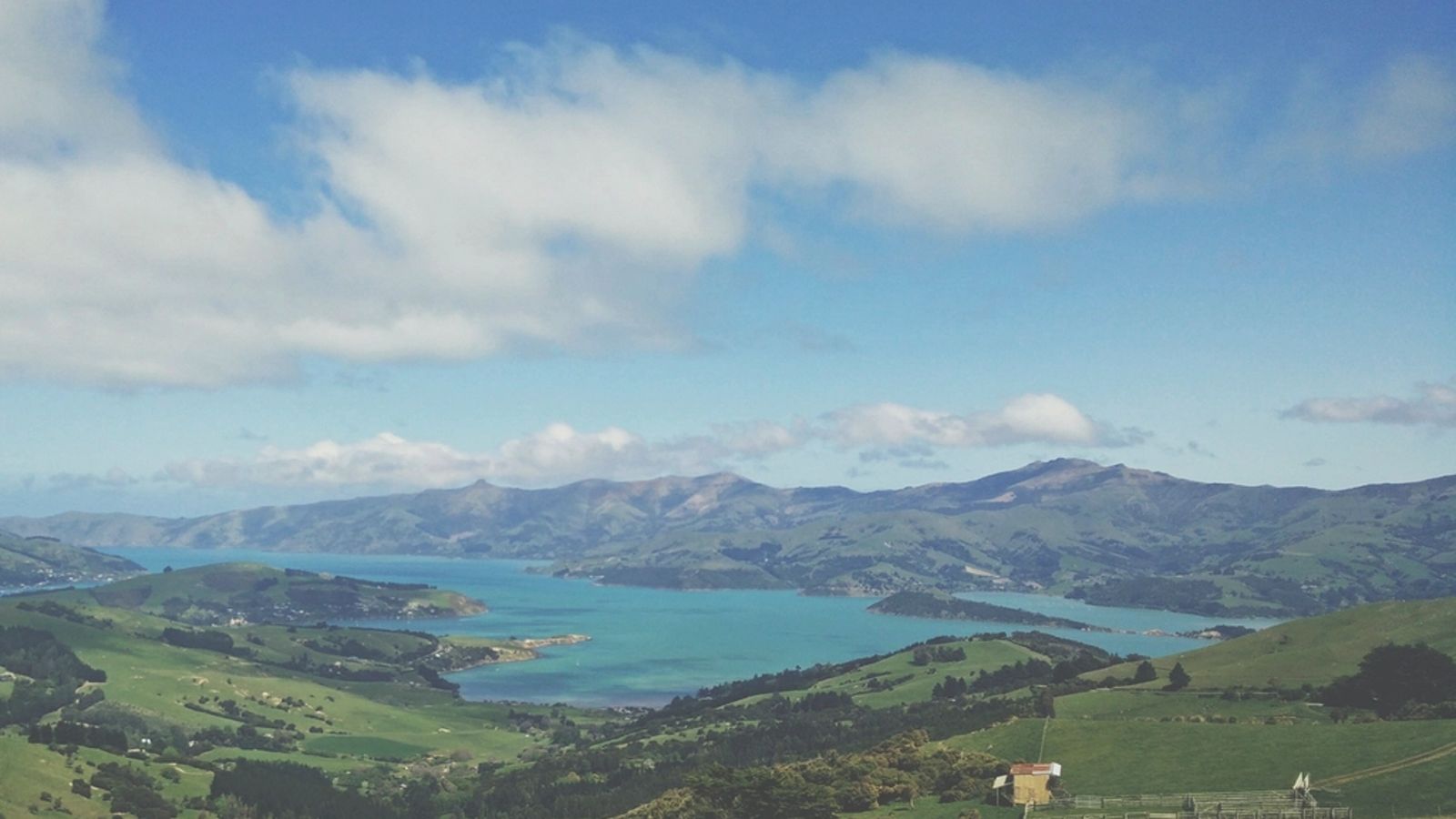
Because on the one hand, it is gorgeous. With white sands, turquoise oceans, coral reefs, diverse rainforests, and enough species of animals and plants to make your head spin, it is in every sense of the word, idyllic.
And yet, on the other hand, West Papua is also a deeply ugly place. It is a land tarnished with murder, torture, exploitation, deforestation, and war. Many of the people there have only ever known violence and repression at the barrel of a gun. It is a territory sitting on decades of atrocities, and an independence struggle so overwhelmingly one-sided, that it feels less like a conflict, and more like a quiet extinction.
Key Takeaways
- West Papua is a region of stunning natural beauty but marred by decades of violence and repression.
- The Indonesian government has controlled West Papua since the 1960s, despite ongoing resistance and calls for independence.
- The 1969 ‘Act of Free Choice’ was a manipulated referendum that did not represent the true will of the West Papuan people.
- Human rights abuses, including torture, arbitrary detention, and sexual violence, have been systematically used against West Papuans.
- Despite ongoing struggles, the West Papuan people remain organized and determined in their fight for self-determination and independence.
So, what is the story of this marvellous and relatively unknown corner of the world? What unspeakable things have its people been through just to get here? And is there light at the end of the tunnel?
Welcome to trouble in paradise.
Where in The World is West Papua?
Ok, crash course on West Papua, what is it? It’s the Western half of the island of New Guinea down where Southeast Asia meets Melanesia, its neighbours being Australia to the South, Papua New Guinea to the East, and the Philippines, Singapore, East Timor, and the Indonesian archipelago to its West. It currently is controlled by the government of Indonesia, over there in Jakarta and it has been since the 60s. But it’s been inhabited by tribal populations for many thousands of years.
What’s the geography like? A large mountainous interior, forested lowlands, and an incredibly dense virgin rainforest only second in biodiversity to the Amazon. Towards the coasts are large numbers of mangrove swamps, and coral reefs, with small islands on the exterior. It is so diverse, that in some parts of the island discoveries of species previously “unknown” to non-natives happen pretty regularly.
Oil, gold, and copper are common too, meaning that it’s actually a relatively wealthy region as far as resources go.
Who lives there? Well, a mix of about half Indonesians, and half West Papuans, the natives on the island in this region. And no, they are not all exclusively living a tribal life. Now the people across the entire island of New Guinea have an incredible cultural distinction that comes from their different cultural backgrounds, and it has been that way since the Austronesian people arrived on the island around 3,000 years ago.
There are about 250 different tribes in West Papua and many of them have distinct languages, cultures, and traditions. Even still, many of them band together as one nation when referencing their struggle for independence and their place in the world as a people.
The land where West Papua now is, just like the people, have been called many things over the years. We’ve elected to call the region West Papua, and its people either West Papuans, or just Papuans to avoid any confusion.
Where does the name come from? The term “Papua” reportedly has many different origins, some claim it comes from the Malay word “papuwah,” describing the frizzy-hair of the locals, whilst others suggest it comes from the Tidore word “Papo-Ua’” meaning “not united”. The idea being that West Papua was a land with many peoples, but no king.
However, West Papua very much has a king right now, or rather, an authoritarian ruler that has subjugated the people, snatched the prospect of independence from them decades ago and brutally put down any dissent in the meantime. It’s called the Indonesian government. But how did this happen?
Let’s go back and see, shall we?
History – Broken Promises and Stolen Land?
West Papua is a land that has been populated by local people for tens of thousands of years. We won’t bore you with the details, because if we did this would go on forever, but just know that the land known today as West Papua didn’t have much contact with the Western world before it was colonised by the Dutch Empire in 1898, likely in search of spices. This is why the overall area of Indonesia was once referred to as “The Dutch East Indies” and “Dutch New Guinea”. And I guess there weren’t that many spices in West Papua specifically, because the Dutch largely left it alone, as a neglected, isolated territory, which allowed the tribal traditions and cultures to grow in the region among its people.
Our next stop on the timeline is 1942, when the Japanese occupied the Dutch East Indies including West Papua in a little under three months, before eventually being recaptured by the allies in 1944. The post-war period saw the Dutch colonial empire weaker than ever, and with a global pressure for big powers to start decolonising, Indonesians started calling for independence. This preluded a four-year war for independence that Indonesia eventually won.
It’s easy to follow this story for West Papua then, Dutch, Japanese, Dutch, Indonesian, right?
Not exactly. And this is where things start to get a little bit messy.
When Indonesia gained independence in 1949, West Papua was not part of the discussion. The Dutch government even back then saw West Papua as geographically, ethnically, and culturally distinct to Indonesia in almost every way. If the Dutch were going to have to decolonise, they were going to do it right, so Amsterdam began preparing West Papua for its own independence throughout the 1950s, whilst it still administered the territory.
And during that time, a more nationalist identity started to solidify among the West Papuan people. They may have been of many tribes, but they were of one nation, and institutions for West Papuans like the New Guinea Council were being set up so that the population had self-determination to show it. By the end of 1961, West Papua held a congress at which its people declared the nation independent, and raised its new flag, a very snazzy number known as the Morning Star.
And this is where it goes from a little messy to a total cluster headache. Indonesia wasn’t happy with just having the territory it had gained thus far, it wanted the whole of the Dutch’s former colonial holdings, including West Papua, and President Sukarno soon announced an invasion into the territory to make it so. But Indonesia, only a little over a decade out from gaining independence itself, couldn’t secure enough support for its invasion amidst the conflict between itself, the Dutch colonial forces, and the West Papuans, so Sukarno turned to the Soviets for help.
And this dragged little West Papua kicking and screaming from an otherwise neglected corner of an old colony to the focal point in both the Cold War and the centre of the international stage. The Americans were terrified that the Indonesians seeking support from the Soviets could cause the dominos to start falling to communism in Asia. So as far as the US was concerned, they had no other choice but to try and step in, by funding and assisting the Indonesian military. You see, they wanted the Indonesian military out of Sukarno’s control, and figured funding and assisting it would help destabilise Sukarno and his communist tendencies overall by creating people capable of overthrowing him from within the military infrastructure.
It really can’t be overstated just how much the US were involved in Indonesian affairs, the CIA were also present in Indonesia at this time, and US President John F. Kennedy wrote a letter in 1962 to the Dutch Prime Minister regarding both Indonesia and the Papuan question. One excerpt reads:
“The Netherlands Government has committed itself to the Papuan leadership to assure those Papuans of the right to determine their future political status. The Indonesians, on the other hand, have informed us that they desire direct transfer of administration to them but they are willing to arrange for the Papuan people to express their political desires at some future time. Clearly the positions are not so far apart that reasonable men cannot find a solution.”
Handing over West Papua to Jakarta would, Washington believed, help appease the nation and bring it closer in line with Western interests over that of communist ones. And it had to be resolved soon, because if the USSR pledged full support, Indonesia could become a Soviet stronghold proper. This led to a meeting in 1962 between the Netherlands and Indonesia, brokered by the US in New York.
The agreement promised that the Netherlands would give West Papua over to the control of the United Nations, and after one year, that authority would transfer to the Indonesian state. It also promised the West Papuans a right to self-determination.
What did the Papuans think? We don’t know, because nobody ever seemed to stop to ask them at the time.
And this transition came and went as you might expect, with immediate and growing resistance by West Papuans to Indonesian rule. This continued on until 1969, by which point the Indonesian military had killed and imprisoned thousands of Papuans in a brutal authoritative campaign. But the international pressure was mounting, Indonesia had made this agreement with the idea of giving the West Papuans a say on their future later down the line.
Well now it was later down the line, so it was agreed that the UN should oversee a referendum by the Papuan people where they get two choices, remain a part of Indonesia, or become an independent nation. This vote was to be called the “Act of Free Choice”.
But this is where it became clear that despite what JFK said in his letter to the Dutch PM, and despite what the Indonesians had agreed in New York seven years prior, the Indonesian government never really held any serious intent to grant West Papua any kind of opportunity for independence. Jakarta just said what it had to say to get the land, and once they had it, they weren’t going to give it up.
Indonesia stepped in to “help” with the referendum. Declaring the Papuans and their tribal roots as “too primitive” to cope with democracy, the Indonesian military hand-picked just 1,026 people out of the million-strong population at the time, who were a “representative” sample to vote on the UN mandate. These 1,026 people were bribed, and if they couldn’t be bribed, they were threatened. It is reported that these members of the West Papuan people were told that they and their families would be killed if they voted the wrong way.
Whether they were bluffing or not, it didn’t matter, the intimidation worked. All 1,026 people voted to remain a part of Indonesia. This was henceforth referred to as the “Act of No Choice”.
But the UN, perhaps itself not wishing to damage its own credentials for an unfair referendum operated under its name, ratified the decision, dooming any idea of independence for West Papua for the foreseeable. The UN likely knew mistakes were made. The UN General Assembly in late 1969 “took note” that the Act of Free Choice did not accurately or democratically represent the will of the people, and yet still nothing was done. West Papua was failed by the UN.
And then it got worse, a whole lot worse.
Resistance In the Land of No King
But telling you the history of West Papua up to that point doesn’t really tell you the whole story. Peel back the more classic colonial story, and you reveal a coordinated attack on West Papuan people since the very first days of the Indonesian occupation. One that has continued all the way up until today.
And you may question why a conflict going on for literal decades, replete with human rights abuses and an ongoing struggle for independence is relatively unknown. And the reality is, for a long time, the world just didn’t care about West Papua, and the Indonesian government has long tried to silence the secessionist movement.
Resistance to the Indonesian power over West Papua began in earnest literal days after the UN relinquished control of West Papua to Indonesia in the early 1960s just after the so-called “Act of Free Choice”. This began as a simple unorganised resistance movement that grew into a fully armed military insurgency known as the OPM, or Free Papua Movement. Except on top of your more classic insurgency mostly fought by guerilla groups with guns; the tribal West Papuans have had very little to be able to fight such an insurgency, instead doing so with their traditional weapons, spears, and bows and arrows.
They’re not the only weapons West Papuans use, but you can find many pictures online of Papuan tribesmen with bows next to armed guerillas with AK-style rifles. As you can imagine, the Indonesian military isn’t playing on the same level of the tech tree. So many of these people today are fighting in Vietnam conditions, with stone age equipment, versus a modern military fighting force.
And they’ve been doing it for over half a century.
The OPM has carried out a number of attacks on Indonesian military and societal targets as a result. In 2025 a teacher was killed by the OPM. In 2018 at least 17 construction workers were killed, a New Zealand pilot was captured in 2019, and on another occasion, attacks managed to cause the temporary closure of the Freeport gold and copper mine in the area. Attacks like these have gone on for years.
Watch The Project Briefing
Open Video
Video Briefing
West Papua: The 60-Year Insurgency You've Never Heard Of
The source of the issue relates back to a lot of factors, one of which is what West Papuans believe is the violation of their people’s rights and territory back in the 60s. Another is the Indonesian ambition to dominate what Jakarta sees as its land, because hey, the UN agreed after all. It’s also supposedly rooted in a deep and societal racism across Indonesia towards Papuans. A Human Rights Watch Report on the issue reads:
“Indonesians often mock Papuans, calling them ‘monkeys’ to imply that they’re lagging behind in evolution or describing Papuans as lazy, primitive or foul-smelling.”
Whilst a backwards view, this adds context to the overall feeling on the ground. Even in 2019, Papuan university students in Indonesia were accused of damaging an Indonesian flag during Independence Day celebrations. As a result, they were surrounded by nationalist students calling the Papuans various kinds of animals in a form of racist goading.
The concept that Papuans were “primitive” was the same reasoning that the previous regime gave for denying their right to a free and fair referendum on their futures. Never mind that West Papuan people had shown some of the earliest signs of people cultivating crops 7,000 years ago. Even despite facts to prove the contrary, the racism is deep-rooted, and is an open wound in relations between both sides in the current conflict.
But there’s more to this than just racism, there is a systemic campaign by the Indonesian government to suppress calls for West Papuan independence. Since the 1960s, the Indonesian government has severely restricted foreign journalists and international rights monitors from visiting West Papua, resulting in a chronic underreporting of the issue in Western media. If you haven’t heard of the West Papuan independence movement, that is likely why.
Peace Brigades International, the International Committee of the Red Cross, Amnesty International, Human Rights Watch, and CordAid have all been forced out of West Papua, even diplomats are regularly denied permission to visit. Jakarta maintains a fierce stance of no international meddling in its internal affairs.
But part of this reason is to suppress growing independence movements, but also to act with total impunity over the region and its people to the point of full military campaigns, human rights abuses and more.
The West Papuan people do not have access to freedom of expression, or freedom of assembly. Anyone openly criticising the government at a protest or some other event can see themselves getting arrested, attacked by riot police, or even killed. In May of 2016, 1,735 people were arrested for demonstrating support over a meeting happening the following day in London’s parliament to call for a free Papua. Hundreds are still arrested every year, often resulting in racist abuse, as well as eventual charges of treason carrying a maximum penalty of 20 years in prison.
Filep Karma is one such activist who was twice imprisoned for protesting peacefully. He was first arrested in July 1998 and jailed for nearly two years for leading a protest on Biak Island at which Indonesian security forces gunned down more than 150 protestors. Karma has since died in 2022.
But it goes further still than arbitrary detention. In the 70s and 80s, the Indonesian military and police imprisoned members of the Papuan elite, by accusing them of committing treason, of being separatists, and taking over their businesses and lands. Although if anything, it looks more like the stealing of territory justified retroactively by calling groups of people enemies of the state, which is in line with the Indonesian government’s actions more generally.
Is West Papua undergoing Genocide?
But it gets darker still. A paper prepared by the Yale Law School for the Indonesian Human Rights Campaign in 2004 found “in the available evidence a strong indication that the Indonesian government has committed genocide against the West Papuans”. And when you look at the list of what the Indonesian forces have done, it’s hard not to agree with that assessment.
Arbitrary detention is common, but so is the torture that goes on of regular West Papuans. Some leaked “trophy videos” allegedly show the Indonesian military abusing West Papuan people by assaulting them, or interrogating them whilst shoving weapons in their faces and using racial epithets.
This usually occurs during “sweeping operations” that cause many of those residing in West Papuan villages to live in abject fear every day. Under the pretence of looking for insurgents, the Indonesian military have repeatedly swept through entire rural areas killing and burning whole villages to the ground without regard to any actual enemies in the area. They have destroyed subsistence food crops and livestock, forcing people to flee into the forests where they are prone to starvation and disease.
And when they can’t do that, they launch bombs, drones and grenades onto villages filled with innocent people. In 2021 it was revealed that those who inhabit the village of Kiwirok had white phosphorous dropped on them. Those there reported a strange looking cloud of dust, followed by sickness where children in the village could not stop coughing up blood.
Satellite images would later confirm over 200 buildings in the village being destroyed in response to an Indonesian intelligence officer being killed. On 26 April 2021, Bambang Soesatyo, Speaker of the Indonesian People’s Consultative Assembly (MPR), the legislative branch in the Indonesian political system, was quoted in the media as saying:
“Destroy them first. We will discuss human rights later.”
For others, it is even worse, as sexual assault and rape have been repeatedly used as a weapon of war on West Papuan civilians by the Indonesian military and police. Such shocking revelations are not new news.
In a public report to the UN Commission on Human Rights in 1999, the Special Rapporteur on Violence Against Women concluded that the Indonesian security forces used rape “as an instrument of torture and intimidation” in West Papua, and that “torture of women detained by the Indonesian security forces was widespread”.
And everywhere you go in West Papua, you hear the exact same stories, of the Indonesian armed forces raping, torturing, arresting, and killing people in numbers that could constitute a genocide for multiple decades at a time.
Others have concluded that these crimes continue to carry on so that Indonesia can continue to impose itself on West Papua. And nowhere is this clearer than how the land in West Papua is used.
Remember that mine that the Papuans managed to close down due to their attacks? It’s known as the Freeport or Grasberg mine, and it is the largest and most profitable gold mine in the entire world. It is half-owned by the Indonesian government and half by American corporation Freeport-McMoRan.
Freeport-McMoRan have been accused of breaching Indonesian environmental laws as early as 1997, which has poisoned the local river system. The mountain that the mine used to exist on was considered sacred in the area, and many thousands were either displaced or killed in order to get it up and running. Similarly, palm oil trees that are planted by companies looking to invest are killing local biodiversity and hunting grounds the Papuans rely on to survive.
Some sources further use this as a reason to call the Indonesian government’s actions tantamount to a genocide on the West Papuan people, especially as around one million Indonesians have been moved from shanty towns to what are known as “transmigration” camps cut into the forests in West Papuan territory, further diluting the West Papuan culture.
And Indonesian settlement in the region has made the West Papuans a minority in their own lands. Development programmes have not only failed to meet Papuans’ basic needs in terms of education, health and economic welfare, but have also caused environmental destruction. And with the Indonesian authorities outright causing Papuan suffering and death, there’s now a deep mistrust, among Papuans, of the Indonesian authorities.
And unfortunately, there’s no discussing West Papua without these grim realities because they have been a key element of West Papuan existence since the mid-20th century. The land has been pillaged and poisoned; the people assaulted, racially abused, arrested, and killed; the culture watered down; the forests slashed and burned.
So how is West Papua getting on today despite this relentless struggle?
West Papua Today – Coordinated Struggle
The more recent history of West Papua tells a story of organisation and a greater hope for the future despite the crimes that have been committed against West Papuans both civilian and combatant. The fighting has largely continued, as have the calls for independence, whilst Jakarta continue to downplay the extent of the dissent amongst the West Papuan people. But the West Papuans have become more organised with their resistance.
When Indonesian President Suharto fell in 1998, the struggle for self-determination and independence underwent a transformation from a poorly armed and decentralised network of guerrilla groups fighting in the mountains and jungles to a popular nonviolent civilian-based movement in the cities and towns across the country wherever Papuans resided to go alongside the guerilla campaign. Overall, five key grievances have been outlined by the Papuan people towards the Indonesian government, and should negotiations ever begin, these will be the founding debates on which the Papuan side is argued.
The first is the contested view of history. Papuans believe that the transfer of sovereignty of West Papua from the Dutch Empire to Indonesia was fundamentally unjust. Given the geopolitical wrangling of the Cold War, the Netherlands’ own understanding that West Papua is distinct prior to even Indonesian independence and UN confirmation that the so-called “Act of Free Choice” did not represent what the West Papuan people really thought, the West Papuans might have a point. But it would take a significant concession from Jakarta to admit this.
The second is the state sanctioned human rights violations and the indifference to the suffering of the West Papuan people, including innocent women, children, and the elderly. It will be hard for either side to move on without some recognition of these crimes. The third is the economic injustice and disadvantage by environmentally destructive development processes. The West Papuans see no money from the half-state-owned largest gold mine in the world for example, and for their trouble their way of life is upended and the land poisoned.
The fourth is the migration of Indonesians from other parts of the archipelago into West Papua, resulting in both conflict and competition over resources between the migrants and the indigenous population. And the fifth is the institutionalised racism and the marginalisation of the West Papuan people across Indonesian society.
So, it’s clear that this isn’t some ragtag group of tribespeople shooting bows and arrows at helicopters, it’s a concerted and organised effort from a people to put their grievances on the table. These are the key issues that will have to be solved to mend the relationship between Jakarta and the West Papuan people.
But I wouldn’t hold your breath. That’s a long way for a government to walk back, and governments don’t typically ever say they were wrong, at least not until every person involved in the wrong is long dead. And the actions of the Indonesian government suggest that they have little desire to do that.
The turn of the millennia was the high watermark for West Papuan calls for agency. Hundreds of delegates from tribes all across Papua came together in a public congress, its own political space, where they started to raise the West Papuan flag as a symbol. The Congress rejected the result of the 1969 “Act of Free Choice” and reaffirmed that West Papua either was, or should be, an independent nation. It also gave power to the newly formed Papuan Presidium Council (PDP) to gain recognition.
But the result of this organisation was unfortunately just more death.
The Indonesian government saw the rapid politicisation of West Papua for what it was. First a political arena like the public congress, then a flag, then an executive office for gaining international recognition. This was the path to independence laid bare, and Jakarta didn’t want that to happen, so fearing secession, the army moved in. Hundreds were shot or arrested for raising West Papua flags and being a part of independence rallies.
Then the president of the PDP, Theys Eluay was assassinated by Indonesian soldiers in late 2001. Eluay was dead, and with him the PDP, which never regained the popularity and recognition that it had under Eluay’s short tenure.
To help quell calls for independence, they passed what was known as the Special Autonomy Law for Papuans in 2001, and it was renewed as recently as 2021. Such legislation aimed to devolve some power to the region, as well as distribute more resources to West Papua. However, most Papuans regard it as a failure, because in the generation since then, special autonomy has been sidestepped at every turn, whilst corruption ensured money was misspent or pocketed. Just labelling something special doesn’t mean you treat it well.
Today a new independence organisation called the KNPB (or the National Committee for West Papua) is the most prominent, but there are many groups. The org has been responsible for mass demonstrations across West Papua, which has resulted in its members being arrested, tortured, and killed. In 2012, the KNPB chairman Mako Tabuni was killed by Indonesian police, whilst many others face lengthy jail sentences of up to 15 years just for raising the West Papuan flag. Villages are still being burned down, the wilderness is still being destroyed, and the West Papuans are still struggling under the boot of Jakarta.
Just in 2023 alone there were 26 unlawful killings of West Papuans by Indonesian authorities according to Amnesty International, who contend that violence, torture, arbitrary detention, and exploitation is still ongoing to this day.
On the 6th of April 2023, the military detained and tortured six Indigenous Papuans, four of which were just boys. They were transported by helicopter to the military headquarters in Timika, where 17-year-old Wity Unue died, reportedly as a result of injuries sustained from torture. The five others were released without charge two weeks later, but were reported to be in poor health.
Meanwhile the multi-billion-dollar Rempang island Eco-City project involves displacing 7,500 residents from 16 villages in West Papua, which would see them lose access to their ancestral home. It’s understandable then, that Papuans aren’t overly pleased at the prospect of “special autonomy”.
So, when will enough be enough? Eventually something will have to give. What does West Papua’s future look like?
West Papua – A Hopeful Future?
But it might be that despite the Indonesian government’s insistence of keeping the rest of the world out of its own affairs, that the West Papua question will soon have to be solved. As other similar disputes, conflicts, and genocides of a similar nature are revealed and settled, and as more people learn about West Papua and the struggle of the region’s people, it’s beginning just to creep up the international agenda.
Those leaked “trophy videos” succeeded in making a dent by causing an outcry, and over time the West Papua independence movement has been making waves through consistent protests, as well as the guerilla fighting.
During a public conference in July 2011, a senior Indonesian security minister delivered a keynote speech welcoming the idea of a dialogue that would bring hostilities to an end. Hundreds of Papuan leaders from different tribes participated in the week-long event, making it a significant point for West Papuan Independence talks, as ending the conflict would be step one on the path to self-determination as the UN had stated West Papua should have all that time ago.
The conference ended with the election of five Papuan leaders, all living in exile, to lead the dialogue with Indonesia, when all five openly advocated for independence from Indonesia, it upset those in Jakarta. They were even less pleased when those five people went on to start the Vanuatu-based United Movement for the Liberation of West Papua in 2014. So, these talks have largely deemed to have stalled, but it does indicate that some within Indonesian government are interested in addressing the question of West Papua through some means, if nothing else.
Meanwhile other organisations like the Free West Papua Campaign solely exist to attempt to persuade the UN to review West Papua’s role in the world through a 21st century lens, one untarnished by global geopolitical wrangling that happened during the Cold War.
In 2016, there was a historic meeting hosted in London’s parliament in Westminster where sympathetic nations to the West Papuan struggle affirmed their support for the people of West Papua being able to choose their own future. This meeting was well attended by senior officials of many small nations and British MPs. Jeremy Corbyn, who was British Labour Party leader at the time, said the following regarding the situation:
“It’s about a political strategy that brings to worldwide recognition the plight of the people of West Papua, that forces it onto a political agenda, that forces it to the UN, and ultimately allows the people of West Papua to make a choice about the kind of government they want and the kind of society in which they want to live.”
Yes, undoubtedly the atrocities are still ongoing every single day. But Papuans are fighting back in their own way. Sometimes by leaving their villages and attending universities, sometimes by putting their struggle on the internet for many to see, sometimes literally just by picking up a weapon and fighting. But the culture of the region is incredibly strong and steeped in tradition, meaning that no matter how much the Indonesian government try to suppress the region, that way of life will continue to shine through.
Both calls of scrutiny from the outside, and calls for an independent West Papua from the inside are getting louder every year. The government in Jakarta cannot ignore it forever.
Overall, West Papua is a fascinating place, unlike almost anywhere on earth today, with a unique struggle unlike anywhere on earth today too. It’s a place where old meets new. Where old ideas for independence meet new attention online, where old weapons are used to fight new soldiers, and where the old indominable spirit of the West Papuan people push for a new chance of a better tomorrow. Whether West Papua will have its independence eventually, we don’t know.
But what we do know is that the West Papuan people will probably not put down their bows, arrows, spears, and guns until they gain it.

Simon Whistler
Simon Whistler is one of YouTube's most prolific educational creators, with tens of millions of subscribers across his channels. Places is his expedition into the world's most remarkable locations — from cities carved from salt to islands nobody dares inhabit. He brings a researcher's rigour and a traveller's awe to every field note.
Frequently Asked Questions
What is West Papua?
West Papua is the western half of the island of New Guinea, located where Southeast Asia meets Melanesia. It is bordered by Australia to the south, Papua New Guinea to the east, and the Indonesian archipelago to the west. It is currently controlled by the Indonesian government.
What is the geography of West Papua like?
West Papua features a large mountainous interior, forested lowlands, and a dense virgin rainforest with high biodiversity. Towards the coasts, there are mangrove swamps, coral reefs, and small islands. The region is rich in natural resources like oil, gold, and copper.
Who lives in West Papua?
West Papua is inhabited by a mix of about half Indonesians and half West Papuans, the native inhabitants. There are approximately 250 different tribes, each with distinct languages, cultures, and traditions.
What is the history of West Papua’s struggle for independence?
West Papua has been inhabited by local people for tens of thousands of years. It was colonized by the Dutch in 1898 and later occupied by Japan during World War II. After the war, the Dutch prepared West Papua for independence, but Indonesia invaded in the 1960s with support from the US. A controversial referendum in 1969, known as the ‘Act of No Choice,’ resulted in West Papua remaining under Indonesian control.
What is the Free Papua Movement (OPM)?
The Free Papua Movement (OPM) is an armed insurgency that began resisting Indonesian rule shortly after the UN relinquished control of West Papua in the early 1960s. The OPM has carried out attacks on Indonesian military and societal targets, using both traditional weapons and modern firearms.
What are the main grievances of the West Papuan people?
The West Papuan people have five key grievances: the contested view of history regarding the transfer of sovereignty, state-sanctioned human rights violations, economic injustice due to environmentally destructive development, the migration of Indonesians into West Papua, and institutionalized racism and marginalization.
What is the Special Autonomy Law for Papuans?
The Special Autonomy Law for Papuans, passed in 2001 and renewed in 2021, aimed to devolve some power to the region and distribute more resources to West Papua. However, most Papuans regard it as a failure due to corruption and the lack of meaningful autonomy.
What is the current status of the West Papuan independence movement?
The West Papuan independence movement continues to be active, with organizations like the KNPB leading mass demonstrations and facing arrests, torture, and killings. Despite ongoing repression, the movement is gaining international attention and support.
What is the future outlook for West Papua?
The future of West Papua is uncertain, but the West Papuan people continue to fight for their independence through various means, including protests, guerrilla warfare, and international advocacy. The Indonesian government’s repression has not succeeded in suppressing the movement entirely.